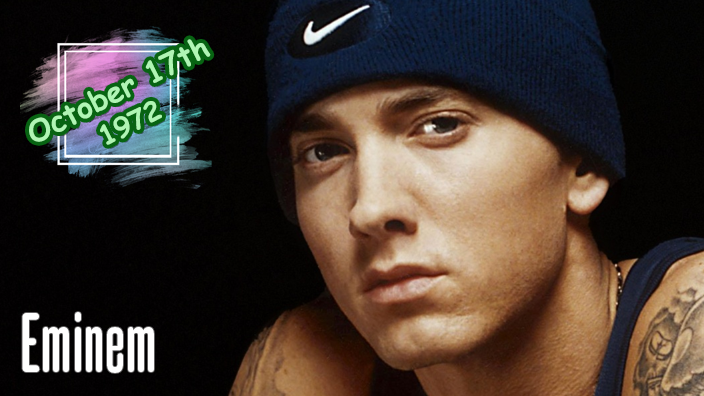
October 17, 1972, in St. Joseph, Missouri
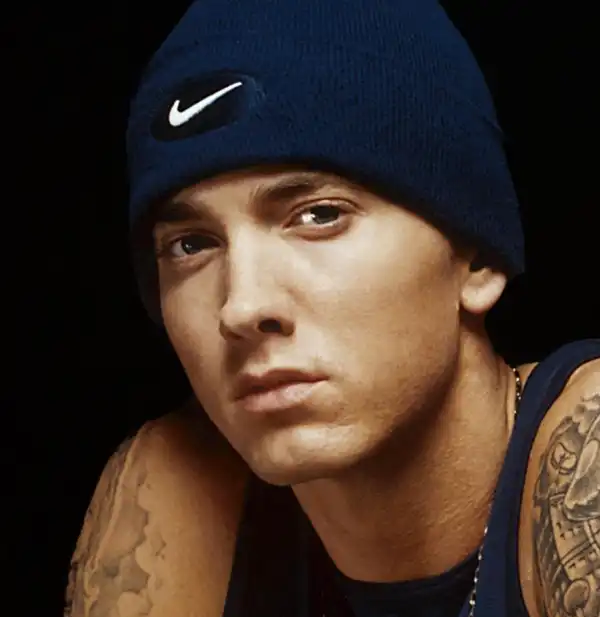
Born Marshall Bruce Mathers III on October 17, 1972, in St. Joseph, Missouri, Eminem grew up far removed from the wealth and celebrity that would eventually define his public life. His childhood was marked by financial difficulties, frequent moves, schoolyard bullying, and a complicated relationship with his mother, Debbie Nelson. Although born in Missouri, he became closely associated with Detroit, Michigan, where he developed his musical identity and learned to survive in the fiercely competitive world of underground hip-hop. School was hardly his favorite institution, and he eventually dropped out of high school after struggling academically. However, his fascination with language, rhyme, and storytelling revealed an extraordinary talent that conventional classrooms had failed to nurture. While other teenagers were memorizing mathematical formulas, Marshall was discovering how many words could rhyme with something that probably shouldn't be repeated at the dinner table.
Eminem's introduction to rap music came through his growing interest in hip-hop culture and the influence of artists such as LL Cool J, Run-D.M.C., and the Beastie Boys. He began experimenting with rhymes, practicing elaborate word combinations, and participating in rap battles around Detroit. These contests required performers to invent clever insults, deliver rapid responses, and maintain their composure while opponents attempted to humiliate them in front of enthusiastic audiences. Eminem developed an aggressive, technically sophisticated style that distinguished him from many competitors. As a white performer entering a predominantly Black musical environment, he encountered skepticism and had to earn respect through his abilities. His determination eventually made him a formidable battle rapper, although his early career was filled with disappointments, financial insecurity, and enough rejection to discourage anyone without an exceptionally stubborn personality.
His first studio album, Infinite, appeared in 1996 and received limited attention. Although it demonstrated his lyrical abilities, the recording failed to achieve commercial success and left Eminem struggling to support himself and his young family. Rather than abandon music, he developed Slim Shady, an outrageous fictional alter ego who could express dark humor, anger, and provocative fantasies without observing the usual boundaries of polite conversation. Slim Shady became the vehicle through which Eminem explored controversial subjects with exaggerated characters, disturbing imagery, and relentless sarcasm. The resulting Slim Shady EP, released in 1997, attracted industry attention, particularly after Eminem finished second at the Rap Olympics competition in Los Angeles. A recording eventually reached producer Dr. Dre, who recognized the rapper's unusual talent and helped launch one of hip-hop's most successful professional partnerships.
The release of The Slim Shady LP in 1999 transformed Eminem from an underground performer into an international celebrity. Produced with significant involvement from Dr. Dre, the album introduced mainstream audiences to his extraordinary verbal dexterity, provocative storytelling, and deliberately outrageous sense of humor. Its breakthrough single, "My Name Is," featured a memorable chorus and a music video filled with celebrity impersonations and absurd situations. The song became an international success, while the album earned Eminem his first Grammy Awards, including Best Rap Album. Suddenly, the young rapper who had struggled to pay his bills was selling millions of records, appearing on television, and discovering that offending people could be remarkably profitable. His popularity also generated fierce criticism over violent imagery, offensive language, and controversial depictions of women and other groups.
Eminem followed his breakthrough with The Marshall Mathers LP in 2000, an album that confirmed his status as one of the most influential rappers in contemporary music. Featuring songs such as "The Real Slim Shady," "The Way I Am," and "Stan," the recording combined celebrity satire, personal frustration, and unsettling fictional narratives. Its commercial performance was extraordinary, selling approximately 1.76 million copies in the United States during its first week. "Stan," featuring British singer Dido, became particularly significant for its portrayal of an obsessive fan whose increasingly desperate letters lead to tragedy. The song demonstrated Eminem's ability to construct complex narratives rather than simply deliver insults at extraordinary speed. Its cultural influence proved so lasting that the word stan entered everyday language as a description of an excessively devoted fan, eventually appearing in major English dictionaries. Not many musicians can claim to have contributed to the dictionary, especially with a song about someone who desperately needed a healthier hobby.
The controversies surrounding Eminem were almost as prominent as his music. Critics accused him of promoting violence, misogyny, and homophobia, while supporters argued that his lyrics represented fictional characters, satire, and artistic expression rather than literal endorsements of their subjects. Eminem frequently responded to criticism through his recordings, turning public outrage into additional material for his songs. One particularly memorable moment came at the 2001 Grammy Awards, when he performed "Stan" alongside Elton John. The collaboration attracted enormous attention because Elton John, an openly gay musician, publicly supported Eminem despite criticism of the rapper's lyrics. Their performance became an important moment in Eminem's career, demonstrating that artistic relationships could sometimes bridge disagreements that appeared impossible to reconcile.
In 2002, Eminem released The Eminem Show, another hugely successful album that expanded his examination of fame, politics, family relationships, and the pressures of celebrity. Songs including "Without Me," "Cleanin' Out My Closet," and "Sing for the Moment" showcased different aspects of his musical personality, from mischievous satire to emotionally charged autobiography. The album also demonstrated his growing involvement in production and musical arrangement. By this stage, Eminem had become one of the world's biggest recording artists, with his albums dominating charts and his music videos receiving extensive television exposure. His influence extended beyond hip-hop audiences, attracting listeners who might previously have considered rap music something best avoided whenever the grandchildren visited.
Eminem's success reached Hollywood with the 2002 drama 8 Mile, directed by Curtis Hanson. Inspired partly by the rapper's experiences in Detroit, the film follows Jimmy "B-Rabbit" Smith Jr., an aspiring musician struggling with poverty, personal relationships, and the intimidating environment of competitive rap battles. Eminem starred alongside Kim Basinger, Brittany Murphy, and Mekhi Phifer, delivering a performance that surprised audiences who knew him primarily for his music. Although the film incorporated elements resembling his own life, it was a fictional drama rather than a straightforward autobiography. Its portrayal of Detroit's working-class communities, musical ambitions, and underground hip-hop culture helped make it a commercial and critical success. The film also demonstrated that Eminem could hold an audience's attention without spending every scene insulting somebody's relatives.
The film's signature song, "Lose Yourself," became one of Eminem's most celebrated recordings. Written specifically for 8 Mile, the track explores determination, fear, ambition, and the importance of recognizing opportunities before they disappear. Its driving rhythm and memorable lyrics helped it become an anthem for athletes, performers, and anyone preparing to face an intimidating challenge. At the 75th Academy Awards in 2003, "Lose Yourself" won the Oscar for Best Original Song, becoming the first rap song to receive that honor. Eminem did not attend the ceremony, and co-writer Luis Resto accepted the award on his behalf. The victory established another milestone in hip-hop history and demonstrated that rap music could receive recognition from institutions traditionally associated with more conventional film compositions.
Throughout the following years, Eminem continued releasing successful recordings while expanding his activities as a producer and record executive. His albums Encore (2004) and Relapse (2009) explored fame, addiction, relationships, and increasingly elaborate fictional scenarios. He also founded Shady Records with his manager Paul Rosenberg, creating opportunities for other performers and helping develop artists including 50 Cent, Obie Trice, and D12. His business activities demonstrated that his influence extended well beyond his own recordings. Through Shady Records and his production work, Eminem helped introduce new performers to international audiences and contributed to the development of commercially successful hip-hop projects. He was no longer simply the young rapper trying to win competitions in Detroit; he had become an important figure in the machinery of the music industry.
Behind his professional achievements, however, Eminem experienced serious personal difficulties. His struggles with prescription drug addiction intensified during the 2000s, eventually contributing to a near-fatal overdose in 2007. Following medical treatment and rehabilitation, he committed himself to recovery and later discussed the experience openly through interviews and music. His 2010 album Recovery marked a significant artistic and personal turning point, replacing some of the exaggerated horror and satire of earlier recordings with more direct reflections on addiction, responsibility, and perseverance. Songs such as "Not Afraid" presented a musician confronting his own failures and encouraging listeners facing similar difficulties. The album became a major commercial success, demonstrating that audiences were interested in hearing from Marshall Mathers even when Slim Shady wasn't causing a public disturbance.
Eminem's collaborations have also played an important role in his musical career. His partnership with Dr. Dre remains among the most recognizable relationships in hip-hop, while recordings with Rihanna, particularly "Love the Way You Lie" and "The Monster," achieved enormous international popularity. He has also worked with artists including Ed Sheeran, Sia, Skylar Grey, and numerous prominent rappers. These collaborations allowed him to explore different musical styles while retaining the intricate rhyme patterns and distinctive delivery that made him famous. His ability to move between aggressive battle rap, emotional storytelling, and commercially accessible pop-rap helped sustain his career through changing musical trends. While some performers struggle to reinvent themselves, Eminem has repeatedly demonstrated that his artistic identity can accommodate several personalities, even if some of them probably shouldn't be invited to a formal dinner.
Later albums such as The Marshall Mathers LP 2 (2013), Revival (2017), Kamikaze (2018), and Music to Be Murdered By (2020) reflected his continued willingness to experiment and challenge critics. These recordings received varying responses, with some reviewers praising his technical brilliance while others questioned his artistic direction. Nevertheless, Eminem maintained a formidable reputation for complex rhyme structures, rapid delivery, and elaborate wordplay. His 2013 song "Rap God" became particularly famous for a passage containing 97 words delivered in approximately 15 seconds, an extraordinary demonstration of verbal speed and precision. Of course, speaking that quickly is one thing; making the words fit a musical rhythm while maintaining their meaning is quite another. Most people would consider it an achievement simply to order breakfast that fast.
In 2024, Eminem released his twelfth studio album, The Death of Slim Shady (Coup de Grâce), revisiting the fictional character who had helped establish his career. Featuring tracks such as "Houdini," "Tobey," "Temporary," and "Somebody Save Me," the concept album examined the relationship between Eminem and his controversial alter ego while reflecting on his past behavior, personal experiences, and artistic legacy. The project combined familiar elements of satire and provocation with more introspective material, suggesting that the rapper remained interested in confronting the contradictions of his public identity. Despite the album's dramatic title, Slim Shady's fictional demise did not require fans to wear black or organize a memorial service. In Eminem's musical universe, even a funeral can become another opportunity for an argument.
Eminem's achievements have earned him recognition from some of the music industry's most prestigious institutions. He has won 15 Grammy Awards, including multiple victories in the Best Rap Album category, and has received numerous additional honors for his recordings and performances. In 2022, he was inducted into the Rock & Roll Hall of Fame, with Dr. Dre delivering the induction speech. The recognition celebrated Eminem's influence on popular music, his commercial achievements, and his contribution to expanding hip-hop's international audience. He also became the first artist to have ten consecutive albums debut at number one on the Billboard 200 chart, an accomplishment illustrating his remarkable consistency in an industry where public enthusiasm can disappear almost as quickly as it arrives.
Although his public persona has often been confrontational, Eminem's personal life reveals a more complicated individual. His relationship with his former wife, Kimberly Scott, inspired numerous recordings and attracted considerable media attention, while his devotion to his children has been a recurring theme throughout his career. His daughter Hailie has appeared frequently in his lyrics, and he has also spoken about his responsibilities toward the other children he helped raise. Songs such as "Mockingbird" reveal a more vulnerable side of the performer, addressing family struggles, parental responsibility, and the emotional consequences of fame. These recordings provide an important contrast to the exaggerated behavior of Slim Shady, reminding audiences that the man behind the microphone has responsibilities and relationships that extend beyond the recording studio.
Eminem has also contributed to charitable causes through the Marshall Mathers Foundation, established to support disadvantaged and at-risk young people, particularly in the Detroit area. His charitable involvement reflects his awareness of the financial insecurity and social difficulties that shaped his childhood. While philanthropy rarely attracts the same headlines as his controversial lyrics, it represents another aspect of his career and public influence. His connection to Detroit has remained especially important, with the city featuring prominently in his music, performances, and professional identity. Despite his birthplace being Missouri, Detroit became the community most closely associated with his development as an artist and his emergence as an international celebrity.
The influence of Eminem on contemporary rap music is difficult to overstate. His technical command of rhyme, storytelling, and rhythm has inspired generations of performers, while his commercial achievements helped broaden hip-hop's mainstream audience. Artists including Kendrick Lamar, Logic, and numerous other rappers have acknowledged his importance to their musical development. His recordings also helped establish rap as a medium capable of expressing complex personal experiences, fictional narratives, satire, and social criticism within the same body of work. His success did not eliminate the controversies surrounding his music, nor did it mean every creative decision received universal approval. Instead, his career illustrates how artistic innovation, commercial success, and public disagreement can exist together over an extended period.
From a difficult childhood and underground rap competitions to international fame, Academy Award recognition, Grammy victories, and induction into the Rock & Roll Hall of Fame, Eminem's career has followed an extraordinary path. His music has provoked arguments, inspired performers, entertained millions, and challenged conventional expectations about what rap can accomplish. Whether audiences admire his technical abilities, appreciate his humor, connect with his personal experiences, or simply marvel at his ability to fit an astonishing number of syllables into a single verse, his place in popular music history is firmly established. Marshall Mathers has spent much of his career telling the world exactly what he thinks, frequently before the world has finished asking the question. And after all these years, the remarkable thing is that people are still listening.