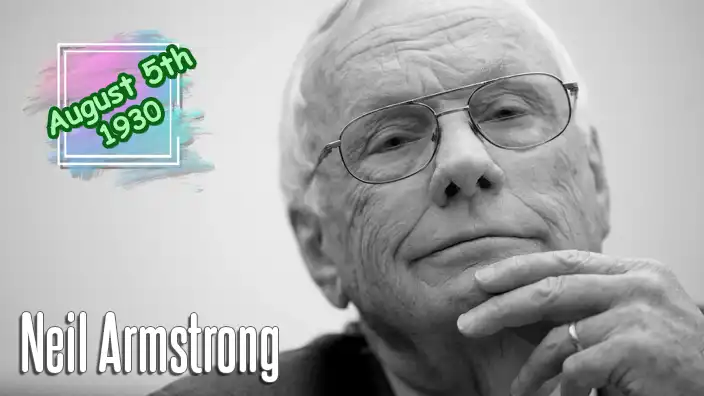
August 5, 1930, near Wapakoneta, Ohio
 August 25, 2012, in Cincinnati, Ohio
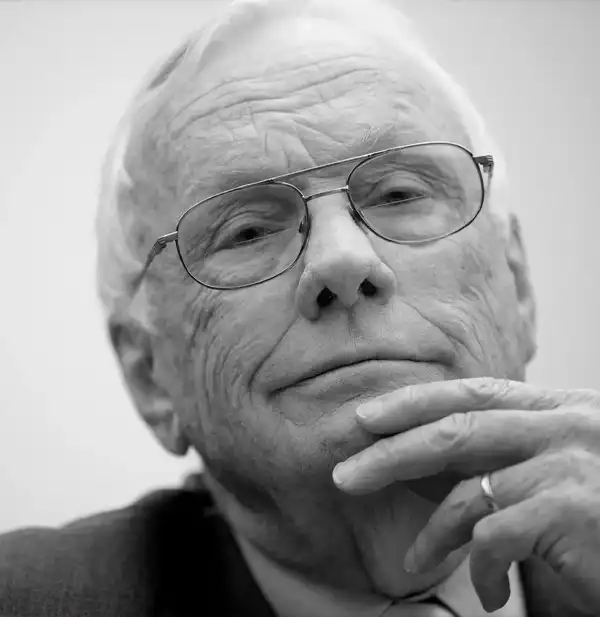
Neil Armstrong was an American astronaut, aeronautical engineer, naval aviator, test pilot, and university professor who became the first human being to walk on the Moon. As commander of Apollo 11, he guided the lunar module Eagle to the surface on July 20, 1969, before descending its ladder and taking a step that became one of the defining moments in human history.
His achievement was the culmination of decades of scientific development, national ambition, personal discipline, and dangerous experimental flying. Although Armstrong became one of the most famous people who ever lived, he remained notably private and regularly emphasized that the Moon landing had been accomplished by an enormous team rather than by three astronauts working alone.
Neil Alden Armstrong was born on August 5, 1930, near Wapakoneta, Ohio. He was the son of Stephen and Viola Armstrong and developed a fascination with aircraft during childhood. His father’s work required the family to move through several Ohio communities before settling in Wapakoneta.
Armstrong’s interest in flight appeared remarkably early. He experienced his first airplane ride as a young child and spent years building model aircraft, reading aviation magazines, and visiting a nearby airfield whenever possible.
At the age of 16, Armstrong earned a student pilot certificate before he had obtained a driver’s license. The sequence seems appropriate: ordinary roads apparently offered insufficient altitude. He paid for flying lessons by working a variety of jobs and completed his first solo flight before graduating from high school.
Armstrong was also an active member of the Boy Scouts of America and achieved the rank of Eagle Scout. The organization remained important to him, and he carried a World Scout Badge during the Apollo 11 mission.
He enrolled at Purdue University in 1947 through the United States Navy’s Holloway Plan, which combined university study with naval aviation training and military service. Armstrong began studying aeronautical engineering, but his education was interrupted when the Navy called him to active duty.
He entered flight training and became a naval aviator in 1950. Assigned to Fighter Squadron 51, Armstrong flew the Grumman F9F Panther jet from the aircraft carrier USS Essex during the Korean War.
Armstrong flew 78 combat missions over Korea. During one low-level bombing mission in September 1951, his aircraft struck a cable that tore away part of one wing. He managed to fly the damaged jet back toward friendly territory before ejecting and was safely recovered.
His naval service earned him several decorations, including the Air Medal and Gold Stars. More importantly for his later career, it gave him valuable experience making rapid decisions in dangerous conditions while operating complicated machinery.
After completing active service, Armstrong returned to Purdue and resumed his studies. He graduated in 1955 with a Bachelor of Science degree in aeronautical engineering. He later earned a Master of Science degree in aerospace engineering from the University of Southern California.
Armstrong joined the National Advisory Committee for Aeronautics, the federal organization that preceded NASA. His first assignment was at the Lewis Flight Propulsion Laboratory in Cleveland before he transferred to the High-Speed Flight Station at Edwards Air Force Base in California.
At Edwards, Armstrong became an experimental research pilot during one of the most exciting and dangerous periods in aviation history. Engineers and pilots were exploring the limits of speed, altitude, aircraft stability, and human endurance.
He flew more than 200 different types of aircraft during his career, including jets, helicopters, gliders, and rocket-powered experimental vehicles. His combination of engineering knowledge and exceptional flying ability allowed him to understand not merely how an aircraft behaved, but why it behaved that way.
Among the most famous aircraft Armstrong piloted was the North American X-15. The rocket-powered research plane flew at extraordinary speeds and altitudes, gathering information that helped engineers understand conditions astronauts would later face during spaceflight. Purdue records note that his aviation career included piloting the X-15 as well as numerous other experimental aircraft.
Test flying was dangerous work. Aircraft systems failed, designs behaved unpredictably, and pilots frequently encountered problems that had never occurred before. Armstrong became known for remaining calm, gathering information, and making measured decisions while others might reasonably have considered shouting.
One famous incident occurred when Armstrong flew a Lockheed T-33 to examine a dry lakebed intended for an emergency landing. The aircraft became trapped in the mud, prompting a complicated recovery effort involving several colleagues, another aircraft, and considerably more inconvenience than anyone had planned.
Such episodes helped establish Armstrong’s reputation as a talented pilot who did not lose his composure when events became untidy. That quality would prove indispensable during his later space missions.
NASA selected Armstrong as an astronaut in 1962. He became part of the agency’s second astronaut group and was the first civilian astronaut chosen for the United States human spaceflight program.
Although he was technically a civilian, his experience compared favorably with that of the military test pilots surrounding him. He had flown combat missions, piloted advanced research aircraft, and worked directly with engineers developing new flight systems.
Armstrong’s first journey into space came aboard Gemini 8 in March 1966. He served as command pilot, with David Scott as pilot.
The Gemini program was designed to develop techniques required for later lunar missions, including orbital maneuvering, spacewalks, long-duration flights, and rendezvous between spacecraft.
During Gemini 8, Armstrong and Scott successfully completed the first docking of two vehicles in orbit. Their spacecraft joined with an uncrewed Agena target vehicle, demonstrating a capability essential to the Apollo program.
Soon after docking, however, the combined vehicles began rolling unexpectedly. Believing the problem originated with the Agena, Armstrong undocked Gemini 8, but the rotation became much worse.
A thruster on the Gemini spacecraft had become stuck in the open position. The capsule began spinning at approximately one revolution per second, placing the astronauts in danger of losing consciousness.
Armstrong remained calm and used the reentry control system to stop the rotation. The emergency maneuver saved the crew, although it required the mission to be ended early. Gemini 8 splashed down safely in the Pacific Ocean.
The incident became one of the clearest demonstrations of Armstrong’s judgment under pressure. Faced with a rapidly deteriorating situation in orbit, he diagnosed the problem and acted before the spinning spacecraft incapacitated its crew.
Armstrong later served as backup commander for Gemini 11 and became deeply involved in planning the techniques that would carry astronauts to the Moon.
In 1968, he narrowly escaped death while piloting a Lunar Landing Research Vehicle near Houston. The unusual aircraft was designed to simulate the handling characteristics of a lunar module descending in the Moon’s weak gravity.
With the vehicle only a short distance above the ground, Armstrong lost control and ejected. His parachute opened moments before impact, while the craft crashed and exploded nearby.
Armstrong walked away from the accident and reportedly returned to his office to complete paperwork. When colleagues asked whether he was all right, he behaved as though ejecting from a doomed flying machine before lunch was simply an inconvenient scheduling matter.
NASA assigned Armstrong to command Apollo 11, the mission intended to make the first human landing on the Moon. His crewmates were Edwin “Buzz” Aldrin, the lunar module pilot, and Michael Collins, the command module pilot.
Apollo 11 launched from Kennedy Space Center in Florida on July 16, 1969, aboard a Saturn V rocket. The spacecraft consisted of the command module Columbia, the service module, and the lunar module Eagle.
After entering lunar orbit, Armstrong and Aldrin moved into Eagle while Collins remained aboard Columbia. The lunar module separated and began its descent toward the Sea of Tranquility.
The landing quickly became more difficult than expected. Computer alarms sounded during the descent because the guidance computer was temporarily overloaded with tasks.
Mission Control determined that the spacecraft could continue. Armstrong and Aldrin pressed on, but another problem soon became visible: the automatic guidance system was directing Eagle toward a rocky area containing a large crater.
Armstrong took partial manual control and guided the lunar module across the hazardous terrain while Aldrin called out altitude and velocity information. Fuel reserves continued falling as Armstrong searched for a safer landing area.
With only a small quantity of usable fuel remaining, Eagle touched down on the Moon. Armstrong calmly reported, “Houston, Tranquility Base here. The Eagle has landed.”
Mission Control responded with audible relief. Everyone on Earth had been breathing again eventually, but Houston appreciated the confirmation.
Several hours later, Armstrong opened the lunar module hatch and descended the ladder. On July 20, 1969, he placed his left foot on the lunar surface and became the first human being to walk on another world.
He delivered one of history’s most famous statements, describing the step as small for an individual but a giant leap for humankind. Radio interference made one word difficult to hear, leading to decades of discussion over whether he said “for man” or “for a man.”
Armstrong maintained that he intended to say “a man.” Grammar took a minor injury during the transmission, but human history carried on.
An estimated 650 million people watched the Moon landing on television, making it one of the largest shared events the world had ever experienced.
Aldrin joined Armstrong on the surface shortly afterward. Together, they unveiled a commemorative plaque, planted the American flag, spoke with President Richard Nixon, deployed scientific equipment, photographed the surrounding landscape, and collected lunar samples.
The astronauts spent approximately two and a half hours outside Eagle. They moved carefully in the Moon’s reduced gravity, testing different methods of walking while carrying out a tightly organized schedule.
Although Armstrong was the first person on the surface, relatively few photographs show him during the moonwalk. He carried the mission’s main camera for much of the excursion and took many of the most famous images of Aldrin. NASA notes that only a small number of photographs clearly show Armstrong on the lunar surface.
Armstrong and Aldrin returned to the lunar module and prepared for departure. The ascent stage of Eagle launched from the Moon and reunited with Collins aboard Columbia.
After transferring the astronauts and lunar material into the command module, the crew released the lunar module and began the journey home.
Apollo 11 splashed down safely in the Pacific Ocean on July 24, 1969. The astronauts were recovered by USS Hornet and placed in quarantine because scientists could not yet be certain that the Moon contained no organisms capable of threatening life on Earth.
The astronauts spent several weeks inside a Mobile Quarantine Facility. Lunar microorganisms failed to appear, which was scientifically reassuring and somewhat disappointing to science-fiction writers.
Following their release, Armstrong, Aldrin, and Collins participated in an international tour. They received parades, decorations, honorary degrees, and invitations from national leaders around the world.
Armstrong was awarded the Presidential Medal of Freedom, the Congressional Space Medal of Honor, the NASA Distinguished Service Medal, and numerous other distinctions.
Despite the attention, he did not seek the lifestyle of a celebrity. Armstrong viewed himself primarily as an engineer and pilot and remained uncomfortable when the Moon landing was portrayed as his accomplishment alone.
He repeatedly praised the hundreds of thousands of engineers, technicians, scientists, factory workers, administrators, military personnel, and contractors whose work made Apollo 11 possible.
After the mission, Armstrong served briefly as NASA’s deputy associate administrator for aeronautics. He left the agency in 1971 and joined the University of Cincinnati as a professor of aerospace engineering.
His students found themselves learning engineering from a man who had personally flown experimental jets, survived an out-of-control spacecraft, landed on the Moon, and returned home safely. Missing one of his lectures because the material seemed unimportant would have required considerable nerve.
Armstrong taught until 1979. He preferred working with students and technical subjects to delivering speeches about his fame, and colleagues remembered him as a demanding but thoughtful educator.
After leaving full-time teaching, he served on the boards of several corporations and participated in government commissions examining aerospace matters.
In 1986, President Ronald Reagan appointed Armstrong as vice chairman of the presidential commission investigating the destruction of the space shuttle Challenger. His technical experience and independent judgment made him an important contributor to the inquiry.
Armstrong remained involved in aviation and space exploration throughout his later life. He supported scientific education, appeared at significant NASA anniversaries, and defended the importance of continued human exploration.
He rarely gave interviews and carefully protected his privacy. This reserve sometimes made him appear distant, but friends and colleagues described a man with a dry sense of humor, strong loyalty, and a deep appreciation for engineering and flight.
Armstrong disliked the commercialization of his identity and objected when his name, autograph, or famous statement was used without permission. He believed the Moon landing belonged to history, not to advertising departments attempting to sell sandwiches, insurance, or commemorative kitchenware.
His life was portrayed in the authorized biography First Man: The Life of Neil A. Armstrong by historian James R. Hansen. Armstrong agreed to cooperate with Hansen after years of resisting biographical projects. Purdue University preserves Hansen’s research papers connected with the book.
The biography later inspired the 2018 film First Man, directed by Damien Chazelle and starring Ryan Gosling as Armstrong. The movie concentrated on the personal sacrifices, technical risks, and emotional strain surrounding the Apollo program.
Neil Armstrong died on August 25, 2012, at the age of 82, following complications from cardiovascular surgery. His family described him as a reluctant American hero who had served his nation proudly as a Navy fighter pilot, test pilot, and astronaut.
Tributes arrived from around the world. Astronauts, scientists, political leaders, educators, and ordinary citizens remembered both his historic achievement and the modest manner in which he carried its enormous weight.
His cremated remains were scattered in the Atlantic Ocean during a burial-at-sea ceremony conducted aboard the USS Philippine Sea. The ceremony honored his service as a naval aviator and connected his final farewell to the Navy in which his remarkable flying career had begun.
Armstrong’s spacesuit, spacecraft, documents, and personal artifacts are now preserved in museums and archives. The National Air and Space Museum displays his Apollo 11 pressure suit alongside Columbia, the command module that carried the crew home.
His name has been given to schools, museums, research facilities, roads, ships, awards, and features on the Moon. The Armstrong Air & Space Museum in Wapakoneta celebrates his life and Ohio’s contributions to aviation and spaceflight.
A research vessel operated by the United States Navy was named USNS Neil Armstrong. The ship honors both his naval service and his contributions to scientific exploration.
Yet Armstrong’s greatest memorial remains the footprint he left in the lunar soil. With no wind or flowing water on the Moon to erode it, that footprint may remain visible for millions of years.
Neil Armstrong did not reach the Moon through courage alone. He combined courage with study, preparation, engineering knowledge, precise flying, disciplined teamwork, and an ability to remain calm when machinery began behaving badly.
He was not simply a passenger selected to perform a symbolic act. He was a deeply experienced pilot and engineer whose abilities helped prevent catastrophe during Gemini 8, saved him during years of test flying, and guided Eagle safely past lunar hazards.
His first step represented far more than the success of one astronaut or one nation. It demonstrated what human beings could accomplish when imagination was supported by science, organization, resources, persistence, and an extraordinary willingness to accept risk.
The Moon landing occurred during a period of war, political division, and international tension. For a brief moment, however, people across the world looked upward together and witnessed a human being standing where none had stood before.
Neil Armstrong returned from that extraordinary journey and spent the remainder of his life resisting attempts to turn him into something larger than human. That modesty only strengthened his reputation.
He was an engineer who solved problems, a pilot who understood risk, a professor who valued knowledge, and an astronaut who carried the work of hundreds of thousands of people to its final destination.
On July 20, 1969, Neil Armstrong stepped down from a ladder and onto another world. The step itself was small. Everything it represented was enormous.