October 17, 1966, in Sedgefield, England
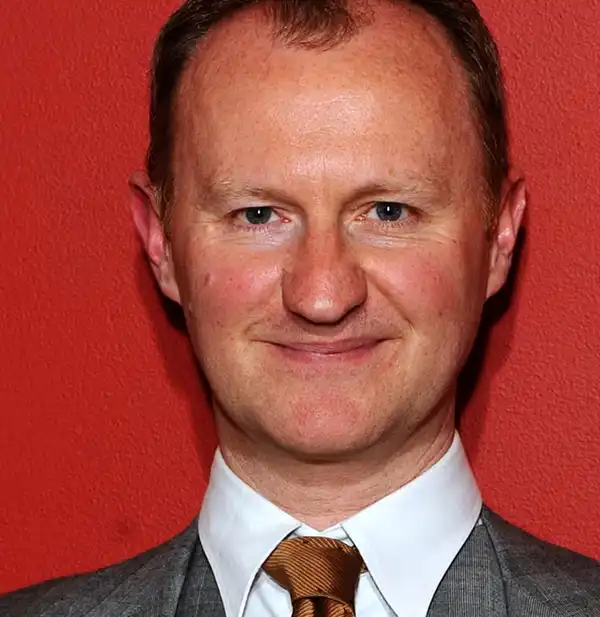
Mark Gatiss was born on October 17, 1966, in Sedgefield, County Durham, England. He grew up in a family whose circumstances provided an unusual background for a future writer of horror and dark comedy. His father, Maurice Gatiss, worked as an engineer at Winterton Hospital, a psychiatric institution near Sedgefield, while his mother, Hylda, also worked at the hospital. The family lived in a house on the hospital grounds, an environment that later influenced Gatiss's imagination and appreciation for unusual settings. Although growing up near an old psychiatric hospital might sound like the opening scene of a Gothic horror film, for Gatiss it was simply home. The atmosphere of imposing buildings, institutional history, and slightly unsettling surroundings would eventually become useful inspiration for someone fascinated by ghost stories and sinister fictional communities.
From an early age, Gatiss developed a passionate interest in horror films, science fiction, classic literature, and British television. He was particularly fascinated by the Hammer horror films that had made Christopher Lee and Peter Cushing internationally recognizable performers. Their atmospheric productions, elaborate Gothic settings, and memorable monsters helped establish his lifelong affection for supernatural storytelling. Gatiss also became an enthusiastic admirer of Doctor Who, the BBC science-fiction series whose combination of adventure, mystery, and occasionally alarming monsters captured his imagination. These interests were not passing childhood distractions. They became the foundations of a professional career in which he would eventually write, perform, and produce material for several of the very genres he had admired as a youngster.
Gatiss attended Heighington Church of England Primary School and Woodham Comprehensive School before pursuing theatrical training at Bretton Hall College of Education in West Yorkshire. The college, associated with the University of Leeds, was known for its emphasis on drama and the performing arts. His education provided opportunities to develop acting techniques, experiment with theatrical production, and meet other aspiring performers. During this period, he became involved in creative partnerships that would shape his professional future. His interest in comedy, horror, and character-based storytelling increasingly merged into a distinctive artistic approach, combining affection for traditional British entertainment with a willingness to expose its absurdities.
One of the most important developments in Gatiss's early career was his association with performers Jeremy Dyson, Steve Pemberton, and Reece Shearsmith. Together, they formed the comedy group The League of Gentlemen, developing material that combined grotesque characters, unsettling situations, and sharply observed social satire. The group emerged from the British theatrical comedy scene during the 1990s, attracting attention through live performances and increasingly ambitious sketches. Their humor differed considerably from conventional sitcoms because it frequently blended ordinary social interactions with disturbing behavior, elaborate character transformations, and an atmosphere borrowed from horror fiction. The result was comedy that could make audiences laugh while simultaneously wondering whether they should be concerned about their own reactions.
The group's breakthrough came at the Edinburgh Festival Fringe in 1997, where The League of Gentlemen won the prestigious Perrier Comedy Award. The recognition helped bring the performers to a wider audience and encouraged further development of their distinctive fictional world. Their success demonstrated that British audiences were receptive to comedy combining traditional sketch performance with dark psychological humor. Rather than presenting unrelated sketches, the group increasingly developed recurring characters and interconnected situations, creating the impression of an entire community populated by people whose behavior ranged from mildly eccentric to profoundly disturbing. It was an imaginative approach to entertainment, although anyone considering moving to their fictional town might reasonably have asked for a refund on the removal van.
In 1997, The League of Gentlemen made its radio debut on BBC Radio 4 with On the Town with the League of Gentlemen. The series introduced listeners to the fictional community of Spent, later developed into the television setting of Royston Vasey. Radio provided an opportunity to establish the characters' distinctive voices, personalities, and relationships without relying on elaborate visual effects or costumes. Gatiss and his colleagues demonstrated an impressive ability to create memorable personalities through dialogue, vocal performance, and carefully constructed comic situations. The radio series helped establish the group's reputation and prepared the way for its transition to television.
The BBC television series The League of Gentlemen premiered in 1999, introducing audiences to the fictional town of Royston Vasey and its extraordinary inhabitants. Gatiss, Pemberton, and Shearsmith portrayed numerous characters, frequently using elaborate makeup, costumes, and physical transformations. Jeremy Dyson contributed substantially to the writing and creative development. The series became famous for its recurring personalities, including the sinister shopkeepers Edward and Tubbs, the unpleasant employment officer Pauline Campbell-Jones, and a collection of other residents whose behavior suggested that ordinary social conventions had been abandoned somewhere near the town boundary.
Gatiss portrayed several memorable characters, including the sinister Reverend Bernice Woodall, the eccentric veterinarian Mr. Chinnery, and the theatrical impresario Hilary Briss. The performances demonstrated his versatility and willingness to transform himself physically and vocally. The show's humor frequently depended on the contrast between familiar British institutions and increasingly disturbing situations. Local shops, employment offices, community gatherings, and family relationships became settings for absurdity, cruelty, and surreal comedy. The series developed a devoted following and won several awards, including a BAFTA Television Award for Best Comedy Programme or Series. Its success established Gatiss as an important figure in British comedy and demonstrated that dark humor could achieve mainstream recognition without sacrificing its unconventional character.
The League of Gentlemen ran for three original television series, with additional specials and later reunions. Its influence extended beyond British comedy, inspiring performers and writers interested in combining horror, satire, and character-based storytelling. The group also produced the feature film The League of Gentlemen's Apocalypse in 2005, which explored the unusual premise of fictional characters attempting to confront their creators. The film allowed the performers to experiment with the relationship between imagination and reality while retaining the distinctive humor of their television work. In 2017, the group reunited for three anniversary specials, returning to Royston Vasey and demonstrating that its peculiar residents had lost none of their capacity for making visitors uncomfortable.
Alongside his comedy career, Gatiss continued pursuing his longstanding enthusiasm for Doctor Who. During the 1990s, when the television series was largely absent from regular broadcasting, he became involved in the community of writers and performers keeping its fictional universe alive through novels, audio dramas, and other projects. His first published Doctor Who novel, Nightshade, appeared in 1992 as part of Virgin Publishing's New Adventures range. The book explored themes of nostalgia, aging, and the unsettling consequences of revisiting the past, demonstrating his interest in combining science fiction with Gothic atmosphere. Gatiss subsequently wrote additional Doctor Who novels and participated in audio productions, developing a reputation as someone with both a detailed understanding of the series and a willingness to explore its darker possibilities.
When Doctor Who returned to BBC television in 2005 under the leadership of Russell T Davies, Gatiss became one of the writers contributing to its revival. His first televised episode, "The Unquiet Dead," featured Christopher Eccleston as the Ninth Doctor and Billie Piper as Rose Tyler. Set in Victorian Cardiff, the story involved Charles Dickens, mysterious deaths, and supernatural-seeming creatures threatening the living. The episode combined several of Gatiss's favorite subjects, including Victorian history, ghostly atmosphere, literary figures, and science-fiction explanations for apparently impossible events. It also established his ability to contribute to the revived series while preserving the combination of imagination, adventure, and occasional terror that had attracted him to Doctor Who as a child.
Gatiss continued writing for Doctor Who over the following years, contributing episodes such as "The Idiot's Lantern" in 2006, "Victory of the Daleks" in 2010, "Night Terrors" in 2011, "Cold War" and "The Crimson Horror" in 2013, "Robot of Sherwood" in 2014, "Sleep No More" in 2015, and "Empress of Mars" in 2017. His stories frequently drew on historical settings, classic monsters, and the traditions of British science-fiction television. He displayed a particular affection for the Daleks, the Ice Warriors, and other established creatures from the program's extensive history. His contributions demonstrated an understanding of the balance required between satisfying longtime enthusiasts and entertaining viewers unfamiliar with decades of complicated fictional continuity. Considering the number of times the Doctor has traveled through history and rewritten events, keeping track of everything probably requires a filing system considerably more advanced than anything available at the BBC.
Gatiss also appeared onscreen in Doctor Who, demonstrating his ability to move between writing and performing within the same fictional universe. In the 2007 episode "The Lazarus Experiment," he portrayed Professor Richard Lazarus, a scientist whose attempt to reverse aging produces disastrous consequences. The character's transformation into a monstrous creature allowed Gatiss to participate directly in the sort of horror-inflected science fiction he had admired since childhood. He later portrayed the mysterious character Gantok in the 2011 episode "The Wedding of River Song" and appeared as the Captain in the 2017 Christmas special "Twice Upon a Time." These performances reflected his continuing affection for the series and his willingness to embrace its imaginative possibilities.
His association with Doctor Who also extended into documentary production and television history. In 2013, Gatiss wrote and produced An Adventure in Space and Time, a BBC drama celebrating the fiftieth anniversary of the science-fiction series. The production examined the creation of Doctor Who in 1963, focusing particularly on actor William Hartnell, portrayed by David Bradley. It explored the challenges faced by the original production team, including producer Verity Lambert and director Waris Hussein, while celebrating the program's cultural significance. Gatiss's screenplay combined historical research with emotional storytelling, presenting the origins of a television institution through the experiences of the people responsible for bringing it to life.
An Adventure in Space and Time received critical praise for its affectionate portrayal of early British television and its attention to the personalities involved in creating Doctor Who. The production demonstrated Gatiss's ability to transform his enthusiasm for popular culture into thoughtful historical drama. Rather than merely celebrating familiar monsters and memorable adventures, the film examined the professional challenges, personal ambitions, and creative risks involved in developing a new television program. It also offered a moving portrait of Hartnell, whose performance as the First Doctor helped establish the character's enduring appeal. For Gatiss, the project represented an opportunity to honor a series that had influenced his imagination and professional ambitions for much of his life.
Gatiss explored the history of horror cinema through the BBC documentary series A History of Horror with Mark Gatiss, first broadcast in 2010. The three-part production examined the development of horror films, from early Hollywood productions through the British Hammer tradition and later American developments. Gatiss interviewed filmmakers, actors, and historians while visiting locations associated with influential horror productions. His enthusiasm for the subject was unmistakable, and the documentary demonstrated his extensive knowledge of the genre's history. Rather than treating horror as disposable entertainment, he explored its artistic traditions, cultural influence, and ability to reflect society's fears.
He followed the documentary with Horror Europa with Mark Gatiss in 2012, examining European horror cinema and its distinctive cultural traditions. The program explored influential films and filmmakers from countries including Germany, France, Italy, and Spain, highlighting the international development of Gothic and supernatural storytelling. Gatiss's interest in horror history also influenced his dramatic work, particularly his affection for atmospheric settings, psychological uncertainty, and stories in which apparently ordinary circumstances conceal something deeply unsettling. His documentaries helped introduce audiences to important films that might otherwise have remained unfamiliar outside specialist circles.
Another major chapter in Gatiss's career began through his creative partnership with writer and producer Steven Moffat. Both shared an enthusiasm for Arthur Conan Doyle's Sherlock Holmes stories and developed the idea of adapting the famous detective for contemporary television. Rather than producing another conventional Victorian period drama, they proposed relocating Holmes and Dr. John Watson to modern London while preserving the essential personalities and intellectual challenges of the original stories. The concept offered opportunities to explore how Holmes's extraordinary deductive abilities might function in a world of smartphones, surveillance technology, forensic science, and contemporary criminal investigations. It was a bold decision, particularly because Sherlock Holmes enthusiasts have traditionally demonstrated considerable enthusiasm for explaining exactly how adaptations have departed from their preferred interpretation.
The resulting BBC series Sherlock premiered in July 2010, starring Benedict Cumberbatch as Sherlock Holmes and Martin Freeman as Dr. John Watson. Gatiss and Moffat served as co-creators and executive producers, developing a distinctive interpretation of Conan Doyle's characters. The series combined intricate mysteries, rapid dialogue, visual representations of Holmes's thought processes, and contemporary interpretations of familiar literary figures. Its approach appealed to both longtime Sherlock Holmes enthusiasts and audiences encountering the characters for the first time. The production quickly became an international success, earning critical praise and developing a devoted following.
Gatiss also portrayed Mycroft Holmes, Sherlock's older brother and an influential figure within the British government. His performance presented Mycroft as an exceptionally intelligent, politically connected, and frequently exasperated individual whose relationship with Sherlock combined sibling rivalry, affection, and professional secrecy. Gatiss brought dry humor and understated authority to the character, creating a memorable contrast with Cumberbatch's energetic and socially unconventional detective. Their interactions became a recurring source of entertainment, particularly when Mycroft attempted to impose order on situations that Sherlock approached with considerable impatience. The relationship suggested that even the world's most brilliant detective could find family gatherings mildly exhausting.
As a writer, Gatiss contributed to several important Sherlock episodes, including "The Great Game," "The Hounds of Baskerville," "The Empty Hearse," "The Six Thatchers," and the Victorian-themed special "The Abominable Bride," which he co-wrote with Moffat. These stories demonstrated his affection for Conan Doyle's original material while introducing new narrative structures, character developments, and contemporary references. "The Hounds of Baskerville," for example, reinterpreted one of the most famous Sherlock Holmes stories through a modern investigation involving scientific experimentation and psychological fear. The episode combined detective fiction with Gothic horror, bringing together two of Gatiss's longstanding creative interests.
Sherlock became one of the BBC's most internationally successful drama series, attracting audiences across Europe, North America, Asia, and other regions. Its distinctive visual style, elaborate mysteries, and performances helped renew popular interest in Conan Doyle's characters. The series received numerous awards, including Primetime Emmy Awards and BAFTA recognition, while its principal actors gained substantial international attention. Gatiss's work as both writer and performer contributed significantly to its success. His involvement demonstrated the value of approaching familiar literary material with both respect for its origins and confidence in the possibilities of reinterpretation.
The popularity of Sherlock also highlighted Gatiss's ability to collaborate creatively with other writers and performers. His partnership with Moffat drew on their shared appreciation for British television history, intricate storytelling, and characters whose intelligence frequently creates as many problems as it solves. The series developed increasingly ambitious narratives over its four seasons and special episodes, exploring the personal relationships and psychological complexities surrounding its central characters. Although the production generated considerable discussion among viewers about its mysteries and creative decisions, it remained an important achievement in contemporary television adaptation.
Gatiss's acting career continued expanding beyond his best-known creative projects. He appeared in Game of Thrones as Tycho Nestoris, a representative of the powerful Iron Bank of Braavos. The character appeared in several episodes between 2014 and 2017, participating in political and financial negotiations within the fictional world created by George R. R. Martin. Gatiss portrayed Tycho as a composed and calculating official whose calm manner concealed the considerable influence of the institution he represented. His performance demonstrated that financial negotiations could be every bit as intimidating as armed conflict, particularly when the banker involved represented an organization capable of influencing the fortunes of entire kingdoms.
In 2017, Gatiss appeared in the BBC drama Taboo, starring Tom Hardy. Set in nineteenth-century London, the series explored trade, colonial ambition, political intrigue, and the activities of powerful commercial organizations. Gatiss portrayed the Prince Regent, bringing a combination of theatrical extravagance and political authority to the role. The production's dark atmosphere and historical setting suited his interest in Gothic storytelling and complicated personalities. His performance also demonstrated his ability to embrace elaborate costumes and exaggerated characters without losing the underlying human qualities that make such figures entertaining.
His film appearances have included roles in The Favourite, directed by Yorgos Lanthimos, and Christopher Robin, among other productions. In The Favourite, he portrayed John Churchill, Duke of Marlborough, contributing to a darkly comic examination of political intrigue during the reign of Queen Anne. The film starred Olivia Colman, Emma Stone, and Rachel Weisz, earning widespread critical recognition and numerous Academy Award nominations. Gatiss's involvement reflected his ability to contribute effectively to ensemble productions that combine historical detail with unconventional humor.
Gatiss also appeared in Operation Mincemeat, portraying Ivor Montagu, one of the British intelligence officers involved in the remarkable Second World War deception operation. The film starred Colin Firth and Matthew Macfadyen and examined the efforts of British intelligence personnel to mislead Nazi Germany about Allied invasion plans. Gatiss's performance added another historical figure to his extensive acting résumé, reinforcing his interest in stories involving secrecy, unusual personalities, and the complicated relationship between appearance and reality. His ability to move between comedy, espionage, and historical drama has remained one of the defining characteristics of his career.
In 2023, Gatiss appeared in the BBC drama Nolly, written by Russell T Davies and starring Helena Bonham Carter as actress Noele Gordon. Gatiss portrayed television producer Larry Grayson, contributing to a story examining British television history and the circumstances surrounding Gordon's departure from the soap opera Crossroads. The production offered another opportunity to explore the personalities and institutions associated with British entertainment, a subject that has frequently interested Gatiss as both a performer and television historian.
His affection for ghost stories has also produced a substantial body of work for the BBC. Gatiss wrote and directed several adaptations of classic supernatural tales, including The Tractate Middoth in 2013, based on a story by M. R. James, and The Dead Room in 2018. He subsequently developed further seasonal ghost stories, including Martin's Close in 2019, The Mezzotint in 2021, Count Magnus in 2022, and Lot No. 249 in 2023. These productions drew on the tradition of British television ghost stories, particularly the atmospheric adaptations broadcast during the 1970s. Gatiss emphasized suggestion, suspense, and psychological unease rather than relying exclusively on elaborate visual effects. His approach demonstrated that a shadow, an unexpected sound, or an apparently empty room can sometimes be considerably more frightening than an entire computer-generated monster.
Gatiss has also maintained a distinguished theatrical career, appearing in productions ranging from Shakespeare to contemporary drama. In 2013, he played John Worthing in The Importance of Being Earnest at the Nottingham Playhouse, continuing his interest in classical British comedy. He later appeared as Menenius in Shakespeare's Coriolanus at the Donmar Warehouse, a production starring Tom Hiddleston. His performance earned an Olivier Award nomination for Best Actor in a Supporting Role. These stage appearances demonstrated his ability to combine the discipline of classical performance with the distinctive comic timing developed through his television work.
In 2023, Gatiss starred as Sir John Gielgud in The Motive and the Cue, directed by Sam Mendes. The play explored the real-life tensions surrounding the 1964 Broadway production of Hamlet, directed by Gielgud and starring Richard Burton. Gatiss's portrayal of the celebrated theatrical figure earned considerable critical praise and won the Laurence Olivier Award for Best Actor in 2024. The achievement represented an important milestone in his stage career, recognizing his ability to portray a complex historical personality through a combination of intelligence, emotional sensitivity, and theatrical precision. It also provided a particularly appropriate role for an actor whose own professional life had been shaped by a lifelong affection for British performance traditions.
Gatiss continued exploring theatrical storytelling with his adaptation of A Christmas Carol, presenting a distinctive interpretation of Charles Dickens's familiar ghost story. His version emphasized the darker supernatural elements of the original narrative, reminding audiences that the story's ghosts were intended to be frightening as well as morally instructive. Gatiss appeared as Jacob Marley in the production, bringing his longstanding enthusiasm for Gothic storytelling to one of literature's most recognizable seasonal tales. His adaptation demonstrated that even a story retold countless times can acquire new dramatic energy when approached through a different theatrical perspective. It also reminded audiences that Victorian Christmas celebrations apparently involved a considerably greater risk of supernatural visitation than modern holiday gatherings.
In 2024, Gatiss portrayed Sir John Gielgud again when The Motive and the Cue received a West End transfer, further demonstrating the production's critical and commercial appeal. His performance reinforced his reputation as an accomplished stage actor capable of interpreting major historical personalities. The recognition also illustrated the unusual breadth of his professional achievements. Few performers move so comfortably between grotesque sketch comedy, international television drama, Gothic horror, classical theater, and award-winning portrayals of celebrated theatrical figures. Gatiss's career has repeatedly demonstrated that an interest in unconventional entertainment need not prevent an artist from achieving recognition within more traditional dramatic institutions.
His contributions to British entertainment were formally recognized when he was appointed an Officer of the Order of the British Empire, or OBE, in the 2025 New Year Honours for services to drama and literature. The distinction acknowledged his extensive work as an actor, writer, producer, and advocate for storytelling across multiple forms of entertainment. For someone whose early professional success involved portraying grotesque inhabitants of a fictional town with deeply questionable social customs, receiving a royal honor represented a particularly entertaining contrast. It was also a recognition of the influence his work had achieved over several decades of British cultural life.
Gatiss has continued working across television, theater, and film, maintaining an interest in projects that explore history, mystery, horror, and human eccentricity. His professional activities frequently involve collaborations with writers and performers who share his enthusiasm for imaginative storytelling. Whether developing a new ghost story, appearing in a historical drama, or revisiting familiar fictional characters, he has demonstrated an ability to combine detailed research with playful creativity. His work often celebrates older traditions while introducing them to contemporary audiences through new interpretations and formats.
Away from his professional activities, Gatiss has spoken openly about his personal life and his relationship with actor Ian Hallard, whom he married in 2008. The couple have occasionally collaborated professionally, including in theatrical productions. Gatiss has also supported LGBTQ+ visibility and representation within the entertainment industry, contributing to discussions about the importance of allowing performers and writers to express their identities openly. His personal experiences have informed his understanding of storytelling and representation, although he has generally preferred to allow his creative achievements to remain central to his public reputation.
One of Gatiss's most distinctive qualities is his enthusiasm for preserving and celebrating the history of British popular entertainment. His documentaries, theatrical productions, and television scripts frequently draw attention to earlier performers, writers, and filmmakers whose achievements influenced subsequent generations. His affection for Hammer horror, classic Doctor Who, Sherlock Holmes, Victorian ghost stories, and traditional British comedy has shaped an unusually varied career. Rather than treating these influences as outdated curiosities, he has repeatedly demonstrated their continuing relevance and potential for creative reinterpretation.
Gatiss's work also reflects an understanding that comedy and horror share important dramatic techniques. Both depend on timing, surprise, anticipation, and the careful management of audience expectations. A pause before a frightening revelation can operate much like the pause before a punchline, while an apparently ordinary character may become either hilarious or terrifying depending on the circumstances. His ability to move between these genres has helped establish his distinctive creative identity. Whether audiences are laughing at the residents of Royston Vasey or nervously anticipating the appearance of a ghost, Gatiss understands the importance of making them wait just long enough.
From his childhood fascination with monsters and detective stories to international success with Sherlock, The League of Gentlemen, and Doctor Who, Mark Gatiss has established a remarkable career built on imagination, versatility, and a deep appreciation for storytelling. His achievements encompass award-winning comedy, acclaimed dramatic performances, influential television writing, historical documentaries, and distinguished theatrical work. He has helped introduce classic British fictional characters to new generations while creating memorable original personalities of his own. And if his career offers one particularly useful lesson, it is that childhood obsessions need not be abandoned in adulthood. Sometimes, with sufficient imagination and determination, they can become an entire profession. Just don't be surprised if the resulting office happens to contain a Dalek, a Victorian ghost, and Sherlock Holmes examining the tea service for suspicious fingerprints.