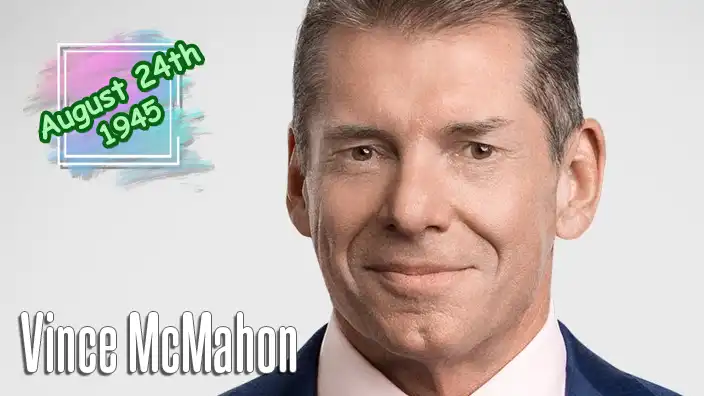
August 24, 1945, in Pinehurst, North Carolina
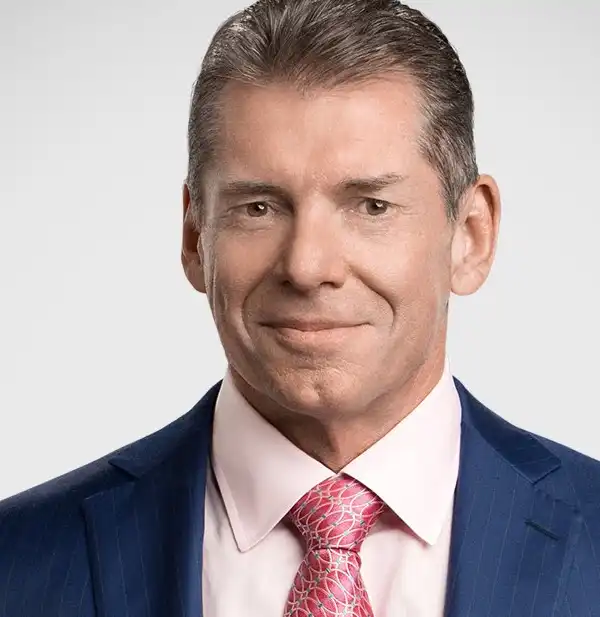
Vince McMahon took a regional wrestling promotion, filled arenas with larger-than-life characters and transformed the business into a worldwide entertainment industry where settling an argument could involve folding chairs, entrance music and occasionally somebody being thrown through a table. For decades, he was simultaneously the businessman running WWE and the villainous “Mr. McMahon” audiences loved to hate—a distinction that became considerably more complicated during the controversial final years of his career.
Vincent Kennedy McMahon was born on August 24, 1945, in Pinehurst, North Carolina. His early life was far removed from the enormously wealthy entertainment executive he would eventually become. His father, Vincent J. McMahon, was a successful wrestling promoter, but the younger McMahon did not grow up with him and spent much of his childhood in North Carolina. He later attended Fishburne Military School in Virginia and graduated from East Carolina University in 1968 with a business degree. Eventually he became involved in his father's wrestling operation, beginning the apprenticeship that would change both his life and professional wrestling.
McMahon began working within the World Wide Wrestling Federation, his father's northeastern promotion, around the beginning of the 1970s. He promoted events in Maine and became a familiar television presence as a play-by-play announcer. In those days, viewers generally knew him simply as the clean-cut fellow interviewing wrestlers and calling matches rather than the bombastic authority figure he would portray decades later. Behind the scenes, however, McMahon was learning promotion, television production and the economics of a wrestling business still organized largely around regional territories.
The traditional territorial system divided North America among promoters who generally respected one another's geographic markets. A wrestling company might dominate New York and New England while another controlled the Carolinas, Texas, Florida or the Midwest. Wrestlers traveled between territories, local television promoted upcoming events, and everybody generally understood where the boundaries were. McMahon looked at this long-established arrangement and essentially asked the dangerous business question: What if we ignored all that?
In 1982, McMahon purchased the wrestling business from his father and associates through his company Titan Sports. He immediately began expanding what was then the World Wrestling Federation beyond its northeastern base, using syndicated television and videotape distribution to enter markets traditionally controlled by other promoters. He also recruited some of their biggest performers. The strategy angered the established wrestling industry, but it worked. WWF programming began reaching audiences throughout the United States, and McMahon increasingly treated professional wrestling not as a collection of regional promotions but as nationally marketed entertainment.
Central to that expansion was Hulk Hogan. McMahon recognized Hogan's potential as the charismatic centerpiece of his growing promotion, and “Hulkamania” became one of the defining pop-culture phenomena of the 1980s. The WWF surrounded Hogan with colorful personalities including André the Giant, “Rowdy” Roddy Piper, Randy “Macho Man” Savage, the Iron Sheik and numerous others whose characters could be understood almost instantly by viewers encountering them for the first time.
McMahon's greatest gamble arrived with WrestleMania in 1985. Professional wrestling supercards were nothing new, but WrestleMania was promoted as something larger—a combination of wrestling, celebrities, music and mainstream entertainment designed to attract audiences beyond traditional wrestling fans. The inaugural event at Madison Square Garden featured Hogan and Mr. T against Piper and Paul Orndorff, with celebrities including Muhammad Ali, Cyndi Lauper and Liberace participating in the spectacle.
WrestleMania succeeded and became the annual centerpiece of McMahon's wrestling empire. As the WWF expanded, events including SummerSlam, Survivor Series and the Royal Rumble joined the calendar, while television increasingly became the engine driving the business. McMahon understood that wrestling could be packaged as serialized entertainment: heroes and villains, betrayals, friendships, rivalries and cliffhangers leading viewers from weekly television toward major events. WWE's own history credits his 1982 takeover and national expansion with beginning the company's transformation from a regional operation into a national powerhouse.
The journey was hardly uninterrupted success. By the early 1990s, the company faced major challenges, including a federal steroid-distribution case in which McMahon was tried and acquitted in 1994. Competition also intensified dramatically when Ted Turner's World Championship Wrestling began challenging WWF directly. WCW's Monday Nitro aired opposite WWF's Monday Night Raw, beginning the famous “Monday Night Wars.” For a considerable period WCW dominated the television ratings, and the WWF suddenly found itself fighting for survival against a competitor with substantial financial resources and many former WWF stars.
The pressure helped produce one of wrestling's most influential periods. WWF programming became edgier during what became known as the Attitude Era, with performers including “Stone Cold” Steve Austin, Dwayne “The Rock” Johnson, The Undertaker, Triple H and Mick Foley becoming enormous attractions. McMahon himself unexpectedly became one of the company's biggest characters.
The transformation followed the controversial 1997 Survivor Series incident involving Bret Hart, commonly known as the “Montreal Screwjob.” Hart was leaving WWF for WCW, and a dispute arose over how he would surrender the WWF Championship. During his match against Shawn Michaels, the referee was instructed to call for the bell while Michaels had Hart in Hart's own Sharpshooter submission hold, even though Hart had not submitted. The incident shattered wrestling's carefully maintained boundary between backstage business and on-screen storytelling.
From that controversy emerged “Mr. McMahon,” the tyrannical corporate boss who became the perfect enemy for Steve Austin's rebellious working-class character. Their feud became one of the defining storylines of the Attitude Era. Austin insulted McMahon, attacked him, defied his orders and occasionally subjected his employer to indignities that would result in immediate dismissal and several police reports in virtually any workplace outside professional wrestling.
McMahon threw himself enthusiastically into the performance. He strutted to the ring, shouted threats, took physical punishment and competed in matches despite being decades older than many of the wrestlers around him. He even became WWE Champion in 1999 and won the Royal Rumble match that same year. His exaggerated walk to the ring became so recognizable that merely imitating it could identify the character without a word being spoken.
Meanwhile, WWF recovered in the ratings war and eventually overtook WCW. In 2001, McMahon's company purchased WCW's assets from Turner Broadcasting, bringing the most significant competitive era in modern American professional wrestling to an extraordinary conclusion. The man who had invaded the old wrestling territories two decades earlier now owned the remains of his greatest national rival.
The company itself continued evolving. WWF became WWE—World Wrestling Entertainment—in 2002 following a trademark dispute with the World Wildlife Fund. By then, professional wrestling had become only part of a much broader entertainment operation encompassing television production, live events, merchandise, licensing, digital media and international expansion. McMahon had also taken the company public in 1999, transforming what had begun as a family-controlled wrestling promotion into a publicly traded entertainment corporation.
His business record included failures as spectacular as some of his successes. McMahon launched the XFL football league with NBC in 2001, promising a more aggressive alternative to the NFL. The original league lasted only one season. He revived the XFL in 2020, only for the COVID-19 pandemic to halt its season and contribute to its bankruptcy. McMahon was never particularly frightened of placing large bets, although occasionally the wrestling ring proved considerably kinder to him than the football field.
For decades, McMahon remained the dominant creative and corporate force within WWE. His wife, Linda McMahon, served in senior executive roles, while their children Shane and Stephanie became both business executives and television personalities. Son-in-law Paul “Triple H” Levesque also became one of WWE's most prominent performers before moving into executive and creative leadership. The McMahon family consequently became part corporate dynasty and part ongoing television storyline, with viewers occasionally requiring considerable concentration to remember which family arguments were fictional.
The final period of Vince McMahon's WWE career was far darker. In 2022, reports concerning previously undisclosed payments connected with alleged sexual misconduct led him to step back from his executive responsibilities and then announce his retirement from WWE. He returned in early 2023 as executive chairman to oversee a strategic review and the company's sale process. WWE was subsequently combined with UFC under the publicly traded TKO Group Holdings, ending the McMahon family's controlling ownership of the wrestling company.
McMahon resigned as executive chairman of TKO in January 2024 after former WWE employee Janel Grant filed a federal lawsuit accusing him of sexual assault and sex trafficking, allegations McMahon denied. In July 2026, Grant agreed to submit her claims against McMahon to arbitration and voluntarily dismissed the federal lawsuit with prejudice as part of that agreement. TKO's regulatory filing confirms that procedural development; it did not constitute a judicial determination of the underlying allegations.
Separately, in January 2025, McMahon settled charges brought by the U.S. Securities and Exchange Commission concerning his failure to disclose two settlement agreements totaling $10.5 million to WWE's board, legal department, accountants and auditor. Without admitting or denying the SEC's findings, McMahon agreed to a $400,000 civil penalty and reimbursement of approximately $1.33 million to WWE. The SEC found that the undisclosed agreements caused material misstatements in WWE's financial statements for 2018 and 2021.
Those controversies form an unavoidable part of McMahon's biography, particularly because they accompanied his departure from the company he had controlled for four decades. Yet assessing his influence on professional wrestling is a separate matter. McMahon fundamentally altered the scale, presentation and economics of the industry. The territorial wrestling system that existed when he entered the business largely disappeared, while the television-centered, nationally and internationally marketed model he pursued became the dominant form of American professional wrestling.
His legacy is therefore unusually complicated. As a promoter, McMahon helped turn WrestleMania into one of the world's most recognizable annual entertainment events and helped transform generations of wrestlers—including Hulk Hogan, Steve Austin, The Rock and John Cena—into mainstream celebrities. As the fictional Mr. McMahon, he became one of wrestling's most successful villains despite beginning his career as the mild-mannered announcer holding the microphone.
The later allegations and corporate controversies ensure that the complete story of Vince McMahon cannot reasonably be presented merely as a colorful tale of wrestling success. But neither can the history of modern professional wrestling be explained without him. He took an established family promotion, discarded many of the industry's traditional rules and built an entertainment business that reached audiences around the world.
Professional wrestling had promoters before Vince McMahon and will certainly have them after him. Few, however, have ever approached the business with quite the same philosophy: make everything bigger, louder and more spectacular—and if necessary, climb into the ring and become part of the show yourself.
References
WWE – The Epic History of WWE
WWE – History of Vincent K. McMahon and the WWF
Sports Illustrated – Vince McMahon Profile and Wrestling Career
Forbes – Vincent McMahon Profile
U.S. Securities and Exchange Commission – In the Matter of Vincent Kennedy McMahon, January 10, 2025
Reuters – Vince McMahon SEC Settlement, January 10, 2025
TKO Group Holdings – 2026 SEC Filing and Legal Proceedings
IMDb – Vince McMahon Biography and Credits