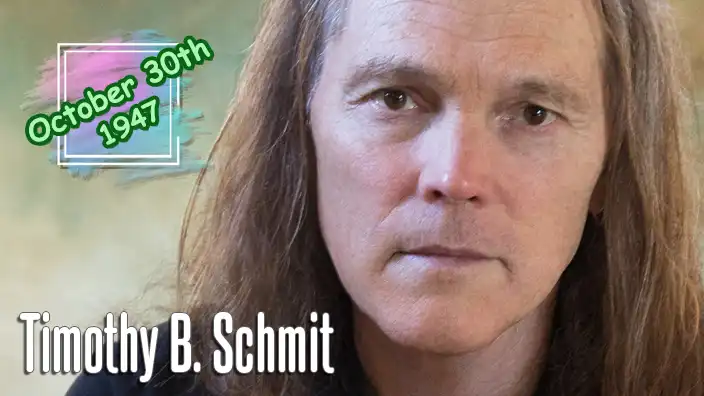
October 30, 1947, in Oakland, California

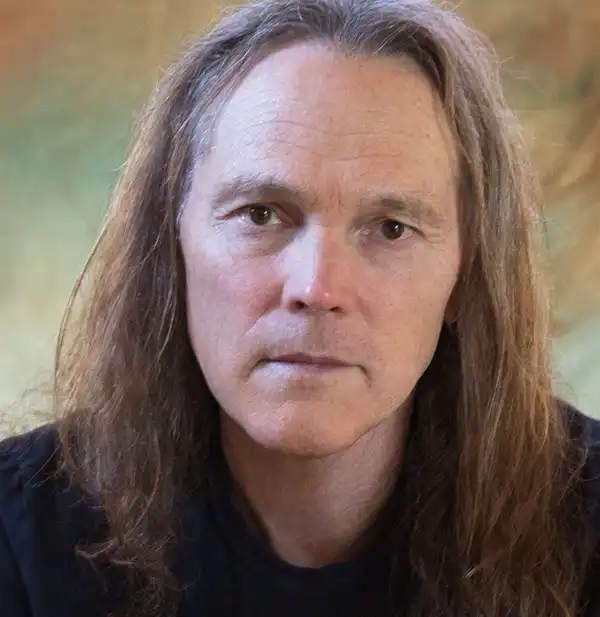
Timothy Bruce Schmit was born on October 30, 1947, in Oakland, California, and grew up primarily in Sacramento. Music entered his life early, partly through his father's work as a musician and the family's travels along the Pacific Coast. His childhood exposed him to a variety of musical styles, while his developing interests included both performing arts and athletics. Before settling on the bass guitar as his principal instrument, he experimented with violin, trombone, ukulele, and guitar. This broad musical education gave him an appreciation for melody, rhythm, and harmony that would eventually become central to his professional identity. Although he would later become famous for playing alongside some of rock music's most recognizable personalities, his early ambitions were those of a young California musician fascinated by the possibilities of popular music.
Growing up during the 1950s and early 1960s placed Schmit at the center of an extraordinary period of musical change. Rock and roll was transforming American popular culture, folk music was experiencing a revival, and young musicians were beginning to combine traditional acoustic sounds with electric instruments. Schmit became particularly interested in vocal harmony, developing a singing style that emphasized clarity, emotional restraint, and precise pitch. His naturally high tenor voice distinguished him from many contemporary rock singers, whose performances often depended on roughness and volume. Schmit discovered that a gentle delivery could be just as powerful as a shouted chorus, particularly when supported by carefully arranged harmonies.
As a teenager, Schmit began performing with friends in a folk trio called Tim, Tom and Ron. The group subsequently evolved into the Contenders as surf music became increasingly popular in California. When the British Invasion transformed American musical tastes, the musicians adapted again, eventually performing as the New Breed. Their repertoire reflected the influence of the Beatles and other British groups, combining energetic guitar arrangements with vocal harmonies. The New Breed achieved regional success with the 1965 single "Green Eyed Woman," providing Schmit with an early taste of professional recognition. Although the group never became a major national attraction, its performances and recordings helped him develop the discipline and versatility necessary for a lasting musical career.
The New Breed later became Glad, another stage in Schmit's developing professional journey. The group's changing names and musical directions reflected the rapidly evolving popular music industry of the 1960s, when young performers frequently adapted their styles to emerging trends. Schmit gained experience in songwriting, recording, live performance, and the complicated business of maintaining a working band. These early years were important because they taught him how to collaborate with other musicians while developing his own artistic identity. He learned that successful ensembles depended on cooperation, patience, and the ability to recognize when another musician's contribution could improve the overall sound.
A major turning point came when Schmit became associated with Poco, the pioneering country-rock band formed by Richie Furay, Jim Messina, Rusty Young, George Grantham, and Randy Meisner following the breakup of Buffalo Springfield. Poco was developing a distinctive musical style that combined traditional country instrumentation, folk influences, and rock arrangements. The group's sound reflected the growing Southern California movement that would eventually produce some of the most commercially successful country-rock recordings of the 1970s. Schmit's vocal abilities and bass playing made him an attractive candidate for the band, although his first attempt to join did not immediately succeed.
In 1968, Schmit auditioned for the bass position in the group then known as Pogo, but Randy Meisner was selected instead. The decision might have discouraged a less determined musician, but circumstances soon changed. Meisner departed, and Schmit successfully auditioned again, joining Poco in 1969. The replacement established an unusual connection between the two musicians that would become one of the most interesting coincidences in country-rock history. Schmit had taken over Meisner's position in Poco, but their professional paths would cross again under circumstances that neither could have anticipated.
Poco provided Schmit with an opportunity to develop his musical abilities within an ambitious and highly regarded ensemble. The band's sound featured intricate vocal harmonies, melodic bass lines, steel guitar, and a mixture of country and rock influences. Schmit's high tenor voice blended particularly well with the other singers, while his bass playing supplied a steady rhythmic foundation without overwhelming the arrangements. His approach reflected a preference for serving the song rather than demonstrating technical ability for its own sake. This musical restraint would become one of his most recognizable qualities, especially when performing alongside musicians with more aggressive or flamboyant styles.
During his years with Poco, Schmit contributed to a substantial collection of recordings, including albums such as Poco, Deliverin', From the Inside, A Good Feelin' to Know, Crazy Eyes, Seven, Cantamos, Head Over Heels, Rose of Cimarron, and Indian Summer. These productions helped establish Poco as one of the most respected groups in the country-rock movement. Although the band attracted enthusiastic audiences and favorable critical attention, its commercial success did not always match its musical reputation. Poco became an influential act whose achievements were frequently appreciated more by fellow musicians and devoted fans than by the wider record-buying public.
One of Schmit's most important contributions to Poco was the song "Keep On Tryin'," which appeared on the 1975 album Head Over Heels. Written and sung by Schmit, the recording showcased his delicate tenor voice and the group's sophisticated harmonies. Its gentle melody and emotionally direct lyrics made it one of Poco's most recognizable songs, demonstrating Schmit's growing confidence as a songwriter and lead vocalist. The recording also revealed the musical qualities that would later make him such a valuable addition to the Eagles. Rather than relying on dramatic vocal effects, Schmit created emotional impact through restraint, sincerity, and an exceptional ability to communicate melody.
His work with Poco also included contributions to songs such as "Rose of Cimarron," a composition by Rusty Young that became one of the group's signature recordings. Schmit's harmonies helped give the song its expansive, atmospheric quality, while the band's combination of country instrumentation and polished vocal arrangements demonstrated the artistic possibilities of the emerging country-rock genre. Poco's recordings influenced numerous musicians and helped establish a musical approach that would become commercially dominant during the 1970s. Although Schmit would eventually achieve greater fame elsewhere, his years with Poco remained an essential foundation for his later success.
Throughout the early 1970s, another Southern California band was enjoying extraordinary commercial success with a similar combination of country, rock, and carefully arranged vocal harmonies. The Eagles, formed in 1971, had developed into one of the most popular groups in American music through recordings such as "Take It Easy," "Desperado," "Best of My Love," "One of These Nights," and "Lyin' Eyes." Their sound combined elements of folk, country, rock, and pop, supported by the songwriting partnership of Glenn Frey and Don Henley. The group also featured bassist and vocalist Randy Meisner, whose high tenor voice contributed to its distinctive harmonies and whose performance of "Take It to the Limit" became one of its most celebrated recordings.
In 1977, Meisner departed the Eagles following increasing tensions within the group and the demanding touring schedule associated with the enormous success of Hotel California. The remaining members needed a musician capable of handling sophisticated vocal harmonies while providing reliable bass accompaniment. Schmit's experience with Poco made him an ideal candidate. Glenn Frey contacted him about joining the Eagles, offering an opportunity that would dramatically change his professional life. Schmit accepted, becoming the band's new bassist and vocalist. Remarkably, he had now replaced Randy Meisner in two different influential country-rock groups, a coincidence so unusual that it sounds like something invented by a particularly unimaginative Hollywood screenwriter.
Joining the Eagles in 1977 placed Schmit within one of the most commercially successful bands in the world. The group had recently released Hotel California, an album that became a defining achievement of 1970s rock music. Its title track, elaborate guitar arrangements, and sophisticated songwriting had helped establish the Eagles as major international stars. Although Schmit did not participate in the original recording of Hotel California, he joined the band during the subsequent touring period and quickly became part of its live performances. His musical abilities allowed him to adapt to an established repertoire while contributing his own distinctive vocal character.
Schmit's arrival also brought a different personality to a group known for its strong opinions and occasional internal disagreements. His relatively reserved demeanor and cooperative approach contrasted with some of the tensions that had developed among the Eagles' established members. He concentrated on learning the songs, developing relationships with his new bandmates, and contributing to the group's performances. His experience in Poco had taught him how to navigate the complicated dynamics of a successful musical ensemble, and he understood the importance of supporting the band's overall identity rather than attempting to dominate its direction.
The first Eagles studio album to feature Schmit was The Long Run, released in 1979. The production followed the extraordinary success of Hotel California and arrived after an extended recording process marked by creative pressures and disagreements. The album featured a mixture of rock, country influences, and polished pop arrangements, reflecting the band's continued evolution. Schmit contributed bass guitar, backing vocals, and songwriting, helping shape a recording that became another major commercial success. The Long Run reached number one on the Billboard 200 and produced several hit singles, including "Heartache Tonight," "The Long Run," and Schmit's signature performance, "I Can't Tell You Why."
"I Can't Tell You Why" became one of the most important recordings of Schmit's career. Co-written with Glenn Frey and Don Henley, the song featured Schmit on lead vocals and presented a softer, more soulful side of the Eagles' musical identity. Its restrained arrangement, gentle electric piano, expressive guitar work, and carefully layered harmonies created an atmosphere of emotional uncertainty and romantic vulnerability. Schmit's delicate tenor voice was perfectly suited to the material, delivering the song with a quiet sincerity that contrasted with the more forceful vocal styles associated with some of the band's other recordings.
Released as a single in 1980, "I Can't Tell You Why" reached number eight on the Billboard Hot 100, becoming a major commercial success and establishing Schmit as an important lead vocalist within the Eagles. The recording also demonstrated the band's ability to incorporate elements of rhythm and blues into its established country-rock sound. Its smooth arrangement and understated emotional intensity helped make it a lasting favorite among listeners, while Schmit's performance became one of the most recognizable vocal moments in the Eagles' catalog. The song remained a regular feature of the band's concerts, providing audiences with an opportunity to hear the distinctive voice that had helped expand its musical range.
Schmit's contribution to "I Can't Tell You Why" was particularly significant because it allowed him to establish an individual identity within a group already dominated by recognizable singers and songwriters. Glenn Frey and Don Henley had become closely associated with the Eagles' most famous recordings, while Joe Walsh contributed a distinctive rock guitar personality. Schmit's performance demonstrated that he could bring something different to the ensemble without disrupting its established sound. His voice added a soulful, almost fragile quality that broadened the group's emotional range and complemented its sophisticated vocal arrangements.
The Eagles continued touring following the release of The Long Run, but tensions within the band were becoming increasingly difficult to manage. The demands of recording, performing, and maintaining commercial success placed considerable pressure on the musicians, whose personalities and creative priorities did not always align. The group effectively ceased working together after its 1980 concert tour, with the official breakup following in 1982. For Schmit, the separation came relatively soon after his arrival, interrupting what had seemed likely to become a lengthy period of collaboration. Nevertheless, his contribution to The Long Run had already secured his place in the band's history.
Following the Eagles' separation, Schmit pursued a solo recording career while continuing to work as a session musician and backing vocalist. His distinctive voice made him particularly valuable to other artists seeking sophisticated harmonies and a smooth tenor sound. He contributed to recordings by a wide variety of performers, demonstrating that his abilities extended far beyond the country-rock style associated with Poco and the Eagles. His work included collaborations with Steely Dan, Crosby, Stills & Nash, Toto, Bob Seger, Jimmy Buffett, and numerous other established musicians.
One of his most recognizable session contributions was to Toto's 1982 hit "Africa," where his backing vocals became part of the recording's celebrated vocal arrangement. The song's combination of synthesizers, intricate rhythms, and layered harmonies made it one of the most enduring pop recordings of the decade. Schmit also contributed vocals to Crosby, Stills & Nash's "Southern Cross," another recording remembered for its sophisticated harmonies and melodic appeal. These appearances demonstrated his remarkable ability to blend with different vocal personalities while maintaining the clarity and warmth that distinguished his own singing.
Schmit's solo career began with the 1984 album Playin' It Cool, which explored a polished pop-rock sound while retaining elements of his country-rock background. The album featured contributions from prominent musicians and introduced listeners to his work outside the established identities of Poco and the Eagles. Its material reflected his interest in melody, romantic themes, and carefully crafted arrangements. Although his solo recordings did not achieve the enormous commercial success associated with the Eagles, they provided opportunities for greater creative independence and allowed him to explore musical ideas that might not have fitted within a major band's collective approach.
His second solo album, Timothy B, appeared in 1987 and included the single "Boys Night Out," which became his most successful solo entry on the Billboard Hot 100. The recording featured a more contemporary pop-rock production style, reflecting the musical trends of the late 1980s. Schmit's vocals remained the central attraction, demonstrating his ability to adapt to changing arrangements without abandoning his recognizable musical identity. The album also reinforced his reputation as a versatile performer capable of moving between country, rock, soul, and mainstream pop.
In 1990, Schmit released Tell Me the Truth, continuing his exploration of melodic rock and contemporary adult-oriented music. The album featured a mixture of original compositions and collaborative material, reflecting his growing experience as a solo recording artist. Although the commercial environment had changed considerably since his early years with Poco, Schmit remained committed to creating music that emphasized strong melodies and meaningful performances. His approach contrasted with the increasingly elaborate production techniques associated with some popular music of the period, demonstrating his preference for songs that could communicate effectively without unnecessary musical decoration.
During the years following the Eagles' breakup, Schmit also performed with Ringo Starr's All-Starr Band, joining a rotating ensemble of established musicians who toured together while performing selections from their individual careers. The project provided opportunities to collaborate with performers from different musical backgrounds and participate in concerts that celebrated several decades of popular music. His involvement reflected the respect he had earned among fellow musicians, many of whom valued his professionalism and ability to contribute to a collective performance without demanding constant attention.
Another important moment came in 1993 when Schmit contributed backing vocals to Vince Gill's recording of "I Can't Tell You Why" for the Eagles tribute album Common Thread: The Songs of the Eagles. The project brought together prominent country music performers to reinterpret the band's recordings, demonstrating the influence of the Eagles on contemporary country music. The album became a major commercial success and helped renew public interest in the group. Its popularity also contributed to the circumstances surrounding the Eagles' eventual reunion, which would restore Schmit to one of the most prominent positions in American rock music.
In 1994, the Eagles reunited for the Hell Freezes Over project, bringing together Don Henley, Glenn Frey, Joe Walsh, Don Felder, and Timothy B. Schmit. The reunion's title humorously referred to the long-standing suggestion that the band would perform together again only when an extremely unlikely event occurred. The project included a television special, live recordings, new studio material, and a successful concert tour. For fans who had spent years hoping to see the group return, the reunion became a major entertainment event. For Schmit, it provided an opportunity to resume performing the music that had helped establish his international reputation.
The Hell Freezes Over album featured live performances of familiar Eagles songs alongside new recordings, including "Get Over It" and "Love Will Keep Us Alive." Schmit sang lead vocals on "Love Will Keep Us Alive," a gentle ballad written by Pete Vale, Jim Capaldi, and Paul Carrack. The recording became another signature performance for him, showcasing his warm tenor voice and ability to convey emotional sincerity through restrained phrasing. Although the song was not released as a conventional commercial single in the United States, it received substantial radio airplay and became a favorite among Eagles audiences.
"Love Will Keep Us Alive" demonstrated the qualities that had made Schmit an essential part of the Eagles' sound. His vocal performance was gentle but expressive, allowing the song's melody and romantic sentiment to remain at the center of the arrangement. The recording also provided a welcome contrast to the band's more aggressive rock material, contributing to the variety that made its concerts appealing to audiences with different musical preferences. Schmit's ability to move between lead vocals, backing harmonies, and bass guitar remained one of his greatest professional strengths.
The Eagles' reunion developed into a continuing period of recording and touring, with the band performing before enormous audiences around the world. Their concerts featured material from throughout their career, including songs originally recorded before Schmit joined the group. His ability to reproduce the band's intricate harmonies while contributing his own distinctive vocal performances helped maintain the quality associated with its classic recordings. The group's reputation for musical precision required extensive preparation, and Schmit's disciplined approach made him an important part of its live presentation.
In 1998, the Eagles were inducted into the Rock and Roll Hall of Fame, recognizing their extraordinary contribution to American popular music. Schmit was inducted alongside Glenn Frey, Don Henley, Joe Walsh, Don Felder, Bernie Leadon, and Randy Meisner. The ceremony celebrated the band's influence on country-rock, popular songwriting, and the development of the Southern California sound. For Schmit, the honor represented recognition of a career that had included important contributions to two influential bands, as well as a substantial body of solo and collaborative work.
The induction was especially meaningful because it acknowledged the collective achievements of musicians whose professional relationships had not always been easy. The Eagles' history included disagreements, departures, reunions, and changing musical priorities, but their recordings remained among the most celebrated in American rock music. Schmit's presence within the inducted lineup confirmed his importance to the band's later development and continuing success. It also highlighted his unusual professional journey from regional California groups to Poco and eventually one of the most successful recording acts in history.
Schmit continued developing his solo career with the 2001 album Feed the Fire, a collection that reflected his interest in melodic rock, country influences, and sophisticated vocal arrangements. The album featured contributions from established musicians and demonstrated his continuing commitment to songwriting. Although the Eagles' activities occupied much of his professional schedule, Schmit regarded solo recording as an important creative outlet. It allowed him to explore personal ideas and musical influences without the compromises required when working within a major ensemble.
The Eagles returned to the recording studio for the 2007 album Long Road Out of Eden, their first full studio album of new material since The Long Run. The ambitious double album featured contributions from the band's principal songwriters and explored themes involving relationships, society, politics, and the passage of time. Schmit contributed vocals and songwriting, including the song "Do Something," which he co-wrote with Don Henley and Steuart Smith. The album became a major commercial success, reaching number one on the Billboard 200 and demonstrating the band's continuing appeal decades after its original breakthrough.
The success of Long Road Out of Eden led to extensive touring, with the Eagles performing across North America, Europe, Australia, and other international markets. Their concerts combined classic hits with newer material, attracting audiences that included longtime fans and younger listeners discovering the band's music through radio, streaming, and family record collections. Schmit remained a dependable presence, contributing the familiar bass lines and harmonies that helped maintain the group's recognizable sound. His lead performances of "I Can't Tell You Why" and "Love Will Keep Us Alive" continued to provide some of the concerts' gentlest and most emotionally engaging moments.
In 2009, Schmit released Expando, a solo album that represented a more personal approach to recording. Working largely in his home studio, he explored a mixture of folk, country, rock, and rhythm and blues influences, emphasizing natural arrangements and intimate performances. The album featured guest contributions from musicians including Graham Nash, Kenny Wayne Shepherd, and members of the Blind Boys of Alabama. Its variety reflected Schmit's broad musical interests and his desire to create recordings that were not restricted by the expectations associated with the Eagles.
Expando received attention for its relaxed atmosphere and thoughtful songwriting, demonstrating that Schmit remained creatively active outside the demanding touring schedule of his principal band. His willingness to experiment with different musical textures reflected the influence of his early years in California, when folk, country, and rock musicians regularly borrowed ideas from one another. The album also reinforced his reputation as an artist more interested in musical quality than in maintaining a particular commercial image.
Schmit faced a serious personal challenge in 2012 when he underwent treatment for throat and neck cancer. The diagnosis was particularly concerning for a professional singer whose career depended on the health and reliability of his voice. He received treatment and subsequently recovered, returning to musical activities after a period of recuperation. The experience reinforced the importance of health, family, and personal priorities, while his return to performing demonstrated considerable determination. His ability to resume singing professionally was especially meaningful given the delicate vocal qualities that had become central to his musical identity.
In 2016, Schmit released Leap of Faith, another solo album exploring his interest in folk, rock, country, and soul music. The project featured a mixture of original compositions and carefully developed arrangements, reflecting his continuing growth as a songwriter. Songs such as "My Hat" and "All Those Faces" demonstrated his preference for thoughtful lyrics and accessible melodies. The album also provided an opportunity to explore themes involving personal reflection, relationships, and the passage of time, subjects that had become increasingly important throughout his lengthy career.
That same year, the Eagles suffered a devastating loss when founding member Glenn Frey died in January 2016. Frey's death raised serious questions about the band's future, particularly because he had been a central songwriter, vocalist, and organizational leader since its formation. Schmit, Don Henley, and Joe Walsh faced the emotional and professional challenge of continuing without one of the musicians most closely associated with the group's identity. The loss was deeply felt throughout the music industry, where Frey's contributions to the Southern California rock movement had earned widespread respect.
The Eagles eventually resumed performing in 2017, with Vince Gill and Deacon Frey, Glenn's son, joining the touring lineup. The new configuration allowed the group to continue presenting its celebrated repertoire while acknowledging the importance of Frey's legacy. Schmit remained an essential member, providing musical continuity and helping preserve the band's distinctive vocal arrangements. The decision to continue performing reflected both the enduring demand for the Eagles' music and the surviving members' desire to celebrate the recordings they had created together.
Schmit's continued involvement also connected the modern Eagles to the group's original country-rock traditions. His experience with Poco had placed him among the musicians who helped develop the genre before the Eagles achieved their greatest commercial success. That background gave him a particular appreciation for the band's musical heritage and the importance of maintaining its vocal character. Although the group's membership and touring arrangements changed over time, Schmit's contribution remained recognizable through his melodic bass playing and distinctive high tenor voice.
In 2022, Schmit released his seventh solo studio album, Day By Day, continuing his exploration of musical styles beyond the Eagles' established sound. The album featured twelve songs recorded during breaks in the band's touring schedule, with contributions from musicians including Jackson Browne and Lindsey Buckingham. Working from his home studio, known as Mooselodge, Schmit developed a collection that combined elements of rock, folk, country, and soul. The production reflected his preference for allowing songs to develop naturally rather than forcing them into a predetermined commercial format.
Day By Day demonstrated Schmit's continuing enthusiasm for songwriting and recording. Its arrangements emphasized melody, musicianship, and the expressive qualities of his voice, while the involvement of respected collaborators reflected the relationships he had developed throughout his career. The album also provided an opportunity to examine personal experiences and contemporary concerns through music, demonstrating that his creative interests remained active despite decades of professional achievements.
Throughout his career, Schmit has been especially admired for his work as a backing vocalist. His contributions to recordings by other artists reveal an ability to understand how individual voices can combine to create a distinctive emotional effect. Rather than attempting to dominate an arrangement, he frequently provides the upper harmony that gives a chorus its brightness and sense of completeness. His voice can be heard on recordings by artists working in different genres, illustrating his adaptability and the respect he has earned among fellow musicians.
His bass playing is similarly characterized by restraint and musical sensitivity. Schmit rarely approaches the instrument as an opportunity for elaborate solos or unnecessary technical display. Instead, he concentrates on providing a reliable rhythmic foundation while introducing melodic movement that supports the song. This approach is particularly effective within the Eagles, whose arrangements often depend on the careful balance of several guitars, keyboards, percussion, and multiple vocal parts. Schmit's ability to remain musically present without overwhelming the ensemble has helped make him one of rock music's most respected supporting musicians.
Schmit's personal life has generally remained relatively private compared with those of some of his more publicly outspoken bandmates. He married his first wife, Noreen, during his early years with Poco, and they welcomed a daughter, Jeddrah, who later pursued musical interests of her own. After the marriage ended, Schmit married Jean Cromie in 1984. Together, they have two children, and family life has remained an important part of his identity outside the recording studio. Although his career has involved extensive travel and demanding schedules, he has frequently emphasized the importance of maintaining a balance between professional responsibilities and personal relationships.
His reputation within the music industry has often reflected his calm personality and cooperative approach to collaboration. The Eagles' history has included numerous disagreements and public disputes, but Schmit has generally avoided becoming the center of those controversies. His willingness to concentrate on music rather than personal conflict has contributed to his longevity within the group. This understated approach also helps explain why he has remained respected by musicians across several generations, many of whom value professionalism and reliability as highly as technical ability.
The Eagles' continued popularity has been demonstrated by successful tours, archival releases, and major concert residencies. Their performances at the Sphere in Las Vegas introduced their classic recordings to audiences through an elaborate combination of live music and immersive visual technology. Schmit's presence connected these modern productions with the band's original recording history, providing continuity between the era of vinyl albums and the contemporary world of technologically sophisticated concerts. The performances also illustrated the remarkable longevity of the Eagles' music, which continued attracting large audiences long after its original release.
Schmit's career is particularly unusual because he participated in the histories of two influential country-rock bands, each associated with an important stage in the genre's development. Poco helped establish the musical vocabulary of Southern California country-rock, combining folk harmonies with electric instrumentation and traditional country influences. The Eagles developed that approach into a commercially dominant sound that reached international audiences. Schmit's involvement in both groups provides a direct connection between the genre's experimental beginnings and its greatest commercial achievements.
His distinctive voice has also given him a lasting place in popular music. "I Can't Tell You Why" remains one of the Eagles' most beloved ballads, while "Love Will Keep Us Alive" continues to demonstrate his ability to communicate romantic emotion through a gentle, carefully controlled performance. His earlier work with Poco, particularly "Keep On Tryin'," reveals the same musical qualities in a different setting. Across these recordings, Schmit's singing reflects an unusual combination of technical precision and emotional warmth, making his performances immediately recognizable without requiring exaggerated vocal effects.
The influence of his work can be heard in the continuing popularity of harmony-based rock and country music. Artists who combine acoustic instrumentation, melodic bass lines, and carefully arranged vocals operate within a tradition that Schmit helped develop through his recordings with Poco and the Eagles. His career demonstrates the importance of musicians whose contributions support the collective sound rather than drawing constant attention to themselves. The greatest musical ensembles frequently depend on performers who understand when to step forward and when to allow another voice or instrument to take the lead.
Perhaps the most remarkable aspect of Timothy B. Schmit's career is the quiet consistency with which he has approached an industry famous for dramatic personalities and unpredictable relationships. He has experienced regional success, international fame, band breakups, reunions, major awards, and significant personal challenges, yet his musical priorities have remained remarkably stable. He continues to value strong songwriting, expressive vocals, thoughtful arrangements, and the pleasure of performing alongside talented musicians.
His professional journey also demonstrates that success does not always arrive through a single dramatic breakthrough. Schmit spent years performing in local California groups before joining Poco, then devoted nearly a decade to developing his abilities within a respected but commercially underappreciated band. His opportunity with the Eagles arrived after years of preparation, and his contributions to The Long Run quickly established him as an essential part of one of rock music's most successful ensembles. The path was neither immediate nor predictable, but the experience he accumulated along the way helped prepare him for the responsibilities of international fame.
Timothy B. Schmit remains an important figure in American rock music because his career connects several generations of musicians and listeners. His recordings with Poco helped develop the Southern California country-rock sound, while his work with the Eagles contributed to some of the most enduring performances in popular music. His solo albums and numerous collaborations demonstrate an artistic curiosity extending beyond the expectations associated with his most famous band.
For longtime Eagles fans, Schmit will always be the musician whose delicate tenor voice transformed "I Can't Tell You Why" into an unforgettable ballad. For Poco enthusiasts, he remains an essential contributor to a pioneering group whose influence exceeded its commercial achievements. For fellow musicians, he represents the value of precision, cooperation, and the ability to make a song sound better without demanding the spotlight.
And after decades of performing with legendary bands, recording with celebrated artists, and contributing to some of rock music's most recognizable harmonies, Timothy B. Schmit has demonstrated that the quietest musician on stage can sometimes leave the loudest impression.
After all, when an Eagle sings that beautifully, nobody needs to ask why.
References & Sources