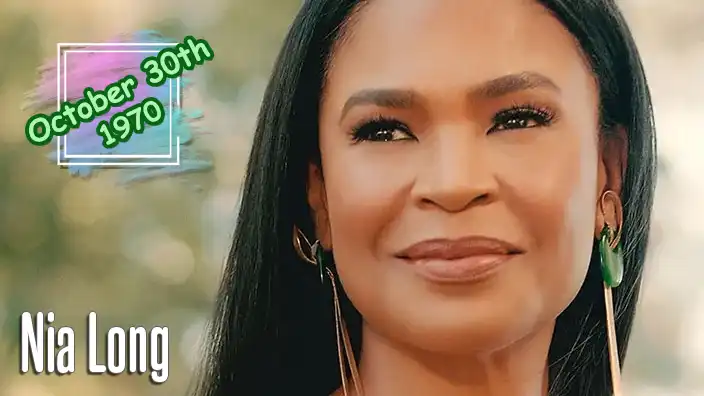
October 30, 1970, in Brooklyn, New York

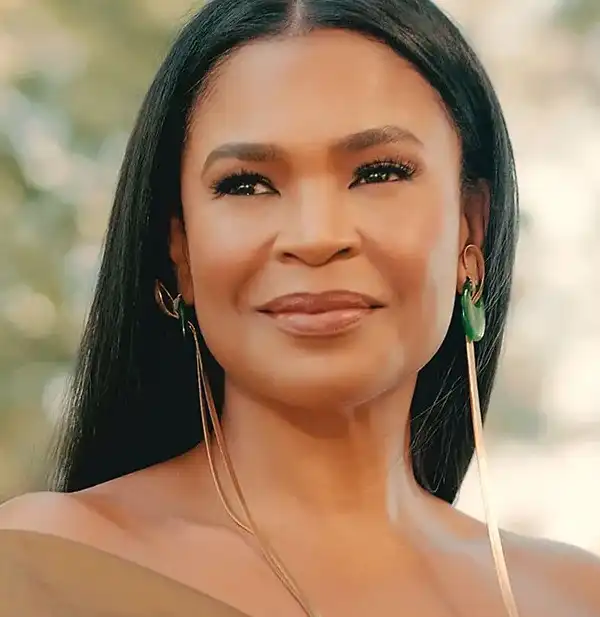
Nia Talita Long was born on October 30, 1970, in Brooklyn, New York, to Talita Long, a teacher and printmaker, and Doughtry Long, a poet and educator. Her parents were involved in the arts and education, creating an environment in which creativity, intellectual curiosity, and self-expression were encouraged. Her name, Nia, has roots in Swahili and is commonly associated with the concept of purpose, an appropriate name for someone who would eventually develop such a determined approach to her career. Her parents separated when she was young, and her mother subsequently moved with Nia to Iowa before settling in California. These early changes introduced her to different communities and experiences that would later contribute to her ability to portray a wide variety of characters.
Long spent much of her childhood in Los Angeles, where her mother continued working in education and the arts. Growing up in California placed her close to the American entertainment industry, although becoming a successful actress was hardly guaranteed simply because Hollywood happened to be nearby. She attended St. Mary's Academy in Inglewood and later Westchester High School, graduating in 1989. During her school years, she developed an interest in dance, theater, and performance, studying ballet, tap, jazz, and other forms of artistic expression. Her early dance training helped her develop physical confidence, discipline, and an understanding of how movement could communicate emotion, qualities that would become valuable when she began pursuing acting professionally.
Her interest in performance eventually led her to acting lessons with Betty Bridges, an actress and acting coach who was also the mother of actor Todd Bridges. The training introduced Long to the technical and emotional demands of professional acting, including character development, script interpretation, and the importance of delivering believable performances. Long approached the profession seriously, recognizing that natural ability needed to be supported by preparation and persistence. She began auditioning for television roles while still young, gradually learning that Hollywood auditions could be both exciting and deeply frustrating. For every opportunity, there were numerous other performers hoping to receive the same telephone call.
Long's early television career included a role on the soap opera Guiding Light, where she portrayed Kathryn "Kat" Speakes from 1991 to 1994. The long-running daytime drama provided valuable experience in an environment that required actors to learn substantial amounts of dialogue and perform emotionally complicated scenes under demanding production schedules. Soap operas have often served as training grounds for performers who later achieve success in film and prime-time television, and Long benefited from the opportunity to develop her skills before a regular audience. Her portrayal of Kat helped establish her professional reputation and demonstrated that she could handle dramatic storylines with confidence and emotional authenticity.
Even before her work on Guiding Light had fully established her television career, Long secured a breakthrough film role in John Singleton's 1991 drama Boyz n the Hood. The film followed the lives of young African American men growing up in South Central Los Angeles, examining the effects of poverty, violence, family relationships, and limited opportunities. Long portrayed Brandi, the intelligent and determined girlfriend of Tre Styles, played by Cuba Gooding Jr. The ensemble cast included Laurence Fishburne, Angela Bassett, Ice Cube, and Morris Chestnut, and the film became an important cultural achievement for its honest depiction of life in an American community rarely represented with such depth in mainstream cinema.
Brandi was an important character because she represented ambition, self-respect, and the possibility of building a future beyond the immediate difficulties surrounding her. Her relationship with Tre explored questions of responsibility, maturity, and personal choices, while her determination to pursue education provided a contrast to the dangerous circumstances affecting other characters. Long's performance was natural and convincing, allowing her to establish a memorable screen presence without relying on exaggerated dramatic gestures. Boyz n the Hood received widespread critical acclaim, and John Singleton earned Academy Award nominations for Best Director and Best Original Screenplay. The film became a landmark of American cinema and introduced Long to a national audience.
The success of Boyz n the Hood opened new professional opportunities, and Long quickly became associated with a generation of talented performers who were reshaping the representation of African American experiences in Hollywood. During the early 1990s, filmmakers increasingly explored stories centered on Black families, friendships, relationships, and communities, offering audiences characters whose lives extended beyond the stereotypes that had frequently dominated mainstream entertainment. Long became an important presence within this movement, bringing intelligence, warmth, and emotional credibility to roles that reflected the experiences of contemporary women.
One of her most recognizable television roles arrived when she joined the cast of NBC's popular sitcom The Fresh Prince of Bel-Air. Beginning in 1994, Long portrayed Lisa Wilkes, the girlfriend and eventual fiancée of Will Smith's character. The series followed a Philadelphia teenager adjusting to life with his wealthy relatives in California, combining broad comedy with occasional explorations of family relationships, race, social class, and personal responsibility. Long's Lisa was confident, athletic, independent, and entirely capable of challenging Will's famously exaggerated personality. Their relationship became an important storyline during the show's later seasons, providing both romantic comedy and moments of genuine emotional development.
Lisa Wilkes quickly became a favorite among viewers, partly because she refused to be intimidated by Will's constant jokes and elaborate attempts to impress her. Long's natural comedic timing allowed her to match Smith's energetic performance while maintaining her character's individuality. The relationship eventually led to an elaborate wedding storyline, although the planned marriage did not take place. The situation became one of the show's memorable romantic developments, reminding viewers that even television's most charming leading men do not always get everything they want. Long's appearances helped strengthen her reputation as an actress equally comfortable with comedy and drama.
In 1995, Long appeared in the cult comedy Friday, directed by F. Gary Gray and starring Ice Cube and Chris Tucker. The film followed Craig Jones and his friend Smokey as they spent an eventful Friday in their Los Angeles neighborhood, encountering eccentric neighbors, personal problems, and an increasingly dangerous local bully. Long portrayed Debbie, Craig's attractive and levelheaded neighbor, whose presence provided both romantic interest and a sense of normality amid the surrounding chaos. Although her role was relatively small, she became part of a film that developed an enormous cultural following and produced numerous memorable lines that audiences continued repeating long after its original release.
Friday was especially significant because it presented a humorous portrait of everyday life in a predominantly Black neighborhood, contrasting with the more serious treatment of similar communities in earlier films. Its combination of neighborhood personalities, friendship, and exaggerated situations made it a defining comedy of the 1990s. Long's involvement further strengthened her connection with an important period of African American filmmaking. Between Boyz n the Hood and Friday, she had participated in two films that approached life in Los Angeles from very different perspectives, demonstrating the variety of stories that could emerge from communities often portrayed through a narrow Hollywood lens.
Long continued expanding her film career with appearances in Made in America, Love Jones, and other productions exploring relationships, identity, and contemporary American life. In the 1997 romantic drama Love Jones, directed by Theodore Witcher, she portrayed Nina Mosley, a talented photographer who develops a complicated romantic relationship with aspiring poet Darius Lovehall, played by Larenz Tate. Set against the vibrant artistic and cultural atmosphere of Chicago, the film explored attraction, friendship, personal ambition, and the difficulties of maintaining a relationship when two independent people are uncertain about what they truly want.
Love Jones became one of Long's most beloved films and an enduring favorite among audiences who appreciated its mature approach to romance. Unlike romantic comedies built around improbable misunderstandings and exaggerated personalities, the film presented characters whose emotional uncertainties felt recognizable and authentic. Long's portrayal of Nina combined vulnerability, independence, and self-confidence, creating a character who refused to sacrifice her ambitions simply to satisfy someone else's expectations. The chemistry between Long and Tate helped establish the film as a modern romantic classic, and its soundtrack, poetry, and portrayal of Black artistic culture contributed to its lasting popularity.
The film also became closely associated with the growing recognition of romantic dramas centered on African American professionals. Long's performance demonstrated that a female romantic lead could be complicated, ambitious, occasionally indecisive, and entirely sympathetic without being reduced to a supporting figure in a man's story. Nina Mosley was a character with her own creative aspirations and emotional priorities, and Long's portrayal helped make her one of the most memorable romantic heroines of the decade. Years later, audiences continued celebrating Love Jones for its music, atmosphere, and honest exploration of relationships.
In 1999, Long starred in Malcolm D. Lee's romantic comedy-drama The Best Man, portraying Jordan Armstrong, a successful television producer whose professional confidence conceals complicated romantic feelings. The film followed a group of college friends reunited for a wedding, where old relationships, secrets, and unresolved attractions threaten to disrupt the celebration. Its ensemble cast included Taye Diggs, Morris Chestnut, Sanaa Lathan, Terrence Howard, Harold Perrineau, and Regina Hall. Long's Jordan was intelligent, ambitious, stylish, and emotionally guarded, a character whose professional accomplishments did not automatically make her personal relationships any easier to manage.
The Best Man became a major success and an important addition to the growing collection of films exploring the lives of African American professionals. Its combination of humor, romance, friendship, and betrayal resonated with audiences, while its ensemble cast created characters who felt like members of a genuine social circle. Long's performance earned recognition for its emotional depth and sophisticated portrayal of a woman balancing professional success with personal uncertainty. The film became one of her signature projects, and Jordan Armstrong remained a character audiences wanted to revisit long after the original story concluded.
Long also appeared in the 1999 comedy Held Up, starring Jamie Foxx, and continued taking roles that allowed her to explore different personalities and situations. Her growing filmography reflected an ability to move between romantic drama, broad comedy, and serious storytelling without losing the recognizable authenticity that had become a hallmark of her performances. While some performers become closely associated with a single genre, Long demonstrated that she could adapt to different material while maintaining a strong connection with audiences.
In 2000, she starred in the crime drama Boiler Room, alongside Giovanni Ribisi, Vin Diesel, Ben Affleck, and Nicky Katt. The film examined the aggressive and often unethical practices of a brokerage firm that recruits ambitious young salespeople into a world of financial manipulation and deception. Long portrayed Abbie Halpert, a secretary who becomes romantically involved with Ribisi's character, Seth Davis. Her performance brought emotional credibility to a story dominated by greed, ambition, and the pursuit of wealth. The film offered another opportunity for Long to work outside the romantic and family-oriented productions with which she was increasingly associated.
During the early 2000s, Long appeared in Big Momma's House, the comedy starring Martin Lawrence as an FBI agent who disguises himself as an elderly woman while investigating a criminal case. Long portrayed Sherry Pierce, the woman whose circumstances draw the disguised agent into a series of increasingly ridiculous situations. The film became a commercial success, and Long returned for its 2006 sequel, Big Momma's House 2. Her performances required her to react convincingly to Lawrence's extravagant physical comedy, a task that probably demanded considerable professional discipline. Keeping a straight face while your co-star attempts to pass himself off as an elderly grandmother is not necessarily covered in conventional acting classes.
Her television career continued to flourish alongside her film work. From 2003 to 2005, Long starred in NBC's crime drama Third Watch, portraying Officer Sasha Monroe. The series followed police officers, firefighters, and emergency medical personnel working in New York City, exploring the physical dangers and emotional pressures associated with emergency service careers. Long's character was a police officer whose professional responsibilities and personal relationships became increasingly complicated. The role allowed her to return to sustained dramatic storytelling and demonstrate her ability to portray a strong, capable woman working in a demanding environment.
Her performance on Third Watch earned her an NAACP Image Award for Outstanding Actress in a Drama Series, recognizing her contribution to a program that explored difficult social issues through the experiences of emergency responders. The series provided Long with an opportunity to portray a character very different from the romantic leads who had helped establish her career. Sasha Monroe faced professional conflicts, dangerous situations, and moral dilemmas that required emotional restraint as well as dramatic intensity. The role reinforced Long's reputation as a versatile actress capable of handling complex television characters.
Long later joined the cast of the legal comedy-drama Boston Legal, appearing during the show's fourth season as Vanessa Walker, an attorney whose presence introduced new professional and personal complications. The series, created by David E. Kelley, combined courtroom drama with satire and unconventional humor, featuring performers including James Spader, William Shatner, and Candice Bergen. Long's appearances allowed her to participate in a distinctive television production known for its willingness to address controversial legal and political subjects through exaggerated personalities and sharp dialogue.
In 2013, Long returned to one of her most celebrated roles when she reunited with the cast of The Best Man for the sequel The Best Man Holiday. Directed again by Malcolm D. Lee, the film brought the original characters together for a Christmas reunion, exploring how their friendships, marriages, careers, and personal priorities had changed over the intervening years. Long reprised her role as Jordan Armstrong, now an established professional facing new emotional challenges. The sequel combined humor and nostalgia with serious themes involving illness, family relationships, grief, and forgiveness.
The Best Man Holiday was a substantial commercial success and demonstrated the continuing affection audiences held for the original characters. Long's performance reflected the passage of time without losing the independence and confidence that had defined Jordan in the first film. Her character's relationships were more complicated, her professional responsibilities had increased, and her understanding of personal happiness had evolved. The film's emotional storylines resonated strongly with viewers, and the reunion of its ensemble cast became an important cultural event for audiences who had grown up with the original production.
Long continued appearing in a wide range of television programs, including House of Lies, The Cleveland Show, Real Husbands of Hollywood, and Uncle Buck. Her appearances demonstrated a willingness to embrace comedy, drama, and voice acting, while her established reputation made her a recognizable addition to ensemble casts. She also appeared in the Fox musical drama Empire, portraying Giuliana Green, a sophisticated and ambitious businesswoman whose connections with the show's central characters introduced additional intrigue. The role allowed Long to explore a more calculating personality within a series already famous for its extravagant rivalries and complicated family relationships.
In 2017, Long starred in the Netflix comedy series Dear White People, appearing as Neika Hobbs, the mother of one of the central characters. Based on the 2014 film of the same name, the series explored race, identity, relationships, and social activism at a fictional Ivy League university. Long's involvement reflected her continued interest in productions examining contemporary cultural issues. Her character contributed an adult perspective to a story largely focused on younger characters navigating academic life and personal identity.
Another important television role arrived with the 2019 Apple TV+ drama The Banker, released in 2020, in which Long portrayed Eunice Garrett, the wife of businessman Bernard Garrett, played by Anthony Mackie. The film was inspired by the experiences of African American entrepreneurs who challenged discriminatory financial practices during the mid-twentieth century. The cast also included Samuel L. Jackson and Nicholas Hoult. Long's portrayal of Eunice provided emotional depth to the story, emphasizing the family relationships and personal sacrifices surrounding the struggle for economic opportunity and civil rights.
In 2020, Long appeared in the Netflix thriller Fatal Affair, portraying Ellie Warren, an attorney whose attempt to reconnect with an old acquaintance leads to dangerous consequences. The film co-starred Omar Epps and explored themes of obsession, trust, and personal boundaries. Long also served as an executive producer, demonstrating her growing involvement in the creative and business aspects of filmmaking. Although the production received mixed critical responses, it became a widely viewed streaming release and provided Long with another opportunity to lead a contemporary suspense story.
Her work as a producer reflected an increasing interest in shaping the stories presented to audiences. Throughout her career, Long had spoken about the importance of meaningful roles for Black actresses and the need for greater diversity in Hollywood storytelling. Her experiences had shown her both the opportunities and limitations that performers could encounter within an industry where casting decisions were often influenced by narrow expectations. By becoming more involved behind the camera, she gained additional opportunities to influence projects and contribute to the development of characters whose experiences reflected a broader range of American life.
In 2022, Long reunited with her The Best Man co-stars for the Peacock limited series The Best Man: The Final Chapters. The production continued the stories of the characters introduced in the original 1999 film, exploring marriage, parenting, professional changes, friendship, and the unexpected challenges of later adulthood. Long once again portrayed Jordan Armstrong, whose career achievements and personal decisions remained central to her storyline. The series offered audiences a concluding chapter to a collection of characters who had become familiar companions across more than two decades.
The Best Man: The Final Chapters received positive attention for its performances and its exploration of mature relationships, while Long's portrayal of Jordan demonstrated the continuing emotional connection she had developed with the character. The role earned her an NAACP Image Award for Outstanding Supporting Actress in a Television Movie, Limited Series or Dramatic Special. The recognition reinforced her status as a respected performer whose work continued to resonate with audiences long after her initial breakthrough.
In 2023, Long appeared in the Netflix romantic comedy You People, starring Jonah Hill, Lauren London, Eddie Murphy, and Julia Louis-Dreyfus. The film explored the complications surrounding an interracial relationship and the cultural differences between the families involved. Long portrayed Fatima Mohammed, the mother of Lauren London's character, Amira. The production combined family comedy with discussions of race, religion, identity, and generational expectations, giving Long another opportunity to contribute to a contemporary story centered on complicated relationships. Her performance added warmth and personality to an ensemble filled with established comedic performers.
That same year, Long appeared in the psychological thriller Missing, portraying Grace Allen, a mother whose disappearance becomes the center of an investigation conducted by her teenage daughter, June, played by Storm Reid. The film unfolded largely through computer screens, video calls, digital messages, and online investigations, using contemporary technology to create suspense. Long's performance was essential to the story's emotional impact, particularly because much of the audience's understanding of her character developed through fragmented digital evidence. The production became a commercial success and demonstrated her ability to contribute to innovative filmmaking techniques that differed substantially from the traditional productions of her early career.
Long's personal life has occasionally attracted substantial media attention. She has two sons, Massai Zhivago Dorsey II, from a previous relationship with actor Massai Z. Dorsey, and Kez Sunday Udoka, whom she shares with former professional basketball player and coach Ime Udoka. Long and Udoka were engaged but separated in 2022 following widely reported circumstances surrounding his professional suspension by the Boston Celtics. Although the situation generated considerable public discussion, Long emphasized the importance of protecting her children and maintaining her family's privacy. Her response reflected the difficulties faced by public figures whose personal relationships become subjects of intense media attention.
Throughout her career, Long has spoken about motherhood, professional ambition, and the challenges of balancing family responsibilities with the demands of the entertainment industry. She has discussed the importance of maintaining personal independence and creating a stable environment for her children, while continuing to pursue roles that challenge her professionally. Her experiences have contributed to her public image as a woman who values family, personal dignity, and self-determination. Although audiences often associate her with confident fictional characters, her interviews have revealed a thoughtful approach to the complexities of life beyond Hollywood.
Long's cultural influence extends well beyond the individual productions in which she has appeared. Her roles in Boyz n the Hood, Friday, Love Jones, and The Best Man helped establish a collection of films that remain important to the history of African American cinema. These productions portrayed Black friendships, families, romantic relationships, and professional ambitions with a level of detail and familiarity that audiences had often found missing from mainstream Hollywood entertainment. Long's characters were frequently intelligent, independent women who possessed their own ambitions and emotional priorities, contributing to more varied representations of Black womanhood on screen.
Her performances also helped shape the romantic storytelling of the 1990s and early 2000s. Films such as Love Jones and The Best Man became enduring favorites because their characters reflected recognizable emotional experiences rather than relying exclusively on conventional Hollywood romantic formulas. Long's ability to convey vulnerability without sacrificing strength made her particularly effective in these roles. She could portray a woman falling in love while simultaneously making it clear that romance was not the only important consideration in her life. That balance became one of the defining qualities of her screen persona.
Over the years, Long has received numerous honors and nominations recognizing her contributions to film and television, including multiple NAACP Image Awards. Her work has been celebrated for its authenticity, emotional depth, and lasting cultural significance. She has also remained a familiar presence in entertainment discussions about the evolution of Black cinema, frequently being recognized alongside performers and filmmakers who helped expand opportunities for African American storytelling. Her longevity reflects not only the popularity of her earlier films but also her ability to adapt to changing audiences and production styles.
Perhaps the most remarkable aspect of Nia Long's career is the number of productions in which she has appeared that became important cultural reference points. Boyz n the Hood remains a landmark American drama. Friday continues to entertain new generations of comedy fans. Love Jones has maintained its reputation as a beloved romantic film. The Best Man developed into a successful franchise spanning films and television. And The Fresh Prince of Bel-Air remains one of the most recognizable sitcoms of its era. Few performers can claim such a consistent connection with projects that have retained their popularity across decades.
Long's career also demonstrates the importance of persistence and adaptability in Hollywood. She began with supporting television roles, achieved recognition in influential films, became a familiar romantic lead, and eventually expanded into producing and more complex dramatic characters. Her performances have explored friendship, ambition, love, betrayal, motherhood, and personal independence, often combining humor with emotional honesty. Rather than remaining associated with a single character, she has created a body of work that reflects the changing experiences of women across different stages of life.
Nia Long remains an enduring figure in American entertainment because she brings authenticity and confidence to characters whose experiences audiences recognize. Whether she is portraying a determined young woman in South Central Los Angeles, a sophisticated professional navigating complicated relationships, or a mother caught in a dangerous mystery, she has consistently demonstrated an ability to make her characters believable and memorable. Her influence can be seen in the continuing popularity of her films and the affection with which audiences discuss the performances that helped define their own experiences growing up.
And after all these years, one thing remains perfectly clear: Nia Long never needed to shout to command attention, never needed an extravagant entrance to steal a scene, and certainly never needed anyone to explain how to make an impression.
Hollywood may have changed considerably since Boyz n the Hood, but Nia Long still knows exactly how to own the screen.
References & Sources