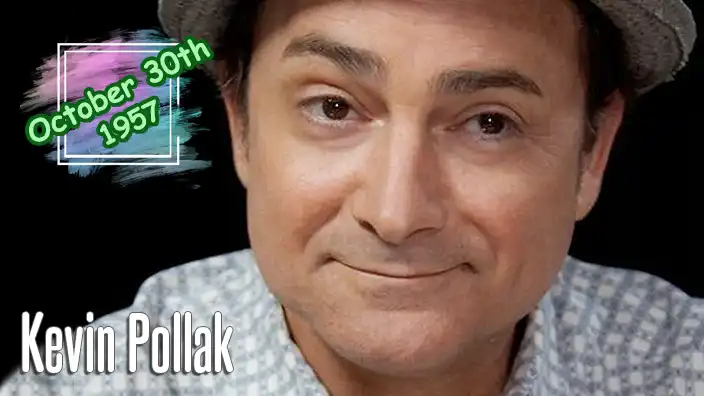
October 30, 1957, in San Francisco, California

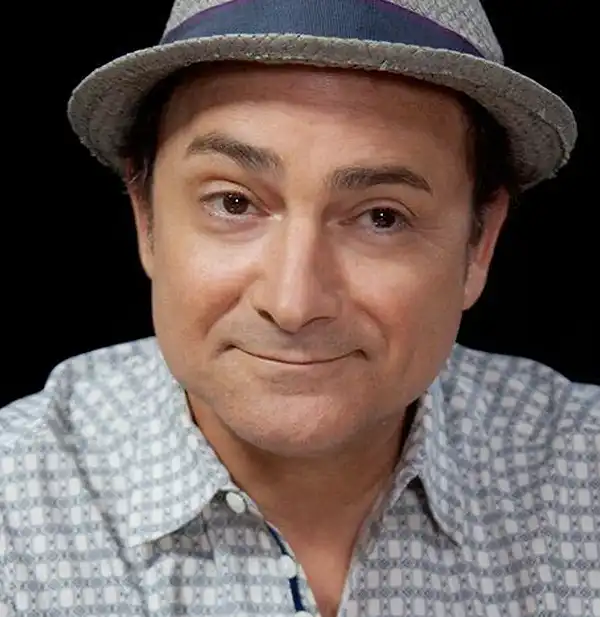
Kevin Elliot Pollak was born on October 30, 1957, in San Francisco, California, to Robert and Elaine Pollak. He grew up in a Jewish family in the San Francisco Bay Area, where humor became an important part of his personality from an early age. His childhood was spent largely in San Jose, California, and he attended Pioneer High School. Unlike many young people who spend years wondering what they want to do professionally, Pollak discovered his enthusiasm for entertaining audiences while still a child. He was fascinated by comedians, actors, and the ability of a skilled performer to transform an ordinary observation into something that could make an entire room laugh. His developing sense of humor would eventually become the foundation of a career spanning stand-up comedy, television, and motion pictures.
Pollak began performing stand-up comedy at the remarkably early age of ten, developing his confidence through appearances before live audiences. By his teenage years, he was already refining the timing, delivery, and observational humor that would become essential elements of his professional style. He was particularly interested in impressions, discovering that he could reproduce the voices, rhythms, and mannerisms of famous personalities with unusual accuracy. His early performances helped him understand the unpredictable relationship between a comedian and an audience, including the important lesson that a joke which seems hilarious while rehearsing in the bedroom can become considerably less amusing when delivered to a room full of people who refuse to laugh.
As his confidence developed, Pollak began performing in comedy clubs throughout California. He became a regular presence in the San Francisco comedy scene, sharing stages with other aspiring performers and learning how to handle difficult audiences. The stand-up circuit of the late 1970s and early 1980s was intensely competitive, requiring comedians to develop distinctive material and establish recognizable personalities. Pollak's combination of sharp observational humor, deadpan delivery, and celebrity impressions helped him distinguish himself from other performers. He was particularly skilled at creating the impression that he was simply having an amusing conversation with the audience, even when every pause and expression had been carefully calculated for maximum effect.
One of Pollak's most recognizable talents became his ability to impersonate celebrated actors. His impressions of Christopher Walken, William Shatner, Jack Nicholson, and other famous personalities demonstrated a remarkable ear for speech patterns and distinctive vocal habits. Rather than merely repeating familiar catchphrases, Pollak often captured the peculiar rhythms that made those performers instantly recognizable. His Christopher Walken impression became especially popular, reproducing the actor's unusual pauses and unpredictable emphasis with such accuracy that audiences could identify the subject almost immediately. His impressions were affectionate but frequently mischievous, and they became a popular feature of his stand-up performances and television appearances.
Pollak's professional career gained momentum when he moved to Los Angeles in the early 1980s, seeking greater opportunities in television and film. His stand-up performances attracted attention from entertainment industry professionals, leading to appearances on comedy programs and late-night television. He became a familiar guest on The Tonight Show Starring Johnny Carson, an important achievement during an era when appearing on Carson's program could significantly advance a comedian's career. The national exposure helped introduce Pollak's humor to a wider audience and demonstrated that his talents could translate successfully from intimate comedy clubs to television studios.
His transition into acting began with small television and film appearances during the 1980s. One of his earliest feature-film credits was Million Dollar Mystery in 1987, followed by a supporting role in Ron Howard's fantasy adventure Willow in 1988. The film, produced by George Lucas, featured Warwick Davis as a reluctant hero undertaking a dangerous journey through a magical world. Pollak portrayed Rool, one of the diminutive Brownies who accompany Willow on his adventure, alongside Rick Overton as Franjean. The characters provided comic relief during the film's more dramatic moments, allowing Pollak to combine his comedic instincts with the demands of a large-scale fantasy production. His appearance demonstrated that even in a world filled with sorcery, monsters, and magical prophecies, there was still room for a comedian with a talent for delivering sarcastic remarks.
Another important early film appearance came in Barry Levinson's 1990 drama Avalon, which explored the experiences of a Jewish immigrant family in Baltimore during the twentieth century. Pollak portrayed Izzy Kirk, contributing to an ensemble cast that included Armin Mueller-Stahl, Aidan Quinn, and Elizabeth Perkins. The film examined family relationships, cultural traditions, immigration, and the gradual changes that accompany assimilation into American society. Its emotional themes provided Pollak with an opportunity to demonstrate his dramatic abilities and participate in a production that drew upon experiences familiar to many American Jewish families. The performance helped establish him as more than a stand-up comedian occasionally appearing in movies.
Pollak's growing reputation as a dependable supporting actor led to increasingly prominent roles during the early 1990s. In 1991, he appeared in L.A. Story, the romantic comedy written by and starring Steve Martin, portraying Frank Swan. The film satirized the peculiarities of Los Angeles life, including celebrity culture, fashionable restaurants, and the sometimes absurd behavior of people living in the entertainment capital. Pollak's natural comedic timing fitted comfortably into the production's eccentric atmosphere. That same year, he appeared in Ricochet, the action thriller starring Denzel Washington and John Lithgow, demonstrating his ability to move between lighthearted comedy and more serious dramatic material.
In 1992, Pollak appeared in the popular western comedy City Slickers, starring Billy Crystal, Daniel Stern, and Bruno Kirby. The film followed three middle-aged friends who attempt to escape their ordinary routines by participating in a cattle drive, only to discover that life on the open range is considerably less comfortable than their vacation brochures suggested. Pollak played Ira Shalowitz, one of two brothers who operate an ice cream business and join the cattle-driving adventure. His performance contributed to the film's memorable ensemble of inexperienced cowboys, and he returned for the 1994 sequel, City Slickers II: The Legend of Curly's Gold. The films demonstrated his ability to make a lasting impression even when surrounded by established comedy stars.
One of Pollak's most significant dramatic roles arrived in 1992 with Rob Reiner's courtroom drama A Few Good Men. Based on Aaron Sorkin's stage play, the film starred Tom Cruise, Jack Nicholson, Demi Moore, Kevin Bacon, and Kiefer Sutherland. Pollak portrayed Lieutenant Sam Weinberg, a Navy lawyer assigned to assist Lieutenant Daniel Kaffee, played by Cruise, in defending two Marines accused of murdering a fellow serviceman at Guantanamo Bay. Weinberg was intelligent, practical, and frequently skeptical of Kaffee's methods, providing a grounded counterbalance to the younger attorney's confidence and occasional recklessness.
Pollak's performance in A Few Good Men demonstrated his ability to combine humor with serious dramatic material. Sam Weinberg often delivered dry observations that relieved tension without undermining the gravity of the courtroom proceedings. The character also brought emotional weight to the story through his concern for the accused Marines and the moral questions surrounding military discipline and responsibility. Pollak held his own alongside an exceptional cast, including Nicholson, whose explosive courtroom confrontation with Cruise became one of the most famous scenes in modern cinema. The film received four Academy Award nominations, including Best Picture, and became a major commercial success. For Pollak, it provided further evidence that he could contribute meaningfully to serious dramatic productions without abandoning his comedic instincts.
His ability to portray believable, ordinary characters became one of his greatest professional strengths. Unlike performers who relied on an imposing physical presence or extravagant theatrical gestures, Pollak often created memorable characters through understated reactions, carefully timed dialogue, and subtle expressions. He could portray the sensible friend, the nervous associate, the cynical professional, or the increasingly frustrated observer with equal conviction. These qualities made him particularly valuable in ensemble productions, where a supporting actor must contribute to the story without overwhelming the central performances.
In 1993, Pollak appeared in the comedy Grumpy Old Men, starring Jack Lemmon, Walter Matthau, and Ann-Margret. He portrayed Jacob Goldman, the son of Matthau's cantankerous character, Max Goldman. The film followed two elderly neighbors whose decades-long rivalry becomes even more complicated when a new woman moves into their neighborhood. Pollak's character provided a younger perspective on the feuding families and contributed to the film's mixture of sentimental humor and sharp verbal exchanges. He returned for the 1995 sequel, Grumpier Old Men, continuing his association with two legendary performers whose comedic partnership had entertained audiences for generations.
Pollak also appeared in the 1995 romantic comedy The Whole Nine Yards—rather, his later work would include that film in 2000—but the mid-1990s first brought one of his most recognizable dramatic achievements. In 1995, he joined the ensemble cast of Bryan Singer's crime thriller The Usual Suspects, portraying Todd Hockney, a cynical and suspicious criminal drawn into an increasingly complicated conspiracy. The film also starred Kevin Spacey, Gabriel Byrne, Benicio del Toro, Stephen Baldwin, and Chazz Palminteri. Its intricate storytelling, shifting loyalties, and famous central mystery made it one of the decade's most discussed crime films.
Todd Hockney was a particularly effective character for Pollak because his sarcastic personality and distrustful attitude fitted naturally with the actor's dry delivery. Hockney rarely appeared impressed by the dangerous people surrounding him, and his skeptical observations helped establish the uneasy relationships among the criminals. The film's elaborate narrative and unexpected conclusion encouraged audiences to reconsider everything they had witnessed, contributing to its lasting popularity. The Usual Suspects won Academy Awards for Best Original Screenplay and Best Supporting Actor, and Pollak's performance became an important part of its memorable ensemble. His involvement in both A Few Good Men and The Usual Suspects firmly established his credentials as a serious character actor.
The mid-1990s continued to provide substantial opportunities. Pollak appeared in Martin Scorsese's Casino in 1995, portraying Phillip Green, a businessman connected with the complicated financial arrangements surrounding a Las Vegas casino. The film starred Robert De Niro, Sharon Stone, and Joe Pesci and explored the relationships between organized crime, gambling, political influence, and personal ambition. Pollak's character occupied a relatively small but important position within the film's elaborate network of corruption and deception. Working under Scorsese's direction offered another opportunity to participate in a major production with some of Hollywood's most respected performers.
In 1996, Pollak appeared in the crime thriller The Underworld and the comedy House Arrest, continuing to alternate between dramatic and humorous material. He also portrayed a federal agent in the 1999 action thriller End of Days, starring Arnold Schwarzenegger. The film combined supernatural horror, religious mythology, and action sequences as Schwarzenegger's character attempted to prevent an apocalyptic catastrophe. Pollak played Bobby Chicago, a former police officer and close associate of the central character, providing both comic relief and dramatic support. Although the production was considerably different from his earlier courtroom and crime films, Pollak once again demonstrated his ability to adapt to the demands of a large-scale Hollywood project.
In 2000, Pollak starred alongside Bruce Willis and Matthew Perry in The Whole Nine Yards, a crime comedy about a mild-mannered dentist who discovers that his new neighbor is a notorious contract killer. Pollak portrayed Janni Gogolak, a dangerous Hungarian-American gangster whose criminal ambitions create considerable trouble for the other characters. The role allowed him to embrace a more exaggerated villainous personality while retaining his familiar comic timing. He returned in the 2004 sequel, The Whole Ten Yards, continuing the film series' combination of criminal intrigue and increasingly ridiculous situations. The productions demonstrated that Pollak could be equally entertaining as a nervous accomplice, a skeptical attorney, or a thoroughly unpleasant gangster.
His film career continued with appearances in productions such as 3000 Miles to Graceland, Dr. Dolittle 2, The Santa Clause 2, and The Santa Clause 3: The Escape Clause. In the Santa Clause films, Pollak portrayed Cupid, one of the legendary figures associated with the magical world of Christmas. The character allowed him to participate in family entertainment while maintaining the playful personality that audiences expected from his comedic performances. Moving from organized crime to Christmas mythology might seem like an unusual professional transition, but Pollak had already established that there were very few genres in which he could not find something entertaining to do.
Throughout his film career, Pollak maintained a strong connection with stand-up comedy. His performances continued to feature observational humor, impressions, and stories drawn from his experiences in Hollywood. Unlike comedians who abandon stand-up after achieving success in motion pictures, Pollak regarded live comedy as an essential part of his professional identity. Performing before an audience offered immediate feedback and the opportunity to experiment with new material, while his growing collection of celebrity acquaintances provided an almost unlimited supply of entertaining stories. His impressions of Christopher Walken and William Shatner remained particularly popular, often becoming highlights of interviews and comedy appearances.
Pollak also developed an interest in directing and producing. In 2015, he directed the documentary Misery Loves Comedy, which explored the personalities, experiences, and psychological motivations of professional comedians. The film featured interviews with numerous performers, including Tom Hanks, Amy Schumer, Jimmy Fallon, and many other prominent entertainers. Rather than simply presenting a collection of jokes, the documentary examined the relationship between humor, insecurity, personal experiences, and the desire to entertain others. It reflected Pollak's longstanding fascination with comedy as both an artistic discipline and a deeply personal form of expression.
Another significant contribution to entertainment came through Kevin Pollak's Chat Show, an online interview program that premiered in 2009. The series featured extended conversations with actors, comedians, filmmakers, and other entertainment professionals, often lasting considerably longer than conventional television interviews. Pollak's relaxed conversational approach allowed guests to discuss their careers, creative processes, personal experiences, and occasional professional disasters in unusual detail. The program became an influential example of long-form internet interviewing during a period when online entertainment was rapidly expanding. His ability to combine thoughtful questions with spontaneous humor helped establish the show as a popular destination for audiences interested in the personalities behind Hollywood productions.
Pollak's interviewing style reflected his extensive experience as both a comedian and actor. He understood the pressures of auditions, the uncertainties of professional performance, and the peculiar relationships that develop on film sets. This background allowed him to approach guests as fellow professionals rather than distant celebrities, frequently encouraging candid discussions that revealed aspects of their careers rarely explored during promotional interviews. The program also demonstrated that Pollak's talents extended beyond scripted entertainment. He could maintain an engaging conversation for hours, which is an impressive achievement in an industry where some interviews struggle to remain interesting for five minutes.
In 2010, Pollak competed in the World Series of Poker Main Event, reflecting his enthusiasm for the game and his interest in competitive strategy. Poker became one of his favorite recreational activities, and he participated in celebrity tournaments and other poker-related events. His ability to maintain a controlled expression and read the behavior of other players was perhaps not entirely unrelated to his acting experience. After spending decades pretending to be other people, concealing a disappointing poker hand may have seemed like a relatively straightforward assignment. Nevertheless, poker has a long history of reminding even experienced performers that confidence and a convincing expression are not always enough to win.
Pollak's television career included appearances in numerous programs, including The Drew Carey Show, Shark, Entourage, Mom, and Angel from Hell. He also starred in the short-lived CBS sitcom Work with Jerks and appeared in dramatic productions that allowed him to explore characters beyond his familiar comedic persona. His recurring television work demonstrated his continued appeal to producers seeking experienced performers who could bring humor, credibility, and personality to supporting roles. Over time, Pollak became one of those actors whose appearance in a production immediately suggested that the audience was about to encounter an interesting character.
One of the most celebrated chapters of Pollak's later career began in 2017 when he joined the Amazon Prime Video comedy-drama The Marvelous Mrs. Maisel. Created by Amy Sherman-Palladino, the series followed Miriam "Midge" Maisel, portrayed by Rachel Brosnahan, a New York housewife who unexpectedly discovers a talent for stand-up comedy during the late 1950s. Pollak played Moishe Maisel, the outspoken father of Midge's estranged husband, Joel, and a successful businessman involved in the garment industry. Moishe was opinionated, stubborn, deeply attached to his family, and frequently convinced that everyone around him would benefit enormously from listening to his advice.
Pollak's portrayal of Moishe Maisel became one of the show's most entertaining supporting performances. The character's loud opinions, family arguments, and exaggerated reactions provided frequent comic highlights, particularly during scenes involving his wife Shirley, played by Caroline Aaron. Their relationship captured the affectionate chaos of a long-married couple who could argue passionately about almost anything while remaining devoted to each other. Pollak brought warmth and humanity to a character who might otherwise have become an overbearing stereotype, allowing audiences to recognize the genuine concern beneath Moishe's bluster.
The Marvelous Mrs. Maisel received widespread critical acclaim for its writing, performances, costumes, production design, and recreation of mid-twentieth-century New York. The series won numerous major television awards and became one of Amazon's most successful original productions. Pollak's performance contributed to the show's richly developed family relationships, providing an entertaining contrast to Midge's increasingly unconventional career ambitions. Given Pollak's own background in stand-up comedy, participating in a series about the challenges of becoming a professional comedian offered a particularly appropriate opportunity. He had spent decades performing the very profession that the fictional Midge Maisel was struggling to master.
The series concluded in 2023 after five seasons, leaving behind a devoted audience and an impressive collection of awards. Pollak's Moishe Maisel remained memorable for his passionate family loyalty, argumentative personality, and ability to transform even an ordinary conversation into a minor domestic emergency. His performance demonstrated the value of an experienced character actor within a strong ensemble cast. While the series centered on Midge's professional journey, the supporting characters helped create the complicated family environment that made her story believable and entertaining.
In addition to acting and interviewing, Pollak published his memoir, How I Slept My Way to the Middle: Secrets and Stories from Stage, Screen, and Interwebs, in 2012. The book combined personal recollections, Hollywood anecdotes, and reflections on his professional experiences, offering readers a humorous account of a career that had included both major successes and the unpredictable realities of show business. Its deliberately self-deprecating title reflected Pollak's ability to laugh at the entertainment industry's obsession with fame and status. Rather than presenting himself as an unstoppable Hollywood superstar, he embraced the perspective of a working actor who had enjoyed an extraordinary variety of opportunities while maintaining a healthy appreciation for life's absurdities.
Pollak has also continued appearing in independent films and television productions, demonstrating his preference for varied material rather than restricting himself to major studio projects. His credits include The Front Runner, The Late Bloomer, Three Christs, and Injustice, along with numerous guest appearances and voice performances. His ability to move between comedy, drama, animation, and documentary projects has helped sustain his career through major changes in the entertainment industry. As streaming services expanded and traditional television networks adapted to new viewing habits, Pollak remained a familiar presence across different forms of entertainment.
His personal life has generally attracted less attention than his professional activities. Pollak married actress and comedian Lucy Webb in 1995, and their marriage ended in divorce in 2010. Although he has occasionally discussed relationships and personal experiences in interviews and comedy performances, he has largely preferred to let his work remain the center of public attention. His interests outside entertainment have included poker, sports, and maintaining friendships with fellow performers. His long career has provided opportunities to work alongside some of the most respected actors and filmmakers in Hollywood, many of whom have also appeared as guests on his interview program.
Perhaps the most distinctive quality of Pollak's acting is his ability to make supporting characters feel like fully developed individuals. Whether portraying Lieutenant Sam Weinberg in A Few Good Men, Todd Hockney in The Usual Suspects, Phillip Green in Casino, or Moishe Maisel in The Marvelous Mrs. Maisel, he brings recognizable human behavior to characters who might otherwise exist merely to advance the plot. His performances frequently depend on subtle expressions, precise timing, and the ability to deliver dialogue as though the character has been thinking about the situation long before the camera began recording.
Pollak's career also illustrates the advantages of versatility in an unpredictable profession. He began as a child comedian, developed into an accomplished impressionist, established himself as a dependable dramatic actor, became a successful interviewer, directed a documentary about comedy, and eventually found renewed television recognition through one of streaming television's most acclaimed series. Each stage of his career built upon skills developed during earlier experiences, demonstrating that comedy and dramatic acting are not necessarily separate disciplines. Both require an understanding of human behavior, emotional truth, and the precise moment when a carefully chosen word or expression can change the atmosphere of a scene.
For audiences who remember the tense courtroom proceedings of A Few Good Men, Pollak will always be the practical attorney trying to keep Tom Cruise's character from making another questionable decision. For fans of The Usual Suspects, he remains the suspicious Todd Hockney, caught in one of cinema's most elaborate criminal mysteries. Viewers of The Marvelous Mrs. Maisel know him as the loud, loving, and frequently exasperating Moishe Maisel, a man whose opinions could probably be heard several blocks away without the assistance of a microphone.
Yet Kevin Pollak's greatest achievement may be the way he has maintained a recognizable personality while disappearing into such different characters. He possesses the rare ability to make an audience laugh without appearing to try particularly hard, while also convincing viewers that the same performer could be a lawyer, criminal, businessman, or worried father. His career demonstrates that a supporting actor can be every bit as essential to a successful production as the person whose name appears at the top of the poster.
And if Hollywood ever runs out of roles for Kevin Pollak, he could probably continue working simply by impersonating the actors who have retired.
Although Christopher Walken might reasonably ask for a percentage of the proceeds.
References & Sources