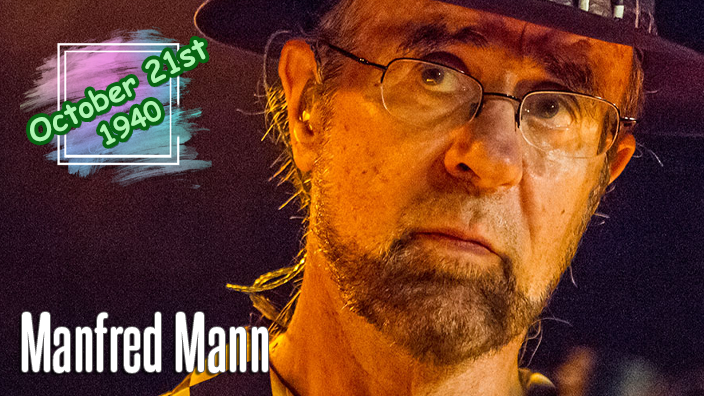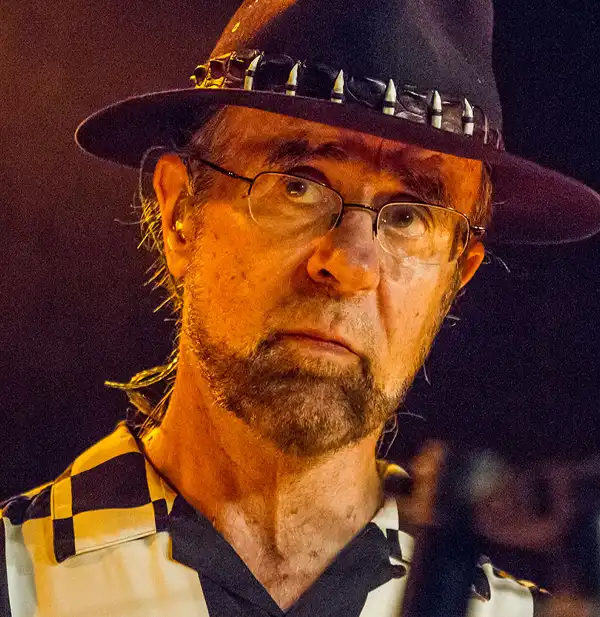
Manfred Mann, born Manfred Sepse Lubowitz on October 21, 1940, in Johannesburg, South Africa, is a keyboardist, composer, producer, and bandleader whose musical career has stretched across several generations of popular music. Best known as the founder of the British Invasion group Manfred Mann and the later progressive rock outfit Manfred Mann's Earth Band, he has achieved something relatively unusual in the music industry: major success with distinctly different bands in different decades. His recordings have ranged from catchy 1960s pop singles to ambitious synthesizer-driven rock, while his interpretations of songs by Bob Dylan and Bruce Springsteen have become classics in their own right. Unlike many musicians who spend their careers attempting to escape one successful song, Mann managed to accumulate several, presumably making it rather difficult to decide which one to play when somebody requests his greatest hit.
Growing up in Johannesburg, Manfred Mann developed an early interest in music, particularly jazz, which would remain an important influence throughout his career. He studied classical music at the University of the Witwatersrand and performed in local clubs and coffeehouses, developing his abilities as a pianist while exploring the improvisational possibilities of jazz. His musical interests included artists such as Miles Davis, John Coltrane, Dave Brubeck, and Bill Evans, whose innovative approaches helped shape his understanding of composition and performance. During his early years, Mann also played alongside future South African jazz legend Hugh Masekela. Although his upbringing provided opportunities to develop his musical abilities, he became increasingly dissatisfied with the restrictions of apartheid-era South Africa and the limited prospects for pursuing the kind of musical career he wanted. In 1961, he left Johannesburg for England, exchanging the familiar surroundings of his homeland for London's rapidly developing music scene.
Upon arriving in Britain, Mann initially supported himself through jazz performances, teaching, and music journalism. He adopted the professional name Manfred Manne, taking inspiration from American jazz drummer Shelly Manne, before eventually dropping the final letter to become Manfred Mann. The change was relatively modest compared with some of the elaborate stage names adopted by musicians, but it certainly proved memorable. London in the early 1960s was becoming an exciting center for blues, rhythm and blues, jazz, and emerging British rock music. Young musicians were experimenting with American musical influences, and audiences were increasingly enthusiastic about energetic live performances. Mann's background in jazz distinguished him from many aspiring pop performers, giving him a sophisticated understanding of harmony, rhythm, and improvisation that would become an important characteristic of his future bands.
In 1962, Mann joined forces with drummer and fellow musician Mike Hugg to establish a group initially known as the Mann-Hugg Blues Brothers. Despite the promising name, which sounded rather like an organization dedicated to rescuing neglected harmonicas, the band eventually became known simply as Manfred Mann. Its early lineup developed around Mann's keyboards, Hugg's drums, Paul Jones's distinctive lead vocals, Mike Vickers's instrumental versatility, and bassist Dave Richmond, with guitarist Tom McGuinness joining later. The group combined rhythm and blues, jazz influences, and contemporary pop, producing a sound that was more musically adventurous than many straightforward beat groups of the period. Their early performances attracted attention, and they secured a recording contract with His Master's Voice, part of EMI. With British popular music preparing to conquer international charts, Manfred Mann was well positioned to participate in the rapidly expanding British Invasion.
The group's first major breakthrough came in 1964 with "5-4-3-2-1," an energetic recording that became associated with the popular British television program Ready Steady Go! The song's driving rhythm, harmonica, and distinctive arrangement helped introduce the band to a wider audience, establishing them as one of Britain's promising new acts. Later that year, Manfred Mann achieved international success with "Do Wah Diddy Diddy," a song originally recorded by the American group the Exciters. Their infectious interpretation reached number one on both the British and American singles charts, becoming one of the defining recordings of the British Invasion. Its irresistible chorus and cheerful nonsense syllables demonstrated that a song did not necessarily require complicated lyrics to become a worldwide sensation. Indeed, generations of listeners have happily sung along without ever feeling compelled to investigate precisely what a "diddy" might be.
The success of "Do Wah Diddy Diddy" transformed Manfred Mann into an internationally recognized group, placing them alongside other successful British acts such as the Beatles, the Rolling Stones, the Animals, and the Kinks. However, the band's musical identity was somewhat different from those of its contemporaries. While many groups concentrated primarily on guitar-driven rock, Manfred Mann incorporated prominent keyboards, harmonica, jazz-influenced arrangements, and rhythm and blues into its recordings. Mann's musicianship helped provide the band with a distinctive sound, even though his relatively reserved stage presence contrasted with the energetic personalities of some lead singers. The group followed its breakthrough with recordings including "Sha La La," "Come Tomorrow," and "If You Gotta Go, Go Now," demonstrating an ability to interpret material from different musical sources while maintaining a recognizable style.
One of Manfred Mann's most memorable recordings arrived in 1966 with "Pretty Flamingo," a song written by Mark Barkan that became another number-one hit in Britain. Featuring a memorable melody and romantic lyrics, the recording captured the lighter side of the band's musical personality. The song also featured bass playing by Jack Bruce, who would later become internationally famous as a member of the rock supergroup Cream alongside Eric Clapton and Ginger Baker. Bruce's association with Manfred Mann illustrates the remarkable connections between musicians working within Britain's rapidly evolving music scene. Many performers moved between groups, collaborated on recordings, and helped establish the foundations of modern rock music. For audiences, "Pretty Flamingo" was simply another excellent pop record, although the title undoubtedly left a few people wondering whether the singer had fallen in love with an actual bird.
In 1966, lead singer Paul Jones departed Manfred Mann to pursue a solo career, creating an important turning point in the group's history. Rather than disbanding, Mann recruited Mike d'Abo as the new lead vocalist, beginning another successful chapter. The revised lineup moved further toward polished pop and psychedelic influences while continuing to explore more adventurous musical arrangements. Bassist Klaus Voormann, who had close associations with the Beatles, also became part of the group. During this period, Manfred Mann recorded several successful singles, including "Just Like a Woman," "Semi-Detached, Suburban Mr. James," and "Ha! Ha! Said the Clown." The band demonstrated an impressive ability to adapt to changing musical tastes without abandoning the instrumental creativity that had distinguished its earlier recordings.
Another major success came in 1968 with "Mighty Quinn," also known as "Quinn the Eskimo," written by Bob Dylan. Manfred Mann's lively interpretation reached number one in Britain and became an international hit, introducing the song to audiences who might not otherwise have encountered Dylan's composition. The recording was particularly significant because it demonstrated Mann's talent for recognizing the commercial potential of songs written by other artists and transforming them through distinctive arrangements. Rather than simply copying the original material, he approached songs as opportunities for musical reinterpretation, adding new rhythms, instrumental textures, and arrangements. This philosophy would become an important part of his later success with Manfred Mann's Earth Band. Bob Dylan supplied the words, Manfred Mann supplied the musical excitement, and listeners were left to decide exactly what the mysterious Quinn was supposed to be doing.
By 1969, however, Mann had grown increasingly dissatisfied with the limitations of commercial pop music. Although the group had achieved considerable success, his personal interests remained closely connected to jazz, experimentation, and more challenging musical compositions. He dissolved the original Manfred Mann group and reunited with Mike Hugg to establish Manfred Mann Chapter Three, an ambitious project combining jazz-rock, brass arrangements, improvisation, and progressive musical ideas. The new group released two studio albums, Manfred Mann Chapter Three in 1969 and Volume Two in 1970. Although these recordings did not achieve the commercial success of the earlier pop singles, they demonstrated Mann's determination to pursue artistic development rather than repeat a successful formula indefinitely. For a musician accustomed to the pop charts, it was a bold decision, rather like leaving a successful restaurant business to open a café specializing in experimental soup.
The musical experimentation of Manfred Mann Chapter Three provided an important bridge to Mann's next major project, Manfred Mann's Earth Band, formed in 1971. The new group combined progressive rock, blues, hard rock, and sophisticated keyboard arrangements, creating a more expansive sound than the original 1960s band. Its early lineup featured Manfred Mann on keyboards, Mick Rogers on guitar and vocals, Colin Pattenden on bass, and Chris Slade on drums. The group embraced the growing possibilities of electronic keyboards and synthesizers, instruments that were transforming the sound of rock music during the 1970s. Mann became particularly associated with the Minimoog synthesizer, using its expressive electronic tones to create distinctive solos and atmospheric musical passages. His keyboard playing helped establish the Earth Band's recognizable sound, blending jazz-inspired improvisation with the power and energy of progressive rock.
Throughout the early 1970s, Manfred Mann's Earth Band released a series of albums that demonstrated its growing musical ambition. Recordings such as Manfred Mann's Earth Band in 1972, Solar Fire in 1973, The Good Earth in 1974, and Nightingales & Bombers in 1975 explored a wide range of musical ideas. The band developed a reputation for elaborate arrangements, extended instrumental passages, and imaginative interpretations of songs by other writers. Their version of Bruce Springsteen's "Spirit in the Night" demonstrated Mann's growing interest in Springsteen's compositions, while other recordings explored themes involving nature, technology, and contemporary society. Although these albums attracted a dedicated audience, the group had not yet achieved the extraordinary international success that would arrive later in the decade. The ingredients were present, however: accomplished musicians, innovative keyboards, and a bandleader with an excellent ear for recognizing songs that deserved a completely different musical treatment.
That breakthrough arrived with the 1976 album The Roaring Silence, which featured Manfred Mann's Earth Band's celebrated interpretation of Bruce Springsteen's "Blinded by the Light." Springsteen had originally recorded the song for his 1973 debut album, Greetings from Asbury Park, N.J., but the Earth Band transformed it into an elaborate progressive rock recording featuring powerful vocals, synthesizer passages, and an arrangement that gave the composition a dramatically different character. With Chris Thompson delivering the lead vocal, the song reached number one on the American Billboard Hot 100 in 1977, becoming the band's biggest international success. Remarkably, it remains the only Springsteen-written song to reach number one on that chart. The recording also became famous for its frequently misunderstood lyrics, inspiring countless enthusiastic listeners to sing words that bear only a passing resemblance to the actual composition. Few rock songs have encouraged so many people to sing so confidently while being so spectacularly uncertain about what they are singing.
The enormous success of "Blinded by the Light" established Manfred Mann's Earth Band as a major international rock act and introduced Mann's musicianship to another generation of listeners. The album The Roaring Silence also became a significant commercial success, while the group's reputation for powerful live performances continued to grow. Mann's arrangement demonstrated his ability to combine accessible melodies with complex musical structures, creating recordings that appealed to mainstream radio audiences and progressive rock enthusiasts alike. The achievement was particularly impressive because it came more than a decade after his first international number-one hit with "Do Wah Diddy Diddy." Few musicians have enjoyed such substantial chart success with different groups across separate musical eras, and even fewer have managed it while keeping essentially the same name on the record sleeve.
Manfred Mann's Earth Band continued its success with the 1978 album Watch, which included the popular recording "Davy's on the Road Again." The song, originally written by John Simon and Robbie Robertson, became another example of Mann's ability to transform existing material into a distinctive performance. The album also featured a new version of "Mighty Quinn," connecting the Earth Band's progressive rock identity with Mann's earlier pop success. During the following years, the group experienced personnel changes and explored new musical directions, releasing albums including Angel Station in 1979, Chance in 1980, and Somewhere in Afrika in 1982. The latter reflected Mann's continuing interest in South Africa and incorporated African musical influences while addressing political and social issues associated with apartheid. His music increasingly demonstrated that progressive rock could provide a platform for subjects extending beyond conventional romantic themes.
The 1980s brought further recordings, including the album Criminal Tango in 1986 and Masque in 1987. Although changing musical fashions affected the commercial fortunes of many established rock groups, Mann continued developing new arrangements and experimenting with electronic instruments. His career had already survived the transition from British beat music to psychedelic pop, progressive rock, and synthesizer-driven recordings, and he showed little inclination to abandon music simply because popular tastes had changed again. Later projects included Soft Vengeance in 1996 and 2006, released under the name Manfred Mann '06 with Manfred Mann's Earth Band. His willingness to explore new sounds reflected a lifelong interest in musical creativity rather than dependence upon nostalgia, even though audiences naturally continued requesting the famous recordings that had first attracted their attention.
Manfred Mann's music has also enjoyed a substantial life beyond record sales and concert performances. His recordings have appeared in films, television programs, documentaries, and other entertainment productions, introducing his work to audiences who may never have encountered the original releases. IMDb credits connect his music with productions including The Philadelphia Experiment in 1984, L.A. Story in 1991, and Kick-Ass in 2010. The original Manfred Mann group also contributed music to the 1968 British film Up the Junction, demonstrating the band's involvement with popular entertainment beyond the recording studio. These appearances have helped preserve the familiarity of his songs, ensuring that recordings created decades earlier continue reaching new listeners. A successful song, it seems, can enjoy an impressively long working life without ever requesting retirement benefits.
One of the most distinctive aspects of Manfred Mann's career is his reputation as a musician who frequently achieved his greatest commercial successes by interpreting other people's compositions. His recordings of songs by Bob Dylan, Bruce Springsteen, and other writers demonstrate an approach that treats an existing composition as the starting point for a new musical creation. Rather than simply reproducing the original arrangement, Mann often changes its tempo, instrumentation, structure, and overall atmosphere. This ability has occasionally overshadowed his own accomplishments as a keyboardist and composer, something he has acknowledged in interviews. Yet the skill involved in recognizing a song's possibilities and developing an arrangement that connects with millions of listeners should not be underestimated. After all, plenty of musicians can play a familiar song; considerably fewer can transform it into a recording that becomes the version everyone remembers.
Mann's influence on keyboard playing and synthesizer-driven rock is another important part of his musical legacy. His background in jazz provided a foundation for improvisation, while his willingness to embrace electronic instruments helped expand the musical possibilities available to rock bands. During an era when guitarists frequently dominated the stage, Mann demonstrated that keyboards could provide equally powerful melodic leads, distinctive textures, and adventurous solos. His playing was generally less theatrical than that of progressive rock keyboardists such as Keith Emerson or Rick Wakeman, but his emphasis on carefully developed sounds and musical expression created a recognizable identity. In interviews, Mann has described himself primarily as a jazz musician, emphasizing the importance of his keyboard playing even though the public often associates him most strongly with hit singles. Apparently, becoming internationally famous for catchy pop songs was an unexpected occupational hazard of being a serious musician.
Throughout his long career, Manfred Mann has maintained a relatively private personal life compared with many internationally recognized rock performers. While his professional achievements have been extensively documented, he has generally preferred to concentrate public attention on his music rather than celebrity gossip. His years in the recording industry have included collaborations with numerous accomplished musicians, changing band lineups, and performances before audiences around the world. The continuing popularity of Manfred Mann's Earth Band has demonstrated the enduring appeal of its mixture of classic rock, progressive arrangements, and memorable songs. For longtime fans, the music provides a connection to the excitement of the 1960s and 1970s, while younger listeners continue discovering the recordings through radio, streaming services, film soundtracks, and family record collections.
Manfred Mann's contribution to popular music is remarkable not simply because of the number of successful recordings associated with his name, but because of the extraordinary range of musical styles he has explored. From South African jazz clubs to London's British Invasion scene, from experimental jazz-rock to international progressive rock success, he has repeatedly reinvented his musical approach while retaining a distinctive creative identity. His career illustrates the importance of adaptability, musical curiosity, and the willingness to pursue new ideas even after achieving commercial success. The songs remain familiar, the keyboard performances continue to impress, and the influence of his recordings can still be heard across generations of rock music. Whether listeners remember "Do Wah Diddy Diddy," "Pretty Flamingo," "Mighty Quinn," or "Blinded by the Light," they are celebrating the work of a musician who helped shape popular music across several decades. And perhaps the greatest achievement of all is that after so many years, people are still trying to work out those lyrics to "Blinded by the Light."