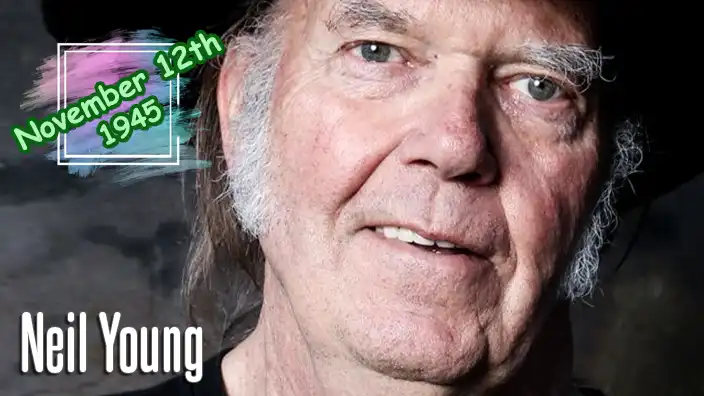
November 12, 1945, in Toronto, Canada

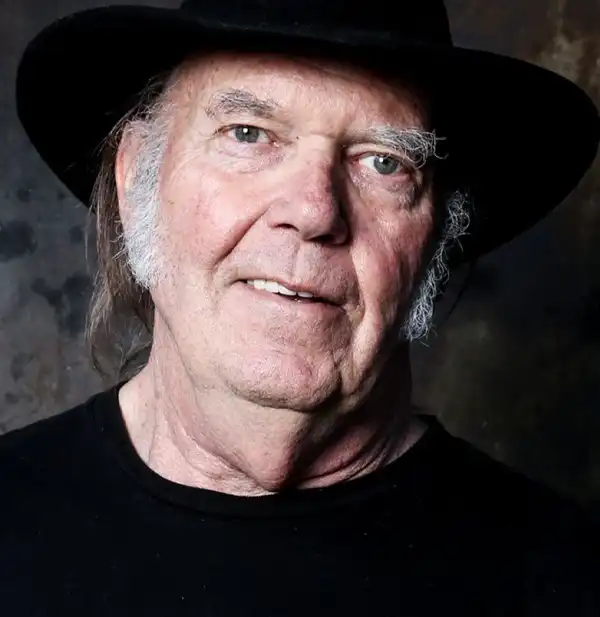
Neil Percival Young was born on November 12, 1945, in Toronto, Ontario, Canada, and grew up in a family where writing, creativity, and independent thinking were familiar parts of everyday life. His father, Scott Young, was a respected Canadian sports journalist and author, while his mother, Edna "Rassy" Young, encouraged her son's artistic interests. Neil spent part of his childhood in the small Ontario community of Omemee before moving to Winnipeg, Manitoba, following his parents' separation. His early years were not without difficulties, including serious childhood illnesses that interrupted his education and required considerable recovery time. Nevertheless, Young developed a fascination with music that would eventually become the defining passion of his life. Nobody could have predicted that the quiet Canadian boy would become one of rock music's most influential performers, although his future determination to do things his own way was already beginning to emerge.
Neil Young's childhood included significant health challenges, particularly a bout of polio that affected him during the early 1950s. The illness required a lengthy recovery and left him with experiences that would shape his understanding of vulnerability, determination, and physical limitations. He also experienced epilepsy and diabetes, conditions that presented additional difficulties throughout his life. During his childhood, Young became interested in musical instruments, beginning with the ukulele before progressing to other stringed instruments and eventually the guitar. His fascination with popular music developed during the emergence of rock and roll, when performers such as Elvis Presley, Chuck Berry, and Little Richard were transforming the musical landscape. The energetic rhythms and rebellious spirit of early rock music captured Young's imagination, while folk and country influences helped shape the distinctive musical style he would later develop.
During his teenage years in Winnipeg, Neil Young became increasingly involved in local music. He played in several bands, most notably the Squires, an instrumental rock group that performed at dances, clubs, and community events. The group drew inspiration from popular instrumental bands such as the Shadows, while Young gradually developed his own guitar-playing technique and songwriting interests. The Squires recorded early material, including the instrumental compositions The Sultan and Aurora, providing Young with his first experience of professional recording. Although these recordings attracted limited attention at the time, they represented the beginning of a career that would eventually produce an enormous catalog of influential music. Like many aspiring musicians, Young discovered that earning a living from rock and roll required considerable persistence, unreliable transportation, and a willingness to perform wherever someone would provide a stage and an electrical outlet.
Young's early musical adventures brought him into contact with several performers who would later become important figures in popular music. While working in Canadian clubs and coffeehouses, he encountered musicians including Joni Mitchell and Stephen Stills, developing friendships and professional connections that would influence his future career. He also performed with the Mynah Birds, a Toronto-based group that included future funk musician Rick James and bassist Bruce Palmer. The band attracted interest from Motown Records but disbanded before establishing a successful recording career. Young subsequently decided to pursue opportunities in the United States, traveling to California with Palmer in a black Pontiac hearse that had become one of his most unusual possessions. For a musician hoping to make a name in the entertainment industry, arriving in Los Angeles in a hearse was certainly an unconventional entrance. Then again, Neil Young was never particularly concerned with making a conventional impression.
In 1966, Neil Young helped form Buffalo Springfield alongside Stephen Stills, Richie Furay, Bruce Palmer, and Dewey Martin. The group became one of the defining bands of the emerging folk-rock movement, combining traditional folk influences with electric guitars, sophisticated vocal harmonies, and socially conscious songwriting. Buffalo Springfield developed a distinctive sound that reflected the cultural changes taking place during the 1960s, when younger audiences increasingly embraced music addressing political unrest, personal freedom, and social uncertainty. The band's name came from a steamroller manufactured by the Buffalo-Springfield Roller Company, an appropriately unusual source of inspiration for musicians who would become associated with one of the most creative periods in American rock history.
Buffalo Springfield achieved widespread recognition with For What It's Worth, written by Stephen Stills and released in late 1966. The song became closely associated with the protest movements and cultural tensions of the decade, although its original inspiration involved confrontations surrounding the Sunset Strip curfew demonstrations in Los Angeles. Young contributed important guitar work to the recording and became increasingly recognized for his distinctive musical approach. His own compositions for the band included Mr. Soul, Expecting to Fly, and Broken Arrow, songs that demonstrated his interest in unusual arrangements, introspective lyrics, and emotionally expressive performances. Although Buffalo Springfield remained together for only a relatively short period, its influence on folk-rock, country-rock, and later alternative music proved substantial.
Internal disagreements and changing musical ambitions eventually contributed to Buffalo Springfield's breakup in 1968. Young had already demonstrated a restless creative personality, sometimes leaving the group temporarily before returning to participate in performances and recording sessions. His desire for artistic independence made a permanent solo career increasingly attractive. Following the band's dissolution, he began recording material under his own name, releasing his self-titled debut album in 1968. The album featured a mixture of folk, rock, and experimental arrangements, establishing several of the musical characteristics that would become associated with his later recordings. Although it did not immediately achieve major commercial success, it demonstrated Young's potential as a songwriter and independent recording artist.
Neil Young's career took an important turn when he began working with musicians Danny Whitten, Billy Talbot, and Ralph Molina, members of a band originally known as the Rockets. Together they formed the foundation of Crazy Horse, the group that would become one of Young's most enduring musical partnerships. Their first major collaboration, Everybody Knows This Is Nowhere (1969), introduced a raw, energetic guitar sound that contrasted sharply with the polished arrangements popular among many contemporary rock performers. The album included Cinnamon Girl, Down by the River, and Cowgirl in the Sand, three compositions that became essential parts of Young's musical legacy. The extended guitar passages on Down by the River and Cowgirl in the Sand demonstrated his preference for emotional expression over technical perfection. Young's guitar solos could be repetitive, distorted, and deliberately rough, but they possessed an intensity that made conventional musical neatness seem almost unnecessary.
Crazy Horse became particularly important because the group's loose, instinctive playing complemented Young's spontaneous creative approach. Rather than emphasizing elaborate studio perfection, the musicians frequently concentrated on capturing the emotional energy of a performance. Their recordings could sound raw and unpredictable, with Young's guitar weaving through arrangements that occasionally seemed on the verge of falling apart. Yet this apparent disorder became one of the group's defining strengths, influencing generations of rock musicians who admired the honesty and immediacy of their sound. Young's long association with Crazy Horse demonstrated his belief that musical chemistry and emotional authenticity were often more important than technical precision. In other words, if a guitar sounded as though it had been dragged behind a truck for several miles, Young might consider that an improvement.
In 1969, Neil Young joined David Crosby, Stephen Stills, and Graham Nash, transforming their successful trio into Crosby, Stills, Nash & Young. The collaboration brought together four highly individual musicians whose contrasting personalities and songwriting approaches created both extraordinary music and considerable internal tension. Their sophisticated vocal harmonies, acoustic arrangements, and socially conscious material made them one of the most influential groups of the late 1960s and early 1970s. Young's addition introduced a more unpredictable electric guitar style and an additional songwriting voice, helping broaden the group's musical possibilities. The musicians performed at the Woodstock festival in August 1969, participating in an event that became one of the defining cultural moments of the decade.
Crosby, Stills, Nash & Young released Déjà Vu in 1970, an enormously successful album featuring songs such as Teach Your Children, Our House, Carry On, and Young's composition Helpless. The album combined folk-rock, country influences, sophisticated harmonies, and personal songwriting, reflecting the group's considerable collective talent. However, the musicians' strong personalities and competing artistic interests created ongoing difficulties, and their professional relationships frequently shifted between collaboration and disagreement. Young continued maintaining his solo career while participating in group projects, an arrangement that allowed him considerable creative independence. Crosby, Stills, Nash & Young became famous not only for their beautiful harmonies but also for the remarkable ability of four talented musicians to disagree about almost everything while occasionally producing extraordinary music together.
One of Young's most significant contributions to Crosby, Stills, Nash & Young was Ohio, written in response to the killing of four students by members of the Ohio National Guard during an antiwar protest at Kent State University on May 4, 1970. Deeply affected by the tragedy, Young composed the song shortly afterward, and the group recorded and released it with unusual urgency. The recording became one of the most powerful protest songs of the Vietnam War era, expressing anger, grief, and disbelief over the deaths. Its direct language and emotionally charged performance demonstrated Young's willingness to address controversial events through music. Ohio remains an important example of how popular songwriting can respond immediately to historical events and preserve the emotional atmosphere of a particular moment.
Young's solo career continued developing alongside his group activities, with After the Gold Rush (1970) becoming one of his most celebrated albums. The recording included Only Love Can Break Your Heart, Southern Man, Don't Let It Bring You Down, and the haunting title track. The album combined acoustic folk arrangements, electric rock, and deeply personal songwriting, exploring themes of love, loss, environmental concern, and social injustice. Its unusual atmosphere and emotional directness helped establish Young as one of the most distinctive singer-songwriters of his generation. His high, sometimes fragile singing voice was particularly effective in conveying vulnerability, even when his lyrics addressed large and complicated subjects. Young's voice was never likely to be mistaken for that of a polished traditional crooner, but its unmistakable character became one of his greatest musical strengths.
The release of Harvest in 1972 transformed Neil Young into an international superstar. Recorded with contributions from musicians including Linda Ronstadt, James Taylor, and members of the Stray Gators, the album blended country, folk, and rock influences into a collection of deeply personal songs. Its most successful single, Heart of Gold, reached number one on the Billboard Hot 100, becoming Young's only American number-one single. Other memorable tracks included Old Man, The Needle and the Damage Done, and Alabama. The album itself reached number one on the Billboard 200 and became one of the defining recordings of the early 1970s. Its commercial success demonstrated that Young's introspective songwriting and understated musical arrangements could appeal to enormous audiences without sacrificing their emotional authenticity.
One of the most memorable songs on Harvest, Old Man, was inspired by Louis Avila, the caretaker of Young's Broken Arrow Ranch in California. The song reflected Young's observations about the similarities between people from different generations, exploring loneliness, relationships, and the desire for emotional connection. Its gentle acoustic arrangement and thoughtful lyrics helped make it one of his most enduring compositions. The Needle and the Damage Done, meanwhile, addressed the destructive effects of heroin addiction, drawing partly on Young's experiences with musicians whose lives had been affected by substance abuse. The song's restrained performance made its message particularly powerful, demonstrating that a musician did not need elaborate production or overwhelming volume to communicate profound sadness.
Ironically, the enormous commercial success of Harvest left Young uncomfortable with the expectations surrounding his career. Rather than simply producing similar albums to satisfy record companies and audiences, he deliberately pursued more challenging and unconventional material. This decision became one of the defining characteristics of his professional life. While many musicians would have enthusiastically repeated the formula responsible for a number-one album, Young seemed determined to investigate every musical direction except the one most likely to guarantee another commercial triumph. Record executives probably developed a nervous twitch whenever he announced that he had an exciting new idea.
The early 1970s also brought personal tragedy and professional difficulties. Danny Whitten, the guitarist whose work had been central to Crazy Horse, died in November 1972 following struggles with substance abuse. The death deeply affected Young, who had already witnessed the destructive consequences of addiction among people close to him. Roadie Bruce Berry also died from a drug overdose in 1973, adding to the atmosphere of grief surrounding Young's musical circle. These experiences influenced a series of darker recordings that explored loss, despair, and emotional exhaustion. Rather than hiding his distress behind cheerful commercial arrangements, Young incorporated these difficult emotions directly into his music.
Albums including Time Fades Away (1973), On the Beach (1974), and Tonight's the Night (recorded largely in 1973 and released in 1975) became associated with one of the most emotionally challenging periods of Young's career. Often described collectively as the Ditch Trilogy, these recordings departed sharply from the polished accessibility of Harvest. The music was frequently raw, somber, and deliberately uncomfortable, reflecting Young's personal experiences and dissatisfaction with conventional expectations. Although some listeners initially struggled with the material, the albums subsequently gained considerable critical recognition for their honesty and artistic courage. Tonight's the Night, in particular, became admired for its unfiltered emotional atmosphere and its willingness to confront grief without offering easy reassurance.
Young returned to more accessible acoustic and country-rock arrangements with Comes a Time (1978), an album that featured contributions from Nicolette Larson and other musicians. The recording included songs such as Four Strong Winds, written by Canadian songwriter Ian Tyson, and the title track, which reflected Young's enduring interest in traditional musical forms. During this period, he continued moving between acoustic performances and louder electric collaborations with Crazy Horse, refusing to establish a permanent distinction between the two approaches. His career demonstrated that folk and rock music could coexist within the work of a single artist, even when their audiences sometimes preferred different versions of his musical personality.
In 1979, Neil Young released Rust Never Sleeps, one of the most influential albums of his career. The recording combined acoustic and electric performances, exploring the changing nature of rock music and the relationship between artistic creativity and commercial success. Songs including My My, Hey Hey (Out of the Blue) and Hey Hey, My My (Into the Black) examined the enduring appeal of rock and roll and the challenges of remaining creatively relevant. The album's distorted electric guitar sound anticipated aspects of the alternative rock and grunge movements that would emerge during the following decade. Young's willingness to embrace musical imperfection, feedback, and emotional intensity helped establish him as an important influence on younger musicians searching for alternatives to polished mainstream rock.
The 1980s became one of the most unpredictable periods in Neil Young's recording career. Rather than concentrating on a single musical style, he explored electronic music, rockabilly, country, blues, and other genres, often surprising listeners and frustrating commercial expectations. His 1982 album Trans incorporated synthesizers, electronic effects, and processed vocals, reflecting his interest in technology and communication. The recording was partly influenced by his experiences as a father of children with communication challenges, giving its unusual musical approach a personal significance that was not immediately apparent to every listener. Young followed this with Everybody's Rockin' (1983), a rockabilly-inspired album that represented another dramatic stylistic departure.
Young's unpredictable artistic decisions contributed to a dispute with Geffen Records, which filed a lawsuit alleging that some of his recordings were commercially unrepresentative of his established musical identity. The dispute became one of the more unusual conflicts between a major recording artist and a record company, illustrating the tension between commercial expectations and creative independence. Young continued pursuing his preferred musical directions rather than simply returning to the sound that had produced his greatest commercial successes. The episode reinforced his reputation as a musician who valued artistic freedom above industry approval. Few performers have managed to frustrate a record company by making music that was considered insufficiently characteristic of themselves, but Young accomplished it with considerable determination.
In 1985, Neil Young joined Willie Nelson and John Mellencamp in establishing Farm Aid, a charitable concert initiative designed to support American family farmers facing economic hardship. The first Farm Aid concert took place in Champaign, Illinois, bringing together numerous prominent musicians to raise money and public awareness. Young's involvement reflected his longstanding concern for rural communities, agricultural independence, and the challenges faced by family-operated farms. Farm Aid subsequently developed into an enduring organization supporting farmers through concerts, advocacy, educational programs, and assistance initiatives. Young's participation demonstrated his belief that musicians could use their public influence to address practical problems affecting ordinary people.
Young also became closely associated with the Bridge School, an educational institution in California supporting children with severe speech and physical disabilities. He and his then-wife, Pegi Young, helped establish the school in 1986, drawing partly on their family's experiences with disability and communication challenges. The couple subsequently organized the Bridge School Benefit Concerts, which attracted prominent musicians and became celebrated annual fundraising events. Performers including Bruce Springsteen, Pearl Jam, David Bowie, Metallica, and numerous others participated over the years. The concerts combined musical entertainment with a meaningful charitable purpose, helping support educational opportunities and communication technologies for children with complex needs.
Neil Young returned to greater mainstream rock prominence with Freedom (1989), an album featuring Rockin' in the Free World, one of his most recognizable compositions. The song combined driving electric guitar, memorable lyrics, and observations about social and economic problems, becoming an enduring part of his concert repertoire. Its energetic performance and direct message helped introduce Young to a younger generation of listeners. The recording also demonstrated that his creative instincts remained strong despite decades of changing musical trends. At a time when many established rock performers were concentrating on nostalgia, Young was producing new material that sounded urgent, contemporary, and unmistakably his own.
The arrival of alternative rock and grunge during the late 1980s and early 1990s brought renewed attention to Neil Young's influence on contemporary music. Bands including Pearl Jam, Nirvana, and Sonic Youth admired his distorted guitar sound, emotional songwriting, and resistance to commercial expectations. Young became widely known as the Godfather of Grunge, a title reflecting his influence on musicians who embraced raw production, heavy guitar distortion, and unconventional performance styles. His 1990 album Ragged Glory, recorded with Crazy Horse, reinforced this connection through energetic electric performances and extended guitar passages. The album demonstrated that Young's musical approach had not become outdated; instead, a new generation of performers had developed an entire movement around many of the qualities he had championed for decades.
Young's relationship with the alternative rock movement became particularly visible through his association with Pearl Jam. He performed with the band and collaborated on the 1995 album Mirror Ball, combining his songwriting and guitar playing with the energetic approach of musicians who regarded him as an important influence. Pearl Jam's Eddie Vedder inducted Young into the Rock and Roll Hall of Fame in 1995, recognizing his contribution to the development of modern rock music. Their collaboration demonstrated the unusual position Young occupied within popular music: an established performer whose creative approach remained relevant to artists from a substantially different generation.
In 1992, Neil Young released Harvest Moon, a reflective album that revisited some of the acoustic and country-influenced musical qualities associated with Harvest. The title track became one of his most beloved songs, celebrating enduring affection and the emotional connections that develop through long relationships. The album featured contributions from musicians associated with his earlier recordings, creating a sense of continuity with his musical past while presenting new material. Its warm arrangements and thoughtful songwriting appealed to longtime admirers and newer listeners alike. Harvest Moon demonstrated that Young could revisit familiar musical territory without simply repeating earlier achievements, offering a mature perspective on themes that had interested him throughout his career.
Young also contributed the song Philadelphia to the soundtrack of the 1993 film of the same name, starring Tom Hanks and Denzel Washington. The film addressed discrimination, illness, and the human consequences of the AIDS epidemic, while Young's composition provided an emotionally restrained musical reflection on its themes. The song earned an Academy Award nomination for Best Original Song, demonstrating the continuing recognition of his songwriting beyond conventional rock music. His ability to create music suited to serious dramatic storytelling reflected the emotional depth that had characterized much of his career.
Throughout the following decades, Neil Young continued releasing albums, performing concerts, and exploring different musical approaches. Recordings such as Prairie Wind (2005), Living with War (2006), Le Noise (2010), Psychedelic Pill (2012), and The Monsanto Years (2015) demonstrated his continuing willingness to address personal experiences, social concerns, and environmental issues. Some albums emphasized acoustic songwriting, while others featured heavy electric guitar or experimental production techniques. Young frequently collaborated with Crazy Horse and other musicians, including Promise of the Real, a band featuring Lukas and Micah Nelson, the sons of Willie Nelson. His extensive catalog became a remarkable record of changing musical interests, personal reflections, and responses to events unfolding around him.
Young's environmental concerns became increasingly prominent in his later work. He supported initiatives addressing climate change, sustainable agriculture, and the environmental consequences of industrial development. His 2015 album The Monsanto Years criticized aspects of corporate agriculture and expressed support for farmers and environmental protection. Although his outspoken positions sometimes generated controversy, they reflected a longstanding commitment to using music as a means of expressing personal convictions. Young also pursued technological projects connected to cleaner transportation, including efforts to develop an alternative-energy automobile based on a modified vintage Lincoln Continental. His enthusiasm for automobiles, mechanical engineering, and environmental technology demonstrated interests extending well beyond the recording studio.
Another important aspect of Young's career has been his fascination with sound quality and music technology. He became an outspoken advocate for high-resolution audio, arguing that compressed digital music often failed to reproduce the richness and detail of original recordings. His efforts contributed to the development of Pono, a digital music player and associated music service intended to provide listeners with higher-quality audio. Although the commercial venture did not achieve lasting success, it demonstrated Young's determination to improve the listening experience and preserve the artistic qualities of recorded music. He subsequently developed the Neil Young Archives, an extensive digital collection offering recordings, photographs, films, historical documents, and information about his musical career.
The Neil Young Archives became an especially ambitious undertaking because of the enormous quantity of material accumulated throughout his career. The project includes previously unreleased recordings, live performances, alternate versions of familiar songs, and historical information documenting the development of his music. Young has also released substantial archival collections, allowing listeners to explore recordings that remained unavailable for decades. These releases have provided valuable insight into his creative process, revealing how songs evolved through different arrangements, recording sessions, and live performances. For devoted admirers, the archives offer an opportunity to investigate the musical history of an artist who apparently never encountered a recording session he considered entirely finished.
Young has also pursued interests in filmmaking and writing. Working under the pseudonym Bernard Shakey, he directed or co-directed several films and concert productions, including Journey Through the Past (1973), Human Highway (1982), and Greendale (2003). His filmmaking often reflected the same unconventional approach that characterized his music, favoring experimentation and personal expression over traditional commercial expectations. He also published autobiographical books, including Waging Heavy Peace: A Hippie Dream (2012) and Special Deluxe: A Memoir of Life & Cars (2014). These works explored his childhood, musical relationships, creative experiences, personal interests, and fascination with automobiles, offering readers an unusually direct perspective on his life.
One of Neil Young's more unexpected interests involves model railroads and mechanical technology. He developed a serious enthusiasm for model trains and became involved with Lionel, the famous American model railroad manufacturer. His interest extended beyond collecting miniature locomotives to developing technical improvements, including control systems designed to make model trains more accessible to people with physical disabilities. Young contributed to several patents related to model railroad technology, demonstrating a practical interest in engineering and innovation. The image of a legendary rock musician spending time developing sophisticated model train controls may seem surprising, but it fits perfectly with a personality that has always combined artistic curiosity with an enthusiasm for mechanical experimentation.
Neil Young's personal life has included marriage, fatherhood, family challenges, and significant changes over the decades. He married actress Carrie Snodgress in the early 1970s, and they had a son, Zeke, although the couple did not remain together. Young later married singer-songwriter Pegi Morton in 1978, and they had two children, Ben and Amber. The couple's experiences raising children with disabilities influenced their involvement with the Bridge School and related charitable initiatives. After their marriage ended, Young married actress Daryl Hannah in 2018. His personal relationships and family responsibilities have influenced many of his songs, particularly those exploring love, loss, commitment, and the complicated emotional experiences of ordinary life.
Young's career has also been marked by a willingness to challenge the music industry's established practices. He has criticized commercial endorsements, questioned the influence of corporations on artistic expression, and expressed strong opinions about how music should be recorded and distributed. His decisions have occasionally resulted in disagreements with record companies, streaming platforms, and other industry organizations. Yet these conflicts have reinforced his reputation for independence, demonstrating that he is prepared to accept professional inconvenience rather than abandon deeply held convictions. Whether audiences agree with every position he takes or not, his willingness to speak openly has remained a defining feature of his public personality.
Neil Young has received numerous awards and honors recognizing his contribution to music. He was inducted into the Canadian Music Hall of Fame in 1982 and entered the Rock and Roll Hall of Fame as a solo artist in 1995. Two years later, he received a second Rock and Roll Hall of Fame induction as a member of Buffalo Springfield. He has also received Grammy Awards, Juno Awards, and recognition from organizations celebrating songwriting and musical achievement. His influence extends across folk, country-rock, hard rock, alternative music, and grunge, making him one of the relatively few performers whose work has helped shape several different generations of popular music.
In the twenty-first century, Young continued producing new recordings and revisiting previously unreleased material from his extensive archives. His albums Barn (2021) and World Record (2022), recorded with Crazy Horse, demonstrated his continuing collaboration with musicians who had helped define his electric sound. In 2025, he released Talkin to the Trees with the Chrome Hearts, a group featuring musicians including Micah Nelson. The recording continued his interest in direct songwriting, environmental themes, and spontaneous performances. Archival releases such as Oceanside Countryside and anniversary editions of earlier recordings also helped introduce long-unavailable material to listeners interested in exploring different periods of his career.
The extraordinary longevity of Neil Young's musical career is particularly impressive because he has consistently resisted becoming a nostalgia act. Although songs such as Heart of Gold, Old Man, Cinnamon Girl, Harvest Moon, and Rockin' in the Free World remain enduring favorites, Young has continued writing and recording new material rather than relying exclusively on past achievements. His concerts have frequently combined familiar compositions with unexpected selections, extended electric performances, and newer songs reflecting his changing interests. Audiences attending a Neil Young performance may encounter gentle acoustic ballads, thunderous guitar improvisations, or material they have never heard before. Predictability has never been one of his major selling points, and that is precisely why many admirers continue finding his work fascinating.
Neil Young's influence on popular music is difficult to overstate. His distinctive voice, emotionally expressive guitar playing, and willingness to explore difficult subjects helped establish a songwriting tradition that values sincerity over technical perfection. His work with Buffalo Springfield contributed to the development of folk-rock, while Crosby, Stills, Nash & Young helped define the sound of a generation. His collaborations with Crazy Horse influenced alternative rock and grunge, while albums such as Harvest and Harvest Moon demonstrated the enduring appeal of acoustic storytelling. Across these different musical environments, Young maintained an unmistakable artistic identity rooted in curiosity, independence, and emotional honesty.
Neil Young's remarkable journey from a Canadian teenager playing local dances to an internationally celebrated singer-songwriter illustrates the power of determination and creative independence. His career has included commercial triumphs, artistic experiments, personal tragedies, influential collaborations, and an extraordinary collection of recordings that continue attracting new listeners. He has never seemed particularly interested in becoming the sort of performer who simply gives audiences what they expect, preferring instead to follow whatever musical direction captures his imagination. And perhaps that is the secret of his enduring appeal: Neil Young has spent a lifetime proving that rock and roll does not need to be polished, predictable, or even particularly tidy to be unforgettable. Sometimes all it needs is a guitar, an honest song, and someone stubborn enough to play it exactly the way they want.
References & Sources