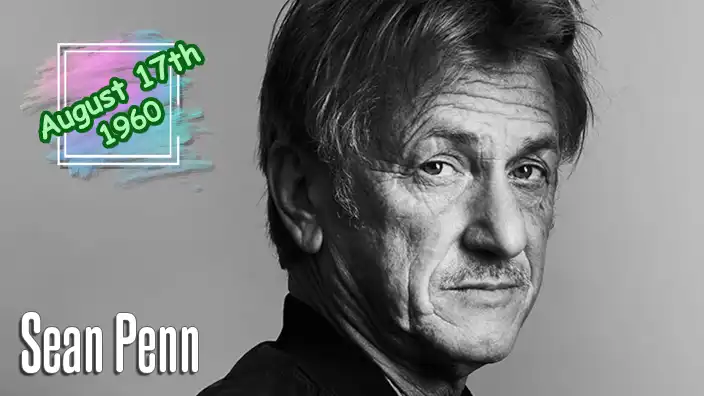
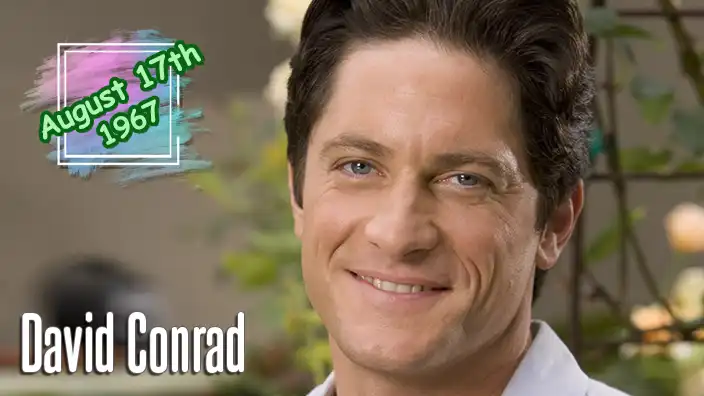
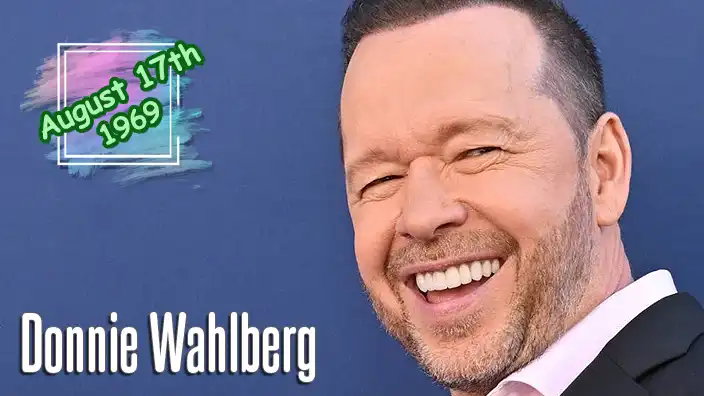
August 17, 1943, in New York City
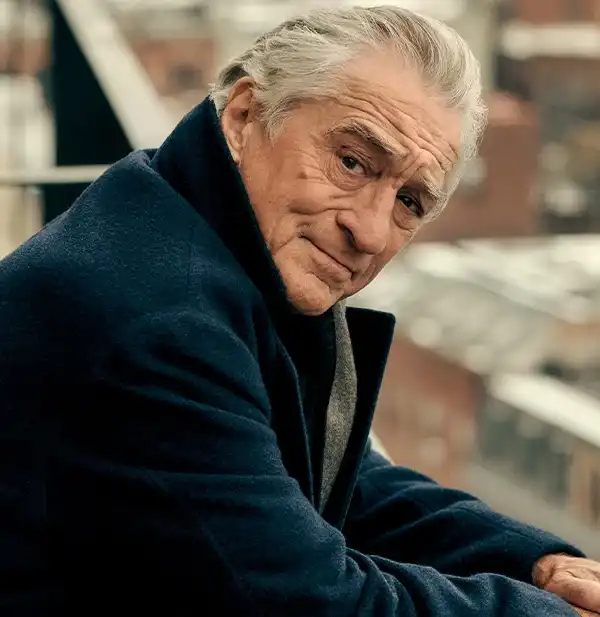
Born Robert Anthony De Niro on August 17, 1943, in New York City, De Niro grew up in Manhattan's Greenwich Village and Little Italy. He was the only child of two respected artists: painter Virginia Admiral and painter and sculptor Robert De Niro Sr. His parents separated when he was very young, and De Niro was primarily raised by his mother, although his father remained part of his life. Growing up amid the artists, writers and unconventional personalities of Greenwich Village gave him an early exposure to creative life, while the streets of nearby Little Italy provided another kind of education that would later prove useful in some of his most famous roles.
De Niro was shy as a child and earned the neighborhood nickname “Bobby Milk” because of his pale complexion. Acting gave him an unexpected outlet. At the age of 10, he appeared as the Cowardly Lion in a school production of The Wizard of Oz, and by his teenage years he had become increasingly serious about performing. He eventually left conventional schooling to study acting, training at institutions including the Stella Adler Conservatory and working with Lee Strasberg at the Actors Studio.
His early career was built slowly through stage work, small films and auditions. De Niro appeared in several projects associated with director Brian De Palma, including Greetings and Hi, Mom!, long before either man became a major Hollywood name. His breakthrough arrived with Bang the Drum Slowly in 1973, in which he played dying baseball player Bruce Pearson. The sensitive performance attracted considerable attention and demonstrated that De Niro possessed much more range than the tough-guy roles that would later become closely associated with him.
That same year, De Niro appeared in Mean Streets, beginning one of the most important actor-director partnerships in American film history. Director Martin Scorsese cast him as Johnny Boy, an unpredictable small-time criminal whose reckless behavior causes endless trouble for Harvey Keitel's Charlie. The film captured the atmosphere of New York's Little Italy with unusual energy and authenticity, while De Niro's explosive performance announced the arrival of an actor capable of being charismatic, dangerous and strangely funny at the same time.
Hollywood noticed.
In 1974, Francis Ford Coppola cast De Niro as the young Vito Corleone in The Godfather Part II. Marlon Brando had created the older version of the character in The Godfather, leaving De Niro with the formidable task of portraying the same man decades earlier without simply imitating Brando's celebrated performance.
De Niro approached the role with characteristic seriousness. Much of his dialogue was spoken in Sicilian, and he spent time in Sicily preparing for the part and studying the language and mannerisms needed to portray Vito's early life. The result was one of cinema's most acclaimed supporting performances.
De Niro won the Academy Award for Best Supporting Actor for The Godfather Part II. Remarkably, he and Brando became the first two actors to win Oscars for portraying the same fictional character. De Niro was not present at the ceremony to accept the award, but the victory established him among the most important actors of his generation.
His collaboration with Scorsese then entered extraordinary territory.
In Taxi Driver in 1976, De Niro played Travis Bickle, a lonely and increasingly unstable Vietnam veteran working nights as a New York City taxi driver. To prepare, De Niro reportedly obtained a taxi driver's license and drove a cab around New York while researching the character.
The film's most famous moment came when Travis stood before a mirror practicing a confrontation and repeatedly asked, “You talkin' to me?” The scene was largely improvised by De Niro and became one of the most recognizable moments in American movie history. It has been quoted, parodied and imitated so often that millions of people who have never seen Taxi Driver still recognize the line.
The role earned De Niro an Academy Award nomination for Best Actor and reinforced his reputation for unusually immersive preparation. More importantly, Travis Bickle became one of cinema's defining portraits of alienation, loneliness and psychological deterioration.
De Niro continued taking challenging roles throughout the 1970s. He appeared in Bernardo Bertolucci's epic 1900, reunited with Scorsese for the musical drama New York, New York, and starred in Michael Cimino's Vietnam War drama The Deer Hunter.
The Deer Hunter, released in 1978, followed a group of Pennsylvania steelworkers whose lives are devastated by the Vietnam War. De Niro played Michael Vronsky alongside Christopher Walken and Meryl Streep. The film won the Academy Award for Best Picture and became another major entry in De Niro's extraordinary run of 1970s performances.
Then came Raging Bull.
Released in 1980 and directed by Scorsese, the film starred De Niro as real-life boxer Jake LaMotta. His physical transformation for the role became legendary. De Niro trained extensively as a boxer and reportedly fought several genuine bouts while preparing to portray LaMotta during his athletic prime. Production was then paused while De Niro deliberately gained a substantial amount of weight to play the older, retired boxer.
The commitment produced one of the most acclaimed performances in film history. De Niro won the Academy Award for Best Actor, his second Oscar and his first in the leading-actor category. Raging Bull initially received a mixed commercial response but grew enormously in critical stature and is now routinely ranked among the greatest American films ever made.
During the 1980s, De Niro continued avoiding easy repetition. He worked with Scorsese again on The King of Comedy, playing Rupert Pupkin, an aspiring comedian whose desperate pursuit of fame becomes increasingly disturbing. Although the film was not a major commercial success upon release, it later gained considerable critical appreciation and influenced generations of filmmakers.
De Niro also starred in Sergio Leone's sprawling gangster epic Once Upon a Time in America, Roland Joffé's The Mission, Alan Parker's Angel Heart and Brian De Palma's The Untouchables. In the latter, he portrayed Chicago crime boss Al Capone, once again undergoing a physical transformation and reportedly wearing specially made clothing to approximate Capone's appearance.
The 1990s produced another extraordinary period in De Niro's career.
In 1990, he reunited with Scorsese for Goodfellas, playing veteran mobster Jimmy Conway alongside Ray Liotta and Joe Pesci. Based on Nicholas Pileggi's book Wiseguy, the film chronicled the rise and collapse of Henry Hill within organized crime and became one of the most celebrated gangster films ever made.
De Niro's performance was quieter than Joe Pesci's famously explosive Tommy DeVito, but Jimmy's calm demeanor often made him even more threatening. A simple look from De Niro could suggest that somebody's evening—and possibly their life—was about to take an unfortunate turn.
He followed Goodfellas with another Scorsese collaboration, Cape Fear, playing terrifying ex-convict Max Cady. De Niro transformed himself physically for the role and earned another Academy Award nomination for Best Actor.
His 1990s films also included Awakenings, opposite Robin Williams; Backdraft; This Boy's Life, opposite Leonardo DiCaprio; A Bronx Tale; Mary Shelley's Frankenstein; Heat; Sleepers; Cop Land; Jackie Brown and Ronin.
A Bronx Tale, released in 1993, was particularly significant because it marked De Niro's feature-film directing debut. Based on Chazz Palminteri's autobiographical one-man play, the story follows a boy growing up in the Bronx who is torn between the values of his hardworking father, played by De Niro, and the influence of a local mob boss played by Palminteri.
In Michael Mann's Heat in 1995, De Niro starred opposite Al Pacino, creating one of the most anticipated screen pairings in modern film history. Although both actors had appeared in The Godfather Part II, their characters existed in different time periods and never shared a scene. Heat finally placed them opposite one another, most famously during a tense conversation in a Los Angeles coffee shop.
After decades of intense dramatic performances, De Niro made another career move that surprised many audiences: he became extremely successful at comedy.
In Analyze This in 1999, he played mob boss Paul Vitti, who begins suffering panic attacks and reluctantly seeks treatment from a psychiatrist played by Billy Crystal. The film cleverly used De Niro's gangster reputation as part of the joke, allowing him to parody the intimidating characters he had spent years perfecting.
Then came Meet the Parents in 2000.
De Niro played Jack Byrnes, a retired CIA operative whose daughter's boyfriend, Greg Focker—played by Ben Stiller—desperately attempts to earn his approval. Jack's suspicious personality, interrogation techniques and devotion to his cat, Mr. Jinx, turned De Niro's intimidating screen presence into comic ammunition.
The film became a major hit and produced sequels Meet the Fockers and Little Fockers. Suddenly, a generation of moviegoers who knew De Niro primarily as a terrifying gangster discovered him as a terrifying father-in-law.
Frankly, the difference was sometimes surprisingly small.
De Niro continued appearing prolifically in films throughout the 2000s and 2010s, balancing dramas, thrillers and comedies. His credits included Men of Honor, The Score, Shark Tale, Hide and Seek, Stardust, Limitless and Silver Linings Playbook.
His performance in Silver Linings Playbook earned him another Academy Award nomination, this time for Best Supporting Actor. Playing Pat Solitano Sr., the obsessive and emotionally complicated father of Bradley Cooper's character, De Niro delivered a performance combining humor, anger and tenderness.
He reunited with Scorsese once again for The Irishman in 2019. De Niro played Frank Sheeran, a truck driver who becomes a hitman and develops connections with union leader Jimmy Hoffa, played by Al Pacino. Joe Pesci came out of retirement to play crime boss Russell Bufalino.
The film used extensive digital effects to portray the actors across several decades of their characters' lives. For De Niro and Scorsese, The Irishman also served as a reflective companion to their earlier gangster films, examining old age, regret and the consequences of a life built around violence rather than romanticizing the criminal world.
Their partnership continued with Killers of the Flower Moon in 2023. Directed by Scorsese and based on David Grann's nonfiction book, the film explored the murders of members of the Osage Nation in Oklahoma during the 1920s.
De Niro played William King Hale, a wealthy and outwardly respected rancher secretly involved in a murderous conspiracy to obtain Osage oil wealth. The chilling performance earned De Niro another Academy Award nomination for Best Supporting Actor, more than half a century after his film career began.
That longevity is extraordinary.
De Niro has worked with an enormous collection of important directors, including Martin Scorsese, Francis Ford Coppola, Sergio Leone, Michael Mann, Brian De Palma, Bernardo Bertolucci, Michael Cimino, Quentin Tarantino, David O. Russell and Todd Phillips. His co-stars have included Marlon Brando, Al Pacino, Meryl Streep, Christopher Walken, Joe Pesci, Robin Williams, Leonardo DiCaprio, Dustin Hoffman, Ben Stiller and countless others.
His collaboration with Martin Scorsese remains especially important. Beginning with Mean Streets, the pair created films including Taxi Driver, New York, New York, Raging Bull, The King of Comedy, Goodfellas, Cape Fear, Casino, The Irishman and Killers of the Flower Moon. Few actor-director partnerships have produced such a large collection of influential films.
De Niro has also been important to New York's cultural life beyond acting. With producing partner Jane Rosenthal, he helped establish the Tribeca Festival following the September 11, 2001 terrorist attacks. The festival was intended in part to help revitalize Lower Manhattan and grew into a major international film and cultural event.
His personal life has remained somewhat more private than his enormous celebrity might suggest, although his family has occasionally made headlines. De Niro has seven children, and in 2023, at the age of 79, he welcomed his youngest daughter, Gia, with partner Tiffany Chen.
Yes, 79.
Most people that age are being congratulated for remembering where they put their glasses. Robert De Niro started another round of fatherhood.
Across his career, De Niro has received numerous honors in addition to his two Academy Awards. He received the Kennedy Center Honors in 2009, the Presidential Medal of Freedom in 2016, and the Screen Actors Guild Life Achievement Award in 2020, among many other recognitions.
Yet awards alone do not explain his importance to film.
De Niro helped redefine expectations of screen acting through meticulous preparation, physical transformation and an intense interest in the psychology of his characters. His influence can be seen in generations of actors who followed, particularly those willing to alter their appearance, learn specialized skills or immerse themselves deeply in a character's environment.
At the same time, his later comedy career demonstrated that his famous intensity could be turned completely on its head. The same stare that made Jimmy Conway frightening in Goodfellas could make Jack Byrnes hilarious in Meet the Parents. De Niro didn't need to abandon the qualities audiences associated with him; he simply changed what those qualities were being used to accomplish.
From Vito Corleone and Travis Bickle to Jake LaMotta, Jimmy Conway, Max Cady, Jack Byrnes, Frank Sheeran and William Hale, Robert De Niro has created one of the most extraordinary collections of characters in modern cinema. His films stretch across more than five decades and include crime classics, war dramas, comedies, historical epics and some of the most celebrated motion pictures ever produced.
Not bad for Bobby Milk.
And if Robert De Niro ever looks into a mirror and asks whether you're talking to him, the safest answer remains exactly what it was in 1976.
No, sir. Absolutely nobody was talking to you.