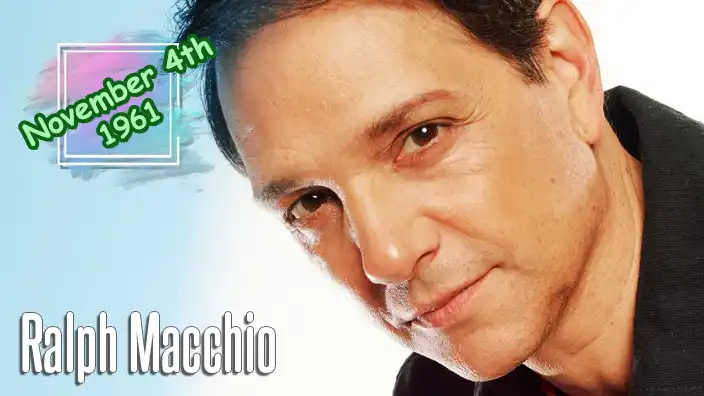
November 4, 1961, in Huntington, New York

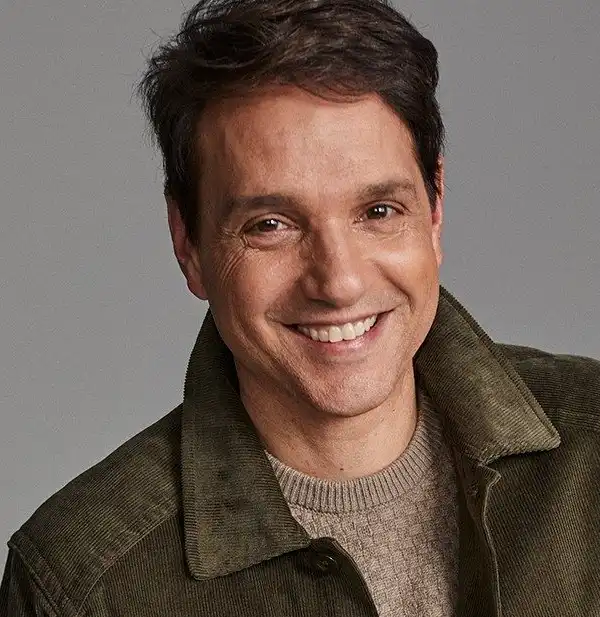
Ralph George Macchio Jr. was born on November 4, 1961, in Huntington, New York, and grew up in the nearby community of Dix Hills on Long Island. His parents, Rosalie and Ralph Macchio Sr., raised him in an Italian-American family with strong connections to their cultural heritage. His father operated a family-owned ranch, and Ralph enjoyed a relatively ordinary suburban childhood before Hollywood came calling. From an early age, he displayed an interest in performing, particularly dancing, and began taking tap-dancing lessons as a young child. His natural coordination, youthful appearance, and enthusiasm for entertaining others would eventually help him establish a career in an industry where looking considerably younger than one's actual years can be a valuable professional advantage.
Macchio attended Half Hollow Hills High School West, graduating in 1979. During his teenage years, he continued developing his dancing and performance skills, attracting the attention of a talent agent who recognized his potential for television and film. He began appearing in commercials, including advertisements for products such as Bubble Yum chewing gum and Dr Pepper. These early assignments introduced him to professional acting and provided valuable experience in front of the camera. Although selling chewing gum was hardly the glamorous Hollywood career he would eventually enjoy, it was a useful beginning for a young performer learning how the entertainment business worked.
His first substantial television opportunity arrived in 1980 when he joined the cast of the ABC comedy-drama series Eight Is Enough. Macchio portrayed Jeremy Andretti, the nephew of Abby Bradford, during the show's final season. The series followed the complicated lives of the large Bradford family and was already a familiar presence on American television. Although Macchio's involvement came toward the end of its run, the role introduced him to a national audience and demonstrated his ability to work within an established ensemble cast. More importantly, it provided the professional exposure that helped him move into feature films.
Macchio's breakthrough in cinema came with Francis Ford Coppola's 1983 adaptation of S. E. Hinton's novel The Outsiders. He played Johnny Cade, a sensitive and vulnerable member of a group of working-class teenagers known as the Greasers. The film featured an extraordinary collection of emerging young actors, including C. Thomas Howell, Matt Dillon, Patrick Swayze, Rob Lowe, Emilio Estevez, Tom Cruise, and Diane Lane. Macchio's portrayal of Johnny, whose difficult home life and tragic circumstances make him one of the story's most sympathetic characters, earned considerable attention. His emotional performance demonstrated that he could handle serious dramatic material and helped establish him among Hollywood's promising young actors.
The Outsiders became an important cultural touchstone for a generation of moviegoers, and Macchio's character was central to some of its most memorable moments. Johnny's relationship with Ponyboy Curtis, played by C. Thomas Howell, explored friendship, loyalty, social division, and the painful consequences of violence. Macchio brought a quiet vulnerability to the role, making Johnny's experiences particularly affecting. The film's success introduced audiences to several performers who would become major Hollywood stars, but for Macchio, an even more recognizable character was waiting just around the corner. Fortunately, that character came with a rather unusual education in household chores.
In 1984, Macchio achieved international fame when he starred as Daniel LaRusso in The Karate Kid, directed by John G. Avildsen and written by Robert Mark Kamen. The film followed Daniel, a teenager who moves from New Jersey to Southern California with his mother and struggles to adjust to a new school and unfamiliar surroundings. After becoming the target of bullying by students from the Cobra Kai karate dojo, Daniel forms an unlikely friendship with his apartment building's maintenance man, Mr. Miyagi, portrayed by Pat Morita. What begins as a story about a bullied teenager develops into a moving exploration of mentorship, discipline, friendship, and personal growth.
The relationship between Daniel and Mr. Miyagi became the emotional heart of The Karate Kid. Rather than immediately teaching Daniel elaborate martial arts techniques, Miyagi assigns him a series of apparently pointless chores, including waxing cars, sanding floors, painting fences, and painting his house. Daniel eventually discovers that the repetitive movements have been teaching him essential defensive techniques. The famous instruction “Wax on, wax off” became one of cinema's most recognizable phrases, while the film's message about patience and perseverance resonated with audiences worldwide. For generations of young viewers, it also created the unfortunate impression that washing the family car might somehow lead to a black belt.
Macchio's portrayal of Daniel LaRusso was crucial to the film's success. He presented Daniel as an ordinary teenager who could be impulsive, stubborn, frightened, and occasionally rather irritating, but who possessed the determination to stand up for himself. His believable performance helped audiences connect with a character who was far from an invincible action hero. The film's climactic All Valley Karate Tournament, featuring Daniel's confrontation with Johnny Lawrence, played by William Zabka, became one of the most celebrated sporting sequences in 1980s cinema. Daniel's dramatic crane kick secured victory and established Macchio as one of the decade's most recognizable young movie stars.
The enormous popularity of The Karate Kid led to The Karate Kid Part II in 1986, with Macchio and Pat Morita returning as Daniel and Mr. Miyagi. This time, the story took the characters to Okinawa, Japan, where Miyagi confronted unresolved conflicts from his past. The sequel expanded the relationship between teacher and student while exploring themes of family honor, forgiveness, and cultural tradition. Daniel also encountered new challenges and developed a romantic relationship with Kumiko, portrayed by Tamlyn Tomita. The film was a major commercial success and demonstrated that audiences remained deeply invested in the friendship between Daniel and Miyagi.
Macchio returned once more in The Karate Kid Part III, released in 1989. The third installment brought Daniel back to California, where he faced a complicated scheme involving John Kreese, Terry Silver, and the aggressive karate competitor Mike Barnes. Although the film received a less enthusiastic critical response than its predecessors, it continued the franchise's story and introduced characters who would become important decades later. Macchio's participation completed his original trilogy as Daniel LaRusso, firmly establishing the role as the defining achievement of his early career. It also ensured that he would spend the rest of his professional life being asked whether he could still perform the crane kick.
Despite his close association with The Karate Kid, Macchio pursued other acting opportunities throughout the 1980s and 1990s. He appeared in the 1986 musical drama Crossroads, playing Eugene Martone, a classically trained guitarist fascinated by blues music and the legend of Robert Johnson. The film featured Joe Seneca and a memorable guitar duel involving music performed by virtuoso guitarist Steve Vai. Macchio's performance explored a very different kind of mentorship, replacing karate lessons with musical education and a journey through the American South. His willingness to move between genres demonstrated that he wanted to be recognized for more than one successful franchise.
One of Macchio's most popular performances outside The Karate Kid came in the 1992 comedy My Cousin Vinny. He played Bill Gambini, a young New Yorker mistakenly accused of murder while traveling through Alabama with his friend Stan Rothenstein, portrayed by Mitchell Whitfield. Desperate for legal assistance, Bill calls upon his cousin Vinny Gambini, played by Joe Pesci, a newly qualified attorney whose courtroom experience is practically nonexistent. The film became a comedy favorite thanks to its memorable characters, sharp dialogue, and entertaining courtroom confrontations. Marisa Tomei won the Academy Award for Best Supporting Actress for her performance as Mona Lisa Vito, while Macchio contributed to the film's enduring appeal as the unfortunate young man whose freedom depends on a lawyer who seems more interested in arguing with the judge.
Throughout the following years, Macchio continued acting in film, television, and theater, although he deliberately maintained a lower public profile than many performers associated with major Hollywood franchises. His stage work included the Broadway production of How to Succeed in Business Without Really Trying, in which he played J. Pierrepont Finch during the musical's 1996 revival. He also appeared in productions such as A Room of My Own, demonstrating his commitment to live theater and character-driven storytelling. Stage acting provided opportunities to develop his craft beyond the demands of commercial cinema and allowed audiences to see a different side of a performer so closely associated with one iconic movie character.
Macchio also made numerous television appearances, including guest roles in Entourage, Ugly Betty, Psych, and How I Met Your Mother. In several of these appearances, he humorously acknowledged his own celebrity image and the lasting popularity of The Karate Kid. His willingness to parody himself demonstrated a healthy sense of humor about his career and helped introduce him to audiences who had not experienced the original films during their theatrical releases. Rather than resent the character that made him famous, Macchio gradually embraced the opportunity to celebrate it while exploring new creative possibilities.
In 2011, Macchio competed in the twelfth season of ABC's Dancing with the Stars, partnered with professional dancer Karina Smirnoff. His early experience with tap dancing proved useful, and he quickly became a popular contestant thanks to his enthusiasm, technical ability, and easygoing personality. The pair finished in fourth place, giving Macchio another opportunity to demonstrate that his coordination extended beyond martial arts choreography. His participation also reminded television audiences that the actor who once defeated Cobra Kai could still move rather impressively without requiring an opponent to stand directly in front of him.
The most remarkable chapter of Macchio's later career began in 2018 with the premiere of Cobra Kai, a continuation of the original Karate Kid story created by Josh Heald, Jon Hurwitz, and Hayden Schlossberg. Initially released on YouTube Red, later known as YouTube Premium, the series eventually moved to Netflix, where it reached an enormous international audience. Macchio returned as Daniel LaRusso, now a successful automobile dealership owner, husband, and father living in the San Fernando Valley. William Zabka also returned as Johnny Lawrence, whose life had followed a considerably less successful path after his defeat in the 1984 tournament.
Cobra Kai cleverly reversed the original film's perspective by initially focusing on Johnny's struggles and his decision to reopen the notorious Cobra Kai dojo. Daniel, meanwhile, discovers that his old rival's return threatens to reopen conflicts he believed had been settled decades earlier. The series explored the complicated relationship between the two men, presenting both as flawed individuals whose memories of the past often differ considerably. Macchio's portrayal of the adult Daniel added new layers to a character once defined primarily by youthful determination and his relationship with Mr. Miyagi. The show demonstrated that growing older does not necessarily make people wiser, particularly when they have spent decades arguing about the correct interpretation of a teenage karate tournament.
One of the strengths of Cobra Kai was its ability to combine nostalgia with fresh storytelling. The series introduced a younger generation of martial arts students while bringing back familiar characters from the original films, including John Kreese, Terry Silver, Chozen Toguchi, Kumiko, and Mike Barnes. Macchio's performance provided an important connection between the original trilogy and the new storylines, while Daniel's efforts to preserve Mr. Miyagi's teachings became central to the show's themes. The series examined bullying, rivalry, family relationships, redemption, and the consequences of refusing to let go of old grudges. It also demonstrated that the San Fernando Valley apparently has more karate-related disagreements than anywhere else on Earth.
Macchio served as an executive producer on Cobra Kai, giving him an important role in the creative development of the series beyond his acting responsibilities. He worked closely with the show's creators to preserve the spirit of the original films while allowing Daniel LaRusso to evolve into a more complicated adult character. His collaboration with William Zabka became one of the show's defining features, with the actors successfully balancing comedy, drama, and the emotional weight of their characters' shared history. Their onscreen rivalry, once a relatively straightforward conflict between hero and bully, developed into a more nuanced exploration of friendship, resentment, and personal responsibility.
The success of Cobra Kai introduced The Karate Kid franchise to a new generation and helped revive interest in the original films. The series received critical praise and earned a Primetime Emmy nomination for Outstanding Comedy Series in 2021. Its popularity also demonstrated the enduring appeal of stories built around mentorship, discipline, and personal transformation. For Macchio, the revival represented an extraordinary professional opportunity: returning to a character he had first portrayed decades earlier while discovering new emotional territory within the same fictional world. Few actors have enjoyed the chance to revisit a defining role across such an extended period while maintaining a direct connection to its original storyline.
In 2022, Macchio published his memoir, Waxing On: The Karate Kid and Me, offering readers an affectionate account of his career, the making of The Karate Kid, and the lasting friendships that developed through the franchise. The book became a New York Times bestseller and included personal reflections on Pat Morita, whose portrayal of Mr. Miyagi had such a profound influence on Macchio's professional life. Rather than simply recounting Hollywood anecdotes, Macchio explored the unexpected responsibilities that come with portraying a beloved character across generations. His writing reflected considerable gratitude for the opportunities he had received and an appreciation for the audiences who continued supporting his work.
In November 2024, Macchio received a star on the Hollywood Walk of Fame, appropriately positioned beside the star honoring Pat Morita. William Zabka and Tamlyn Tomita attended the ceremony, celebrating a career that had become closely connected with one of cinema's most enduring mentor-and-student relationships. The recognition provided a particularly meaningful tribute to Morita, who died in 2005, and to the extraordinary cultural influence of The Karate Kid. Macchio's Hollywood honor acknowledged not only his original film success but also his work as an actor, producer, director, and author.
The Cobra Kai story reached its conclusion in February 2025, completing six seasons of rivalry, reconciliation, and martial arts adventures. Macchio and Zabka's characters ultimately developed a genuine friendship, bringing their decades-long conflict to a satisfying conclusion. Later that year, Macchio returned as Daniel LaRusso in Karate Kid: Legends, appearing alongside Jackie Chan, who reprised his role as Mr. Han from the 2010 Karate Kid film. The new installment introduced Ben Wang as Li Fong, a young martial artist learning from two different traditions. Macchio's return connected the original films with a new generation, reinforcing the franchise's enduring themes of discipline, respect, and mentorship.
Away from Hollywood, Macchio has enjoyed a remarkably stable family life. He married Phyllis Fierro, a nurse practitioner whom he first met through his grandmother during his teenage years, in 1987. The couple have two children, Julia and Daniel, and have maintained their family home on Long Island. Macchio has frequently spoken about the importance of his family in keeping him grounded throughout the unpredictable demands of show business. His relatively private personal life has provided a contrast to the highly publicized relationships and controversies that frequently surround Hollywood celebrities. While Daniel LaRusso spent decades struggling to find balance through martial arts, the actor portraying him appears to have discovered that family, loyalty, and a little common sense work rather well without the need for a karate tournament.
Ralph Macchio's career is an extraordinary example of how one memorable character can shape an actor's professional life without completely defining his abilities. From the emotional drama of The Outsiders and the courtroom comedy of My Cousin Vinny to the international success of The Karate Kid and Cobra Kai, he has entertained audiences across generations. His enduring popularity reflects not only nostalgia for the films of the 1980s but also his genuine affection for the characters and stories that made him famous. Through his performances, producing work, writing, and dedication to family, Macchio has demonstrated the importance of patience, perseverance, and appreciating life's unexpected opportunities. Mr. Miyagi would probably approve, although he might still ask Daniel to finish waxing the car before celebrating.
References & Sources