September 6, 1976, in Brooklyn, New York
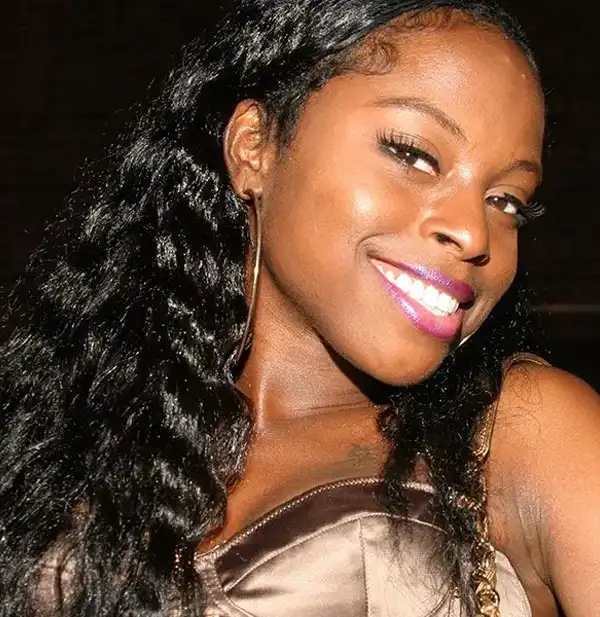
Born Inga DeCarlo Fung Marchand on September 6 in Brooklyn, New York, Foxy Brown grew up in a city that was already one of the great proving grounds of hip-hop. She was raised primarily by her mother and developed her skills while still young, entering the competitive New York rap scene at an age when most teenagers were dealing with considerably less intimidating matters such as homework and figuring out what they were going to do on Saturday night.
Her breakthrough began after she demonstrated her ability at a Brooklyn talent contest. Her performance attracted the attention of the production team Trackmasters, and before she had even released an album of her own, Foxy was appearing alongside established recording artists. One of the most important early opportunities came when she contributed a verse to LL Cool J's “I Shot Ya” remix in 1995. It was quite an introduction. She wasn't politely knocking on hip-hop's door; she was already inside rearranging the furniture.
More high-profile appearances followed. Foxy contributed to recordings involving Total, Case and Toni Braxton, and she appeared alongside Jay-Z on “Ain't No Nigga” from his 1996 debut album, Reasonable Doubt. The chemistry between Foxy and Jay-Z helped bring her considerable attention, and the pair would collaborate repeatedly during their careers.
The sudden demand for the young Brooklyn rapper resulted in interest from major record companies. Foxy eventually signed with Def Jam Recordings and began preparing her debut album. By the time Ill Na Na arrived in November 1996, audiences already knew the voice. Now they were getting an entire album of it.
Ill Na Na made an immediate impact, reaching No. 7 on the Billboard 200 and eventually earning platinum certification. Produced largely by Trackmasters, the album featured appearances by Jay-Z, Blackstreet, Method Man, Havoc and Kid Capri. Foxy's confident delivery and sexually explicit lyrics distinguished her from much of the male-dominated rap landscape surrounding her.
The album produced “Get Me Home,” featuring Blackstreet, and “I'll Be,” featuring Jay-Z. “I'll Be” became particularly successful, reaching the Top 10 of the Billboard Hot 100. For an artist releasing her first album while still remarkably young, Foxy Brown had gone from promising newcomer to major recording star with impressive speed.
Her success came during an especially important period for women in hip-hop. Artists including Queen Latifah, MC Lyte and Salt-N-Pepa had already demonstrated that women belonged at the highest levels of rap, while Foxy Brown and Lil' Kim brought a different kind of unapologetic sexuality and aggressive swagger into the mainstream during the mid-1990s. Comparisons between Foxy and Lil' Kim became practically unavoidable and eventually developed into a highly publicized rivalry.
The two artists were frequently presented as competitors, partly because their debut albums appeared within days of one another in November 1996. The rivalry would become increasingly personal over the years, but both women ultimately helped expand the range of identities available to female rappers. They demonstrated that women could be commercially successful while using the same bravado, sexual confidence, luxury imagery and lyrical aggression that male rappers had employed for years.
Foxy's next major venture placed her inside a hip-hop supergroup. She joined Nas, AZ and initially Cormega in The Firm, with Nature later replacing Cormega in the group's final lineup. Backed by production from Dr. Dre and Trackmasters, The Firm: The Album was released in 1997.
The project debuted at No. 1 on the Billboard 200. Although critical reaction was mixed and The Firm did not become the long-running supergroup some had anticipated, the project placed Foxy alongside several of New York's most respected rappers. She was not included as a novelty or merely as “the female member.” She was there because she could hold her own.
Foxy returned to her solo career with Chyna Doll in January 1999. The album debuted at No. 1 on the Billboard 200, placing her among a very small number of female rappers who had reached the summit of America's album chart. Whatever critics thought about Foxy's provocative image, record buyers were clearly paying attention.
The album included “Hot Spot” and further developed the extravagant, confrontational persona that had become her trademark. Foxy's music mixed street toughness with luxury, sexuality and the unmistakable confidence of someone who had little interest in asking permission.
Her third studio album, Broken Silence, arrived in 2001 and showed another side of the performer. The album incorporated elements reflecting her Trinidadian heritage, including Caribbean rhythms and patois, while retaining the forceful delivery associated with her earlier recordings.
Broken Silence reached No. 5 on the Billboard 200 and was certified gold. One of its tracks, “Na Na Be Like,” later received a Grammy Award nomination for Best Female Rap Solo Performance. The album demonstrated that Foxy Brown could develop musically without abandoning the characteristics that had established her career.
Then came a problem considerably more serious than record sales or chart positions.
During the 2000s, Foxy experienced substantial hearing loss. For a rapper whose livelihood depended on hearing beats, producers, musicians and her own performance, the condition threatened her career. She underwent surgery and treatment, eventually regaining much of her hearing. The episode kept her away from recording during a period when her career had already been disrupted by record-label difficulties.
There were legal troubles as well. Several confrontations resulted in arrests and court appearances, and in 2007 she was sentenced to jail after violating probation connected with an earlier assault case. She served time at Rikers Island before being released in 2008.
Her personal difficulties frequently attracted as much media coverage as her music, and planned albums repeatedly failed to appear. Projects including Ill Na Na 2: The Fever and Black Roses were announced but ultimately shelved. What had once been a remarkably rapid career began moving in fits and starts.
In 2008, Foxy released Brooklyn's Don Diva, a mixtape-style project that marked her first substantial release in several years. By then, however, hip-hop had changed considerably from the world she had entered during the mid-1990s.
Her influence had not disappeared with those changes. Quite the opposite.
A generation of female rappers grew up hearing Foxy Brown's records, and her combination of lyrical aggression, sexuality, fashion and luxury became increasingly visible in mainstream hip-hop. Nicki Minaj has openly acknowledged Foxy as an influence, and the connection became particularly clear when Foxy appeared on Minaj's “Coco Chanel,” released on the 2018 album Queen.
The collaboration connected two generations of New York female rap. Foxy's influence could be heard in Minaj's confidence, vocal attack and willingness to occupy spaces traditionally dominated by male performers. By that point, the characteristics that had once made Foxy controversial had become far more commonplace among successful women in hip-hop.
Another reunion came in 2020 when Nas brought members of The Firm back together for “Full Circle” on his album King's Disease. Foxy appeared alongside Nas, AZ and Cormega, revisiting a musical partnership that had begun more than two decades earlier.
Foxy Brown's influence also extends beyond recordings. Her fashion, public persona and unapologetic approach to female sexuality helped reshape expectations surrounding women in rap. She arrived during a period when female rappers were frequently treated as exceptions within the industry and insisted instead on occupying the same commercial and creative territory as the men around her.
Her career has certainly not followed a tidy path. Label disputes, unfinished projects, legal problems, hearing loss and personal controversies interrupted what might otherwise have produced a considerably larger discography. Yet the relatively small number of major albums actually emphasizes how much influence she achieved with them.
Ill Na Na, Chyna Doll and Broken Silence were enough to establish Foxy Brown as an important figure in the development of female hip-hop. Her early collaborations with Jay-Z, Nas, LL Cool J and others also place her firmly within one of the most celebrated periods in New York rap history.
There is another interesting piece of Foxy Brown's identity hiding in plain sight: the name itself. Her stage name was inspired by Foxy Brown, the 1974 action film starring Pam Grier. The movie's fiercely independent heroine provided an appropriate namesake for a rapper who would build her own career around confidence, toughness and refusing to be overlooked.
Decades after she first appeared on “I Shot Ya,” Foxy Brown remains an influential figure in hip-hop. Her catalogue may not be enormous, and her career has certainly contained enough drama to keep entertainment reporters busy, but her impact is difficult to dismiss. She entered a male-dominated business as a teenager, competed alongside some of New York's strongest MCs and helped change what audiences expected a female rapper could sound like.
Foxy Brown didn't need to politely request a seat at hip-hop's table. She arrived, pulled out the chair herself and started rapping. Everyone else simply had to decide whether they could keep up.