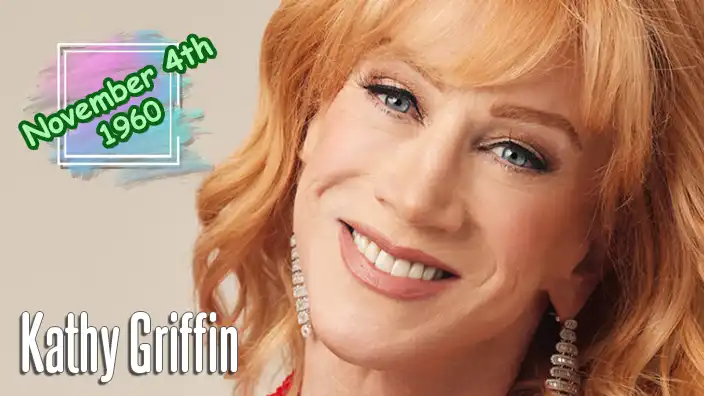
November 4, 1960, in Oak Park, Illinois

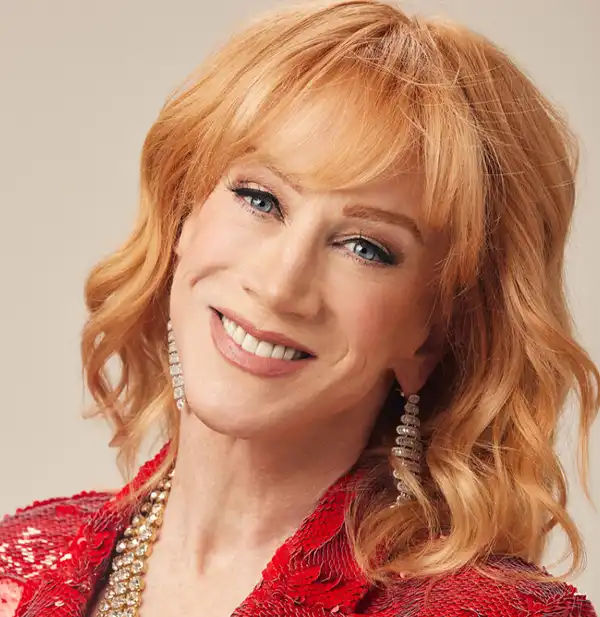
Kathleen Mary Griffin was born on November 4, 1960, in Oak Park, Illinois, a suburb of Chicago. She was the youngest of five children born to John Patrick Griffin and Mary Margaret “Maggie” Corbally Griffin, both of whom came from Irish-American families. Growing up in a lively Catholic household, Kathy developed an early appreciation for storytelling, humor, and the entertainment value of other people's behavior. Her mother, Maggie, would eventually become a beloved personality in her own right through appearances on Kathy's television series, frequently delivering dry observations while enjoying a glass of wine. It was a family in which a quiet evening apparently represented a wasted opportunity for conversation.
As a child, Griffin was fascinated by show business and developed a particular interest in television personalities and celebrity culture. She attended St. Bernadine's Elementary School and Oak Park and River Forest High School, where her outgoing personality and enthusiasm for performing became increasingly apparent. Unlike many aspiring entertainers who dream of becoming glamorous movie stars, Griffin was particularly interested in the people behind the glamorous images. She enjoyed observing their mannerisms, peculiar habits, and occasional displays of enormous self-importance. These observations would eventually form the foundation of a comedy career built around exposing the wonderfully ridiculous side of fame.
After graduating from high school, Griffin moved to Los Angeles with her parents in 1978 to pursue opportunities in entertainment. She studied acting at the Lee Strasberg Theatre and Film Institute and began auditioning for television and film roles. Like countless aspiring performers, she discovered that Hollywood was overflowing with talented people competing for a limited number of jobs. Rather than wait patiently for the entertainment industry to recognize her brilliance, Griffin began developing her comedic skills through improvisational theater. She joined The Groundlings, the influential Los Angeles comedy troupe whose alumni include numerous successful actors and comedians. The experience helped her sharpen her timing, develop characters, and discover the value of turning everyday absurdities into comedy.
During the 1980s and early 1990s, Griffin gradually established herself through stand-up performances and television appearances. Her early acting credits included small roles in films and television productions, while her comedy work attracted attention for its unusually candid approach to celebrity culture. She became associated with a generation of alternative comedians who rejected conventional joke-telling in favor of personal observations, storytelling, and improvisation. Rather than deliver a predictable series of punchlines, Griffin developed lengthy, detailed accounts of encounters with celebrities, industry insiders, and ordinary people whose behavior struck her as amusing. The stories often became funnier as they became more outrageous, particularly when she began imitating the people involved.
One of Griffin's early breakthroughs came through her appearances on the NBC sitcom Seinfeld, where she played Sally Weaver, an aspiring actress and comedian whose relationship with Jerry Seinfeld becomes increasingly uncomfortable. Her character appeared in the episodes “The Doll” and “The Cartoon,” with Sally eventually developing a comedy act devoted to criticizing Jerry. The role suited Griffin's willingness to portray characters who were socially awkward, outspoken, and spectacularly unaware of when to stop talking. It also introduced her distinctive comedic personality to a wider television audience, although Jerry Seinfeld's fictional counterpart might have preferred a considerably shorter introduction.
Griffin achieved greater mainstream recognition when she joined the NBC sitcom Suddenly Susan in 1996. Starring Brooke Shields as magazine columnist Susan Keane, the series featured Griffin as Vicki Groener, Susan's outspoken colleague and friend. Griffin appeared throughout the show's four-season run, which concluded in 2000, and her performance helped establish her as a recognizable television actress. Vicki's sarcastic remarks and uninhibited personality provided an effective contrast to the more restrained characters around her. The role demonstrated Griffin's ability to contribute to an ensemble comedy while maintaining the distinctive humor that had made her successful on the stand-up circuit.
Although television acting provided steady work, Griffin's greatest success came from her stand-up comedy. Her performances increasingly focused on Hollywood gossip, celebrity encounters, reality television, award ceremonies, and the sometimes astonishing behavior of famous people. She became known for delivering elaborate behind-the-scenes stories about entertainment industry events, often mentioning celebrities by name and recreating their conversations with exaggerated voices and expressions. Her humor could be affectionate, merciless, or somewhere between the two, depending on the circumstances and how badly someone had behaved. Audiences appreciated her willingness to discuss the entertainment business without the polished restraint usually expected from people hoping to remain on every Hollywood invitation list.
Griffin's comedy also developed a strong connection with LGBTQ+ audiences, who embraced her outspoken personality, irreverent humor, and support for equality. She became a prominent advocate for LGBTQ+ rights, participating in fundraising events, awareness campaigns, and public discussions about discrimination. Her comedy performances frequently attracted enthusiastic audiences from the LGBTQ+ community, and she openly acknowledged the importance of that support to her career. Griffin's willingness to challenge social conventions and defend marginalized communities became an important part of her public identity, extending her influence beyond the traditional boundaries of stand-up entertainment.
Her career reached another level in 2005 with the premiere of the Bravo reality television series Kathy Griffin: My Life on the D-List. The program followed Griffin as she navigated her career, personal relationships, publicity appearances, and efforts to improve her position within Hollywood's unofficial celebrity hierarchy. The title reflected her deliberately self-deprecating approach to fame, suggesting that she occupied a considerably lower rung on the celebrity ladder than the stars she regularly discussed. The joke, of course, was that a supposedly D-list celebrity had managed to secure her own successful television series, proving that Hollywood's ranking system was not particularly reliable.
My Life on the D-List became a major success for Bravo, running for six seasons from 2005 to 2010. The series featured Griffin's parents, friends, assistants, and various celebrity acquaintances, combining behind-the-scenes entertainment industry adventures with family humor and personal experiences. Her mother, Maggie, became a particular audience favorite, thanks to her practical outlook, unmistakable personality, and ability to respond to Kathy's latest professional crisis with a mixture of affection and disbelief. The program earned the Primetime Emmy Award for Outstanding Reality Program in both 2007 and 2008, making Griffin a two-time Emmy winner. For someone who had built a television series around her supposedly low celebrity status, winning consecutive Emmy Awards was a rather effective way of upsetting the established pecking order.
Griffin's success on reality television coincided with a prolific period of stand-up specials and comedy recordings. She became particularly associated with Bravo, producing numerous televised performances featuring her observations about celebrity scandals, award shows, political figures, and entertainment industry controversies. Her stand-up specials included Kathy Griffin: Allegedly, Kathy Griffin: Everybody Can Suck It, Kathy Griffin: Straight to Hell, and Kathy Griffin: Balls of Steel. The titles alone made it abundantly clear that audiences should not expect a gentle evening of polite jokes about the weather. Her comedy style was direct, energetic, and frequently provocative, with lengthy stories that rewarded audiences familiar with the latest developments in popular culture.
In 2009, Griffin published her memoir, Official Book Club Selection: A Memoir According to Kathy Griffin, which became a New York Times bestseller. The book explored her childhood, family relationships, struggles in Hollywood, and experiences building a career in comedy. It also addressed difficult personal subjects, demonstrating that her willingness to discuss uncomfortable matters extended beyond celebrity gossip. Readers discovered a performer who had experienced rejection, disappointment, and professional uncertainty while maintaining a determination to succeed on her own terms. Her candid writing reflected the same conversational approach that had made her stand-up performances popular.
Griffin achieved another notable accomplishment in 2013 when she won the Grammy Award for Best Comedy Album for Calm Down Gurrl. The recording captured her energetic storytelling style and established her among a distinguished group of comedians recognized by the Recording Academy. The award followed several previous Grammy nominations for her comedy albums, reflecting her consistent popularity as a live performer. With Emmy Awards for television and a Grammy for comedy, Griffin had accumulated an impressive collection of entertainment industry honors. Not bad for a woman who had spent years insisting that she belonged somewhere near the bottom of Hollywood's celebrity food chain.
Her television career also included hosting assignments, talk show appearances, and entertainment commentary. She hosted the Bravo talk show Kathy from 2012 to 2013, interviewing guests and discussing celebrity news with her customary lack of restraint. Griffin also became a familiar presence on CNN's New Year's Eve broadcasts, co-hosting alongside Anderson Cooper from 2007 through 2016. Their contrasting personalities became an important part of the annual program's appeal, with Cooper frequently attempting to maintain professional composure while Griffin introduced increasingly unpredictable remarks. The broadcasts developed a loyal following among viewers who enjoyed watching a respected news anchor struggle to survive several hours beside an exceptionally mischievous comedian.
Griffin's willingness to provoke controversy occasionally brought serious professional consequences. In 2017, she participated in a controversial photo shoot featuring a bloodied mask resembling the head of President Donald Trump. The image generated widespread condemnation, including criticism from people who ordinarily supported her political views. Griffin apologized for the photograph, and CNN subsequently ended her participation in its New Year's Eve broadcasts. The controversy led to canceled appearances and considerable public debate about political satire, artistic expression, and the limits of provocative comedy. Griffin later withdrew her apology, arguing that the backlash had been disproportionate. The episode became one of the most consequential controversies of her career and illustrated the professional risks associated with deliberately confrontational humor.
Despite the setbacks, Griffin continued performing and eventually returned to touring. Her Laugh Your Head Off world tour in 2018 addressed the controversy directly, incorporating her experiences with public criticism, professional isolation, and the entertainment industry's response into her comedy. Rather than avoid the subject, she made it a central part of her performances, using humor to examine a period that had dramatically changed her public reputation. Her return demonstrated the resilience that had characterized her career since her earliest years in Hollywood, when rejection was considerably more common than standing ovations.
Griffin faced another major challenge in 2021 when she revealed that she had been diagnosed with lung cancer despite never having smoked. She underwent surgery to remove part of her left lung and subsequently reported that she was cancer-free. The surgery affected her voice, presenting a particularly difficult problem for someone whose livelihood depended on speaking professionally. Griffin publicly discussed her recovery and the medical challenges she experienced, including treatment for damage to her vocal cord. Her openness brought attention to lung cancer among nonsmokers and the difficulties patients can face during recovery. For a comedian whose career depended on having the last word, protecting her ability to speak became an especially personal battle.
Throughout her career, Griffin has maintained a distinctive relationship with celebrity culture. Unlike entertainers who carefully protect their public images, she has frequently treated her own reputation as another source of comic material. Her jokes about being excluded from prestigious events, encountering difficult celebrities, and navigating Hollywood's complicated social hierarchy helped create an approachable persona despite her considerable professional success. This ability to make herself the target of the joke has remained an important element of her comedy, allowing audiences to laugh at the absurdities of fame without necessarily feeling removed from the people involved.
Kathy Griffin's career encompasses stand-up comedy, sitcom acting, reality television, bestselling books, award-winning recordings, and decades of entertainment commentary. Her two Primetime Emmy Awards and Grammy Award reflect achievements across multiple areas of the entertainment industry, while her willingness to address personal difficulties and professional controversies has kept her in the public conversation. She has never been a performer who appeals to everyone, and she has rarely appeared particularly troubled by that fact. Whether audiences admire her fearless humor or find her approach too confrontational, Griffin has established herself as one of America's most recognizable and outspoken comedians. For a woman who once built her reputation around being on the D-list, she has certainly managed to make an extraordinary amount of noise at the top.
A further milestone in Griffin's career came in 2013, when Guinness World Records recognized her achievement of writing and starring in 20 televised stand-up comedy specials, an extraordinary accomplishment for a performer who had once struggled to secure regular television work. In 2024, she returned to touring with My Life on the PTSD-List, drawing on her experiences with controversy, illness, and recovery. Following further treatment for her damaged vocal cord, she reported significant improvements in her voice, allowing her to perform with renewed confidence. Her continued return to comedy reinforced the determination that had carried her through decades of professional highs and lows.
References & Sources