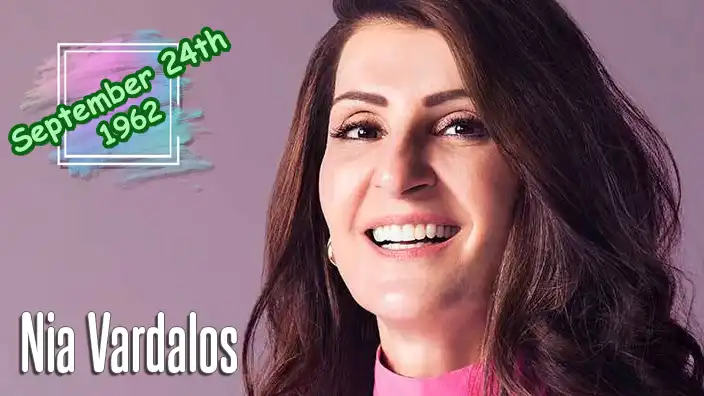
September 24, 1962, in in Winnipeg, Canada
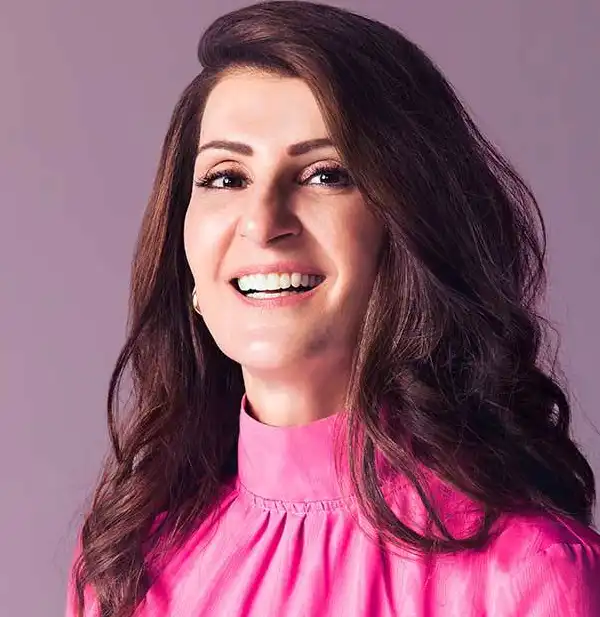
Nia Vardalos achieved the sort of Hollywood breakthrough that sounds suspiciously like something a screenwriter would invent after being told to make the ending more uplifting. A Canadian actress and comedian of Greek heritage, she spent years working in theater and collecting relatively small television roles before writing a deeply personal story inspired by her own enormous, affectionate and occasionally overwhelming family. That story became My Big Fat Greek Wedding, first as a one-woman stage show and then as one of the most remarkable independent-film successes of its era. Vardalos wrote the screenplay, played the leading role and received an Academy Award nomination for Best Original Screenplay, proving that an unconventional romantic comedy about cultural identity and family interference could compete quite comfortably with Hollywood's much more expensive machinery.
Born Antonia Eugenia Vardalos in Winnipeg, Manitoba, Canada, she grew up in a Greek Canadian family whose traditions would later provide abundant raw material for her writing. Her father was born in Greece, while her mother was born in Canada to Greek parents, and Vardalos grew up surrounded by the language, food, religion, celebrations and close family relationships of Greek immigrant culture. She attended Greek school as a child, an experience eventually reflected in My Big Fat Greek Wedding, where young Toula Portokalos watches with envy as other children enjoy sandwiches while she arrives at school carrying unmistakably Greek lunches.
Vardalos studied theater at Toronto Metropolitan University, then known as Ryerson University, before developing her comedy skills through Second City. She performed with Second City in Toronto and later Chicago, becoming part of the famous improvisational and sketch-comedy institution that has produced generations of major performers. Vardalos wrote and performed in numerous Second City revues and won a Chicago Joseph Jefferson Award for her work. Improvisational comedy proved particularly valuable training for a performer who would eventually build her career around observing the absurdities of everyday family life and finding the affectionate comedy buried within them.
After moving toward film and television work, Vardalos encountered the familiar frustrations of an actress who did not fit neatly into Hollywood's preferred categories. She accumulated appearances on television programs including The Drew Carey Show, Two Guys, a Girl and a Pizza Place and other productions, but the career-changing role she needed stubbornly refused to materialize. Instead of waiting indefinitely for someone else to write it, Vardalos began developing material based on her own Greek family and her experience of marrying actor Ian Gomez, who was not Greek.
The resulting one-woman show, My Big Fat Greek Wedding, drew heavily from Vardalos' experiences growing up within a close Greek family and then introducing that family to the man she intended to marry. She performed the show in Los Angeles, where its audience eventually included actress and producer Rita Wilson. Wilson, who is of Greek and Bulgarian heritage, recognized the cultural authenticity and universal family comedy in the material. Her husband, Tom Hanks, also became involved through their production company Playtone, and the possibility emerged of adapting Vardalos' stage creation into a feature film.
What happened next was crucial. Hollywood could easily have purchased the concept, rewritten it, cast a more established actress and sent Vardalos home with a check and an interesting story about the movie somebody else made from her life. Instead, she remained both screenwriter and star. Directed by Joel Zwick, My Big Fat Greek Wedding was produced independently on a comparatively modest budget and released in 2002, with Vardalos playing Fotoula “Toula” Portokalos opposite John Corbett as Ian Miller.
The story is wonderfully simple. Toula works at her family's Chicago restaurant, Dancing Zorba's, while enduring the loving but relentless attention of relatives who expect her to marry a Greek man, produce Greek children and continue being extremely Greek thereafter. She wants something different, begins changing her life and falls in love with Ian, a schoolteacher who possesses many admirable qualities but suffers from the significant Portokalos-family disadvantage of not being Greek. Their romance leads inevitably toward marriage, which means Ian must first survive being absorbed by Toula's enormous family.
Much of the movie's comedy comes from cultural specificity rather than conventional romantic-comedy machinery. Toula's father, Gus, played by Michael Constantine, is convinced that almost every word can be traced to a Greek origin and believes Windex possesses medicinal powers considerably beyond those advertised by its manufacturer. Lainie Kazan plays Toula's formidable mother, Maria, while Andrea Martin nearly walks away with the film as Aunt Voula, a woman for whom the concept of sharing too much information has apparently never existed.
Audiences recognized something beneath all the Greek specificity: nearly every family possesses its own traditions, embarrassing stories, peculiar relatives and ability to interfere at precisely the wrong moment. Viewers did not need to be Greek to understand Toula's mixture of love, frustration and loyalty toward her family. The details were culturally specific, but the emotional experience was remarkably universal. That combination became one of the principal reasons the film connected with audiences far beyond the community Vardalos originally portrayed.
My Big Fat Greek Wedding became an extraordinary sleeper hit. Rather than exploding at the box office during its opening weekend and disappearing shortly afterward, it expanded gradually as audiences recommended it to one another. The film remained in theaters for months and ultimately earned hundreds of millions of dollars worldwide, an astonishing result for a modestly budgeted independent romantic comedy without the conventional marquee stars generally considered necessary for such success.
Vardalos suddenly found herself at the center of Hollywood attention. Her screenplay earned an Academy Award nomination for Best Original Screenplay, while her performance brought a Golden Globe nomination for Best Actress in a Motion Picture – Musical or Comedy. The success was particularly satisfying because the characteristics that could once have been viewed as obstacles—her ethnic background, unconventional route into Hollywood and determination to tell a highly specific family story—became precisely the qualities that made the movie distinctive.
The inevitable expansion followed. Vardalos starred in the television series My Big Fat Greek Life, which attempted to continue the characters and family dynamics on the small screen. The series was short-lived, demonstrating once again that capturing lightning in a bottle does not necessarily mean it will cooperate when transferred to a weekly television schedule. Nevertheless, the Portokalos family had become permanently associated with Vardalos, and the original movie continued finding audiences.
She followed with Connie and Carla in 2004, which she also wrote and starred in. Vardalos and Toni Collette played struggling performers who witness a crime and hide among drag performers in Los Angeles, resulting in a comedy filled with music, disguises and theatrical chaos. The film demonstrated Vardalos' continued interest in creating her own material rather than simply accepting whatever acting roles followed her breakthrough.
Other film work included My Life in Ruins, in which she played a tour guide working in Greece, and I Hate Valentine's Day, which reunited her onscreen with John Corbett. Vardalos wrote and directed the latter, expanding her involvement behind the camera. She also co-wrote Larry Crowne with Tom Hanks, who directed and starred in the 2011 film alongside Julia Roberts. The collaboration brought her career back into the orbit of the people who had helped bring My Big Fat Greek Wedding to the screen.
Television remained another consistent part of her work. Vardalos has appeared in series including Law & Order: Special Victims Unit, Cougar Town, Grey's Anatomy, Jane the Virgin and Crazy Ex-Girlfriend. She has also performed voice roles and hosted television programming, demonstrating the versatility developed during her Second City years. Comedy remained her most recognizable territory, but she has periodically taken dramatic roles that deliberately move away from the warm family humor audiences most strongly associate with her.
The Portokalos family eventually returned to theaters with My Big Fat Greek Wedding 2 in 2016. Vardalos again wrote the screenplay and starred as Toula, with John Corbett returning as Ian and many members of the original ensemble reprising their roles. This time the story explored marriage and family life years after the original wedding, while discovering that Toula's parents had a matrimonial complication of their own. The sequel could hardly recreate the surprise of the original film—by then everybody knew exactly how big and Greek this wedding universe was—but it demonstrated the continuing affection audiences had for the characters.
Vardalos has also found significant success as an author. Her memoir Instant Mom recounts her experience of becoming a parent through adoption from foster care. After years of fertility treatments and unsuccessful attempts to become parents, Vardalos and then-husband Ian Gomez were matched with a young girl through the foster-care system. Vardalos subsequently became an advocate for adoption and foster care, using her public profile to encourage prospective parents to consider children waiting for permanent families.
Theater remained an important part of her creative life as well. Vardalos adapted Cheryl Strayed's Tiny Beautiful Things for the stage, based on Strayed's collection of advice columns originally written under the name Sugar. Vardalos originated the role of Sugar in the Public Theater production, directed by Thomas Kail. The adaptation subsequently became widely produced by regional and professional theaters, giving Vardalos another substantial writing accomplishment far removed from the Portokalos family.
Then came My Big Fat Greek Wedding 3, which expanded her responsibilities yet again. Vardalos wrote, starred in and directed the 2023 film, taking the Portokalos family to Greece following the death of patriarch Gus. The production was filmed in Greece, allowing the franchise finally to visit the country that had always occupied such an important place in the family's identity. John Corbett, Louis Mandylor, Lainie Kazan, Andrea Martin, Gia Carides, Joey Fatone and other familiar performers returned, while Vardalos assumed responsibility behind the camera as director. Focus Features described the film as the third installment of the franchise, with longtime supporters Tom Hanks, Rita Wilson and Gary Goetzman again serving as producers.
Directing the third film brought Vardalos' relationship with her creation neatly around the circle. She had begun by standing alone on a stage telling stories inspired by her family. She then became the screenwriter and star of the movie, returned for its sequels and ultimately took control from the director's chair while filming in Greece. Few performers have enjoyed such sustained creative ownership over the character and world that made them famous.
The enduring appeal of Nia Vardalos comes partly from that authenticity. My Big Fat Greek Wedding never treats Toula's family simply as a collection of jokes. They are loud, intrusive and occasionally exhausting, but the affection beneath the comedy is unmistakable. Vardalos understood that families can simultaneously drive us completely mad and provide the place where we most strongly belong. That contradiction gave the original movie an emotional foundation sturdy enough to support all the weddings, baptisms, arguments, food and Windex piled on top of it.
Her career also offers a useful reminder that success in entertainment does not always arrive according to the approved timetable or through the expected door. Vardalos spent years performing comedy and taking small roles before deciding to write something only she could write. The result earned an Oscar nomination, produced a film franchise and turned Toula Portokalos into one of romantic comedy's most recognizable characters.
Nia Vardalos may forever be associated with one exceptionally large Greek wedding, but her accomplishments extend well beyond it. She is an actress, screenwriter, playwright, director, author and comedian who created her own breakthrough when Hollywood failed to provide one. Better still, she did it by taking the very family experiences that once made her feel different and showing that underneath the Greek food, enormous gatherings and enthusiastic interference, families everywhere are remarkably alike. Although, admittedly, not all of them keep Windex in the medicine cabinet.