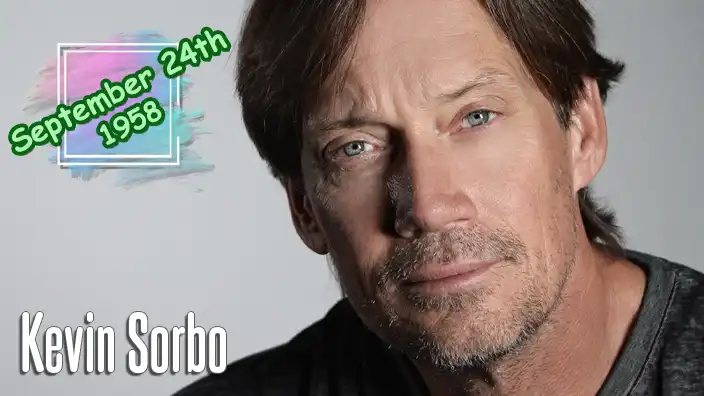
September 24, 1958, in Mound, Minnesota
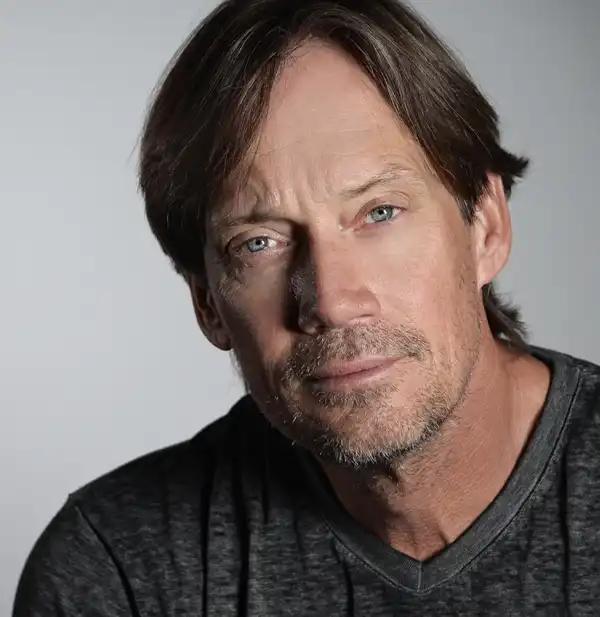
Kevin Sorbo became one of television's most recognizable action stars during the 1990s when he picked up a club, grew his hair appropriately heroic and took the title role in Hercules: The Legendary Journeys. The fantasy adventure series became an international success and turned Sorbo into the face of a new generation of syndicated television adventure. Yet Hercules represents only one portion of a career that has included another long-running science-fiction series, feature films, directing, producing and decades of work in independent cinema.
Born Kevin David Sorbo in Mound, Minnesota, he grew up in a family far removed from Hollywood mythology. His mother worked as a nurse, while his father was a teacher. Sorbo was heavily involved in sports during his school years, playing football, baseball and basketball, and he continued his athletic interests while attending what was then Moorhead State University in Minnesota. The university's own historical archives later recalled Sorbo telling its student newspaper that he had spent much of his time lifting weights and playing basketball before deciding to try acting.
That decision eventually carried him far beyond Minnesota. Sorbo joined an actors' theater group and traveled extensively while pursuing acting and modeling opportunities. He spent time in Europe and Australia and developed a successful career in commercial work, appearing in a large number of advertisements before settling in Los Angeles. The commercial years provided useful experience in front of a camera, but they also produced the familiar actor's problem of becoming recognizable without necessarily becoming famous. Sorbo was working regularly, but the role that would define his career had yet to arrive.
Television guest appearances followed, including work on series such as Murder, She Wrote. Sorbo also came tantalizingly close to another superhero role when he was considered for Clark Kent in Lois & Clark: The New Adventures of Superman. Dean Cain ultimately became television's new Superman, leaving Sorbo available when another hero with considerably older source material came calling. In retrospect, losing Superman worked out rather nicely for a fellow about to become Hercules.
Sorbo first appeared as the legendary Greek hero in a series of television movies produced as part of the Action Pack programming package. Beginning with Hercules and the Amazon Women in 1994, the films established Sorbo's version of the character and introduced the combination of mythology, action, humor and deliberately modern sensibility that would define the subsequent series. The television movies proved successful enough to justify a weekly production, and Hercules: The Legendary Journeys premiered in 1995.
The series presented Hercules as the son of Zeus and a mortal woman, possessing extraordinary strength but retaining enough humanity to make him more approachable than the distant figure of classical mythology. Accompanied frequently by his loyal friend Iolaus, played by Michael Hurst, Hercules wandered through a highly flexible version of the ancient world helping people, defeating warlords, confronting monsters and repeatedly becoming involved in the extremely complicated domestic affairs of the Greek gods.
Historical accuracy was never really the point. Hercules: The Legendary Journeys enthusiastically borrowed characters and stories from mythology while adding comedy, contemporary dialogue and the sort of action sequences unlikely to trouble anyone grading an examination in classical studies. Ancient Greece had rarely looked quite so much like New Zealand, where the series was filmed, but audiences happily accepted the arrangement.
Sorbo's physical presence was obviously important to the role, but his relatively relaxed sense of humor helped distinguish his Hercules from more solemn screen interpretations. He could handle the fights and heroic speeches while also acknowledging the absurdity surrounding him. The show's willingness to laugh at itself became an important ingredient in its popularity, particularly as its mythology expanded and recurring characters developed increasingly complicated relationships.
The production also became notable for the talent surrounding it. Sam Raimi and Robert Tapert were among the executive producers, while performers and filmmakers including Bruce Campbell became recurring members of the wider creative family. Campbell appeared memorably as Autolycus, the self-proclaimed King of Thieves, and also directed episodes. Sorbo himself expanded his responsibilities behind the camera, directing episodes of the series and receiving a story credit during its run.
The success of Hercules produced something even larger than a single television hit. The character Xena, played by Lucy Lawless, was introduced on Hercules before becoming the central figure in the spin-off Xena: Warrior Princess. That series developed an enormous following of its own and helped establish a shared television universe populated by gods, warriors, villains and heroes who could cross between programs. For several years, ancient mythology became remarkably busy syndicated-television territory.
Sorbo's Hercules appeared throughout the six-season run of The Legendary Journeys, which continued until 1999. IMDb credits him with more than 100 episodes as Hercules and related characters. Maintaining an action-heavy television schedule was physically demanding, particularly because Sorbo performed a significant amount of stunt work and trained in martial arts for the role. The cheerful ease of the finished episodes disguised a production schedule requiring long hours and considerable physical exertion.
During the series, Sorbo faced a serious health crisis after experiencing an aneurysm in his shoulder followed by multiple strokes. The illness affected his strength, balance and vision and required a lengthy recovery while Hercules was still in production. The show's writers and producers adjusted stories and filming schedules to accommodate his condition, sometimes increasing the involvement of supporting characters while Sorbo recovered. He later discussed the experience publicly and wrote about it in his memoir, True Strength: My Journey from Hercules to Mere Mortal—and How Nearly Dying Saved My Life.
The episode demonstrated a striking contrast between Sorbo's public image and his private circumstances. On television he was playing a hero defined by apparently limitless physical strength; away from the cameras he was dealing with serious medical problems and rehabilitation. Sorbo eventually returned to a heavier workload, although he has said that recovery took years. Hercules continued through its final season, giving the character and series a proper conclusion rather than allowing illness to end his involvement abruptly.
Sorbo also moved into feature films during his Hercules years. He starred as the title character in Kull the Conqueror in 1997, another sword-and-sorcery adventure based on a character created by Robert E. Howard. Kull was not Hercules wearing a different name, although anyone encountering Sorbo wielding a sword while Hercules was still on television could perhaps be forgiven for checking twice.
Once Hercules: The Legendary Journeys ended, Sorbo avoided the fate that sometimes follows performers who become strongly identified with a single character. In 2000, he returned to weekly television as Captain Dylan Hunt in Andromeda, a science-fiction series based on concepts developed by Star Trek creator Gene Roddenberry. Instead of traveling through an ancient world, Sorbo was now traveling through space aboard the starship Andromeda Ascendant. The wardrobe changed considerably, but saving civilization remained inconveniently high on the daily agenda.
Dylan Hunt begins the series after being trapped near the event horizon of a black hole while centuries pass outside. When he is finally rescued, the civilization he served has collapsed, leaving him determined to rebuild the Systems Commonwealth. The premise gave Sorbo a character who combined action-hero qualities with leadership and idealism, while the science-fiction setting placed him in a very different television environment from Hercules.
Andromeda ran for five seasons from 2000 to 2005, with Sorbo appearing throughout its 110 episodes. He also served as an executive producer, giving him a greater role in the production beyond acting. The longevity of the series demonstrated that the audience following him from Hercules was willing to accept him as something other than the son of Zeus. Between the two programs, Sorbo spent roughly a decade as the leading man of internationally distributed genre television.
After Andromeda, Sorbo continued working extensively in film and television rather than attempting to recreate either of his major series. His credits have included Meet the Spartans, Soul Surfer, Walking Tall: The Payback, What If..., God's Not Dead and numerous independent productions. He has also made guest appearances on television and contributed voice performances to animated programs and video games.
Sorbo increasingly moved into directing and producing as his career developed. His directing credits have included Let There Be Light, Miracle in East Texas and Left Behind: Rise of the Antichrist, in addition to his earlier work directing episodes of Hercules. His production credits have similarly expanded, making the later stages of his career as much about developing projects as appearing in them.
His personal life also has a direct connection to Hercules. Actress Sam Jenkins appeared on the series as Serena, the Golden Hind, and she and Sorbo married in 1998. Professionally known as Sam Sorbo, she has subsequently worked as an actress, writer and producer. The couple have three children and have collaborated on various projects over the years.
Sorbo has also become publicly identified with Christian and conservative causes and has appeared in numerous faith-based films. His political and religious views have generated both support and criticism, particularly through his public appearances and social-media activity. Those activities form a visible part of his later public profile, but his place in television history was established considerably earlier through the two long-running genre series that made him internationally recognizable.
For many viewers, Kevin Sorbo will nevertheless always be Hercules. The series arrived during a distinctive period of 1990s television when first-run syndication could turn an unconventional fantasy adventure into an international hit without relying on one of the major American broadcast networks. Hercules embraced its modest television origins rather than disguising them, mixing action, mythology and comedy with an infectious willingness to have fun.
Yet Sorbo's subsequent success with Andromeda is equally important to understanding his career. One long-running genre series can become an accident of casting; leading another for five seasons demonstrates considerably greater staying power. Together, Hercules and Dylan Hunt established Sorbo as a durable television leading man capable of carrying elaborate fantasy and science-fiction productions.
Kevin Sorbo's career ultimately stretches well beyond swinging clubs at mythological villains. He moved from Minnesota sports fields and commercial modeling to international television fame, survived a serious health crisis in the middle of his biggest success, led another series for five years and continued working as an actor, producer and director. Hercules may remain the character printed in the largest letters beside his name, but after decades in front of and behind the camera, Sorbo has traveled considerably farther than even those legendary journeys promised.