Mark The Days - February

February may be short, but it sure knows how to stir things up. It packs in romance, groundhogs, presidents, and more weather drama than a tornado in a teacup. Valentine’s Day pops up in the middle like a glitter-covered emotional pop quiz, while the rest of the month toggles between “do I need a parka or just a sweater?” It’s the calendar’s wildcard—only 28 days long (unless it’s feeling frisky), but fully capable of delivering snowstorms, awkward dinner dates, and random holidays involving umbrellas, chili, or lost socks. Small? Yes. Boring? Never.

- Details
Loving your pet isn’t just about belly rubs and treats—it’s a full-time commitment to being their personal butler, entertainer, and cuddle provider. Whether it’s pretending to enjoy an imaginary cup of tea your cat “served” you, letting your dog take up 90% of the bed while you cling to the edge, or whispering sweet nothings to your fish (who, let’s be honest, probably thinks you’re just a weird air-breathing creature), giving love to your pet means embracing the chaos, the fur, and the occasional judgmental stare. But hey, that’s what unconditional love looks like—covered in pet hair and delivered with a wag, purr, chirp, or an enthusiastic headbutt to the face!
Celebrated: Annually, on February 20th
Discover the history and significance of National Love Your Pet Day, a celebration of the bond between humans and their beloved pets. Show them love today!

- Details
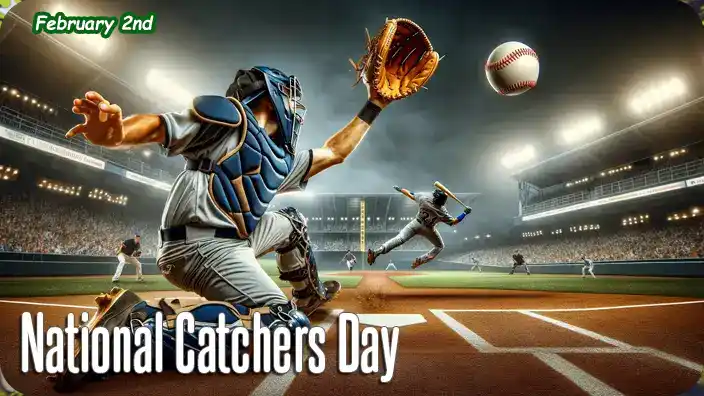
Baseball catchers: the unsung heroes of the game who squat so much they make toads jealous. They're the only players who view the game from a rearview mirror perspective, acting as part therapist, part strategist, and part human target for fastballs. Catchers gear up like they're heading into battle, donning masks that wouldn’t look out of place at a medieval jousting tournament. They communicate with pitchers through a series of signs that resemble an elaborate game of rock-paper-scissors, but with more consequences. In a world where stealing is frowned upon, they stand as the last line of defense against base thieves, ready to throw down at a moment's notice. Here's to the catchers, the knights in shining armor—well, more like sweaty armor—who make taking a 90 mph projectile to the body look like all in a day's work.
Celebrated: Annually, on February 2nd
Celebrate National Catchers Day with admiration for baseball's unsung heroes. Discover the skills, gear, and heart of the game's strategic masterminds.


- Details
The Arabian leopard may not host wildlife documentaries as often as lions with dramatic manes or tigers with blockbuster reputations, but this rare feline remains one of nature’s most impressive underdogs—or perhaps undercats. Agile, elusive, and perfectly adapted to some of the harshest landscapes on Earth, the Arabian leopard proves that true greatness doesn’t require constant publicity. International Day of the Arabian Leopard celebrates this critically endangered predator while reminding humanity that preserving extraordinary wildlife is far more noble than simply admiring cats on the internet, though admittedly, both have their appeal.
Celebrated: Annually, on February 10th
Learn about the Arabian leopard, its endangered status, conservation efforts, and the global importance of International Day of the Arabian Leopard


- Details
Finding someone who’s gone missing is like trying to spot your friend in a crowded concert—except they didn’t text you what they’re wearing, and the stakes are infinitely higher. For families, the search is relentless, like yelling “Marco!” in an ocean of silence, hoping to hear the faintest “Polo!” in return. It’s a serious issue, but the dedication of search teams, investigators, and communities proves that no one stops playing the game until the missing are found.
Celebrated: Annually, on February 3rd
Learn how technology and community support play vital roles on National Missing Persons Day, focusing on solutions for families affected by disappearances.


- Details
Crepes are like the international spies of the breakfast world: thin, suave, and mysteriously versatile. They show up dressed in everything from a simple coat of sugar and lemon to a fancy tux of strawberries and cream. They can disappear in a flash, leaving no evidence behind except a dusting of powdered sugar and a room full of satisfied smiles. They're the culinary equivalent of a smooth operator, sliding onto your plate with understated elegance, whispering, "Bon appétit," and vanishing before you can ask, "More syrup, please?"
Celebrated: Annually, on February 2nd
Discover the whimsical origins of Bavarian Crepes Day, where French cuisine meets Bavarian tradition in a delightful culinary celebration.


- Details
World Cancer Day, observed annually on February 4th, is a solemn reminder of the global impact of cancer, a disease that knows no borders or boundaries. It's a day dedicated to raising awareness, promoting research, and encouraging preventive measures to combat this devastating illness. On this day, we remember those affected by cancer and recommit ourselves to advancing treatments, supporting patients, and fostering hope in the ongoing fight against one of humanity's most persistent health challenges. World Cancer Day represents a collective call to action, uniting individuals, communities, and nations in the pursuit of a cancer-free world.
Celebrated: Annually, on February 4th
Observe World Cancer Day by learning about its significance, themes, and the global effort to combat cancer. Join the fight for a healthier future.


- Details
National Unclaimed Property Day is the holiday we never knew we needed, but now can't live without. It's like playing a financial game of hide-and-seek, where your long-lost assets are the ones hiding and you're 'it.' Imagine searching for hidden treasure, but instead of a map marked with an 'X,' you've got a government website and instead of a shovel, you've got your old tax documents. It's the day when checking your couch cushions for loose change pales in comparison to discovering that forgotten utility deposit from 2005. So, dust off your detective hat and start searching - your wallet might just thank you!
Celebrated: Annually, on February 1st
National Unclaimed Property Day. The quest for forgotten assets and benefit your wallet with unclaimed treasures—a guide to reclaiming what's yours.


- Details
Without them, our lives would be a never-ending scavenger hunt for wall outlets and extension cords stretching across rooms like high-stakes tripwires. That remote control you so confidently point at the TV? Useless. Your phone, that digital lifeline connecting you to the world? A cold, lifeless brick. Even your car would sit in the driveway like a stubborn mule refusing to budge. We don’t think about them until they betray us—always at the worst possible moment, like when the smoke detector starts its infernal beeping at 3 a.m. Yet, for all their quirks, they are the unsung heroes of modern convenience, quietly powering our gadgets, gizmos, and general ability to function without having to be permanently tethered to a power source.
Celebrated: Annually, on February 18th
Discover the fascinating journey of batteries from ancient times to modern technology, and appreciate their vital role in our daily conveniences.


- Details
If you’ve ever had to explain your medical condition three times in one appointment—and then spell it—you already understand Rare Disease Day. It’s the annual reminder that uncommon doesn’t mean imaginary, dramatic, or “Googleable in under five seconds.” For millions of people, “rare” simply means living with something most folks have never heard of, while still showing up, carrying on, and occasionally correcting the doctor’s pronunciation.
Celebrated: Annually, the Last Day of February
Rare Disease Day raises awareness for 300 million people worldwide living with rare conditions and highlights research, advocacy, and hope.


- Details
Gumdrops, those squishy ambassadors of sweetness, lead a double life. By day, they lounge in candy jars, masquerading as mere treats. But by night, they embark on wild adventures across kitchen countertops, engaging in epic sugar-coated battles and staging elaborate dramas that rival any soap opera. Rumor has it, the green ones fancy themselves as aspiring stunt doubles for action movie stars, while the reds hold secret meetings, plotting to become the next big pop sensation. Amidst all this, the poor yellow gumdrops just can't seem to shake off their eternal dilemma: to be or not to be a lemon flavor, that is the question. In the world of gumdrops, every day is a rollercoaster of drama, laughter, and the occasional sticky situation.
Celebrated: Annually, on February 15th
Discover the fun celebration of National Gumdrop Day. Learn about the origins, types of gumdrops, and how to make your own delicious gumdrop treats.


- Details
Groundhogs, nature's fuzzy little meteorologists, and the only rodents that get their own holiday are surprisingly low-maintenance celebrities. They work just one day a year, predicting the weather with a method that's as scientifically accurate as flipping a coin. The rest of the time? They're living the dream, burrowing underground, munching on veggies, and avoiding emails. Despite their busy schedules of eating and sleeping, these whiskered weathermen have convinced the world to hold its breath every February 2nd, proving that with the right PR, even a groundhog can achieve fame. And if they predict six more weeks of winter? Well, they shrug and go back to bed, leaving us to shovel the driveway.
Celebrated: Annually, on February 2nd
Discover the quirky origins and cultural significance of Groundhog Day, where Punxsutawney Phil predicts weather with a mix of tradition and fun.


- Details
Stuffing mushrooms is like embarking on a miniature culinary adventure, where each mushroom cap is a tiny, edible boat setting sail on a sea of flavor. As you scoop out the stems and prepare your filling, it's hard not to feel like a gourmet chef, even if your primary cooking experience is boiling water. Whether you're spooning in a classic mix of garlic, breadcrumbs, and cheese or getting creative with crabmeat, spinach, or even a dash of truffle oil, the act of stuffing these little caps is both therapeutic and exciting. Once they're loaded up and ready for the oven, these bite-sized delights promise a journey of taste in every morsel – a small bite with big flavor, ready to win over hearts and taste buds alike.
Celebrated: Annually, on February 4th
Celebrate National Stuffed Mushroom Day with humor and creativity! Explore the art of stuffing mushrooms and join the fungi festivities.


- Details
There’s a fine line between culinary triumph and total disaster, and it’s measured in the rise (or fall) of an overconfident dessert. One moment, you’re staring into the oven, watching a majestic, puffy masterpiece take shape, and the next—poof—it collapses faster than your willpower at a dessert buffet. Few dishes demand both precision and blind hope like this one, where even a strong breeze or an ill-timed sneeze can send it into a deflated spiral of despair. But hey, even if it sinks, it’s still chocolate, and that’s a win in any book.
Celebrated: Annually, on February 28th
Celebrate National Chocolate Soufflé Day on February 28th with delightful recipes, history, and tips to master this airy dessert. Indulge in chocolatey perfection!


- Details
Think curling is just polite people sliding rocks while aggressively tidying the ice? Think again. Curling Is Cool Day celebrates a sport where precision rules, strategy reigns, and grown adults shout “SWEEP!” with complete seriousness. It’s quiet, it’s calculated, and it’s cooler than it looks — both figuratively and frostbite-adjacent.
Celebrated: Annually, on February 23rd
Celebrate Curling Is Cool Day with a humorous look at the strategy, history, style, and surprising intensity of this icy sport.

- Details
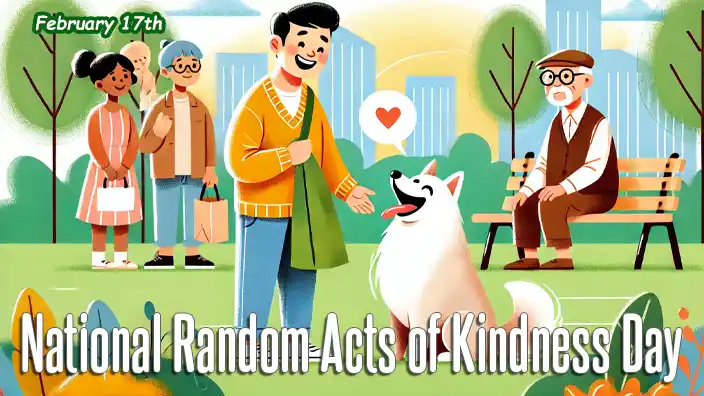
Random acts of kindness are like surprise snacks—you never know when one will show up, but when it does, it’s the best part of your day. Whether it’s someone paying for your coffee, holding the door open when your hands are full, or letting you merge in traffic without the passive-aggressive honk, these little moments restore your faith in humanity. Of course, kindness can backfire—like when you try to help an elderly lady with her bags, only to have her whack you with a baguette because she thinks you're stealing her groceries. But hey, it’s the thought that counts, right?
Celebrated: Annually, on February 17th
Learn about the history and benefits of random acts of kindness. Find simple and humorous ways to brighten someone's day and create a ripple effect of goodwill.


- Details
Golden Retrievers are like the sunshiny, overachieving students of the dog world who never seem to have a bad hair day. Imagine a dog with the enthusiasm of a toddler hopped up on birthday cake, combined with the looks of a canine supermodel. They're the type who could accidentally knock over a vase while wagging their tail, and you'd end up apologizing for putting the vase in such a wag-hazardous location. Known for retrieving everything from tennis balls to your last bite of sandwich (watch out for that one), they approach life with a "go big or go home" attitude, where going big usually means trying to fit one more tennis ball in their already stuffed mouth. In short, a Golden Retriever is like living with a furry, four-legged sunshine machine that occasionally drools.
Celebrated: Annually, on February 3rd
Discover the rich history of Golden Retrievers and how to celebrate their special day with activities that highlight their loyalty and playful spirit.


- Details
There are very few vehicles where the official safety advice includes "hold onto your hat and maybe your dignity," but here we are. One minute, you're peacefully floating along, taking in the scenic wetlands, and the next, you're clinging to your seat as a fan the size of a helicopter rotor launches you across the water like a swamp rocket. Conversations? Forget it—between the roar of the engine and the wind aggressively restyling your hair, the only communication happening is a series of wide-eyed expressions that translate to "Did we just almost hit that gator?" and "Why didn’t I wear tighter sunglasses?"
Celebrated: Annually, on February 19th
Join the adventure on National Airboat Day! Learn about airboat history, celebrate with exciting tours, and uncover fun facts about these powerful machines.

- Details
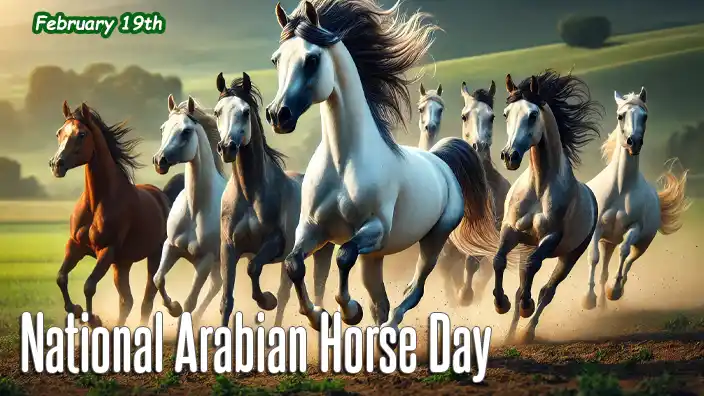
Graceful, intelligent, and just the right amount of dramatic, some creatures were simply born to be admired—and they know it. With a swish of the tail and a toss of the mane, this four-legged aristocrat can go from regal elegance to playful mischief in a heartbeat. One moment, it’s prancing with the poise of a royal steed, the next, it’s expertly untying the lead rope and making a grand escape just to prove it can. Add in a flair for expressing opinions (mostly through exaggerated head tosses and judgmental stares), and you’ve got an animal that isn’t just a horse—it’s an experience.
Celebrated: Annually, on February 19th
Explore the elegance and spirited nature of Arabian horses. Learn how to celebrate National Arabian Horse Day with fun activities and fascinating facts.

From Our Marks Catelog
-

Brussels sprouts: the tiny green orbs that have been sparking dinner table debates for...
-
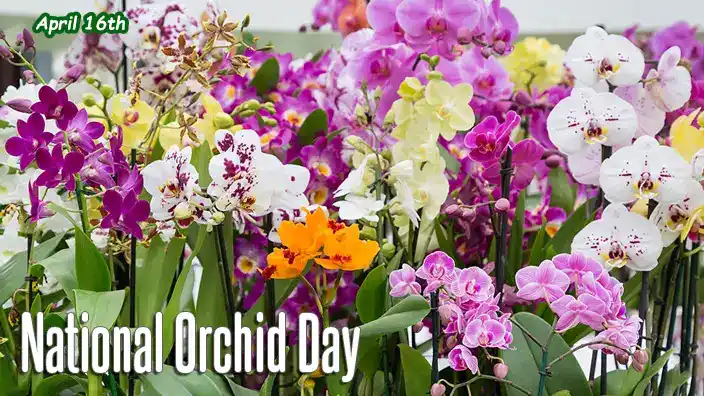
Elegance, mystery, and just the right amount of arrogance—some things demand admiration without lifting...
-
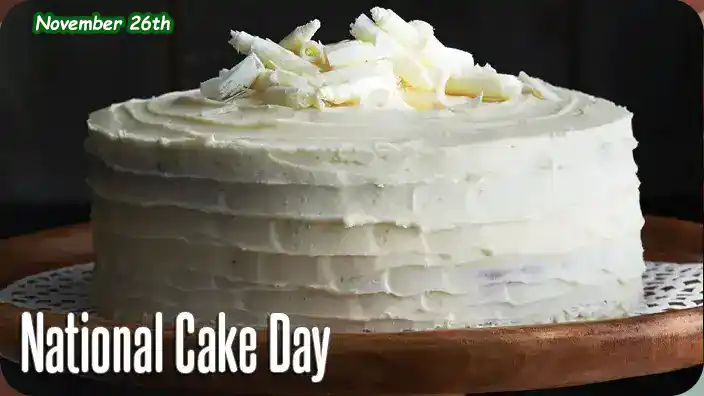
National Cake Day is the one day of the year when it's socially acceptable to have your cake and eat...
-

Forget glow-in-the-dark snack cakes and cheese that comes in a spray can—there’s something wildly...
-

If there were an Olympic event for clumsiness, someone would be rolling down the hill, missing their...
-

Gazpacho Soup Day isn’t just a day to honor cold tomato soup; it’s a day to revel in the absurdity of...


