Mark The Days - February

February may be short, but it sure knows how to stir things up. It packs in romance, groundhogs, presidents, and more weather drama than a tornado in a teacup. Valentine’s Day pops up in the middle like a glitter-covered emotional pop quiz, while the rest of the month toggles between “do I need a parka or just a sweater?” It’s the calendar’s wildcard—only 28 days long (unless it’s feeling frisky), but fully capable of delivering snowstorms, awkward dinner dates, and random holidays involving umbrellas, chili, or lost socks. Small? Yes. Boring? Never.
- Details
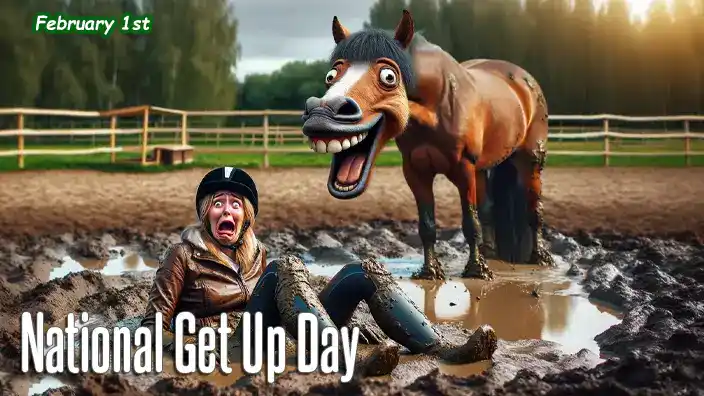
There's an unspoken rule in the Handbook of Life: if you trip and fall, you must get up with as much grace as a newborn giraffe on roller skates. It's not just about the getting up; it's the art of pretending you meant to inspect the pavement up close, or suddenly felt an urge to do a spontaneous push-up. The trick is to rise with a smile so convincing, even the sidewalk believes you're just practicing your acrobatics. After all, every stumble is not a misstep, but an impromptu audition for life's grand slapstick comedy!
Celebrated: Annually, on February 1st
National Get Up Day on February 1st encourages everyone to embrace resilience and the courage to rise after setbacks, transcending sports to inspire all.

- Details
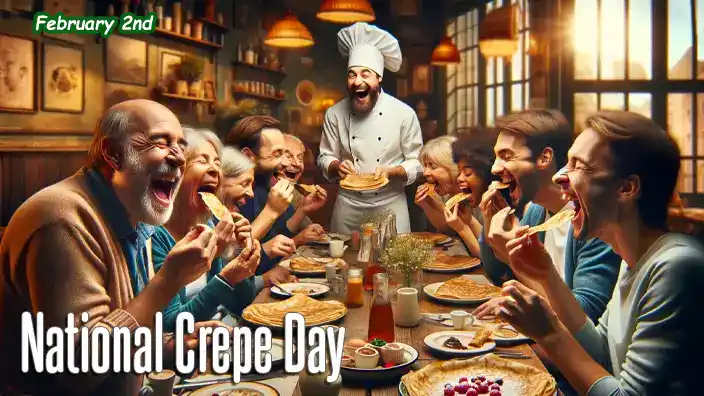
Crepes are like the international spies of the breakfast world: thin, suave, and mysteriously versatile. They show up dressed in everything from a simple coat of sugar and lemon to a fancy tux of strawberries and cream. They can disappear in a flash, leaving no evidence behind except a dusting of powdered sugar and a room full of satisfied smiles. They're the culinary equivalent of a smooth operator, sliding onto your plate with understated elegance, whispering, "Bon appétit," and vanishing before you can ask, "More syrup, please?"
Celebrated: Annually, on February 2nd
Discover the whimsical origins of Bavarian Crepes Day, where French cuisine meets Bavarian tradition in a delightful culinary celebration.


- Details
Wine is like a loyal friend—always there when you need it, full of personality, and occasionally responsible for your worst decisions. It has the magical ability to make you feel sophisticated while simultaneously convincing you that dancing on the coffee table is a brilliant idea. One glass turns you into a philosopher, two glasses make you fluent in a foreign language you don’t actually speak, and three glasses? Well, let’s just say that’s when you start texting your ex or attempting to explain quantum physics to the cat. Cheers to wine—the only history lesson that gets better with every sip!
Celebrated: Annually, on February 18th
Join the festivities of National Drink Wine Day! Discover fun ways to celebrate, from wine tastings to perfect food pairings, and enjoy this timeless elixir.


- Details
Overripe bananas are like distant relatives—you never plan for them, but suddenly they’re there, and you’ve got to do something about it. Thankfully, instead of quietly disposing of the fruit bowl evidence at 2 a.m., someone once thought, “What if we bake this and pretend it was intentional?” The result? Banana bread: the glorious loaf that transforms botanical regret into breakfast pride. Celebrated every February 23rd, this is the day we honor the miracle of turning decay into delight—one buttery slice at a time.
Celebrated: Annually, on February 23rd
Discover the history, humor, and delicious charm of National Banana Bread Day. Learn fun facts, baking tips, and why overripe bananas are a gift.


- Details
Open That Bottle Night is the one evening of the year when your wine rack stops being a museum and starts being a kitchen appliance. That dusty bottle you’ve been saving for the “perfect occasion” finally gets its moment, only for you to realize the perfect occasion is you, your spouse, and leftovers in the microwave. Still, there’s something heroic about pulling that cork—like you’ve defeated time itself, or at least your own indecision. And if the wine turns out to be amazing, you feel like a genius. If it tastes like vinegar with a backstory, well, at least you’ve freed up some shelf space for the next “special” bottle you’ll absolutely open… someday.
Celebrated: Annually, on the Last Saturday in February
Celebrate Open That Bottle Night by uncorking a special bottle, sharing stories, and turning an ordinary evening into a memorable occasion.

- Details
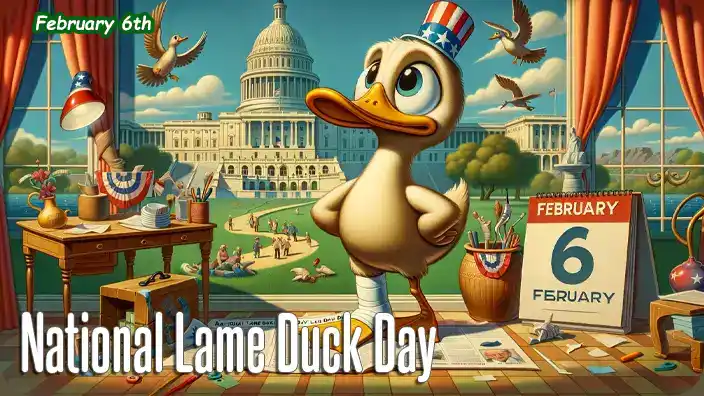
In the world of politics, the "Lame Duck" is less about feathers and quacks, and more about the awkward waddle of an outgoing politician. Picture this: a lawmaker, having lost the race or reached the term limit, still hanging around the corridors of power. It's like that one party guest who doesn't realize the party ended hours ago. They wander the halls, passing laws with the enthusiasm of someone who knows they've got nothing left to lose - because, well, they already lost. They're the political equivalent of someone doing karaoke with no fear of judgment - belting out policies in a finale that’s part swan song, part rubber chicken dance. In short, a lame duck's final days can be as unpredictable as a game of Duck, Duck, Goose played in Congress.
Celebrated: Annually, on February 6th
Celebrate National Lame Duck Day on February 6! Dive into the history, humor, and unique celebrations of this day honoring outgoing politicians.


- Details
Let’s be honest—no one eats tortilla chips casually. You don’t take one and move on with your life. You take one, then another, then suddenly you’re standing over the counter, wondering how half the bag disappeared while you were “just having a few.” They’re the official snack of accidental dinners, heroic dipping attempts, and bold confidence in a chip that may or may not survive the scoop it’s been assigned. Tortilla chips don’t judge, they don’t ask questions, and they certainly don’t stop you. They just crunch loudly enough to announce that you’re enjoying yourself—and maybe that it’s time to buy another bag.
Celebrated: Annually, on February 24th
Discover the history of tortilla chips, their rise from simple tortillas to snack legend, plus fun facts and tasty ways to celebrate National Tortilla Chip Day.


- Details
Imagine a world where lattes are the currency. Suddenly, coffee shops become banks, baristas are the new financial advisors, and your latte art skills? Let's say they could make or break your credit score. In this caffeinated economy, a beautifully crafted swan on your foam could mean a loan approval, while a blobby heart might sink your chances of buying that dream house. So next time you're sipping on that frothy blend of espresso and milk, remember: in an alternate universe, you might just be drinking your savings account!
Celebrated: Annually, on February 11th
Celebrate National Latte Day with a frothy fusion of fun and flavor, exploring the cultural impact of this beloved coffee icon. Raise your mugs and toast to the artistry of baristas and the modern café culture.

- Details
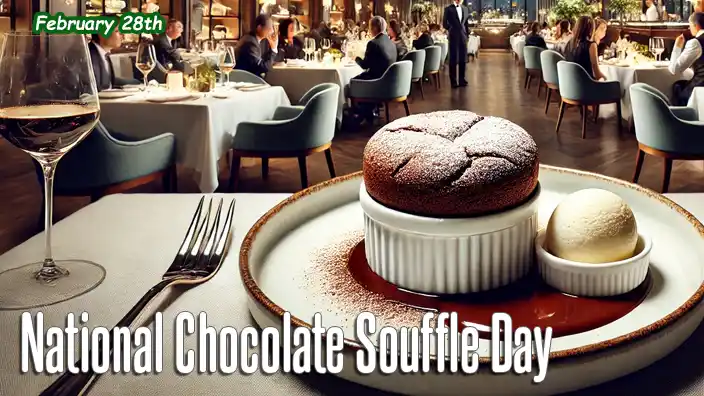
There’s a fine line between culinary triumph and total disaster, and it’s measured in the rise (or fall) of an overconfident dessert. One moment, you’re staring into the oven, watching a majestic, puffy masterpiece take shape, and the next—poof—it collapses faster than your willpower at a dessert buffet. Few dishes demand both precision and blind hope like this one, where even a strong breeze or an ill-timed sneeze can send it into a deflated spiral of despair. But hey, even if it sinks, it’s still chocolate, and that’s a win in any book.
Celebrated: Annually, on February 28th
Celebrate National Chocolate Soufflé Day on February 28th with delightful recipes, history, and tips to master this airy dessert. Indulge in chocolatey perfection!


- Details
Stuffing mushrooms is like embarking on a miniature culinary adventure, where each mushroom cap is a tiny, edible boat setting sail on a sea of flavor. As you scoop out the stems and prepare your filling, it's hard not to feel like a gourmet chef, even if your primary cooking experience is boiling water. Whether you're spooning in a classic mix of garlic, breadcrumbs, and cheese or getting creative with crabmeat, spinach, or even a dash of truffle oil, the act of stuffing these little caps is both therapeutic and exciting. Once they're loaded up and ready for the oven, these bite-sized delights promise a journey of taste in every morsel – a small bite with big flavor, ready to win over hearts and taste buds alike.
Celebrated: Annually, on February 4th
Celebrate National Stuffed Mushroom Day with humor and creativity! Explore the art of stuffing mushrooms and join the fungi festivities.


- Details
Optimists are the folks who wear sunglasses in a thunderstorm, firmly convinced that the sun is just on a brief coffee break. They'll look at a glass half-empty and not only argue it's half-full but also cheerfully anticipate a free refill any minute now. Optimism, their unshakeable belief system, turns them into the kind of people who'd bring a single fork to an all-you-can-eat buffet, ready to tackle life's challenges one bite at a time. To an optimist, every Monday is a Friday in disguise, every flat tire an opportunity for an impromptu workout, and every tax return a surprise savings account they forgot they had. In the grand theatre of life, optimists are those insisting on clapping until the curtain call, convinced the best is yet to come—even if it's just the blooper reel.
Celebrated: Annually, on the First Thursday in February
Join the celebration of Optimist Day, a festival dedicated to positivity, resilience, and finding hope in every situation, taking place every February.

- Details
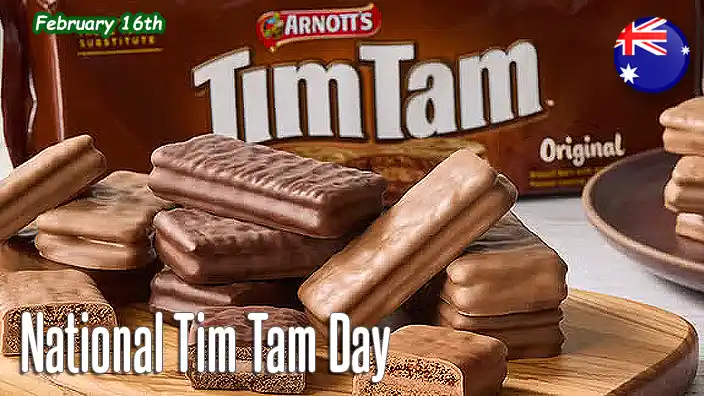
There’s something dangerously addictive about Tim Tams—one bite, and suddenly you’re staring at an empty pack, wondering how time slipped away so quickly. These chocolate-coated delights have a way of making people lose all self-control, and honestly, who can blame them? They’re crunchy, creamy, and designed to be devoured in absurd quantities. And let’s not even talk about the Tim Tam Slam, where you turn this innocent biscuit into a chocolate straw—because once you experience the melty, gooey bliss of sipping hot coffee through a Tim Tam, there’s no going back. It’s not just a snack; it’s a life-changing event.
Celebrated: Annually, on February 16th
Indulge in the delicious world of Tim Tams this February 16th! Learn about their history, unique flavors, and how to master the famous Tim Tam Slam.


- Details
This is the one day a year when the amount of love in the air is directly proportional to the panic in the hearts of those who've forgotten to book a dinner reservation. It's a magical 24 hours where chocolates become a dietary staple, roses are worth their weight in gold, and plush teddy bears holding hearts somehow become acceptable home decor. Let's not forget the high-stakes game of "Guess the Correct Level of Romance," where going too big can be as risky as not going big enough. Whether you're swiping right in hopes of a last-minute date or crafting the perfect "I love you more than pizza" card, remember, it's the thought that counts... and maybe also the chocolate.
Celebrated: Annually, on February 14th
Discover the fascinating origin story of Valentine's Day, from ancient Rome to modern-day celebrations. Explore the traditions and legends of Valentine's Day.

- Details
Molasses is the sweet, sticky superstar of the syrup world, moving at the speed of a relaxed snail on vacation. It's the only food substance that gives you enough time to reconsider your life choices as you wait for it to ooze out of the bottle. Rich, dark, and with a viscosity that defies gravity, molasses is like the syrup version of a slow-motion action hero. It's used in everything from cookies to baked beans, proving its versatility and the universal truth that slow and steady wins the race – especially in the kitchen. So next time you pour molasses, remember: patience is sweet and, in this case, deliciously sticky too!
Celebrated: Annually, on February 8th
Celebrate National Molasses Bar Day by indulging in the rich, smoky sweetness of molasses bars—a nostalgic treat that brings people together.

- Details
Margaritas aren’t just a drink—they’re a personality test in a glass. The on-the-rocks purists sip with the elegance of a seasoned philosopher, contemplating life’s mysteries (or at least the best taco pairing). The frozen margarita lovers are the party-starters, the ones who convince everyone that karaoke is a great idea after just one sip. And then there’s the salt-or-no-salt debate, which has ended more friendships than Monopoly. One thing’s for sure—no matter how you take your margarita, the night always starts with “just one” and somehow ends with an impromptu conga line and a newfound appreciation for the art of lime squeezing.
Celebrated: Annually, on February 22nd
Discover the vibrant history of margaritas, from its mysterious origins to classic recipes and exciting variations perfect for any celebration.


- Details
This day brings a harrowing reminder of the stolen childhoods and shattered innocence resulting from the forced recruitment of child soldiers around the globe. This day casts a spotlight on the grim reality that, in many conflict zones, children are coerced into becoming instruments of war, robbing them of their education, families, and futures. The red handprint, a symbol of protest against this atrocity, embodies the collective outcry against the exploitation of children in armed conflicts and the urgent call for action to restore their rights, dignity, and hope. Red Hand Day is not just a day of awareness; it's a plea for the world to recognize and end the cycle of violence that preys on the most vulnerable, demanding immediate and unwavering efforts to safeguard all children from the horrors of war.
Celebrated: Annually, on February 12th
Learn about Red Hand Day, a global initiative to protect children from being recruited as soldiers in armed conflicts. Join the fight to uphold children's rights and end this grave violation.


- Details
The umbrella: humanity's bold attempt to outsmart Mother Nature with a few spokes and a sheet of fabric. It's our personal force field against the sky's mood swings, a valiant defender against rain, shine, and the occasional bird with terrible aim. Yet, for all its heroics, the umbrella has a comical knack for turning inside out at the first whisper of the wind, transforming from a shield into a confused nylon flower in seconds. It's the only item that can make us feel both sophisticated and utterly defeated as we battle the elements, making it clear that while we may have invented the wheel, we're still figuring out how to handle a breeze.
Celebrated: Annually, on February 10th
Discover the fascinating history and evolution of umbrellas, from ancient symbolic luxury to modern-day essential accessories, on National Umbrella Day. Unfurl the fabric and delve into the world of this versatile shield against the elements.


- Details
In 1849, thousands of men ran west in search of gold. In 1853, one man showed up and said, “Gentlemen, before you get rich, you’re going to need sturdier pants.” History suggests he was the smartest man in the room.
Celebrated: Annually, on February 26th
Explore the history of Levi Strauss, the 1873 denim patent, and how Gold Rush workwear turned into a global icon.

From Our Marks Catelog
-

Brussels sprouts: the tiny green orbs that have been sparking dinner table debates for...
-
Elegance, mystery, and just the right amount of arrogance—some things demand admiration without lifting...
-
National Cake Day is the one day of the year when it's socially acceptable to have your cake and eat...
-

Forget glow-in-the-dark snack cakes and cheese that comes in a spray can—there’s something wildly...
-

If there were an Olympic event for clumsiness, someone would be rolling down the hill, missing their...
-
Gazpacho Soup Day isn’t just a day to honor cold tomato soup; it’s a day to revel in the absurdity of...

