Mark The Days - December

December doesn’t walk in—it bursts through the door wearing twinkle lights and demanding cocoa. It’s the month where to-do lists triple, bank accounts whimper, and Mariah Carey begins her annual takeover of the airwaves. There’s gift-wrapping, cookie-baking, carol-singing, and the occasional existential crisis about whether you sent Aunt Linda a card last year or just thought about it really hard. But in the chaos comes cheer, and in the cold comes comfort—plus a solid excuse to eat fudge for breakfast. December is loud, sparkly, sentimental... and somehow always over too soon.
- Details
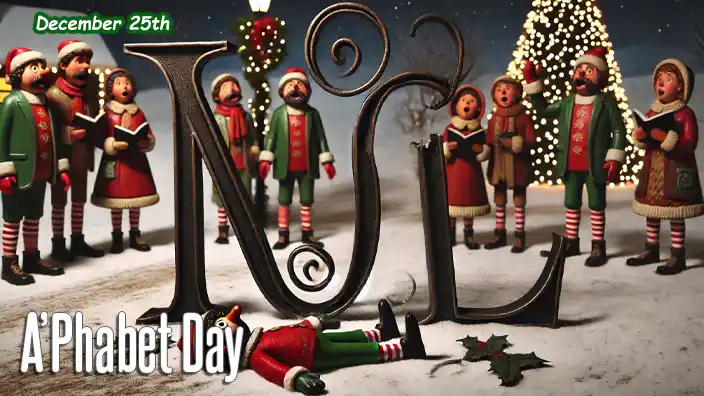
Imagine spending an entire day tiptoeing around a single letter like it’s a booby trap in a word jungle. Conversations turn into riddles, grocery lists become epic quests, and ordering a sandwich sounds like a poorly dubbed movie: “Yes, I desire bread with stuff inside.” This is the magic of A’Phabet Day, where every slip-up is met with laughter, and every creative workaround feels like a small victory against the tyranny of the letter “L.”
Celebrated: Annually, on December 25th
Discover A’Phabet Day, a whimsical holiday on December 25th, where participants avoid words with 'L', sparking creativity and laughter.


- Details
Have you ever wondered what would happen if a kitchen appliance had a life crisis and decided to take over the universe? Enter the Daleks of "Doctor Who" fame. These pepper-pot-shaped conquerors, equipped with a plunger and a whisk for world domination (because who needs laser guns when you've got kitchen utensils?), have the dramatic flair of a Shakespearean villain and the mobility of a broken shopping trolley. They trundle around, shouting "Exterminate!" with the zeal of a telemarketer at dinner time, yet are notoriously stumped by the universe's most complex invention: stairs.
Celebrated: Annually, on December 21st
Discover International Dalek Remembrance Day, a unique celebration dedicated to Doctor Who's iconic villains. Join the Whovian universe in embracing the charm of these quirky characters.


- Details
Icing everywhere—on the counter, in your hair, possibly even on the dog—and somehow the roof still won’t stay up. Welcome to the chaotic joy of gingerbread house construction! It’s a delicate dance of architecture and willpower, where gumdrops double as shingles, and the structural integrity of your candy cane columns is tested by the sheer weight of sugar. Sure, your “dream house” may end up leaning like the Tower of Pisa, but in the end, the point isn’t perfection—it’s having fun, making memories, and sneaking enough frosting to justify a second cup of coffee.
Celebrated: Annually, on December 12th
Gingerbread House Day celebrates the joy of baking and creativity. Explore tips, historical insights, and the whimsical world of gingerbread architecture!

- Details
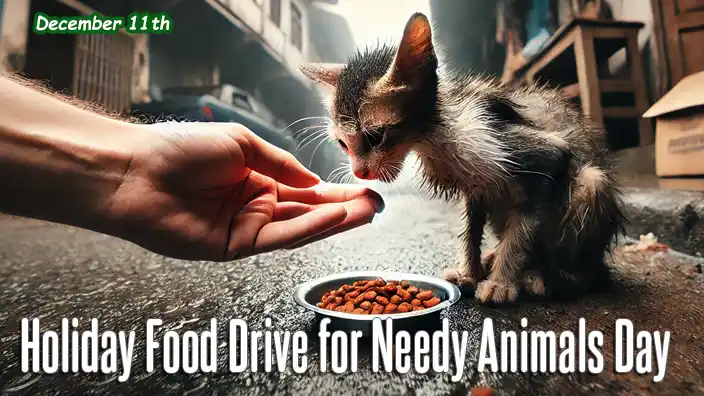
Every day, abandoned and starving animals roam the streets, their lives defined by hunger, fear, and neglect. They didn’t choose this fate, and their survival often depends on the kindness of strangers. Your donation, no matter how small, can be the difference between a life of suffering and one of safety and care. It’s not just about food—it’s about giving them hope, a second chance, and the possibility of knowing compassion in a world that’s turned its back on them. When you give, you’re not just helping an animal—you’re taking a stand against indifference and becoming part of a movement that refuses to let these voiceless beings be forgotten.
Celebrated: Annually, on December 11th
Join the Holiday Food Drive for Needy Animals Day to support abandoned and starving animals. Your contributions can make a significant impact this season.


- Details
On Bathtub Party Day, let’s not forget the unsung heroes: the bath accessories. Imagine the loofah, hanging in the corner, watching the festivities with a mix of pride and a touch of envy. It’s the Cinderella of the bathroom, always scrubbing, never soaking. Then there’s the often-ignored shower cap, dreaming of the day it’ll be invited to the party instead of just watching from a hook. And let’s not overlook the shampoo bottle opera singers, providing a soundtrack of slippery serenades. As you celebrate, give a nod to these bathroom buddies; after all, every good party needs a supporting cast!
Celebrated: Annually, on December 5th
Celebrate Bathtub Party Day in style with bubbles, rubber ducks, and relaxation. Discover the origins and health benefits of this quirky holiday.


- Details
Ditch the texts and dial up some laughter! It's time to give your thumbs a break and your vocal cords a workout. Reconnect with old pals, relive those "remember when" moments, and laugh over the phone like it's 1999. Who knew science could be this much fun? So, grab your phone, call a friend, and let the good times and giggles roll!
Celebrated: Annually, on December 28th
Celebrate National Call a Friend Day: reconnect with humor, relive memories, and discover the joy and science of hearing a friend's voice!


- Details
National Pearl Harbor Remembrance Day is not only a day of solemn commemoration but also an important educational opportunity. It serves as a catalyst for deeper understanding and reflection on a crucial period in world history. This day invites Americans, especially younger generations, to explore and grasp the complexities and nuances of their nation's involvement in World War II, a conflict that shaped much of the modern world.
Celebrated: Annually, on December 7th
National Pearl Harbor Remembrance Day, observed on December 7th, commemorates the historic attack that propelled the U.S. into World War II.

- Details
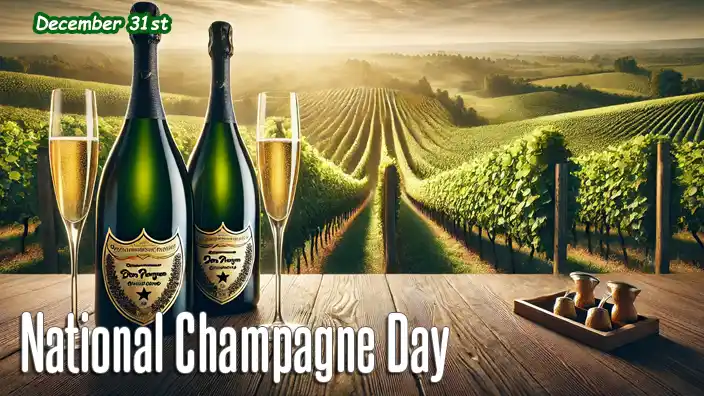
Champagne is proof that bubbles make everything better—except maybe bathtubs, where 350 bottles could get awkward (looking at you, Marilyn Monroe). This sparkling marvel transforms ordinary nights into celebrations and makes indecision about whether to drink wine or soda obsolete. It’s not just a drink; it’s an event, a mood, and sometimes, a projectile cork flying at 25 miles per hour—so proceed with caution, but most importantly, with joy!
Celebrated: Annually, on December 31st
Discover the rich history and intriguing facts about champagne, from its origins in France to its status as a celebration staple worldwide.

- Details
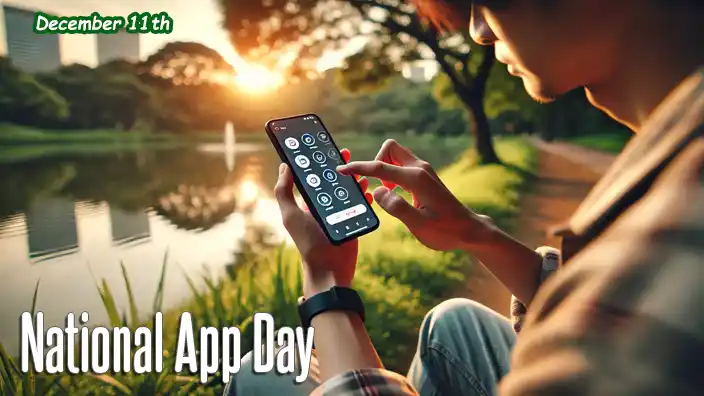
In a world where we can summon a ride, order a pizza, and virtually adopt a panda all without leaving the couch, it’s fair to say our priorities have taken a digital turn. These tiny squares on our screens have become the ultimate life coaches, nagging us to hydrate, exercise, and meditate—though they conveniently ignore our habit of doomscrolling at 2 AM. And let’s not forget the sheer irony of a “wellness” app that bombards us with notifications until we’re more stressed than relaxed. Somehow, apps have turned even the simplest of tasks into gamified adventures, where every grocery list feels like a high-stakes mission to unlock the next level of adulting.
Celebrated: Annually, on December 11th
Discover the impact of apps on daily life, their benefits, drawbacks, and how to embrace technology while maintaining a healthy balance on National App Day.


- Details
Did you know that hugging could be an Olympic sport? Hear me out: a hug measures strength (of affection), endurance (how long can you hold it without making it weird?), and flexibility (to accommodate various heights and hug styles). It's like a triathlon for emotions! Plus, hugging burns about 12 calories per hour, which isn't a lot, but if you hug enough people at a party, you could work off a cookie. And here's the kicker: while a hug lasts only a moment, the awkwardness of an unwanted hug can feel like an eternity. It's like time travel, but with more personal space issues. So, next time you go in for a hug, remember you're engaging in a complex athletic and temporal event – or just giving someone a squeeze because, well, it feels nice!
Celebrated: Annually, on December 3rd
Explore the profound impact of a simple hug on human connection, health benefits and the celebration of Let's Hug Day.

- Details
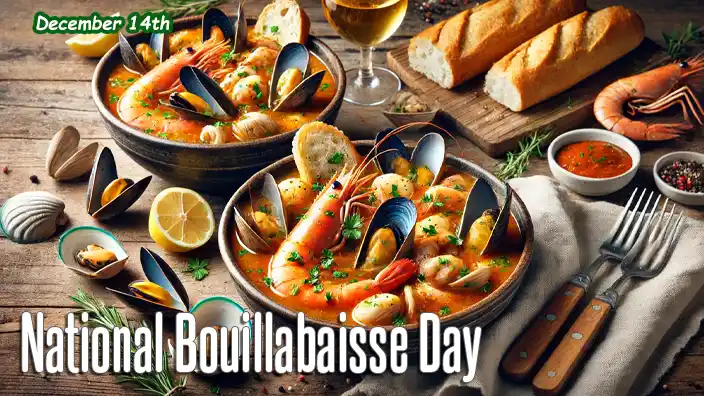
It’s the kind of dish that makes you feel fancy just saying its name, even if you’re pronouncing it wrong. Somewhere between the delicate swirl of saffron and the occasional battle with a slippery mussel shell, you realize bouillabaisse isn’t just food—it’s an adventure. You’re not just eating dinner; you’re navigating a treasure chest of seafood, dodging rogue fish bones, and wondering if the chef secretly has a hotline to Poseidon. And by the end, when the broth is gone and you’ve somehow used three napkins, it feels like you’ve earned a certificate in culinary courage.
Celebrated: Annually, on December 14th
Celebrate National Bouillabaisse Day on December 14th by exploring the rich history and culinary artistry of this iconic seafood stew from Marseille.


- Details
Ah, Christmas Eve — that magical night when every parent becomes a covert operative, sneaking around the house like clumsy ninjas with rolls of wrapping paper instead of nunchucks. The kids are pretending to sleep while secretly running NORAD’s Santa tracker, Grandma’s insisting the turkey “just needs another hour,” and Dad’s arguing with the tree lights that have somehow unionized overnight. The air smells like cookies, pine needles, and mild panic — the true scent of the holidays.
Celebrated: Annually, on December 24th
Experience the magic of Christmas Eve, where the chill of December meets the warm glow of holiday lights, filled with joy, nostalgia, and festive anticipation. Discover more!


- Details
Today we tip our hats (and our frying pans) to the slick superstar of the culinary world: lard. This is the day when calorie counters take a break, vegetarians look away, and chefs joyously dance in a grease rain. It's a day to celebrate those secret, flaky pie crusts and whisper sweet nothings to crispy fried chicken. So, let's raise our spatulas and salute the king of the kitchen, lard, because, without it, life would just be a series of unexciting, non-greasy meals.
Celebrated: Annually, on December 8th
National Lard Day celebrates the rich history and comeback of lard in the culinary world. From cooking masterpieces to sustainability, discover the greasy glory of this versatile fat.

- Details
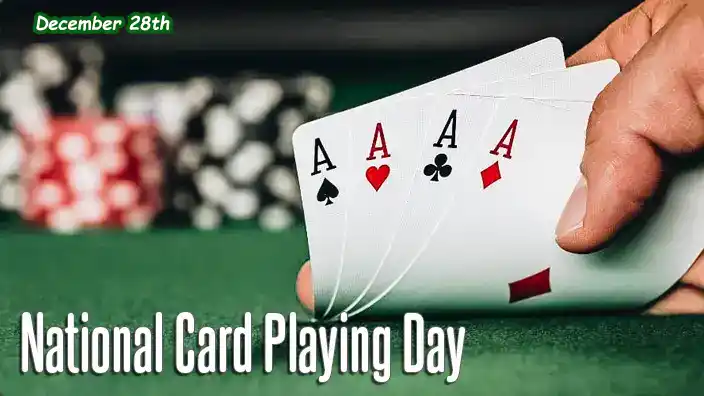
National Card Playing Day is the perfect excuse to dust off those old decks of cards, sharpen your poker face, and settle family grudges over a friendly game of Go Fish. It’s a day where grandparents become ruthless opponents, kids suddenly master the art of bluffing, and everyone realizes that Uno can end friendships quicker than Monopoly. So, gather around the table, deal those cards, and remember: losing gracefully is a skill, but winning with a victory dance is an art form!
Celebrated: Annually, on December 28th
Celebrate National Card Playing Day on December 28th with family and friends. Rediscover the joy of card games and the history behind every shuffle and deal.

- Details
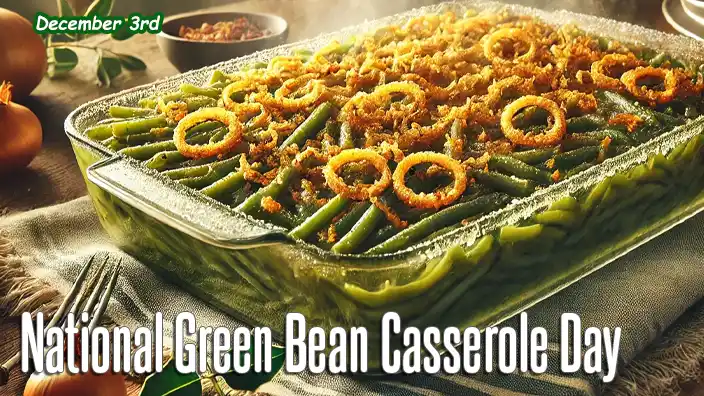
Green bean casserole is the ultimate potluck ninja—quietly unassuming but always ready to steal the show. It’s like the middle child of side dishes: not as flashy as mac and cheese, not as trendy as kale salad, but somehow, it’s the one everyone ends up piling onto their plates. And let’s be honest, those crispy fried onions on top? They’re the edible equivalent of glitter—once you’ve had a taste, you’ll find yourself compulsively sprinkling them on everything from burgers to ice cream (okay, maybe not ice cream… or maybe yes?). It’s the dish that says, “I’m simple, I’m comforting, and I will definitely be the first thing gone from the buffet table.”
Celebrated: Annually, on December 3rd
Join the fun of National Green Bean Casserole Day with tips for cooking, hosting competitions, and sharing this classic dish with others.


- Details
If there were a prize for “Figuring Things Out That the Rest of Us Didn’t Even Know Were Questions,” the Nobel Prize would win it—oh wait, it already does. Nobel Prize Day is when the world tips its hat to people who looked at impossibly complex problems and said, “Give me a minute,” and then actually came back with answers. Meanwhile, the rest of us are just trying to remember why we walked into the kitchen. It’s a day to celebrate brilliance, curiosity, and the comforting fact that somewhere out there, very smart people are making progress… so we don’t have to panic just yet.
Celebrated: Annually, on December 10th
Learn about Nobel Prize Day, Alfred Nobel, and how these prestigious awards recognize contributions that change the world.


- Details
Violins may be the epitome of elegance, but they have a playful side too. Ever tried tuning one? It’s like convincing a toddler to clean their room—a delicate negotiation that often ends in frustration. And who can forget the violin’s knack for exposing even the slightest lack of coordination? One misplaced bow stroke and you’re performing an impromptu rendition of “Screeching Symphony.” Yet, despite these quirks, the violin’s charm is undeniable—a testament to the fact that even temperamental divas can steal the show.
Celebrated: Annually, on December 13th
Discover the allure of the violin on National Violin Day! Learn about its craftsmanship, legendary musicians, and how to celebrate this timeless instrument.

- Details
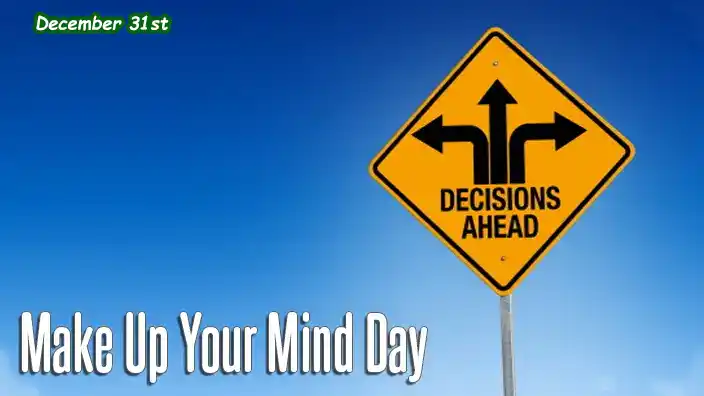
Decisiveness sounds impressive in theory—bold choices, firm handshakes, confident nods—but in real life it often looks like someone standing in front of the fridge with the door open, debating between leftovers and a sandwich for ten solid minutes. Being decisive means picking a direction and going with it, even if you later discover it was the scenic route to a minor mistake. Still, there’s something admirable about a person who says, “Right, this is what we’re doing,” and actually does it, instead of forming a committee, holding a vote, and postponing the decision until after lunch. Sometimes the best choice is simply making one. 😄
Celebrated: Annually, on December 31st
Make Up Your Mind Day is a humorous holiday promoting bold choices and decisiveness, helping you leave indecision behind as the New Year approaches.

From Our Marks Catelog
-

Single parenthood is a crash course in multitasking—where making dinner, helping with homework, and dodging Lego...
-

Balloons are the life of any party, with their bright colors and whimsical shapes, but they also...
-

Letting things go is a skill we all think we have—until we’re in the shower five years later, replaying an...
-

Some holidays ask for deep reflection. Others demand fireworks, feasts, or elaborate decorations....
-

With a gaze that could melt ice and a mustache so perfectly groomed it might have had its own...
-

Imagine having the uncanny ability to make even the driest statistics sound like the punchline to a...

