Mark The Days - December

December doesn’t walk in—it bursts through the door wearing twinkle lights and demanding cocoa. It’s the month where to-do lists triple, bank accounts whimper, and Mariah Carey begins her annual takeover of the airwaves. There’s gift-wrapping, cookie-baking, carol-singing, and the occasional existential crisis about whether you sent Aunt Linda a card last year or just thought about it really hard. But in the chaos comes cheer, and in the cold comes comfort—plus a solid excuse to eat fudge for breakfast. December is loud, sparkly, sentimental... and somehow always over too soon.

- Details
As the final hours of the year tick away, meet Alex, the ultimate procrastinator. Armed with a mountain of sticky notes and a frazzled expression, Alex is racing against time to conquer a year's worth of goals. From attempting a half-hearted yoga pose to speed-reading a novel, and even trying to bake a year's worth of cookies, Alex's frantic antics are a sight to behold. It's a mad dash of chaos, caffeine, and comically missed deadlines—because nothing says "Happy New Year" like realizing you still haven't finished that 2023 to-do list!
Celebrated: Annually, on December 29th
Tick Tock Day's 'Eleventh Hour Hustle' sees people transform into productivity powerhouses on December 29th, striving to complete their year's goals in a last-minute dash.

- Details
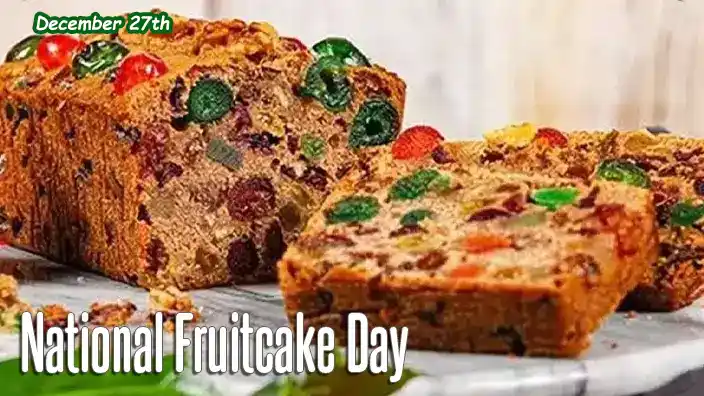
It’s not every day you encounter a dessert that doubles as a paperweight and a conversation starter. This dense confection has inspired everything from fierce culinary debates to competitive flinging contests—because if you’re not eating it, you might as well see how far it can fly. Packed with enough candied fruit to rival a carnival stand and fortified with enough booze to make a pirate blush, it’s less of a snack and more of a lifestyle commitment.
Celebrated: Annually, on December 27th
Celebrate National Fruitcake Day with creative ideas, from baking your own to hosting tastings, embracing this beloved and quirky holiday treat.

- Details
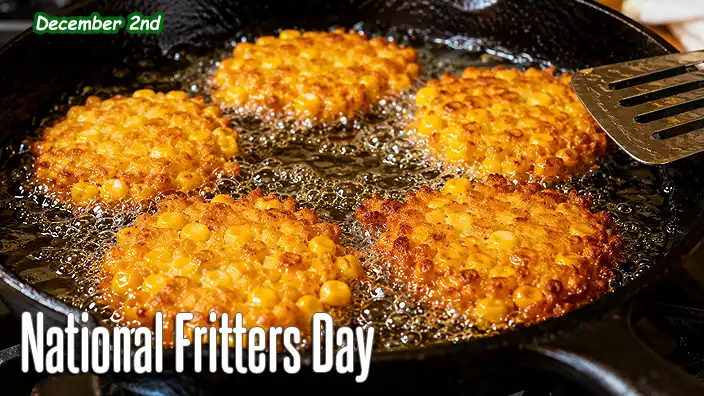
Why did the fritter go to therapy? Because it had too many inner fillings and couldn't handle the pressure of being deep-fried all the time. It just needed a safe space to be a little less crispy and a little more fluffy. The therapist said, "It's okay to feel a bit battered; life is not always a piece of cake." The fritter replied, "I guess I'm just fried to perfection!
Celebrated: Annually, on December 2nd
Celebrate National Fritters Day and pay tribute to the humble fritter, a dish that transcends borders and unites us in our love for fried batter. Learn about its intriguing history and global variations.

- Details
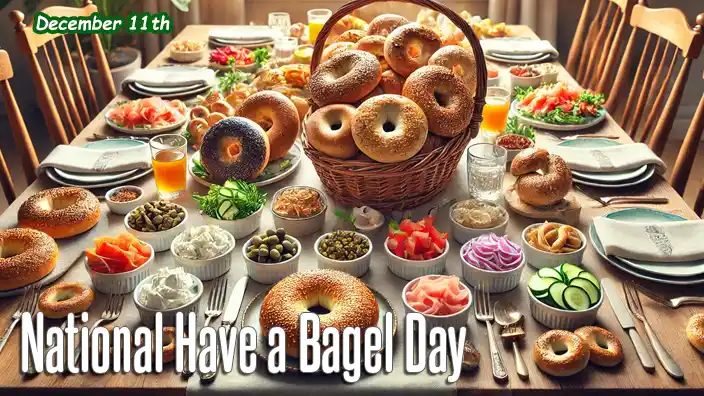
Bagels are proof that even bread can have a personality crisis. Are they breakfast? Lunch? A full-on dinner? Nobody knows, but they bravely attempt all three. They’re the only food that demands you stab them with a knife, smear them with something, and then apologize by adding lox and capers. And let’s not forget the hole—an existential reminder that no matter how much cream cheese you add, something will always be missing. Yet, despite this pastry paradox, bagels remain the chewy champions of carbs, uniting us all in the eternal struggle of sesame seeds versus poppy seeds stuck in our teeth.
Celebrated: Annually, on December 11th
Discover the fascinating origins and evolution of bagels, from their 17th-century Polish roots to their status as a beloved American staple.
- Details
Short story readers are a unique breed, often armed with a cup of coffee and a slightly smug grin that says, “I consume entire narratives while you’re still on chapter one.” They delight in the concise brilliance of a well-crafted tale, flipping pages like literary speed demons. For them, short stories are the literary equivalent of a perfectly-timed joke or a well-aimed zinger—quick, clever, and impossible to forget. And if you ask them why they love short stories so much, they’ll give you an answer so succinct it could fit on a Post-it.
Celebrated: Annually, on December 21st
Discover the essence of concise storytelling and the power of short stories on National Short Story Day. Join the celebration of literary brevity and toast to tiny tales that pack a punch in a few pages.

- Details
There’s nothing quite like stepping barefoot onto the living room carpet, only to discover a holiday ambush of pine needles. What started as a proud, fragrant centerpiece of holiday cheer has slowly devolved into a seasonal menace, shedding more than a golden retriever in summer. The vacuum is on its third emotional breakdown, the broom has given up entirely, and the cat has decided this is its new playground of pain. Yet somehow, as you pull another needle from your sock, you can’t help but smile—because nothing says Christmas like cleaning up after a tree that’s clearly over it.
Celebrated: Annually, on December 30th
Celebrate Falling Needles Family Fest Day on December 30th, a quirky tribute to the Christmas tree's final moments filled with laughter and memories.

- Details
Bicarbonate of soda might look like an unassuming white powder, but don’t be fooled—it’s basically the MacGyver of the pantry. Got a clogged sink? Sprinkle it in. Stubborn carpet stains? Mix it up. Forgot to buy toothpaste? Guess who’s got your back. It’s like the friend who can fix your car, cook you dinner, and babysit your kids, all while neutralizing the funky smell in your fridge. Honestly, if it could do your taxes, we’d elect it president.
Celebrated: Annually, on December 30th
Discover the fascinating science and surprising applications of baking soda, a household hero celebrated on December 30th for its countless benefits.


- Details
National Pearl Harbor Remembrance Day is not only a day of solemn commemoration but also an important educational opportunity. It serves as a catalyst for deeper understanding and reflection on a crucial period in world history. This day invites Americans, especially younger generations, to explore and grasp the complexities and nuances of their nation's involvement in World War II, a conflict that shaped much of the modern world.
Celebrated: Annually, on December 7th
National Pearl Harbor Remembrance Day, observed on December 7th, commemorates the historic attack that propelled the U.S. into World War II.

- Details
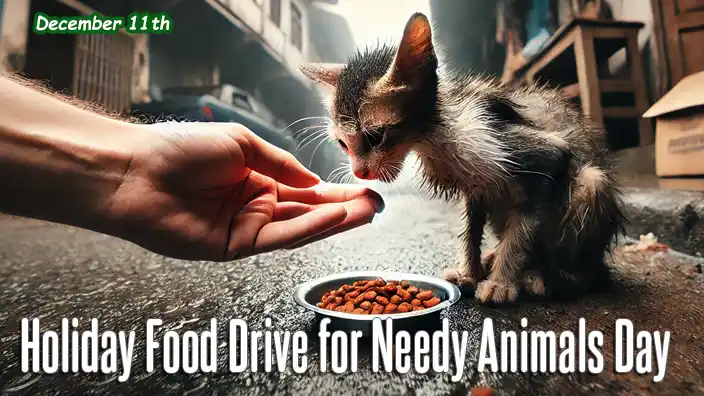
Every day, abandoned and starving animals roam the streets, their lives defined by hunger, fear, and neglect. They didn’t choose this fate, and their survival often depends on the kindness of strangers. Your donation, no matter how small, can be the difference between a life of suffering and one of safety and care. It’s not just about food—it’s about giving them hope, a second chance, and the possibility of knowing compassion in a world that’s turned its back on them. When you give, you’re not just helping an animal—you’re taking a stand against indifference and becoming part of a movement that refuses to let these voiceless beings be forgotten.
Celebrated: Annually, on December 11th
Join the Holiday Food Drive for Needy Animals Day to support abandoned and starving animals. Your contributions can make a significant impact this season.

- Details
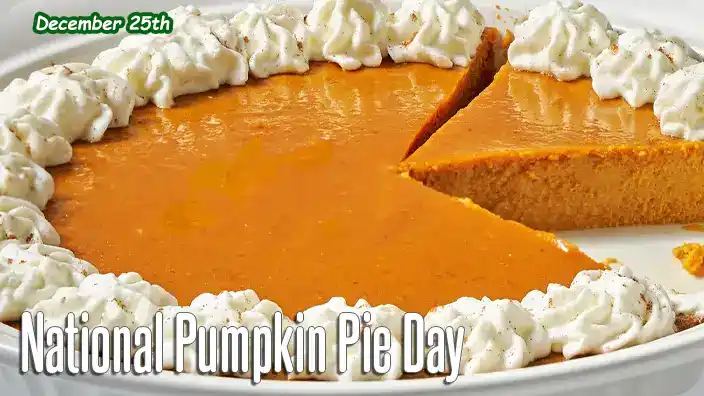
Pumpkin pie is the dessert that proves pumpkins have a higher calling than just being carved into spooky faces. It's the slice of autumn that brings everyone to the table, where debates about whipped cream versus ice cream rage on. Every bite is a delicious blend of spices and nostalgia, except when Aunt Karen insists on using her "secret ingredient" that turns the pie into an unexpected adventure. It's the one dessert where you can indulge and still claim it's a serving of vegetables—sort of.
Celebrated: Annually, on December 25th
Discover the quirky celebration of National Pumpkin Pie Day on December 25th, adding a delicious twist to Christmas traditions with the beloved pumpkin pie.

- Details
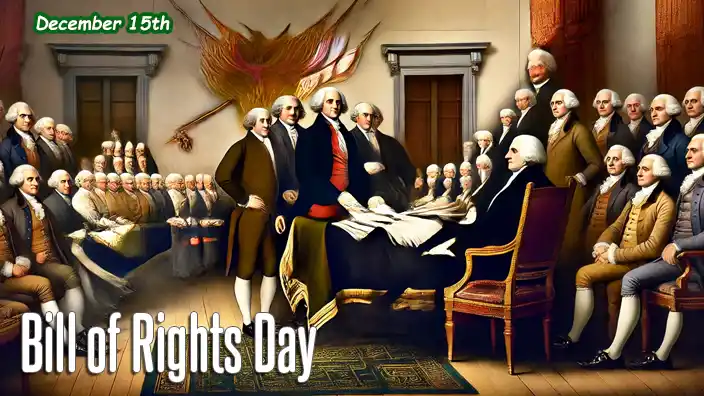
The Bill of Rights is like the ultimate “Terms and Conditions” document—except people actually care about it. Imagine James Madison handing it over to the states like, “Here’s a list of things the government can’t do to you, so you don’t end up hosting random soldiers or being punished for not remembering all the lyrics to ‘Yankee Doodle.’” It’s a mix of serious protections and oddly specific grievances, like a group project where everyone insisted their pet peeve be included. But hey, thanks to this historic top ten list, we get to enjoy freedoms like speaking our minds, binge-watching in peace, and politely telling quarter-seeking soldiers, “Not today.”
Celebrated: Annually, on December 15th
Discover the significance of the Bill of Rights, its historical context, and how it continues to shape American democracy and individual liberties today.


- Details
Icing everywhere—on the counter, in your hair, possibly even on the dog—and somehow the roof still won’t stay up. Welcome to the chaotic joy of gingerbread house construction! It’s a delicate dance of architecture and willpower, where gumdrops double as shingles, and the structural integrity of your candy cane columns is tested by the sheer weight of sugar. Sure, your “dream house” may end up leaning like the Tower of Pisa, but in the end, the point isn’t perfection—it’s having fun, making memories, and sneaking enough frosting to justify a second cup of coffee.
Celebrated: Annually, on December 12th
Gingerbread House Day celebrates the joy of baking and creativity. Explore tips, historical insights, and the whimsical world of gingerbread architecture!


- Details
Today has brought the perfect occasion to air all those grievances about not getting the gifts you hinted at for months. It's the one day when sighing dramatically and muttering, "This isn't what I asked for," won’t just be tolerated, it’ll be celebrated! So, dust off your best pout and get ready to complain about everything from the overcooked turkey to the underwhelming socks from Aunt Edna. After all, if you can’t whine today, when can you?
Celebrated: Annually, on December 26th
Discover the cultural phenomenon of National Whiner's Day, a holiday born from holiday stress and unmet expectations. Embrace your inner grumbler and vocalize your grievances on this unique day.
- Details
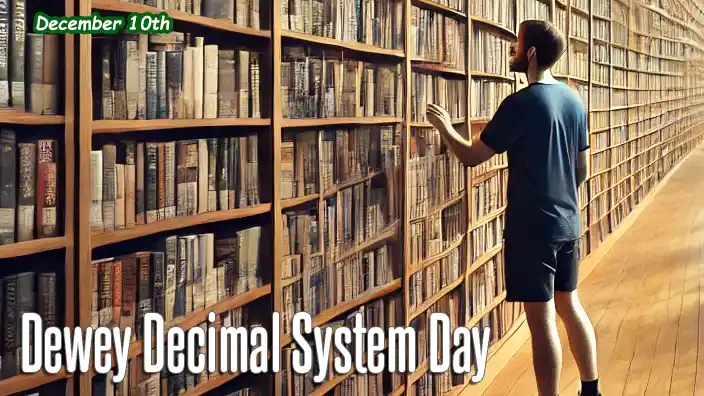
Walking into a library and navigating the shelves can feel like embarking on an intellectual treasure hunt where the map is made of numbers and decimals. Somewhere between the 500s and 600s, you might wonder if Melvil Dewey was a librarian or a secret agent leaving cryptic codes for us to decode. And let’s face it, while the system is a marvel of organization, there’s something hilariously ironic about the fact that the books teaching us how to stay organized are often tucked away in the depths of the 640s, requiring an organizational feat just to find them.
Celebrated: Annually, on December 10th
Explore the fascinating world of the Dewey Decimal System, a revolutionary classification method that organizes knowledge, making libraries navigable treasure troves of information.


- Details
Constitutions rarely make the bestseller list, inspire blockbuster movies, or receive standing ovations. Yet without them, governments would be a bit like assembling furniture without the instructions—everyone would be convinced they're doing it correctly until something important fell over. Constitution Day is a chance to appreciate the document that quietly keeps the wheels of government turning, even if it doesn't come with a dramatic soundtrack.
Celebrated: Annually, on December 25th
Discover Taiwan's Constitution Day and the fascinating history of the Constitution of the Republic of China, its unique five-branch government, and why the day marks this important civic observance

- Details
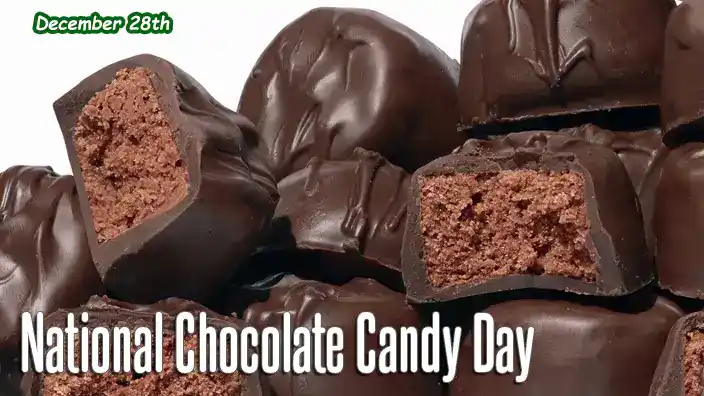
Chocolate is the magical bean that turns bad days into bearable ones and good days into unforgettable moments. It's like a tiny therapist wrapped in foil, ready to melt your worries away and replace them with blissful cocoa-induced euphoria. Whether it's a sneaky midnight snack or a well-deserved reward, chocolate understands you like no other confection can, proving that sometimes, the best therapist is the one you can eat.
Celebrated: Annually, on December 28th
Celebrate National Chocolate Candy Day on December 28th! Dive into the sweet world of chocolate treats, history, and health benefits. Indulge guilt-free in your favorite confections.

- Details
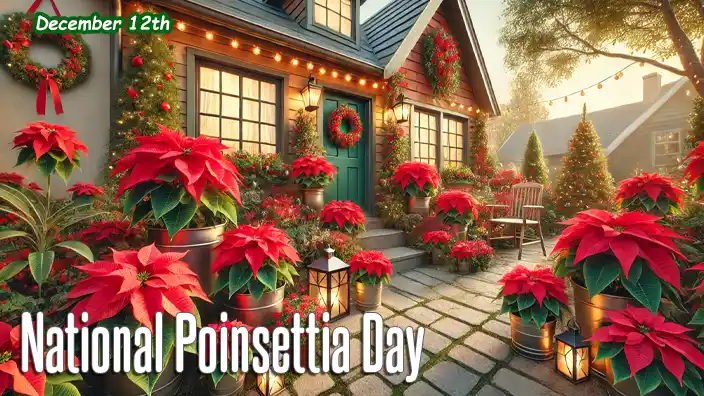
Poinsettias are the divas of the plant world—beautiful, vibrant, and just a little bit high-maintenance. They demand the perfect balance of water, light, and temperature, or else they start shedding leaves faster than a Christmas tree in January. And don’t even think about placing them near a drafty window; they’ll wilt dramatically as if to say, “How dare you!” But when treated with the care and attention they believe they deserve, poinsettias reward you with their star-like beauty, turning any room into a festive stage. Truly, they’re the holiday performers we didn’t know we needed.
Celebrated: Annually, on December 12th
Learn about the poinsettia's journey from Aztec traditions to modern holiday decor, alongside fun facts and care advice for this festive plant.

- Details
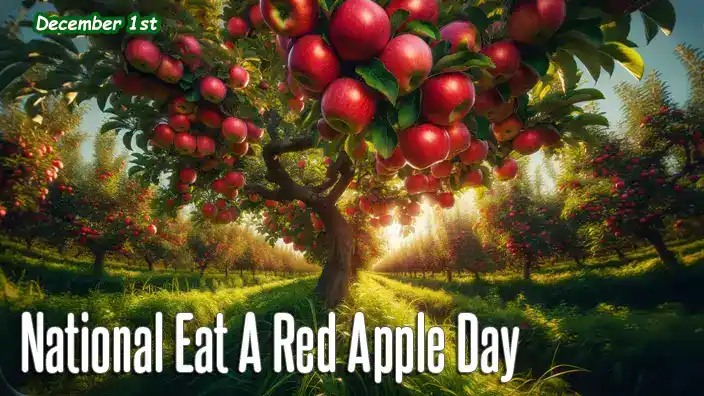
You select the most photogenic apple from the bunch, its skin shining like a polished sports car. You take a bite, expecting a silent movie-style dainty nibble, but instead, it's like a sound effect from a cartoon – a loud, echoing crunch that startles your cat and earns a look from your neighbor through the window. You realize that eating a red apple isn't just a snack, it's an experience. There you are, juice dribbling down your chin, looking more like a mischievous toddler than a dignified adult. And just when you think you've got it under control, you find a rogue apple peel stuck between your teeth, turning your confident smile into a comedic grimace. Who knew eating an apple could be a one-person slapstick routine?
Celebrated: Annually, on December 1st
Celebrate National Eat A Red Apple Day on December 1st. Dive into a world of apple-related knowledge, history, and delicious recipes.

From Our Marks Catelog
-

Single parenthood is a crash course in multitasking—where making dinner, helping with homework, and dodging Lego...
-

Balloons are the life of any party, with their bright colors and whimsical shapes, but they also...
-

Letting things go is a skill we all think we have—until we’re in the shower five years later, replaying an...
-

Some holidays ask for deep reflection. Others demand fireworks, feasts, or elaborate decorations....
-

With a gaze that could melt ice and a mustache so perfectly groomed it might have had its own...
-

Imagine having the uncanny ability to make even the driest statistics sound like the punchline to a...

