November 22, 1967, in Kenosha, Wisconsin

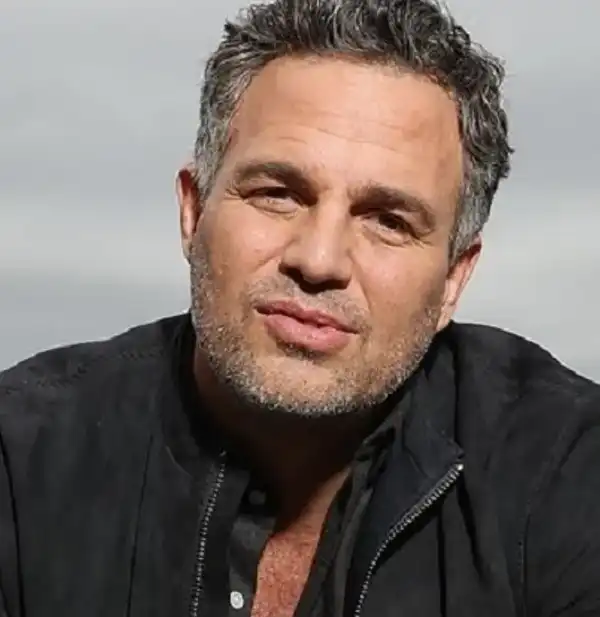
Mark Alan Ruffalo was born on November 22, 1967, in Kenosha, Wisconsin. The American actor, producer, and director is best known for portraying Bruce Banner and the Hulk in the Marvel Cinematic Universe, as well as his acclaimed performances in Spotlight, The Kids Are All Right, Foxcatcher, Poor Things, and Zodiac. His career has encompassed independent films, major Hollywood productions, television dramas, and Broadway theater, earning him widespread recognition for his naturalistic acting style and ability to portray emotionally complicated characters.
Ruffalo has received four Academy Award nominations for Best Supporting Actor, establishing himself as one of the most respected performers of his generation. Although his international popularity increased dramatically after he joined the Marvel franchise, his professional reputation was already firmly established through years of acclaimed dramatic performances. His ability to move between intimate character studies and enormous superhero productions has become one of the defining features of his career.
Ruffalo grew up in a working-class family of Italian and French Canadian ancestry. His father, Frank Lawrence Ruffalo Jr., worked as a construction painter, while his mother, Marie Rose, was a hairdresser and stylist. He was raised alongside his siblings, including his brother Scott and sisters Tania and Nicole. His childhood included time in Wisconsin and Virginia before his family eventually relocated to San Diego, California.
During his school years, Ruffalo developed an interest in wrestling and participated in competitive athletics. He also struggled academically with dyslexia and attention-related difficulties, experiences he has discussed publicly. Despite these challenges, he developed an interest in acting and eventually began pursuing performance opportunities after moving to California.
Ruffalo attended First Colonial High School in Virginia Beach before completing his education in California. He later studied acting at the Stella Adler Conservatory in Los Angeles, where he developed his understanding of character development, emotional realism, and theatrical performance. His training emphasized the importance of creating believable characters whose behavior emerged naturally from their personal circumstances.
His early years in Hollywood were far from glamorous. Ruffalo worked various jobs while auditioning for acting opportunities, including employment as a bartender. He has spoken about the difficulties of establishing a professional career and the enormous number of auditions he attended before achieving significant recognition. His persistence eventually paid off, although success arrived considerably later than he initially hoped.
Ruffalo also became involved in the Los Angeles theater community, working with the Orpheus Theatre Company and developing his abilities through stage productions. Theater provided an opportunity to explore complicated characters and build the confidence required for sustained dramatic performances. He appeared in numerous productions and gradually attracted attention for his emotional honesty and understated acting style.
His early film appearances included small roles in productions such as Mirror, Mirror II: Raven Dance (1994), The Dentist (1996), and Safe Men (1998). These projects provided professional experience but did little to establish him as a recognizable Hollywood personality. Like many aspiring actors, Ruffalo spent years accepting available work while hoping that a more substantial opportunity would eventually arrive.
His breakthrough came through his collaboration with playwright and filmmaker Kenneth Lonergan, who cast him in the acclaimed 1996 stage production of This Is Our Youth. Ruffalo's performance attracted attention within the theater community and helped establish a creative relationship that would prove enormously important to his film career.
In 2000, Lonergan cast Ruffalo opposite Laura Linney in You Can Count on Me, an independent family drama that became a defining moment in his professional development. Ruffalo portrayed Terry Prescott, an irresponsible but emotionally vulnerable drifter who returns to his hometown and reconnects with his older sister, Sammy, played by Linney.
The film explores the complicated relationship between two siblings whose lives have developed in very different directions following the deaths of their parents. Terry is charming, impulsive, and frequently incapable of making sensible decisions, but his affection for his sister and nephew reveals a deeply sympathetic personality beneath his unreliable behavior.
Ruffalo's performance received widespread critical praise for its emotional realism and subtle complexity. Rather than portraying Terry as a conventional irresponsible troublemaker, he created a character whose flaws emerged naturally from insecurity, grief, and difficulty accepting responsibility. The film earned major critical recognition and introduced Ruffalo to a wider audience as a serious dramatic actor.
You Can Count on Me became an important milestone because it demonstrated Ruffalo's ability to portray ordinary individuals with extraordinary emotional depth. His performance helped establish the understated, naturalistic acting style that would characterize much of his later work.
Following his breakthrough, Ruffalo began receiving more substantial film offers. In 2001, he appeared in The Last Castle, starring Robert Redford and James Gandolfini, portraying a military prisoner involved in a confrontation with the authoritarian commander of a military detention facility. The film provided an opportunity to work alongside established Hollywood performers in a major studio production.
That same year, Ruffalo starred opposite Meg Ryan in In the Cut, a psychological thriller directed by Jane Campion and released in 2003. He portrayed Detective Giovanni Malloy, a police investigator whose relationship with a New York teacher becomes entangled in a disturbing murder investigation. The film explored sexuality, suspicion, and psychological vulnerability, allowing Ruffalo to portray a morally ambiguous character whose intentions remained uncertain.
Ruffalo also demonstrated his romantic-comedy abilities in 13 Going on 30, released in 2004. The film starred Jennifer Garner as Jenna Rink, a teenager who mysteriously awakens in the body of her adult self after making a birthday wish. Ruffalo portrayed Matt Flamhaff, Jenna's childhood friend, who has grown into a thoughtful photographer while maintaining complicated feelings about their shared past.
The film became a popular romantic comedy, and Ruffalo's performance contributed significantly to its emotional appeal. His portrayal of Matt combined warmth, humor, and vulnerability, creating a character whose sincerity contrasted with the superficial social world surrounding Jenna. The movie introduced Ruffalo to audiences who might not have encountered his independent dramatic work and demonstrated that he could be equally effective in lighter entertainment.
In 2004, he also appeared in Eternal Sunshine of the Spotless Mind, directed by Michel Gondry and written by Charlie Kaufman. The film starred Jim Carrey and Kate Winslet as former lovers whose memories of their relationship are deliberately erased through an experimental medical procedure. Ruffalo portrayed Stan Fink, a technician employed by the company responsible for performing the memory-erasure process.
The film combined science fiction, romantic drama, and psychological exploration, examining the relationship between memory, identity, and emotional attachment. Ruffalo's supporting performance added humor and humanity to a production that became widely regarded as one of the most inventive films of its decade. His character's professional responsibilities involved removing painful memories, a service that might have attracted considerable interest from anyone who had ever attended an embarrassing family gathering.
In 2005, Ruffalo continued his romantic-comedy success with Just Like Heaven, starring opposite Reese Witherspoon. He portrayed David Abbott, a lonely landscape architect who moves into a San Francisco apartment only to discover that it appears to be occupied by the spirit of its former resident. The film combined romance, comedy, and supernatural fantasy, giving Ruffalo an opportunity to portray a grieving man gradually rediscovering his capacity for affection. His understated performance provided a believable emotional foundation for a story involving circumstances that would normally prompt an immediate telephone call to a real estate agent.
Ruffalo's career took another important step with Zodiac, directed by David Fincher. Based on the investigation into the unidentified serial killer who terrorized Northern California during the late 1960s and 1970s, the film starred Jake Gyllenhaal, Robert Downey Jr., and Ruffalo. He portrayed San Francisco Police Inspector Dave Toschi, one of the investigators involved in the complex and frustrating effort to identify the killer.
The production required Ruffalo to portray a real person whose professional life had been shaped by a notorious criminal investigation. He studied Toschi's mannerisms and personality, developing a performance that emphasized the detective's persistence, professionalism, and growing frustration. The film's detailed examination of police procedures, journalism, and investigative uncertainty created an atmosphere of tension without relying on conventional action sequences.
Zodiac received widespread critical praise and subsequently developed a reputation as one of the most accomplished crime thrillers of its period. Ruffalo's performance demonstrated his ability to portray disciplined authority figures whose emotions remained largely concealed beneath professional responsibilities. It also showed that he could remain compelling while spending considerable screen time examining documents, discussing evidence, and looking increasingly annoyed that nobody had solved the case.
In 2008, Ruffalo appeared in Blindness, directed by Fernando Meirelles and based on the novel by José Saramago. The film explores a mysterious epidemic of blindness that causes society to collapse into disorder and desperation. Ruffalo portrayed a doctor who becomes one of the earliest victims of the epidemic, while Julianne Moore played his wife, the only person among the central characters who retains her sight.
The film's disturbing examination of human behavior under extreme circumstances provided Ruffalo with another opportunity to explore vulnerability and moral uncertainty. Its themes of fear, social breakdown, and compassion reflected his continuing interest in stories that examined how ordinary individuals respond when familiar institutions and relationships begin to collapse.
Ruffalo also made his feature-film directing debut with Sympathy for Delicious (2010), an independent drama starring Christopher Thornton, Orlando Bloom, Juliette Lewis, and Ruffalo himself. The story follows a paralyzed disc jockey who discovers that he possesses an extraordinary ability to heal others, although he remains unable to cure his own condition. The film explored faith, celebrity, exploitation, and the complicated relationship between personal suffering and public attention.
Directing provided Ruffalo with an opportunity to approach filmmaking from a different perspective, requiring him to oversee performances, visual storytelling, and the practical challenges of production. The film received the Special Jury Prize for dramatic filmmaking at the Sundance Film Festival in 2010, recognizing his efforts as a director. Although acting remained his primary profession, the experience demonstrated his interest in the broader creative process.
That same year, Ruffalo delivered one of his most acclaimed performances in The Kids Are All Right, directed by Lisa Cholodenko. The comedy-drama starred Annette Bening and Julianne Moore as a married couple whose teenage children decide to contact their biological father, Paul Hatfield, played by Ruffalo. Paul is a relaxed restaurant owner whose unexpected introduction into the family creates emotional complications and challenges existing relationships.
Ruffalo portrayed Paul as charming, impulsive, and somewhat immature, a man whose apparently carefree lifestyle conceals an uncertain understanding of responsibility and commitment. His performance combined humor with emotional complexity, creating a character who was sympathetic despite making several spectacularly questionable decisions.
The Kids Are All Right received widespread critical acclaim and earned four Academy Award nominations, including Best Picture. Ruffalo received his first Oscar nomination for Best Supporting Actor, establishing him among Hollywood's most respected dramatic performers. His success was particularly significant because it followed years of independent films and supporting roles in which he had steadily developed his reputation.
In 2012, Ruffalo entered an entirely different category of Hollywood entertainment when he joined the Marvel Cinematic Universe as Dr. Bruce Banner and the Hulk in The Avengers, directed by Joss Whedon. The film brought together several established Marvel superheroes, including Iron Man, Captain America, Thor, Black Widow, and Hawkeye, to confront an extraterrestrial invasion threatening Earth.
Ruffalo became the third actor to portray Bruce Banner in a major modern live-action film, following Eric Bana in Hulk (2003) and Edward Norton in The Incredible Hulk (2008). His interpretation emphasized Banner's intelligence, dry humor, emotional restraint, and constant awareness that his anger could transform him into an enormously powerful green creature.
Rather than presenting Banner solely as a tortured scientist, Ruffalo introduced a warmer and more approachable personality. His character was thoughtful, occasionally sarcastic, and surprisingly comfortable acknowledging the absurdity of his circumstances. This approach created an effective contrast between the mild-mannered scientist and the destructive superhero lurking beneath his carefully controlled exterior.
Ruffalo also contributed to the Hulk's performance through motion-capture technology, allowing his facial expressions and physical movements to influence the digitally created character. The combination of acting and visual effects helped establish a more expressive Hulk who could communicate recognizable emotions despite his enormous size and limited vocabulary.
The Avengers became a worldwide commercial phenomenon, earning more than $1.5 billion at the box office. Ruffalo's performance received considerable praise, with many viewers appreciating the humor and emotional depth he brought to Bruce Banner. His ability to balance vulnerability with extraordinary physical power made the character an important part of the superhero ensemble.
For Ruffalo, joining Marvel represented a remarkable professional transformation. After years of portraying emotionally complicated men in independent dramas, he had become a scientist who occasionally transformed into an enormous green superhero capable of smashing buildings and throwing alien invaders across city streets. It was certainly a considerable change from romantic comedies, although both genres occasionally involve losing one's temper.
He reprised the role in Avengers: Age of Ultron (2015), where Banner's relationship with Natasha Romanoff, played by Scarlett Johansson, introduced a more personal dimension to the character. The film explored Banner's fear of losing control and the emotional consequences of possessing powers that could endanger innocent people.
Ruffalo returned in Thor: Ragnarok (2017), directed by Taika Waititi, which presented a more comedic interpretation of the Hulk. Stranded on the planet Sakaar, the character had become a celebrated gladiator and developed a more independent personality. Ruffalo's performance combined physical comedy, emotional confusion, and an entertaining rivalry with Thor, played by Chris Hemsworth.
The film allowed Banner and the Hulk to become more distinct personalities, exploring the complicated relationship between the scientist and his powerful alter ego. Ruffalo embraced the lighter tone, demonstrating that the Hulk could provide comedy as effectively as destruction. After all, when someone is capable of smashing almost anything, there is considerable comic potential in watching him attempt an ordinary conversation.
His character played a major role in Avengers: Infinity War (2018), where Banner struggled to transform into the Hulk during the superheroes' confrontation with Thanos. The conflict between Banner and his alter ego became an important part of the story, emphasizing that possessing extraordinary powers does not necessarily mean having complete control over them.
In Avengers: Endgame (2019), Ruffalo portrayed a transformed version of the character who had successfully combined Banner's intelligence with the Hulk's enormous physical strength. Frequently called Smart Hulk, this version retained Banner's personality while possessing the Hulk's green appearance and remarkable abilities.
The transformation allowed Ruffalo to explore a more confident and humorous character who no longer regarded his extraordinary condition as an unavoidable curse. Avengers: Endgame became one of the highest-grossing films in cinema history, providing a dramatic conclusion to the interconnected storyline that had developed across numerous Marvel productions.
Ruffalo subsequently appeared as Bruce Banner and Smart Hulk in the Marvel television series She-Hulk: Attorney at Law (2022), starring Tatiana Maslany as Jennifer Walters, Banner's cousin. The series explored the humorous complications of balancing a legal career with the ability to transform into a powerful green superhero.
Ruffalo's appearances allowed him to portray Banner as an experienced mentor attempting to explain the responsibilities associated with extraordinary abilities. Unfortunately, Jennifer frequently proved considerably less interested in his carefully prepared lessons than he had anticipated. It was another opportunity for Ruffalo to demonstrate that the Hulk's greatest challenge might not always be defeating supervillains. Sometimes it was simply persuading a relative to listen.
Despite his enormous success with Marvel, Ruffalo continued pursuing independent and dramatic productions. In 2013, he appeared in Now You See Me, portraying FBI agent Dylan Rhodes, who investigates a group of illusionists responsible for elaborate robberies conducted during their stage performances. The film starred Jesse Eisenberg, Woody Harrelson, Isla Fisher, Dave Franco, Morgan Freeman, and Michael Caine.
Ruffalo's character initially appears to be an increasingly frustrated investigator struggling to understand how the magicians accomplish their extraordinary crimes. However, the story eventually reveals unexpected connections and motivations that transform the audience's understanding of his role. Ruffalo's performance helped maintain the mystery while providing humor through Dylan's apparent inability to remain one step ahead of the performers.
He reprised the character in Now You See Me 2 (2016), continuing the franchise's combination of elaborate illusions, criminal conspiracies, and unexpected revelations. The films demonstrated his ability to participate in commercially successful entertainment outside the superhero genre while maintaining his distinctive screen personality.
In 2014, Ruffalo appeared in Begin Again, directed by John Carney. He portrayed Dan Mulligan, a struggling music executive whose professional and personal life has deteriorated after a series of poor decisions. His circumstances change when he encounters Gretta James, an aspiring singer-songwriter played by Keira Knightley.
The film follows their efforts to create an unconventional album recorded in various locations throughout New York City. Ruffalo's performance combined humor, vulnerability, and emotional warmth, portraying a man attempting to rebuild his career while confronting the consequences of his personal failures. The production also featured Adam Levine, Hailee Steinfeld, and Catherine Keener.
That same year, Ruffalo received his second Academy Award nomination for his performance in Foxcatcher, directed by Bennett Miller. The film was based on the real-life relationship between Olympic wrestlers Mark and Dave Schultz and wealthy wrestling enthusiast John du Pont, portrayed by Steve Carell.
Ruffalo played Dave Schultz, an accomplished wrestler, coach, husband, and father whose relationship with his younger brother Mark, played by Channing Tatum, becomes entangled in du Pont's increasingly troubling behavior. The film explored ambition, manipulation, class differences, and the psychological pressures surrounding elite athletic competition.
Ruffalo underwent extensive physical preparation for the role, drawing partly upon his own childhood wrestling experience. His performance emphasized Dave's patience, emotional intelligence, and concern for his family and brother. Unlike the more volatile personalities surrounding him, Dave represented a stabilizing influence whose quiet dignity contributed significantly to the film's emotional impact.
Foxcatcher received widespread critical acclaim, and Ruffalo's portrayal earned an Academy Award nomination for Best Supporting Actor. The recognition reinforced his reputation as an actor capable of transforming himself physically and emotionally while maintaining a believable, understated performance style.
One of Ruffalo's most important dramatic achievements arrived in 2015 with Spotlight, directed by Tom McCarthy. The film tells the true story of the Boston Globe's investigative journalism team that uncovered widespread sexual abuse of children by Catholic priests and the institutional failures that allowed the abuse to continue.
Ruffalo portrayed Michael Rezendes, an investigative reporter whose determination to expose the truth becomes increasingly intense as the journalists discover the scale of the scandal. The ensemble cast included Michael Keaton, Rachel McAdams, Liev Schreiber, John Slattery, and Stanley Tucci.
His performance captured Rezendes's urgency, frustration, and commitment to the investigation. Ruffalo studied the real journalist's mannerisms and speech patterns, developing a portrayal that emphasized his relentless pursuit of evidence and accountability. The film focused on the detailed work of investigative journalism, including interviews, document searches, legal proceedings, and the difficult process of verifying information before publication.
Rather than sensationalizing the subject, Spotlight presented the investigation with restraint and seriousness, emphasizing the experiences of survivors and the responsibility of institutions to address wrongdoing. Ruffalo's performance contributed to the film's emotional intensity while remaining grounded in the professional realities of journalism.
Spotlight won the Academy Award for Best Picture at the 2016 ceremony, while Ruffalo received his third Oscar nomination for Best Supporting Actor. The film also won Best Original Screenplay, recognizing its carefully constructed examination of an important investigation.
Ruffalo's portrayal of Rezendes became one of his most respected performances, demonstrating his ability to communicate moral urgency without abandoning the naturalistic style that had defined his career. It also reinforced his willingness to participate in films addressing serious social issues and the responsibilities of powerful institutions.
In 2019, Ruffalo starred in Dark Waters, directed by Todd Haynes. The legal thriller was inspired by the true story of attorney Robert Bilott, who investigated chemical contamination associated with industrial manufacturing in West Virginia.
Ruffalo portrayed Bilott, a corporate defense lawyer whose investigation into environmental complaints gradually reveals evidence of widespread contamination involving perfluorooctanoic acid, commonly known as PFOA. The film explores the challenges of confronting powerful corporations, the difficulties of obtaining scientific evidence, and the long-term consequences of environmental pollution.
Ruffalo also served as a producer on the film, reflecting his interest in environmental issues and corporate accountability. His performance emphasized Bilott's persistence and personal sacrifices as the investigation expanded over many years. The film received positive reviews and contributed to public discussion of industrial chemicals and their potential health and environmental effects.
The production reflected Ruffalo's longstanding involvement in environmental advocacy, particularly his support for efforts to address water contamination and reduce dependence on fossil fuels. His public activities have included support for renewable energy, clean-water initiatives, and environmental organizations. While his advocacy has occasionally generated controversy, it has remained an important part of his public life outside acting.
Ruffalo returned to television drama in 2020 with the HBO miniseries I Know This Much Is True, based on the novel by Wally Lamb. He portrayed identical twin brothers Dominick and Thomas Birdsey, whose lives are shaped by complicated family relationships, personal trauma, and Thomas's schizophrenia.
The dual role required Ruffalo to create two distinct personalities while maintaining the physical similarities expected of identical twins. Dominick is an emotionally exhausted man struggling to support his brother while confronting his own personal difficulties, while Thomas experiences severe mental illness that affects his relationships and daily life.
Ruffalo underwent a significant physical transformation between filming the two characters, allowing their appearances to reflect their different circumstances. His performances emphasized the brothers' contrasting personalities, emotional vulnerabilities, and complicated relationship.
The miniseries received critical acclaim, and Ruffalo won the Primetime Emmy Award for Outstanding Lead Actor in a Limited Series or Movie. He also received a Golden Globe Award for Best Actor in a Miniseries or Television Film, adding major television honors to his established film achievements.
The production demonstrated his ability to sustain emotionally demanding performances across an extended narrative, portraying two characters whose lives were deeply interconnected but psychologically distinct. It was an extraordinary acting challenge, particularly because he had to create convincing chemistry with himself. Most actors consider that difficult enough when working with someone else.
In 2023, Ruffalo appeared in Poor Things, directed by Yorgos Lanthimos and starring Emma Stone, Willem Dafoe, and Ramy Youssef. The surreal fantasy follows Bella Baxter, a young woman whose unusual origins lead her on a journey of personal discovery, independence, and exploration.
Ruffalo portrayed Duncan Wedderburn, an arrogant and flamboyant lawyer who becomes romantically involved with Bella. Initially confident in his charm and sophistication, Duncan gradually discovers that Bella's growing independence makes her considerably less willing to tolerate his attempts at control.
The role provided Ruffalo with an opportunity to embrace exaggerated comedy, theatrical mannerisms, and an increasingly ridiculous character whose self-confidence collapses as the story progresses. His performance was deliberately extravagant, contrasting sharply with the restrained dramatic roles that had earned him earlier acclaim.
Poor Things received widespread critical praise and won four Academy Awards, including Best Actress for Emma Stone. Ruffalo earned his fourth Academy Award nomination for Best Supporting Actor, confirming his ability to achieve recognition across dramatically different types of performances.
The film also demonstrated that Ruffalo was willing to make himself look completely foolish when the story required it. After years of portraying thoughtful investigators and emotionally sensitive men, he enthusiastically embraced a character whose principal talents included arrogance, jealousy, and making an extraordinary spectacle of himself.
Ruffalo continued working in prestigious television productions with All the Light We Cannot See, a 2023 Netflix miniseries based on Anthony Doerr's Pulitzer Prize-winning novel. Set during World War II, the story follows a blind French girl and a young German soldier whose lives become connected amid the devastation of the conflict.
Ruffalo portrayed Daniel LeBlanc, the devoted father of Marie-Laure, played by Aria Mia Loberti. His character works at the Museum of Natural History in Paris and attempts to protect his daughter as German forces occupy France. The role emphasized parental devotion, courage, and the emotional consequences of war, allowing Ruffalo to return to the intimate family relationships that had characterized many of his earlier dramatic performances.
In 2025, Ruffalo starred in the HBO crime drama Task, created by Brad Ingelsby. He portrayed Tom Brandis, an FBI agent and former priest who leads a task force investigating a series of violent robberies in the Philadelphia area. The series also starred Tom Pelphrey and explored the personal and professional pressures affecting individuals involved in criminal investigations.
Ruffalo's performance combined the authority of an experienced investigator with the emotional complexity of a man confronting difficult personal circumstances. The production continued his association with character-driven television dramas, demonstrating his ability to portray believable individuals whose professional responsibilities intersect with complicated private lives.
In 2026, Ruffalo appeared in the science-fiction film Project Hail Mary, starring Ryan Gosling and based on Andy Weir's bestselling novel. Ruffalo portrayed Stratt's colleague? No—Ruffalo was not part of the film's established cast, and the production should not be included among his acting credits. His confirmed 2026 film work instead includes Crime 101, an ensemble crime thriller featuring Chris Hemsworth, Halle Berry, and Barry Keoghan. Ruffalo portrayed Detective Lou Lubesnick, a determined investigator pursuing a sophisticated jewel thief.
His participation in Crime 101 continued his long association with crime dramas and investigative characters, providing another opportunity to combine understated humor with professional determination. It also reunited him with a fellow Marvel actor, Chris Hemsworth, although their characters' circumstances were considerably more grounded than battles involving gods, aliens, and enormous green superheroes.
Outside his professional achievements, Ruffalo has maintained a relatively private family life. He married Sunrise Coigney, a former actress, in 2000, and the couple have three children: Keen, Bella, and Odette. He has frequently spoken about the importance of family relationships and the stability they provide amid the unpredictable demands of the entertainment industry.
Ruffalo's personal life has also included significant challenges. In 2001, he was diagnosed with a benign brain tumor known as an acoustic neuroma. He underwent surgery to remove the tumor, but the procedure resulted in temporary facial paralysis and permanent hearing loss in his left ear. His recovery required considerable patience and determination, particularly because facial movement and expression are essential elements of an actor's professional abilities.
He eventually returned to acting, rebuilding his career while adapting to the lasting effects of the surgery. His experience became an important part of his personal story, demonstrating resilience during a period when his professional future was uncertain.
In 2008, Ruffalo experienced another devastating personal tragedy when his younger brother, Scott, died following a gunshot wound in Beverly Hills, California. The loss deeply affected his family and occurred during a period when Ruffalo was already balancing professional responsibilities with personal challenges.
Despite these experiences, Ruffalo continued developing his acting career and expanding his involvement in charitable and environmental causes. His willingness to discuss difficult experiences publicly has contributed to his reputation as a thoughtful and approachable performer who recognizes that professional success does not eliminate personal hardship.
Ruffalo's acting style is distinguished by emotional authenticity, understated humor, and an ability to portray individuals whose vulnerabilities remain visible beneath their professional or personal confidence. His performances frequently involve characters who struggle with guilt, responsibility, uncertainty, and the consequences of difficult decisions.
Unlike performers who rely heavily on exaggerated gestures or theatrical dialogue, Ruffalo often communicates emotion through subtle expressions, hesitant speech, and carefully controlled physical behavior. His characters frequently appear to be thinking through their problems in real time, creating a sense of spontaneity that makes their experiences believable.
His versatility has allowed him to portray romantic leads, investigative journalists, professional athletes, detectives, troubled family members, eccentric aristocrats, and one of the most recognizable superheroes in modern entertainment. The enormous differences between these characters demonstrate his willingness to explore unfamiliar material rather than depend entirely on the roles that brought him commercial success.
Ruffalo has also earned recognition for his stage work, including a Tony Award nomination for Best Featured Actor in a Play for the 2006 Broadway revival of Clifford Odets's Awake and Sing!. His theatrical background continues to influence his performances, particularly his emphasis on character development and emotional credibility.
Mark Ruffalo's career represents an impressive combination of artistic achievement and commercial success. From his breakthrough in You Can Count on Me to his Oscar-nominated performances in The Kids Are All Right, Foxcatcher, Spotlight, and Poor Things, he has consistently demonstrated his ability to bring emotional depth to widely different characters.
His portrayal of Bruce Banner and the Hulk introduced him to an enormous international audience, but his continued success in independent films and prestigious television dramas demonstrates that his professional identity extends far beyond the Marvel franchise. He remains an actor whose performances are frequently defined by humanity, vulnerability, and an unmistakable ability to make audiences care about the people he portrays.
And perhaps the most entertaining contradiction in Ruffalo's career is that the man famous for playing a superhero whose anger can demolish entire buildings has become equally respected for portraying quiet, thoughtful individuals struggling to understand their own emotions.
Fortunately for Hollywood, Ruffalo appears perfectly capable of handling both extremes. Whether he's investigating a scandal, navigating a complicated relationship, or transforming into a gigantic green creature, he has demonstrated that a successful performance begins with creating a believable character.
Although in the Hulk's case, it probably also helps to have a very generous special-effects budget.
References & Sources