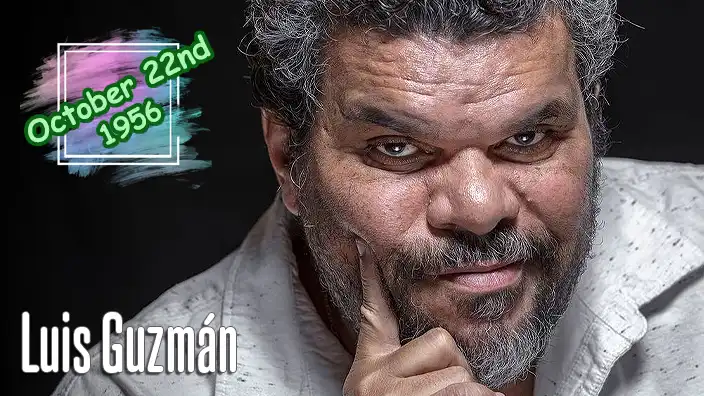
October 22, 1956, in

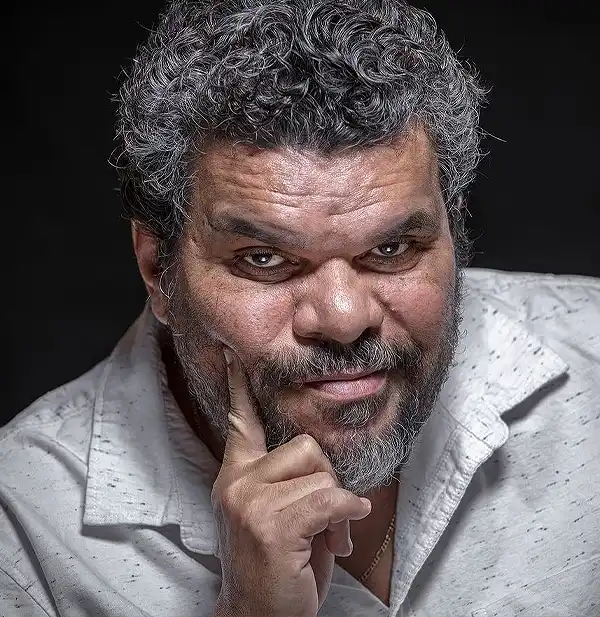
Luis Guzmán was born in Cayey, Puerto Rico, and grew up in New York City's Lower East Side, where his family established a new life in one of Manhattan's most culturally diverse neighborhoods. His mother, Rosa, worked in a hospital, while his stepfather, Benjamin Cardona, repaired televisions. Growing up in a working-class household helped shape Guzmán's understanding of ordinary people and the challenges they faced. The busy streets of New York provided an education in human behavior that no acting textbook could fully reproduce. Long before he became a familiar presence in Hollywood, Guzmán was learning to observe personalities, understand different communities, and appreciate the colorful characters who would eventually inspire his performances.
His early ambitions did not revolve exclusively around becoming a movie star. After attending Seward Park High School, Guzmán studied at the City College of New York and developed a strong interest in community service. He worked as a social worker and youth counselor at the Henry Street Settlement, a longstanding community organization serving residents of Manhattan's Lower East Side. His responsibilities included helping young people navigate difficult circumstances and encouraging constructive participation in neighborhood activities. These experiences gave him a firsthand understanding of social problems, economic hardship, and the importance of community support. Hollywood would eventually reward him for portraying tough characters, but his original professional responsibilities involved helping people avoid becoming the very criminals he would later play on screen.
Guzmán's introduction to acting developed through community theater, local productions, and politically engaged street performances. Rather than following a conventional route through prestigious drama schools and theatrical institutions, he learned his craft through practical experience and direct interaction with audiences. Street theater offered opportunities to explore social issues while entertaining neighborhood residents, combining his interests in performance and community involvement. His natural charisma, expressive features, and ability to communicate complicated emotions quickly attracted attention. He discovered that acting allowed him to explore the human experiences he had encountered through social work while reaching audiences beyond his immediate neighborhood. It was an unusual career transition, but considerably more practical than attempting to become a Hollywood actor by simply waiting for someone to discover him at the corner grocery store.
His early film career began taking shape during the 1980s, including an appearance in the independent drama Variety (1983), directed by Bette Gordon. The film explored unconventional relationships and urban life, providing Guzmán with an opportunity to develop his screen presence. He subsequently appeared in television productions and smaller film roles, frequently portraying criminals, streetwise acquaintances, and intimidating figures. His distinctive appearance and believable delivery made him particularly effective in these parts, although they also created the danger of being repeatedly cast in similar roles. Guzmán approached the work seriously, understanding that even a character with limited dialogue could contribute significantly to a story. His performances demonstrated that memorable acting often depends less on the number of lines spoken than on the personality behind them.
As his reputation developed, Luis Guzmán appeared in films including Crocodile Dundee II (1988), Family Business (1989), and Sidney Lumet's crime drama Q&A (1990). These productions allowed him to work alongside established performers and directors while expanding his professional experience. He also appeared in The Hard Way (1991), starring Michael J. Fox and James Woods, demonstrating his ability to move between serious crime stories and action comedies. His naturalistic performances made him particularly convincing in urban settings, where his characters frequently possessed a combination of toughness, suspicion, and unexpected humor. Even when playing someone with questionable intentions, Guzmán often suggested that the character had a complicated personal history extending well beyond the events shown on screen.
A particularly important opportunity arrived with Brian De Palma's acclaimed crime drama Carlito's Way (1993), starring Al Pacino as Carlito Brigante, a former drug dealer attempting to escape his criminal past. Guzmán portrayed Pachanga, a member of Carlito's circle whose involvement in the dangerous underworld contributed to the film's atmosphere of uncertainty and betrayal. The production featured Sean Penn and Penelope Ann Miller and became recognized for its stylish direction, complex characters, and exploration of loyalty. Guzmán's performance reinforced his reputation as an actor capable of bringing credibility to gritty crime dramas. His characters frequently appeared to understand the unwritten rules of the streets, although following those rules did not always guarantee a particularly pleasant ending.
During the 1990s, Guzmán became a familiar presence in films directed by some of Hollywood's most respected filmmakers. His professional relationship with Paul Thomas Anderson proved especially significant, beginning with Boogie Nights (1997), a critically acclaimed drama examining the adult entertainment industry in California during the late 1970s and early 1980s. Guzmán portrayed Maurice T. T. Rodriguez, a nightclub owner with ambitions of becoming involved in filmmaking. The ensemble cast included Mark Wahlberg, Burt Reynolds, Julianne Moore, Don Cheadle, and John C. Reilly. Guzmán brought humor and vulnerability to his character, creating a memorable personality within a story filled with ambition, excess, and personal disappointment. His performance demonstrated that supporting characters could contribute substantially to a film's emotional richness.
Guzmán continued collaborating with Paul Thomas Anderson in Magnolia (1999), an ambitious ensemble drama exploring interconnected lives, family conflicts, regret, and the unpredictable nature of human relationships. The film featured an impressive cast including Tom Cruise, Philip Seymour Hoffman, Julianne Moore, and Jason Robards. Although Guzmán's appearance was relatively limited, his involvement reflected the confidence Anderson placed in performers capable of creating believable characters within complex narratives. Their collaboration continued with Punch-Drunk Love (2002), starring Adam Sandler in an unconventional romantic drama. Guzmán portrayed Lance, an associate involved in a telephone-sex operation that creates serious problems for Sandler's character. His performance balanced intimidation with absurdity, contributing to the film's distinctive combination of psychological tension and unexpected comedy.
Another important creative partnership developed with director Steven Soderbergh, who cast Guzmán in several acclaimed productions. In Out of Sight (1998), starring George Clooney and Jennifer Lopez, Guzmán appeared as Chino, contributing to a stylish crime comedy based on Elmore Leonard's novel. He subsequently appeared in The Limey (1999), portraying Eduardo Roel, a man who assists a British criminal investigating his daughter's death in Los Angeles. The film starred Terence Stamp and combined unconventional editing with a compelling revenge story. Guzmán's performance earned him an Independent Spirit Award nomination for Best Supporting Male, recognizing his ability to create a distinctive and sympathetic character within a relatively restrained role. His work demonstrated that the familiar tough-guy exterior could conceal warmth, intelligence, and considerable emotional complexity.
The collaboration with Soderbergh continued in Traffic (2000), a critically acclaimed drama exploring the international drug trade and its effects on law enforcement, government policy, and ordinary families. Guzmán portrayed Ray Castro, a Drug Enforcement Administration agent working alongside Montel Gordon, played by Don Cheadle. Their characters investigated criminal operations while navigating the dangers and frustrations of drug enforcement. The film featured Michael Douglas, Benicio del Toro, Catherine Zeta-Jones, and numerous other distinguished performers. Traffic won four Academy Awards, including Best Director for Soderbergh, and received widespread praise for its complex storytelling. Guzmán's performance contributed to the film's realistic depiction of law enforcement, proving that he could portray the people investigating criminals just as convincingly as the criminals themselves.
Throughout this period, Luis Guzmán demonstrated a remarkable ability to work across different genres without losing his distinctive identity. He appeared in the supernatural thriller The Bone Collector (1999), starring Denzel Washington and Angelina Jolie, and portrayed Jacopo in The Count of Monte Cristo (2002), an adventure drama based on Alexandre Dumas's classic novel. As Jacopo, Guzmán played a loyal companion to Edmond Dantès, portrayed by Jim Caviezel, providing humor and friendship within a story dominated by betrayal and revenge. His performance offered audiences a more openly sympathetic character than many of his earlier criminal roles. It also proved that Guzmán could fit comfortably into a nineteenth-century adventure, although the period costumes were presumably less comfortable than his usual New York street clothes.
His comedic talents became increasingly prominent through films such as Anger Management (2003), The School of Rock (2003), and Waiting... (2005). In Anger Management, starring Adam Sandler and Jack Nicholson, Guzmán portrayed Lou, a participant in an unconventional anger-management program. The film allowed him to embrace exaggerated comedy while retaining the natural delivery that made his performances recognizable. In Waiting..., a workplace comedy set in a restaurant, he portrayed Raddimus, contributing to the film's outrageous depiction of food-service employees and their questionable methods of surviving difficult shifts. Guzmán's ability to deliver ridiculous dialogue with complete seriousness made him particularly effective in these productions. He could make an audience laugh without appearing to realize that anything funny had happened.
His filmography continued expanding with appearances in Journey 2: The Mysterious Island (2012), where he portrayed Gabato Laguatan, a helicopter pilot who becomes involved in a fantastical expedition. Starring Dwayne Johnson, Josh Hutcherson, Vanessa Hudgens, and Michael Caine, the family adventure introduced Guzmán to younger audiences through a considerably lighter role. His character supplied much of the film's comic relief, combining nervous reactions with unexpected courage during encounters with extraordinary creatures and dangerous landscapes. Guzmán also appeared in We're the Millers (2013), Keanu (2016), and numerous independent productions, demonstrating his willingness to alternate between major studio releases and smaller projects. His career became an example of the extraordinary range available to character actors who refuse to be restricted by their earliest screen appearances.
Television provided equally important opportunities for Luis Guzmán, particularly through the HBO prison drama Oz, which premiered in 1997. He portrayed Raoul "El Cid" Hernandez, a dangerous inmate associated with the series' violent prison environment. Oz became known for its uncompromising examination of incarceration, institutional power, racial tensions, and the complicated relationships between prisoners and correctional staff. Guzmán's performance contributed to the show's intense atmosphere, demonstrating his ability to portray morally troubling characters without reducing them to simple stereotypes. His experience working with vulnerable communities before entering acting gave additional context to his understanding of individuals shaped by difficult social circumstances, although his fictional prison characters were certainly not recommended as role models.
Guzmán also appeared in the HBO comedy-drama How to Make It in America, which ran from 2010 to 2011. The series followed ambitious young New Yorkers attempting to establish careers in fashion and business while navigating the city's competitive social environment. Guzmán portrayed Rene Calderon, an ex-convict involved in promoting an energy drink called Rasta Monsta. The role combined streetwise confidence, entrepreneurial ambition, and an unpredictable personality, providing another opportunity to explore the intersection between comedy and urban drama. His performance reflected the distinctive New York atmosphere that had influenced his own upbringing, bringing authenticity to a story about individuals attempting to improve their circumstances through determination, creativity, and occasionally questionable business decisions.
In 2015, Luis Guzmán appeared in Netflix's acclaimed crime drama Narcos, portraying José Gonzalo Rodríguez Gacha, a notorious Colombian drug trafficker associated with the Medellín Cartel. The series dramatized the rise of powerful drug organizations and the efforts of law enforcement agencies to dismantle their operations. Guzmán's portrayal of Rodríguez Gacha required a darker, more threatening performance, reflecting the character's involvement in violent criminal activities. His ability to communicate menace without excessive theatricality made him particularly effective in the role. Narcos received widespread attention for its combination of historical events and dramatic storytelling, although viewers were reminded that the series employed fictionalized dialogue and dramatic interpretation alongside documented history.
Another major television success arrived with the CBS medical drama Code Black, which premiered in 2015. Guzmán portrayed Jesse Salander, affectionately known as "Mama," a senior emergency department nurse at Angels Memorial Hospital in Los Angeles. The series followed doctors, nurses, and medical professionals working in an overcrowded emergency department where resources were frequently stretched beyond capacity. Guzmán's character became one of the show's emotional anchors, offering guidance, practical experience, and occasional stern advice to colleagues facing extraordinary pressure. His performance combined authority, humor, and compassion, creating a believable healthcare professional whose knowledge and dedication were essential to the department's survival. After years of portraying criminals and intimidating figures, Guzmán demonstrated that he could be equally convincing as the person everyone trusted when things went disastrously wrong.
Jesse Salander's nickname, "Mama," reflected his protective attitude toward the medical team and his willingness to provide emotional support during difficult situations. The character frequently served as a mentor to inexperienced doctors and nurses, reminding them that effective healthcare required more than technical knowledge. Guzmán brought warmth and humanity to the role, helping audiences appreciate the essential contributions of experienced nursing professionals. Code Black ran for three seasons, concluding in 2018, and developed a loyal following among viewers who appreciated its intense medical emergencies and emotionally engaging characters. For Guzmán, the series offered an opportunity to portray a fundamentally decent individual whose strength came from compassion rather than intimidation. His character could still deliver a formidable warning, but usually because someone needed to follow hospital procedures before making a spectacular mess.
Guzmán's television career also included appearances in Community, Shameless, Godfather of Harlem, and Perpetual Grace, LTD. His involvement in Community became particularly memorable because the fictional Greendale Community College displayed a statue honoring him as a distinguished former student. Guzmán appeared as himself in the series, participating in a storyline that affectionately parodied celebrity endorsements and the sometimes questionable methods educational institutions use to promote themselves. The joke became especially amusing because Guzmán had attended the real City College of New York rather than the fictional institution. His willingness to participate in the comedy demonstrated an appreciation for self-parody and an ability to laugh at the absurdities of celebrity culture.
One of the most recognizable roles of Luis Guzmán's later career arrived in 2022 when he joined Netflix's supernatural mystery series Wednesday, portraying Gomez Addams, the devoted husband of Morticia Addams and father of Wednesday and Pugsley. Created by Alfred Gough and Miles Millar, with Tim Burton serving as an executive producer and director of several episodes, the series reimagined the famous Addams family through the experiences of Wednesday Addams, portrayed by Jenna Ortega. Catherine Zeta-Jones played Morticia, while Guzmán brought his distinctive personality to Gomez, a character previously portrayed by performers including John Astin and Raul Julia. The casting introduced a new interpretation of one of popular culture's most recognizable fictional fathers.
Guzmán's portrayal of Gomez Addams emphasized the character's passionate devotion to his family, particularly his wife Morticia. Unlike conventional television fathers, Gomez enthusiastically embraces his family's macabre interests, celebrates their eccentric behavior, and appears genuinely delighted by situations that would send most ordinary parents searching for the nearest emergency exit. Guzmán brought warmth and enthusiasm to the role, creating a character whose affection for his family remained unmistakable beneath the Addams household's wonderfully unsettling traditions. His performance also reflected aspects of the character's appearance in Charles Addams's original cartoons, where Gomez was depicted differently from some later screen interpretations. The result was a recognizable yet distinctive version of the beloved character.
Wednesday became a major international success for Netflix, introducing the Addams family to another generation of viewers while renewing interest in earlier television and film adaptations. The series combined supernatural mysteries, teenage relationships, dark humor, and elaborate Gothic settings, creating a distinctive atmosphere that appealed to audiences worldwide. Guzmán returned as Gomez Addams for the second season, released in 2025, allowing the character's family relationships and personal history to receive further attention. His involvement reinforced the series' emphasis on the complicated but affectionate connections within the Addams household. Although Gomez may not be the most conventional father in television history, his enthusiasm for family life is difficult to question. He simply prefers his family gatherings with a little more darkness, danger, and occasional swordplay.
His later film appearances continued to demonstrate his versatility. In Beverly Hills Cop: Axel F (2024), Guzmán joined Eddie Murphy's long-running action-comedy franchise, contributing to another production built around crime, humor, and recognizable personalities. He also appeared in the action thriller Havoc (2025), starring Tom Hardy, and the action comedy Guns Up (2025), continuing his association with stories involving criminal organizations and dangerous circumstances. These productions demonstrated that his screen presence remained valuable to filmmakers seeking performers capable of combining credibility with memorable characterization. Guzmán's career has never depended on maintaining a single heroic image; instead, he has built a reputation for making almost any character interesting, regardless of whether the audience is supposed to admire, distrust, or laugh at him.
Beyond film and television, Luis Guzmán has contributed voice performances to animated productions and video games. He voiced Ricardo Diaz, a powerful and volatile criminal figure, in the popular video games Grand Theft Auto: Vice City (2002) and Grand Theft Auto: Vice City Stories (2006). His distinctive voice proved particularly effective in creating a memorable antagonist within the fictional criminal underworld of Vice City. Voice acting requires performers to communicate personality and emotion without relying on facial expressions or physical movement, making Guzmán's recognizable vocal delivery an important advantage. His involvement introduced his talents to gaming audiences, many of whom recognized the voice immediately even without seeing the actor's face.
Guzmán has also maintained a connection to music and popular culture through appearances in music videos and other entertainment projects. He appeared in Bruno Mars's music video for "Gorilla," adding another unexpected credit to his extensive professional résumé. His willingness to participate in unconventional projects reflects an enthusiasm for entertainment that extends beyond traditional dramatic acting. Whether appearing in a crime thriller, animated production, television comedy, or music video, Guzmán approaches his work with a recognizable combination of confidence and humor. He has developed the rare ability to appear completely comfortable in almost any fictional environment, from a busy emergency department to a Gothic mansion populated by a family whose idea of entertainment frequently involves dangerous objects.
His accomplishments have also contributed to greater visibility for Puerto Rican and Latino performers in American entertainment. Throughout much of Hollywood's history, Latino actors frequently encountered limited opportunities and narrowly defined character types, particularly in crime dramas and urban stories. Guzmán experienced some of these restrictions early in his career, when his appearance often led to roles as criminals or intimidating supporting characters. Through persistence and versatility, he gradually expanded his opportunities to include sympathetic professionals, comedic personalities, devoted fathers, and complex dramatic figures. His career illustrates both the challenges faced by character actors from underrepresented communities and the possibilities created when performers are given opportunities to demonstrate their full range.
Away from Hollywood, Luis Guzmán has maintained a relatively private family life. He married Angelita Galarza in 1985, and the couple established their family home in Vermont, away from the constant attention of the entertainment industry. They have raised a family together, and Guzmán has spoken about the importance of family relationships and maintaining a sense of normality despite his professional success. His decision to live outside Hollywood reflects a preference for a quieter environment and a strong connection to everyday life. Considering the extraordinary number of fictional criminals, gangsters, and dangerous individuals he has portrayed, the peaceful Vermont countryside probably offers a welcome contrast to his working environment.
His commitment to community involvement has remained an important part of his public identity. Having worked as a social worker before becoming an actor, Guzmán has continued to express concern for young people, education, and opportunities for disadvantaged communities. His early experiences helped shape his understanding of social responsibility and the importance of helping individuals overcome difficult circumstances. He has also spoken about his Puerto Rican heritage and the value of cultural representation in entertainment. His professional achievements demonstrate that performers can maintain strong connections to their communities while building successful international careers. Fame may have changed his employment prospects considerably, but it has not erased the experiences that influenced his earliest ambitions.
One of Luis Guzmán's most impressive qualities is his ability to create memorable characters without depending on elaborate speeches or conventional leading-man glamour. His performances frequently rely on natural reactions, carefully timed humor, and an understanding of how ordinary people behave under extraordinary pressure. He can portray a threatening criminal in one production and a compassionate nurse in another without making either performance seem artificial. This flexibility has made him particularly valuable to directors working with ensemble casts, where supporting characters must contribute to the story without overwhelming its central narrative. Guzmán has mastered the difficult art of being unforgettable while allowing the production itself to remain the main attraction.
His collaborations with respected directors including Steven Soderbergh, Paul Thomas Anderson, Brian De Palma, and Sidney Lumet reflect the high regard in which he is held within the film industry. These filmmakers have repeatedly trusted Guzmán to create convincing personalities within complicated stories, recognizing his ability to communicate emotional depth through relatively economical performances. His extensive filmography encompasses crime dramas, independent cinema, romantic comedies, medical television, supernatural mysteries, family adventures, and animated entertainment. Such variety is particularly impressive for an actor whose early opportunities were frequently limited by assumptions about his appearance. Rather than allowing those assumptions to define his career, Guzmán gradually transformed his recognizable screen presence into one of his greatest professional strengths.
Luis Guzmán's enduring appeal lies in his authenticity. Whether portraying a devoted father, an experienced nurse, a streetwise criminal, or an eccentric supporting character, he gives audiences the impression that the person on screen exists beyond the boundaries of the script. His characters have histories, frustrations, loyalties, and personalities that make them believable even when the surrounding circumstances become ridiculous. This ability has helped him remain a respected and recognizable performer across decades of changing entertainment trends. Hollywood may continually introduce new stars, spectacular visual effects, and increasingly elaborate productions, but there will always be a place for actors who understand that a convincing human personality is often more entertaining than an expensive explosion.
From his beginnings in Puerto Rico and New York's Lower East Side to his remarkable career in Hollywood, Luis Guzmán has demonstrated the value of persistence, individuality, and genuine acting talent. His memorable performances in Boogie Nights, Traffic, The Limey, Code Black, and Wednesday have entertained audiences while highlighting his extraordinary versatility. Whether investigating criminals, navigating hospital emergencies, or enthusiastically embracing the peculiar traditions of the Addams family, he brings humor, intelligence, and humanity to his characters. His career reminds us that supporting actors are often the people who make great stories unforgettable. And if Gomez Addams ever needs a reliable nurse, an experienced detective, or someone to investigate a suspicious disappearance at Nevermore Academy, Luis Guzmán already has the professional experience to handle all three. Preferably without changing costumes.