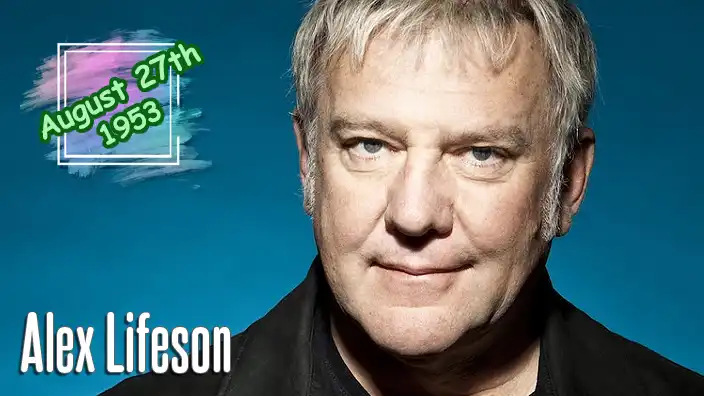
August 27, 1953, in Fernie, Canada
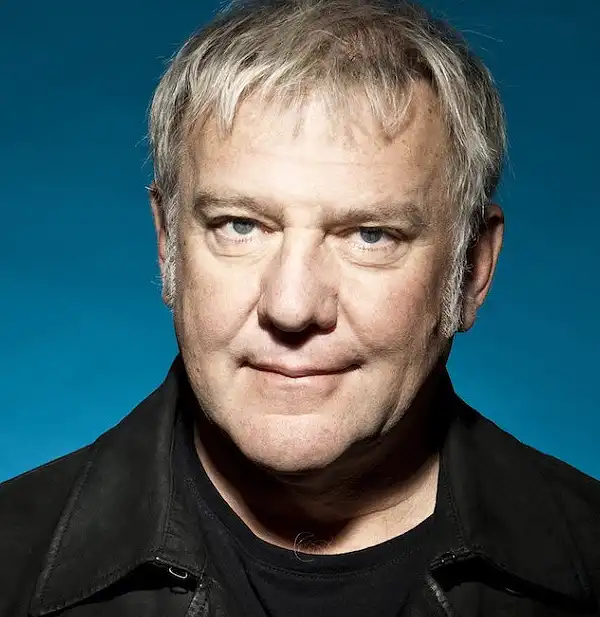
Alex Lifeson was born Aleksandar Živojinović on August 27, 1953, in Fernie, British Columbia, Canada. His parents, Nenad and Melanija Živojinović, were Serbian immigrants from Yugoslavia who had settled in Canada after World War II. The family eventually moved to Toronto, where the future guitarist grew up and discovered music at precisely the age when parents traditionally begin wondering whether purchasing their child an instrument was such a magnificent idea after all.
Lifeson initially experimented with the viola before becoming fascinated with guitar. His first guitar was a Christmas present from his father, and he began teaching himself by listening to records and copying the musicians he admired. Among his early influences were blues and rock guitarists including Eric Clapton, Jimi Hendrix, Jeff Beck and Jimmy Page. Those influences gave him a foundation in blues-based rock, but Lifeson would eventually develop a far broader vocabulary involving acoustic guitar, classical textures, unusual chords, effects and synthesizer-era experimentation.
The name Lifeson came from an approximate English translation of his Serbian surname, Živojinović, which is associated with the idea of "son of life." It was considerably easier for audiences and announcers to handle, although progressive rock fans would eventually prove perfectly willing to memorize far more complicated things if Rush put them on an album.
In 1968, teenage Lifeson joined with bassist and singer Jeff Jones and drummer John Rutsey to form a band in the Toronto suburb of Willowdale. Jones departed almost immediately and was replaced by another neighborhood teenager, Geddy Lee, born Gary Lee Weinrib. The new group played high-school dances, clubs, bars and whatever other venues would tolerate extremely young musicians making an enthusiastic quantity of noise.
The band was named Rush, reportedly at the suggestion of John Rutsey's brother Bill. There was no grand philosophical meaning behind it, which is amusing considering how many Rush albums would later encourage listeners to contemplate individualism, philosophy, technology, free will, mythology and the occasional interstellar struggle while attempting to work out what time signature Neil Peart had just changed into.
The young musicians worked relentlessly around Toronto and southern Ontario. Lifeson and Lee developed an unusually close musical relationship, learning how to fill enormous amounts of sonic space despite having relatively few musicians onstage. Rush became a hard-rocking club band influenced by groups such as Led Zeppelin and Cream, and the trio gradually developed enough of a following to record independently.
Rush released its self-titled debut album in 1974. The record contained the song "Working Man," a heavy, guitar-driven track that became crucial to the band's breakthrough. Cleveland radio station WMMS began playing the song, and listeners responded enthusiastically. Rush suddenly had an American audience and secured a record deal.
Shortly before the band's first major American tour, however, drummer John Rutsey left because of health concerns and the demands of touring.
Enter Neil Peart.
Peart auditioned for Lifeson and Lee in 1974 and joined Rush shortly afterward. He brought not only extraordinary drumming ability but also a strong interest in literature and philosophy, eventually becoming the band's principal lyricist. The classic Rush lineup—Lee, Lifeson and Peart—was complete.
The arrival of Peart dramatically changed the band's musical direction. Rush moved away from straightforward blues-based hard rock and began embracing longer compositions, complex arrangements and increasingly ambitious concepts. Albums including Fly by Night and Caress of Steel demonstrated the transition, although commercial success was not immediate.
Then Rush made 2112.
Released in 1976, 2112 opened with a sprawling title suite occupying most of the album's first side. The science-fiction story concerned an authoritarian future in which individual creativity and music had been suppressed. It was exactly the sort of project record executives were not particularly eager to receive after the disappointing sales of the band's previous album.
Rush recorded it anyway.
2112 became the band's breakthrough and eventually one of its defining albums. Lifeson's guitar was central to the enormous sound created by only three musicians. He moved between heavy riffs, atmospheric passages, acoustic sections and extended solos while leaving room for Lee's bass and Peart's intricate percussion.
That ability to create space became one of Lifeson's defining characteristics.
Rush was a trio containing three extraordinarily active musicians. Geddy Lee's bass playing could be remarkably busy, while Neil Peart constructed elaborate rhythmic patterns underneath it. A less thoughtful guitarist might simply have responded by playing louder and more frequently until everybody surrendered.
Lifeson often did the opposite.
His guitar parts frequently emphasized unusual chord voicings, suspended chords, ringing open strings and carefully constructed textures. He could deliver ferocious riffs and soaring solos when required, but he also understood when not to play. That restraint helped Rush avoid becoming a musical traffic jam involving three virtuosos simultaneously attempting to prove they had practiced.
The late 1970s brought increasingly ambitious albums including A Farewell to Kings and Hemispheres. Lifeson incorporated six- and twelve-string acoustic guitars, classical guitar and increasingly sophisticated effects into the band's music. Songs such as "Xanadu," "Closer to the Heart" and the enormous Hemispheres suite demonstrated Rush's growing range.
Then the band began changing again.
The 1980 album Permanent Waves maintained Rush's progressive complexity while introducing shorter, more accessible compositions. It included "The Spirit of Radio," which became one of the band's most enduring songs. Lifeson's opening guitar figure remains instantly recognizable, combining chiming chords with rapid movement and demonstrating his ability to make technically sophisticated playing sound energetic rather than academic.
The following year produced Rush's most commercially successful album, Moving Pictures.
Released in 1981, the album contained "Tom Sawyer," "Red Barchetta," "YYZ" and "Limelight." Each became central to the Rush catalog, and Lifeson's playing throughout the album demonstrated his extraordinary range. The guitar solo in "Limelight," in particular, became one of his most celebrated performances, using bends, harmonics and effects to create something emotional and slightly otherworldly rather than simply a demonstration of speed.
"Tom Sawyer" became Rush's best-known song, its massive synthesizer textures, irregular rhythms and memorable guitar work providing an introduction to the band for generations of listeners. "YYZ," meanwhile, was an instrumental named after the airport identification code for Toronto Pearson International Airport. Its opening rhythm was based on the letters YYZ in Morse code because, apparently, normal bands had already used all the easy ideas.
As the 1980s progressed, synthesizers became increasingly important to Rush's sound. Albums such as Signals, Grace Under Pressure, Power Windows and Hold Your Fire placed greater emphasis on keyboards, often requiring Lifeson to rethink the traditional role of the guitar.
Rather than simply competing with the synthesizers, he adapted.
Lifeson began using more effects, processed sounds and textural guitar parts, finding frequencies and spaces not already occupied by Lee's expanding keyboard arrangements. His playing became increasingly atmospheric, sometimes functioning almost like another synthesizer rather than a conventional rock guitar.
By the late 1980s and early 1990s, Rush began bringing the guitar forward again. Albums including Presto, Roll the Bones, Counterparts and Test for Echo demonstrated another evolution in the band's sound. Lifeson's heavier guitar tone on Counterparts, particularly, reminded listeners that beneath decades of progressive experimentation remained a man perfectly capable of producing a riff with enough weight to rearrange furniture.
Lifeson also pursued work outside Rush. In 1996, he released Victor, his only full-scale solo album, featuring several guest musicians and a darker, more experimental sound than much of his work with Rush. The project allowed him to explore ideas that did not necessarily fit within the musical democracy of his primary band.
Rush's future became uncertain after devastating events in Neil Peart's personal life. Peart's daughter Selena died in an automobile accident in 1997, and his wife Jacqueline died from cancer the following year. Peart withdrew from music and embarked upon a long motorcycle journey across North America while grieving.
For several years, Rush effectively ceased to exist.
Eventually, Peart returned, and the band recorded Vapor Trails, released in 2002. Rush resumed touring and entered another productive period that included Snakes & Arrows in 2007 and Clockwork Angels in 2012.
Clockwork Angels became Rush's final studio album. It was an ambitious concept album created by three musicians who were now approaching or entering their sixties but apparently remained constitutionally incapable of writing three chords and going home.
In 2013, Rush was inducted into the Rock and Roll Hall of Fame.
The induction was particularly satisfying for the band's famously devoted fanbase, which had spent years complaining loudly about Rush's absence from the Hall. When Lifeson stepped to the microphone during the ceremony, he responded with one of the strangest acceptance speeches in Rock Hall history.
He said "blah".
Repeatedly.
For several minutes.
Lifeson delivered an entire mock speech using variations of the word "blah," changing his tone and gestures so that the audience could somehow follow the meaning despite his technically saying almost nothing. Geddy Lee and Neil Peart watched alongside him while the crowd gradually realized that Lifeson was turning a major career honor into an elaborate joke.
It was quintessential Alex Lifeson.
Rush completed its R40 tour in 2015, celebrating approximately 40 years of the classic lineup. The elaborate concerts worked backward through the band's history, gradually stripping down the stage until the musicians appeared surrounded by equipment resembling their earliest club days.
The final concert took place at the Forum in Los Angeles on August 1, 2015. It ultimately became Rush's last full performance.
Peart had been suffering from physical problems caused by decades of extraordinarily demanding drumming, and he retired from touring. In January 2020, the world learned that Neil Peart had died from glioblastoma, an aggressive form of brain cancer, after a private three-and-a-half-year illness. He was 67.
His death ended any realistic possibility of Rush continuing.
Lifeson and Lee have repeatedly made clear that Rush, as the trio the world knew, ended with Peart. The two surviving members have occasionally performed together and remained close friends, but neither has attempted to simply hire another drummer and pretend nothing happened.
Lifeson nevertheless continued making music. He collaborated with bassist Andy Curran and singer Maiah Wynne in Envy of None, whose self-titled debut album appeared in 2022. The project moved well beyond Rush's familiar progressive-rock territory, incorporating atmospheric, alternative and electronic elements and demonstrating that Lifeson's musical curiosity remained intact decades after his first Toronto club performances.
His influence on guitarists is enormous but sometimes less immediately obvious than that of players known primarily for spectacular soloing. Lifeson certainly possesses formidable technical ability, but his greatest contribution may be his understanding of arrangement. Rush songs frequently required the guitar to perform several jobs at once—providing rhythm, melody, texture and atmosphere while accommodating Lee's bass, keyboards and vocals alongside Peart's enormously detailed drumming.
Lifeson developed a distinctive vocabulary of suspended chords and ringing open strings that allowed his guitar to sound enormous without occupying every available frequency. Guitarists frequently refer to these unusual shapes as "Lifeson chords," particularly the suspended voicings heard throughout songs such as "Hemispheres."
He was equally comfortable with heavy electric guitar, delicate acoustic passages and classical-style playing. "The Trees" begins with classical guitar before erupting into progressive rock. "Closer to the Heart" opens delicately before expanding. "La Villa Strangiato" provides an extended demonstration of the band's instrumental abilities, while "Limelight" contains a solo whose emotional character is immediately recognizable as Lifeson.
Despite the seriousness and complexity frequently associated with Rush's music, Lifeson himself became known for an irreverent sense of humor. Interviews with the band often deteriorated wonderfully once he began making jokes, and his friendship with Lee contained the relaxed banter of two men who had known each other since adolescence.
That friendship is an important part of the Rush story. Lifeson and Lee were teenagers when they began playing together, and they remained musical partners for nearly half a century. Peart joined them in 1974 and completed a trio whose lineup remained unchanged for more than 40 years—an extraordinary achievement in rock music, where bands sometimes struggle to keep the same personnel through lunch.
Rush sold tens of millions of records worldwide and developed one of rock's most devoted audiences. The band's musicianship influenced progressive rock, hard rock and heavy metal artists, while its insistence on following its own musical instincts earned considerable respect. Rush could be fashionable, unfashionable and fashionable again without appearing particularly concerned about any of it.
Alex Lifeson's role within that history was essential. He was never merely the guitarist standing between Geddy Lee and Neil Peart. His ability to create space, atmosphere and enormous dynamic range made the trio possible. Where another guitarist might have competed with two unusually accomplished bandmates, Lifeson learned how to complement them.
The result was a sound far larger than three people should reasonably have been able to produce.
From teenage clubs in Ontario to sold-out arenas, 2112, Moving Pictures, "Tom Sawyer," the Rock and Roll Hall of Fame and more than four decades of musical experimentation, Alex Lifeson helped build one of the most distinctive careers in rock history.
And after all those odd meters, concept albums, twelve-string guitars, synthesizers, philosophical lyrics and extraordinarily complicated drum parts, perhaps his finest explanation of the entire experience remains that Rock and Roll Hall of Fame speech.
Blah, blah, blah.
Somehow, coming from Alex Lifeson, everybody understood perfectly.