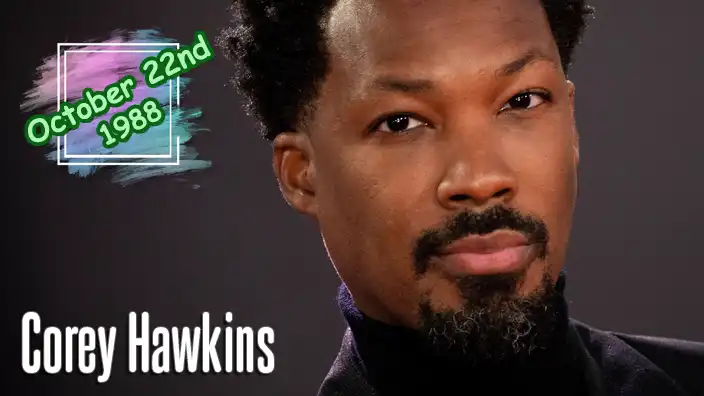
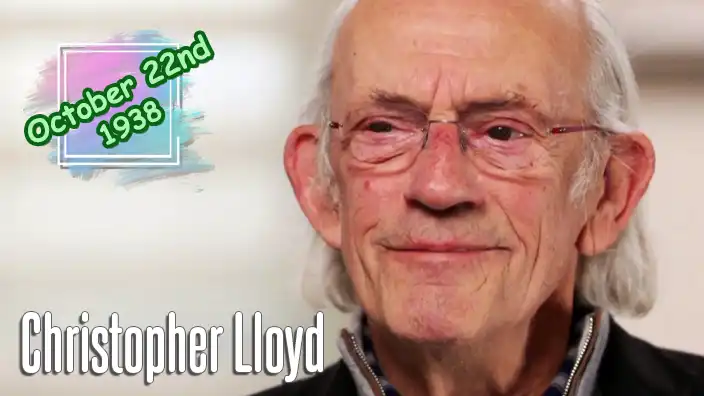
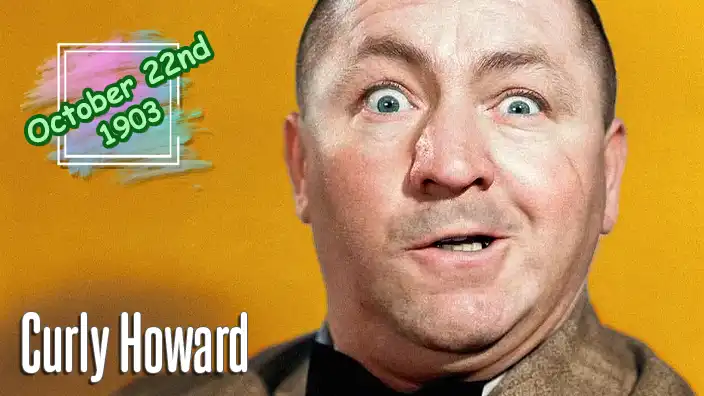
October 22, 1938, in Leytonstone, England

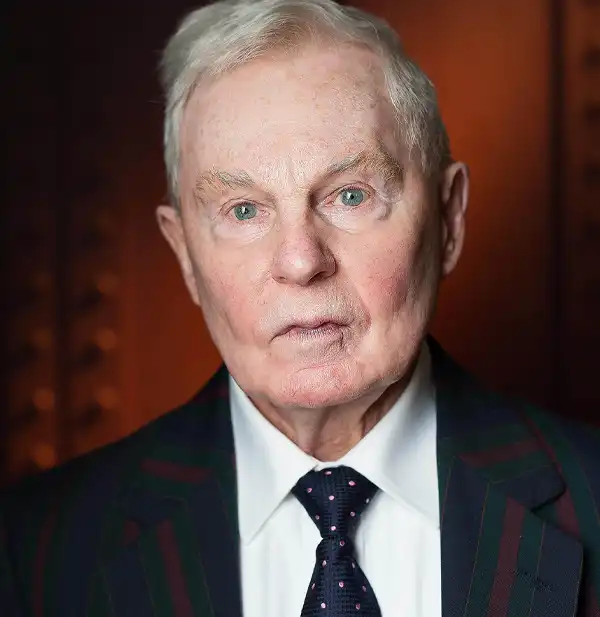
Sir Derek George Jacobi was born on October 22, 1938, in Leytonstone, East London, England. He was the only child of Alfred George Jacobi, who worked in retail and operated a tobacconist and sweet shop, and Daisy Gertrude Masters Jacobi, a secretary with an appreciation for the performing arts. His upbringing was comfortably removed from the aristocratic households, royal palaces, and imperial courts that would later become familiar settings throughout his acting career. His parents encouraged his creative interests, although they could hardly have imagined that their son would eventually become one of Britain's most respected classical actors, portraying enough kings and emperors to populate a particularly argumentative royal family reunion.
Derek Jacobi's childhood included a serious bout of rheumatic fever that left him confined to bed for an extended period. During his recovery, he spent considerable time listening to radio programs and watching television, experiences that helped develop his fascination with storytelling and performance. His interest in acting became increasingly apparent during his school years at Leyton County High School, where he participated enthusiastically in theatrical productions. He joined the amateur dramatic group known as the Players of Leyton and developed an early reputation for his impressive stage presence. His portrayal of Hamlet in a school production attracted considerable attention when the company performed at the Edinburgh Festival Fringe, suggesting that the young actor possessed an unusual understanding of Shakespeare's troubled Danish prince.
His talent earned him a scholarship to St John's College at the University of Cambridge, where he studied history while immersing himself in the university's theatrical activities. Cambridge provided an exceptional environment for a young performer, bringing him into contact with future theatrical luminaries including Ian McKellen and director Trevor Nunn. Jacobi became deeply involved with the Marlowe Society, performing in numerous classical productions and refining the commanding vocal delivery and emotional sensitivity that would later become trademarks of his work. His performance in Christopher Marlowe's Edward II was particularly influential, attracting professional attention and helping secure his entry into repertory theater. Studying history undoubtedly proved useful for a man who would eventually spend much of his professional life portraying historical figures, although few history students can claim to have personally impersonated quite so many monarchs.
After graduating from Cambridge, Derek Jacobi joined the Birmingham Repertory Theatre, where he gained valuable professional experience in a wide variety of productions. His performances quickly demonstrated a remarkable ability to handle demanding classical material, combining precise diction with emotional depth and an instinctive understanding of character. In 1963, the legendary Sir Laurence Olivier selected Jacobi to become one of the founding members of Britain's newly established National Theatre Company. It was an extraordinary opportunity for a developing actor, placing him alongside some of the country's most accomplished performers. Working under Olivier's leadership, Jacobi appeared in major productions and established himself as an important figure in British theater. When Laurence Olivier personally invites you to help establish a national theatrical institution, it is generally advisable to accept before he changes his mind.
Derek Jacobi's association with the National Theatre strengthened his reputation as a formidable Shakespearean actor. His classical repertoire eventually included Hamlet, Othello, Richard III, Macbeth, The Tempest, King Lear, and Twelfth Night, among many other productions. His interpretation of Hamlet became especially celebrated, with performances reaching international audiences through extensive touring. Jacobi's approach to Shakespeare emphasized psychological complexity rather than empty theatrical grandeur, allowing audiences to understand the emotional conflicts beneath the elaborate language. Whether portraying a troubled prince, a ruthless ruler, or a foolish aristocrat, he demonstrated that Shakespeare's characters remain recognizably human despite their magnificent speeches and unfortunate tendency to resolve family disagreements with swords.
Although theater remained his primary professional passion, Derek Jacobi gradually established a successful screen career. His early film appearances included Othello (1965), featuring Laurence Olivier, followed by the political thriller The Day of the Jackal (1973) and the espionage drama The Odessa File (1974). These productions introduced his talents to cinema audiences while allowing him to develop a screen acting style that retained the intelligence and precision of his theatrical work. Unlike performers who rely heavily on extravagant gestures, Jacobi discovered that a carefully measured expression or a subtle change in vocal tone could communicate considerable emotional complexity. His ability to convey authority, uncertainty, intelligence, and vulnerability would prove especially valuable in the television production that transformed his international reputation.
In 1976, Derek Jacobi achieved one of the defining successes of his career with the BBC historical drama I, Claudius, adapted from the novels by Robert Graves. He portrayed Claudius, the Roman emperor whose physical disabilities and apparent awkwardness caused others to underestimate his intelligence and political instincts. The series explored the dangerous intrigues of the Roman imperial family, including betrayals, assassinations, ambition, and enough questionable family behavior to make modern reality television appear positively civilized. Jacobi delivered an extraordinary performance, portraying Claudius as simultaneously vulnerable, observant, intelligent, and increasingly aware of the brutal political world surrounding him. His portrayal earned him the BAFTA Television Award for Best Actor and established I, Claudius as one of the most celebrated historical dramas in British television history.
The success of I, Claudius demonstrated Derek Jacobi's exceptional ability to make complicated historical personalities accessible to modern audiences. Rather than portraying Claudius merely as a weak or physically impaired figure, he revealed a shrewd survivor whose intelligence enabled him to navigate an extraordinarily dangerous political environment. His carefully controlled stammer, nervous mannerisms, and expressive facial movements created a convincing character whose apparent helplessness concealed considerable strength. The performance became a landmark in historical television drama and remains an important example of character acting at its finest. Jacobi managed to make an ancient Roman emperor sympathetic, which was no small achievement considering the imperial family's collective enthusiasm for poisoning relatives.
Following his success on television, Derek Jacobi continued building an impressive international theatrical career. He appeared in acclaimed productions of Hamlet, The Tempest, and Cyrano de Bergerac, earning recognition for his ability to combine classical technique with emotional authenticity. His portrayal of Cyrano in the Royal Shakespeare Company's 1983 production of Cyrano de Bergerac brought him a Laurence Olivier Award for Actor of the Year in a Revival. The character's combination of wit, romantic longing, courage, and insecurity provided an ideal opportunity for Jacobi's expressive talents. Cyrano's famous nose might have attracted attention, but Jacobi ensured that audiences remained equally interested in the complicated man attached to it.
His theatrical accomplishments continued in 1985 when he received the Tony Award for Best Actor in a Play for his portrayal of Benedick in Shakespeare's Much Ado About Nothing. The production demonstrated his gift for sophisticated comedy, allowing him to explore the character's verbal sparring, romantic confusion, and reluctant surrender to affection. Jacobi's performance showed that his classical training could be equally effective in Shakespeare's lighter works, where timing and wit are just as important as emotional intensity. His success on Broadway strengthened his international reputation and added another prestigious award to an increasingly impressive collection. For a performer who had begun his career in amateur theater, receiving Broadway's highest acting recognition was a considerable achievement.
Derek Jacobi also faced personal professional challenges, including a period of debilitating stage fright following his Broadway debut in The Suicide in 1980. The experience temporarily affected his confidence and made performing before live audiences extraordinarily difficult. His eventual return to the stage demonstrated considerable determination and resilience, particularly in a profession where maintaining composure under public scrutiny is essential. Rather than allowing the experience to end his theatrical career, Jacobi gradually regained his confidence and returned to demanding classical roles. His recovery offers a reminder that even exceptionally accomplished performers can experience anxiety and self-doubt. Apparently, knowing Shakespeare's lines perfectly does not necessarily prevent the occasional desire to disappear behind the scenery.
Throughout the 1980s and 1990s, Derek Jacobi maintained a varied television and film career. His performance in the 1988 television film The Tenth Man, based on a story by Graham Greene, earned him a Primetime Emmy Award. He also appeared in Kenneth Branagh's acclaimed film adaptation of Henry V (1989), portraying the Chorus, a narrator who guides audiences through Shakespeare's historical drama. Jacobi's distinguished voice and commanding presence made him particularly effective in this role, providing a thoughtful introduction to the film's dramatic events. He subsequently appeared in Branagh's Dead Again (1991), further demonstrating his willingness to move between classical adaptations and contemporary suspense.
Another memorable television success arrived in 1994 with Cadfael, a British mystery series based on the historical novels by Ellis Peters. Derek Jacobi portrayed Brother Cadfael, a Benedictine monk and former soldier who investigates crimes in twelfth-century England. Set during the turbulent period known as the Anarchy, the series combined medieval history with traditional detective storytelling. Jacobi brought warmth, intelligence, and quiet authority to the title character, portraying a thoughtful investigator whose understanding of human nature often proved more useful than conventional assumptions about guilt and innocence. The series continued until 1998 and became popular among viewers who appreciated historical mysteries. Brother Cadfael demonstrated that solving murders could be a respectable monastic occupation, provided one remembered to attend prayers between investigations.
In 2000, Derek Jacobi appeared in Ridley Scott's epic historical film Gladiator, portraying Senator Gracchus, a respected Roman politician opposed to the increasingly dangerous ambitions of Emperor Commodus. The film starred Russell Crowe as Maximus Decimus Meridius, a Roman general betrayed and forced into slavery before becoming a gladiator. Jacobi's character represented a voice of political principle within an empire dominated by corruption, ambition, and violence. His dignified performance provided an important contrast to the ruthless behavior of Commodus, portrayed by Joaquin Phoenix. Although Gladiator was filled with spectacular battles and elaborate action sequences, Jacobi demonstrated that a determined senator armed with a persuasive argument could still command attention without swinging a sword.
Gladiator became an enormous international success, winning five Academy Awards, including Best Picture and Best Actor for Russell Crowe. Jacobi's involvement introduced him to another generation of moviegoers who might not have been familiar with his extensive Shakespearean career or his celebrated portrayal of Claudius. Interestingly, his appearance in Gladiator brought him back to the world of ancient Rome, where he had already achieved one of television's greatest historical performances. Having previously portrayed a Roman emperor, Jacobi now found himself serving as a senator attempting to restrain imperial excess. It was a career progression that would probably have confused the Roman civil service.
His film career continued with Robert Altman's acclaimed ensemble mystery Gosford Park (2001), in which he portrayed Probert, a valet in an English country house filled with aristocratic secrets and social tensions. The film featured an extraordinary cast including Maggie Smith, Michael Gambon, Helen Mirren, and Stephen Fry. Jacobi's understated performance contributed to the intricate relationships between servants and wealthy guests, demonstrating his ability to excel within a large ensemble. He also appeared in Nanny McPhee (2005), The Golden Compass (2007), and numerous other productions, moving comfortably between period dramas, fantasy adventures, and family entertainment. His willingness to accept diverse roles ensured that his screen career remained as varied as his theatrical accomplishments.
Derek Jacobi returned to another royal setting in The King's Speech (2010), portraying Archbishop Cosmo Gordon Lang. Directed by Tom Hooper, the acclaimed historical drama followed King George VI, played by Colin Firth, as he struggled to overcome a speech impediment with the assistance of unconventional therapist Lionel Logue, portrayed by Geoffrey Rush. Jacobi's portrayal of the Archbishop contributed to the film's depiction of the pressures surrounding the British monarchy during a period of political uncertainty. The King's Speech won four Academy Awards, including Best Picture, and received widespread praise for its performances and historical storytelling. For Jacobi, the film represented another opportunity to explore the complicated relationships between public responsibility, personal vulnerability, and the traditions of British institutions.
His work in television continued to attract admiration, particularly through the BBC drama Last Tango in Halifax, which premiered in 2012. Jacobi starred opposite Anne Reid as Alan Buttershaw, a widower who reconnects with his childhood sweetheart, Celia Dawson, after many decades apart. The series explored later-life romance, family relationships, personal regrets, and the complications that arise when two people discover that affection does not necessarily make their relatives any easier to manage. Jacobi's warm and sensitive portrayal of Alan demonstrated his remarkable ability to create deeply sympathetic characters without relying on theatrical grandeur. The series became a critical and popular success, offering a thoughtful and frequently humorous examination of love, companionship, and the unexpected opportunities life can provide.
In 2013, Derek Jacobi reunited with his longtime friend and fellow Shakespearean actor Sir Ian McKellen for the British sitcom Vicious. The series followed Freddie Thornhill, portrayed by McKellen, and Stuart Bixby, portrayed by Jacobi, an elderly couple whose long relationship was characterized by affection, theatrical arguments, and a seemingly inexhaustible supply of sarcastic remarks. Their performances delighted audiences with the contrast between two distinguished classical actors behaving like a pair of exceptionally well-dressed schoolboys engaged in an endless verbal competition. The series ran until 2016 and provided both performers with an opportunity to demonstrate their considerable comedic talents. After careers filled with Shakespearean tragedy, playing a couple who argued over household matters must have felt positively relaxing.
Derek Jacobi also entered the world of science fiction through the long-running British television series Doctor Who. In the 2007 episode Utopia, he portrayed Professor Yana, a seemingly kindly scientist whose true identity was eventually revealed to be the Master, one of the Doctor's most dangerous adversaries. His transformation from a sympathetic character into a sinister Time Lord provided one of the episode's most memorable moments. Jacobi subsequently returned to the character through audio dramas produced by Big Finish Productions, where his extraordinary vocal abilities proved especially effective. Having portrayed Roman emperors, Shakespearean kings, and medieval detectives, becoming a villainous Time Lord was simply another interesting addition to an already remarkable professional résumé.
His distinguished voice has also made Derek Jacobi a popular narrator of documentaries, audiobooks, and dramatic recordings. His precise diction, expressive delivery, and ability to communicate subtle emotional changes have made him particularly well suited to literary narration and historical storytelling. He has participated in numerous recordings of classical literature, poetry, and theatrical works, extending his artistic influence beyond traditional stage and screen performances. For audiences who appreciate spoken-word recordings, Jacobi's voice offers the reassuring authority of a highly educated English gentleman, even when the subject matter involves murder, political betrayal, or some unfortunate individual meeting an untimely end in a Shakespearean tragedy.
Jacobi's later screen appearances included the live-action adaptation of Cinderella (2015), in which he portrayed the King, and Kenneth Branagh's Murder on the Orient Express (2017), where he played Edward Masterman, the valet to the mysterious Samuel Ratchett. The Agatha Christie adaptation featured an ensemble cast including Branagh, Judi Dench, Michelle Pfeiffer, Penélope Cruz, and Willem Dafoe. Jacobi's involvement added another distinguished presence to a film filled with elaborate costumes, suspicious characters, and a detective whose mustache practically deserved its own billing. He also portrayed the Duke of Windsor in Netflix's historical drama The Crown, continuing his association with productions exploring monarchy, political responsibility, and the complicated private lives of public figures.
His remarkable theatrical accomplishments have received extensive recognition throughout his career. In addition to his Tony Award and two Laurence Olivier Awards, Derek Jacobi has received BAFTA and Primetime Emmy honors, reflecting his exceptional versatility across different performance mediums. He was appointed Commander of the Order of the British Empire in 1985 and knighted by Queen Elizabeth II in 1994 for his services to drama. He also received a Danish knighthood through the Order of the Dannebrog, placing him among a particularly select group of performers recognized by more than one monarchy. Few actors can claim to have portrayed so many royal figures while also receiving genuine royal honors. Fortunately, his actual knighthoods did not require him to defend a castle or challenge anyone to single combat.
Away from the professional spotlight, Derek Jacobi has shared a long-standing relationship with actor and theater director Richard Clifford. Their partnership began in 1979, and they entered into a civil partnership in 2006. Jacobi has spoken about the importance of companionship, stability, and personal happiness, particularly within a profession that frequently demands extensive travel and irregular schedules. His personal life has generally remained separate from the theatrical spectacle of his professional work, reflecting a preference for privacy and a quieter existence away from the demands of public performance. Considering the extraordinary number of dramatic conflicts he has portrayed throughout his career, a peaceful domestic life seems an entirely reasonable ambition.
One of Derek Jacobi's most impressive qualities is his ability to move between serious drama and comedy without sacrificing credibility. His interpretation of Claudius demonstrated profound psychological insight, while his performance in Vicious revealed a mischievous sense of humor and impeccable comic timing. His work in Last Tango in Halifax showed considerable tenderness, while his appearances in Gladiator and The King's Speech communicated authority and political intelligence. These varied performances reflect an actor who understands that successful characterization depends on emotional truth rather than elaborate costumes or impressive speeches. Whether wearing a Roman toga, a medieval habit, or an ordinary modern suit, Jacobi brings intelligence and authenticity to every role.
His contribution to Shakespearean theater remains especially significant. Across decades of performances, Derek Jacobi has helped introduce classical drama to audiences throughout Britain and around the world. His interpretations have emphasized the humanity of Shakespeare's characters, making their ambitions, fears, romantic disappointments, and moral dilemmas accessible to contemporary viewers. He has also contributed to ongoing discussions about Shakespearean authorship, expressing support for the controversial theory that Edward de Vere, the Earl of Oxford, wrote the plays traditionally attributed to William Shakespeare. The overwhelming scholarly consensus continues to recognize William Shakespeare as their author, but Jacobi's interest reflects his longstanding engagement with theatrical history and the questions surrounding its most famous playwright.
Derek Jacobi's enduring popularity is particularly remarkable because he has never depended upon the conventional machinery of Hollywood celebrity. His reputation has been built primarily through the quality of his performances, his dedication to classical theater, and his willingness to approach every character with seriousness and imagination. He has earned admiration from fellow actors, directors, critics, and audiences across generations, establishing himself as one of Britain's most accomplished performers. His professional journey demonstrates that artistic longevity depends not merely on talent but also on discipline, curiosity, resilience, and the determination to continue exploring unfamiliar creative territory.
From the modest streets of East London to the grand stages of the National Theatre, from the imperial intrigues of I, Claudius to the spectacular arenas of Gladiator, Sir Derek Jacobi has enjoyed an extraordinary acting career. His performances have entertained audiences, enriched classical theater, and brought historical and fictional personalities vividly to life. Whether commanding a Roman senate, investigating a medieval murder, portraying a troubled Shakespearean king, or exchanging insults with Sir Ian McKellen, he has demonstrated an exceptional ability to make every character memorable. His legacy is one of intelligence, craftsmanship, humor, and enduring artistic achievement. And after portraying so many rulers, emperors, and distinguished gentlemen, one might reasonably conclude that Sir Derek has earned the right to put his feet up occasionally—although Shakespeare would probably insist that he deliver a five-minute soliloquy first.