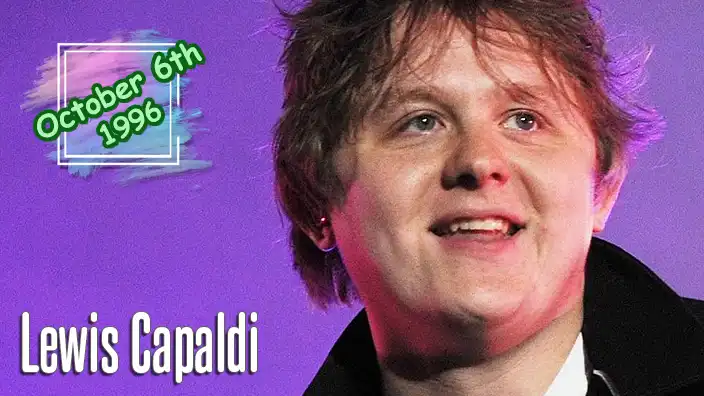
October 7, 1996, in Glasgow, Scotland
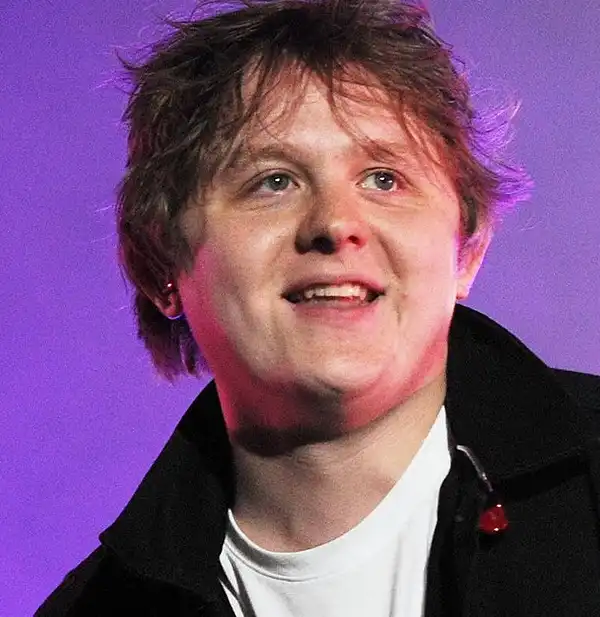
Lewis Marc Capaldi was born on October 7, 1996, in Glasgow, Scotland, and grew up in Bathgate, West Lothian. Music entered his life early, although there was little indication that the youngster experimenting with songs would eventually become internationally famous for making enormous crowds sing enthusiastically about heartbreak. Capaldi began playing drums and guitar as a child, started singing in pubs while still young and gradually developed the booming, emotionally charged voice that would become his musical trademark.
Capaldi grew up as the youngest of four children. His family was supportive of his musical ambitions, although his route toward a professional career was considerably less glamorous than the finished product might suggest. He played wherever he could, performing in pubs and small venues and working steadily on songwriting. Those early appearances gave him the kind of practical musical education that cannot easily be obtained from a textbook: how to hold an audience's attention when some of the audience originally came in principally because the building sold beer.
He attended St. Kentigern's Academy in Blackburn, West Lothian, before studying music at New College Lanarkshire. By then Capaldi was performing regularly and uploading recordings to the internet. His online presence eventually attracted the attention of music manager Ryan Walter, who discovered Capaldi after encountering one of his recordings online. It was the modern version of being discovered in a smoky club, except nobody had to find somewhere to park.
Capaldi's professional breakthrough began with the release of "Bruises" in 2017. The song showcased his distinctive combination of powerful vocals and emotionally direct songwriting and rapidly accumulated millions of streams. Its success brought Capaldi wider attention from both listeners and the music industry, and he signed recording agreements with Virgin EMI Records and Capitol Records. Additional songs and live performances followed as his audience expanded well beyond Scotland.
His debut EP, Bloom, arrived in 2017 and was produced with Grammy-winning producer Malay. Capaldi continued touring extensively, supporting established performers including Sam Smith and Niall Horan. The touring schedule helped introduce him to larger audiences while giving him the opportunity to develop the stage personality that became almost as recognizable as his singing voice.
Then came "Someone You Loved." Released in 2018, the piano-driven ballad transformed Capaldi from a rising singer-songwriter into an international star. The song reached No. 1 on the UK Singles Chart and remained there for seven weeks. It subsequently crossed the Atlantic and topped the Billboard Hot 100 in the United States. For a song built around loss, loneliness and emotional vulnerability, it demonstrated an impressive capacity to make millions of people voluntarily listen to something that could thoroughly ruin an otherwise cheerful afternoon.
"Someone You Loved" became one of Capaldi's signature recordings and received widespread industry recognition. The song earned a Grammy Award nomination for Song of the Year and won Song of the Year at the 2020 Brit Awards. Capaldi also received the Brit Award for Best New Artist. The combination of commercial success and major awards established him as one of the most prominent British singer-songwriters to emerge during the late 2010s.
Capaldi released his debut studio album, Divinely Uninspired to a Hellish Extent, in May 2019. The wonderfully unpretentious title fitted an artist who appeared determined not to take the machinery of celebrity too seriously. The album included "Someone You Loved," "Grace," "Hold Me While You Wait" and other tracks and became a major commercial success. It topped the UK Albums Chart and became one of Britain's biggest-selling albums of the period.
Another major hit followed with "Before You Go." The song dealt with the emotional aftermath of suicide and questions left behind for surviving family members. Capaldi has explained that the subject was connected to his family's experience following the death of his aunt. The recording again demonstrated his ability to turn painful personal themes into accessible pop songs without burying their emotional weight beneath elaborate production.
Capaldi's singing style is characterized by a raspy, powerful delivery that can move from restrained verses into enormous choruses. His songs frequently deal with failed relationships, longing, grief and regret. On paper, this might make a Lewis Capaldi concert sound like somewhere people should be issued blankets and a telephone number for emotional support upon arrival. In practice, his live shows developed a reputation for humor, audience interaction and a surprisingly cheerful atmosphere between the songs.
That contrast became central to Capaldi's public personality. His recordings could be intensely vulnerable, while his interviews and social-media appearances were often self-deprecating, mischievous and deliberately unpolished. At a time when popular musicians could carefully curate every photograph and public statement, Capaldi frequently seemed determined to demonstrate that international fame had not prevented him from behaving like the funniest fellow at the end of a Scottish pub.
His sense of humor became particularly visible through social media, where he accumulated millions of followers. Rather than presenting an untouchable celebrity image, Capaldi joked about his appearance, his career and the peculiarities of fame. When his face appeared on enormous advertising displays and album campaigns, he frequently appeared as amused by the situation as anyone else. The approach created a connection with audiences that went beyond his music and made his personality an important part of his public appeal.
Capaldi's distant family connection to actor Peter Capaldi also generated considerable attention. Peter Capaldi, known internationally for playing the Twelfth Doctor in Doctor Who, is a relative, although the two were not especially close before Lewis became famous. Peter appeared in the music video for "Someone You Loved," portraying a widower involved in an organ-donation storyline. The video gave the song a narrative distinct from romantic heartbreak and brought two very different Capaldi careers together on screen.
Following the enormous success of his debut album, expectations surrounding Capaldi's second record were inevitably high. He released Broken by Desire to Be Heavenly Sent in 2023. The album included "Forget Me," "Pointless" and "Wish You the Best," all of which became successful singles. The album reached No. 1 in the United Kingdom, confirming that the extraordinary response to his debut had not been merely a one-album phenomenon.
The period surrounding the second album also brought greater public attention to Capaldi's health. He had previously disclosed that he had been diagnosed with Tourette syndrome, a neurological condition that can cause involuntary movements and vocalizations known as tics. Capaldi discussed the diagnosis openly and explained some of the physical movements audiences had noticed during performances. His willingness to address the condition publicly helped increase awareness and corrected speculation about his behavior.
In 2023, Netflix released the documentary Lewis Capaldi: How I'm Feeling Now. The film followed Capaldi as he worked on his second album and dealt with the pressures created by the extraordinary success of his first. Rather than presenting a conventional parade of awards, screaming crowds and glamorous dressing rooms, the documentary examined anxiety, self-doubt, family relationships, songwriting and his experience with Tourette syndrome. It offered audiences a considerably more vulnerable portrait of the person behind the jokes and enormous choruses.
Capaldi's appearance at the Glastonbury Festival in June 2023 produced one of the most widely discussed moments of his career. During his performance, his Tourette symptoms became increasingly difficult for him to manage, and his voice also struggled. When Capaldi had difficulty continuing "Someone You Loved," members of the enormous crowd sang portions of the song for him. The moment circulated widely around the world and demonstrated the unusually strong relationship he had developed with his audience.
Shortly afterward, Capaldi announced that he would step away from touring while concentrating on his physical and mental well-being. The decision interrupted a period when his career was operating at full commercial speed, but Capaldi made clear that his health needed to take priority. His openness about the decision was consistent with the candid manner in which he had already discussed anxiety, pressure and Tourette syndrome.
After an extended period away from regular performance, Capaldi gradually returned to music. His comeback included new material and appearances before audiences, marking another chapter in a career that had experienced an extraordinary rise within only a few years. The reception demonstrated that his audience had not disappeared simply because he had taken the time he needed away from the touring machinery.
Capaldi's film and television credits naturally reflect his musical career. IMDb lists appearances as himself on talk shows, awards programs, music documentaries and entertainment productions, along with music-video and soundtrack credits. The Netflix documentary provided the most substantial screen portrait of his life and career, while his songs have also appeared in television programs and other productions.
Despite the awards, chart records and international recognition, Capaldi's songwriting remains rooted in relatively straightforward musical ingredients. Piano or guitar frequently provides the foundation, his voice carries much of the emotional force, and the lyrics tend to address experiences that require little explanation: love, loss, regret and the uncomfortable realization that somebody else appears to be coping with a breakup considerably better than you are.
Lewis Capaldi's rapid journey from performing in Scottish pubs to topping charts on both sides of the Atlantic could easily have produced the carefully manufactured personality traditionally associated with international pop stardom. Instead, he built much of his reputation by doing almost the opposite. He sings as though his heart has just been run over by a bus, finishes the song, tells a ridiculous joke and somehow convinces thousands of people that this is a perfectly sensible way to spend an evening.
Behind that humor is a serious songwriter with an unusually powerful voice and a willingness to make vulnerability central to his music. From "Bruises" and "Someone You Loved" to "Before You Go," Broken by Desire to Be Heavenly Sent and his subsequent work, Capaldi has demonstrated that traditional emotional songwriting still has an enormous audience. The technology and distribution may belong firmly to the twenty-first century, but the basic recipe is considerably older: write a good song, mean what you sing and make people feel something. Lewis Capaldi simply added the useful modern innovation of making them laugh again afterward.