October 7, 1951, in Seymour, Indiana
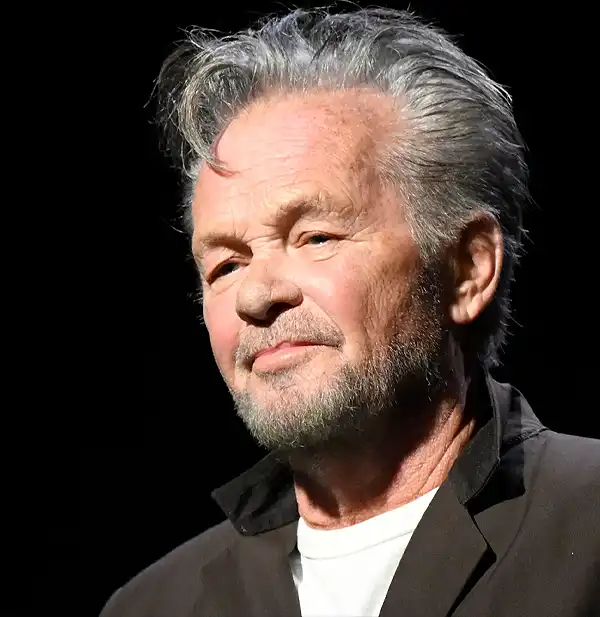
John Mellencamp was born on October 7, 1951, in Seymour, Indiana, a small Midwestern community that would eventually provide both the physical landscape and much of the emotional territory for his music. Long before songs such as "Pink Houses," "Small Town" and "Jack & Diane" made him one of America's most recognizable rock singers, Mellencamp was growing up in precisely the sort of place that would later populate his lyrics: working families, ordinary streets, local characters and people attempting to make a decent life without expecting anyone to write a song about them.
Mellencamp was born with spina bifida and underwent corrective surgery as an infant. He survived an operation that was considerably more dangerous in the early 1950s than such procedures would later become, and he grew into an energetic and frequently rebellious youngster. Music became increasingly important during his teenage years, and he formed his first band, Crepe Soul, while still in school. The group played a mixture of rock and soul, providing Mellencamp with early experience performing before audiences.
His youth was not particularly conventional. Mellencamp married his girlfriend Priscilla Esterline while still a teenager, and their daughter Michelle was born soon afterward. He subsequently attended Vincennes University in Indiana and continued playing music while working various jobs. The notion of becoming a professional musician gradually became less of a fantasy and more of a plan, although the route between Seymour, Indiana, and a successful recording career contained several potholes large enough to swallow a touring bus.
After college, Mellencamp traveled to New York in pursuit of a record deal. He came to the attention of music manager Tony DeFries, who had previously worked with David Bowie. DeFries secured Mellencamp a recording contract with MCA Records, but there was a catch that would follow the singer for years: his professional name was changed to Johnny Cougar.
Mellencamp has repeatedly made clear that the name was not his idea. The change was made because his management believed "Mellencamp" was too awkward to market. His 1976 debut album, Chestnut Street Incident, therefore appeared under the name Johnny Cougar. The album was not commercially successful, and MCA dropped him. Being renamed against your wishes is irritating enough; being renamed and then dropped by the record company adds a particularly efficient finishing touch.
He continued recording, eventually shortening Johnny Cougar to John Cougar. His early albums gradually attracted attention, particularly in Australia, where "I Need a Lover" became a hit. Pat Benatar later recorded the song as well, helping introduce Mellencamp's songwriting to a wider American audience. His persistence began paying off as his rough-edged mixture of rock, pop and Midwestern storytelling found a growing audience.
The 1980 album Nothin' Matters and What If It Did produced successful singles including "This Time" and "Ain't Even Done with the Night," but Mellencamp's major commercial breakthrough came with American Fool in 1982. The album contained "Hurts So Good" and "Jack & Diane," two songs that transformed him from a successful performer into a major American rock star.
"Hurts So Good" became a substantial hit and earned Mellencamp a Grammy Award for Best Male Rock Vocal Performance. "Jack & Diane," meanwhile, reached No. 1 on the Billboard Hot 100 and became one of the defining recordings of his career. The song told the story of two American teenagers confronting romance and the uncomfortable realization that youthful possibilities do not remain unlimited forever. Its famous line about holding on to sixteen became instantly recognizable, while the handclaps and guitar arrangement made the record difficult to mistake for anything else.
Success finally gave Mellencamp enough leverage to begin reclaiming his own name. His 1983 album Uh-Huh was credited to John Cougar Mellencamp. It was not quite complete liberation, but at least his actual surname had made it onto the album cover. The record included "Crumblin' Down," "Pink Houses" and "Authority Song," all of which reinforced his growing identity as a songwriter interested in American working-class life, individual independence and skepticism toward institutions.
"Pink Houses" became one of Mellencamp's best-known songs, presenting images of American life that could sound celebratory while carrying considerably more complicated observations underneath. That combination became characteristic of his songwriting. Mellencamp could write choruses designed for thousands of people to sing together while filling the verses with characters whose economic and social circumstances were far less comfortable than the music initially suggested.
The 1985 album Scarecrow pushed those themes even further. Songs including "Small Town," "Rain on the Scarecrow" and "R.O.C.K. in the U.S.A." combined traditional rock influences with stories rooted in rural and working-class America. "Small Town" drew directly upon Mellencamp's Indiana upbringing, while "Rain on the Scarecrow" addressed the economic crisis confronting American family farmers during the 1980s.
That concern helped lead Mellencamp into one of the longest-running charitable projects associated with American popular music. In 1985, he joined Willie Nelson and Neil Young in organizing the first Farm Aid concert in Champaign, Illinois. The event raised money and awareness for family farmers facing financial hardship. Farm Aid subsequently became an ongoing organization and annual concert event, with Mellencamp remaining closely associated with it for decades.
His musical development continued with The Lonesome Jubilee in 1987. The album expanded his sound through instruments including fiddle and accordion, drawing more strongly upon folk and roots traditions. Songs such as "Paper in Fire," "Cherry Bomb" and "Check It Out" demonstrated that Mellencamp was increasingly comfortable moving beyond straightforward rock arrangements while maintaining the direct storytelling that had become central to his work.
By 1991, after years of Johnny Cougar, John Cougar and John Cougar Mellencamp, he finally released an album simply credited to John Mellencamp. It had taken roughly 15 years to travel professionally back to the name printed on his birth certificate. Most people accomplish this without releasing several platinum albums along the way, but everybody has their own route.
Mellencamp continued producing successful recordings through the 1990s. His 1994 album Dance Naked included a hit cover of Van Morrison's "Wild Night," recorded with singer and bassist Meshell Ndegeocello. The collaboration became another major chart success and demonstrated that Mellencamp remained commercially relevant well beyond the period normally associated with his breakthrough hits.
His career was interrupted by a serious health warning in 1994 when Mellencamp suffered a heart attack. A longtime heavy smoker, he subsequently reduced his touring schedule while recovering. He returned to recording and performing, continuing a career that increasingly emphasized roots music, folk influences and songwriting over the glossy pop-rock production associated with some of his earlier records.
Mellencamp also developed a substantial career as a painter. He had studied art during his younger years and returned seriously to painting later in life. His work has been exhibited in galleries and museums, with portraits and figurative paintings forming an important part of his artistic output. Painting was not merely a celebrity pastime; it became another sustained creative discipline alongside songwriting and recording.
Film provided another outlet. Mellencamp directed and starred in the 1992 movie Falling from Grace, playing a successful country singer who returns to his Indiana hometown and confronts unresolved personal and family problems. The film's screenplay was written by novelist Larry McMurtry. IMDb also records Mellencamp's numerous appearances as himself in documentaries, concert productions, television programs and music-related films, as well as the extensive use of his songs on soundtracks.
Mellencamp later collaborated with horror novelist Stephen King on the musical Ghost Brothers of Darkland County. King wrote the story while Mellencamp composed the music and lyrics. The unusual partnership developed over many years before the production premiered in Atlanta in 2012. A Midwestern rock singer and one of America's most famous horror writers may not sound like an obvious theatrical partnership, but neither did "Johnny Cougar," and that apparently lasted for years.
Recognition for Mellencamp's songwriting and recording career continued accumulating. He was inducted into the Rock and Roll Hall of Fame in 2008. In 2018, he was inducted into the Songwriters Hall of Fame, recognition particularly appropriate for an artist whose long-term reputation increasingly rested not merely on performing hits but on constructing concise stories about American lives.
His catalog contains a remarkable collection of familiar songs: "Jack & Diane," "Hurts So Good," "Pink Houses," "Small Town," "Authority Song," "Crumblin' Down," "Cherry Bomb," "Paper in Fire," "Lonely Ol' Night," "R.O.C.K. in the U.S.A." and many others. Although his music has frequently been described as heartland rock, Mellencamp himself has resisted being confined too neatly by labels. His recordings incorporate rock and roll, folk, country, blues and roots music, often drawing upon older American musical traditions.
One constant throughout much of that work has been Indiana. Mellencamp could have relocated his public identity completely to Los Angeles or New York after becoming successful, but he maintained deep ties to his home state. Seymour and southern Indiana remained recurring reference points in both his music and public persona. The "small town" of the famous song was not an abstract invention; it represented the environment from which he came and to which he remained connected.
Mellencamp has also been unusually willing to write about aging, disappointment, mortality and the limits of the American dream. The young characters of "Jack & Diane" eventually gave way to songs written from the perspective of someone who had accumulated decades of experience. His later albums became rougher and less concerned with conventional pop-radio expectations, emphasizing weathered vocals, sparse instrumentation and the storytelling traditions that had always existed beneath his biggest hits.
His personal life has attracted considerable media attention as well. Mellencamp has been married three times and is the father of five children. One of his daughters, Teddi Mellencamp, became a television personality known for The Real Housewives of Beverly Hills. His relationships have periodically supplied entertainment headlines, although his musical career has remained the far more substantial reason his name continues to appear in American popular culture.
IMDb's record of Mellencamp's career extends well beyond conventional acting. His songs have appeared in numerous films and television programs, while he has appeared as himself in documentaries, music programs, award ceremonies and concert films. Like many musicians with careers spanning several decades, his screen presence provides a parallel record of changing hairstyles, changing fashions and, thankfully, a professional name that eventually stopped changing.
Mellencamp's longevity is particularly notable because his early career gave no guarantee that longevity was coming. His first major record failed. His label dropped him. His management changed his name without his enthusiasm. He had to rebuild his career gradually and spent years attempting to gain enough control over his work to present himself as the artist he wanted to be. The polished mythology of instant rock stardom simply does not fit.
What emerged instead was a distinctly American songwriting career rooted in persistence, observation and an affection for ordinary characters. Mellencamp's best songs rarely concern glamorous people living extraordinary lives. They concern teenagers, workers, farmers, families and people living in places that television crews generally drive through on the way somewhere else. He made those lives suitable material for arena-sized rock songs without pretending that everything in those lives was wonderful.
From Seymour to the top of the Billboard charts, Farm Aid, the Rock and Roll Hall of Fame and the Songwriters Hall of Fame, John Mellencamp has built a career stretching across rock music, songwriting, painting, film and activism. "Johnny Cougar" may have been somebody else's marketing idea, and "John Cougar Mellencamp" may have been an awkward diplomatic compromise, but eventually the unnecessary wildlife disappeared. John Mellencamp turned out to be quite enough.