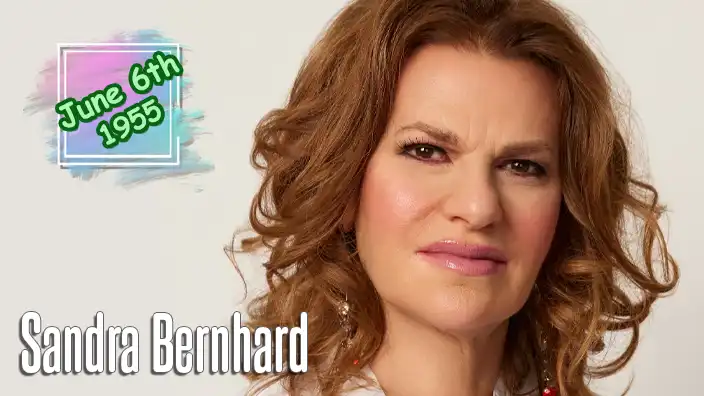
August 21, 1938, in Houston, Texas
 March 20, 2020, in Sandy Springs, Georgia
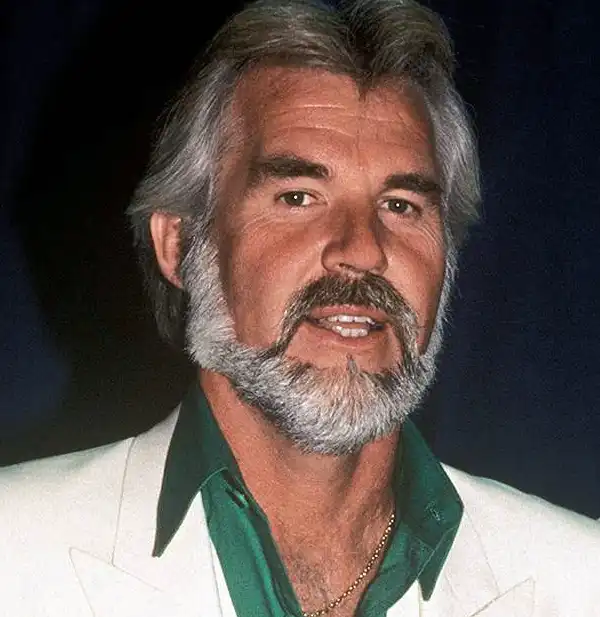
Kenneth Ray Rogers was born on August 21, 1938, in Houston, Texas, and grew up in public housing as one of eight children in a working-class family. Money was scarce, but Houston exposed the young Rogers to an unusually broad collection of musical styles, including country, gospel, rhythm and blues and jazz. That mixture proved important because the man who would eventually become one of the most recognizable figures in country music took a remarkably indirect route getting there. Rogers did not emerge from Texas wearing a white beard and carrying a deck of cards; before country music claimed him, he tried just about everything else.
As a teenager, Rogers joined a doo-wop group called the Scholars, which achieved some local success, and he subsequently tried his hand as a solo performer. His 1958 recording “That Crazy Feeling” became a regional hit and earned him an appearance on American Bandstand. During the early 1960s, he changed direction again, playing bass and singing with the Bobby Doyle Three, a jazz group. He later joined the popular folk ensemble the New Christy Minstrels, where he met several musicians with whom he would eventually form the First Edition. By the time most people began recognizing his name, Rogers had already received a remarkably thorough education in the American music business.
The First Edition formed in 1967 and provided one of the more entertaining surprises in the Kenny Rogers story. Their breakthrough recording, “Just Dropped In (To See What Condition My Condition Was In),” was not country music at all but psychedelic rock, complete with distorted guitars and the sort of production that sounded perfectly at home during the counterculture era. The song reached No. 5 on the Billboard Hot 100. Long before Rogers became the silver-haired gentleman dispensing poker-table wisdom, he had therefore fronted a psychedelic hit. Anybody convinced that Kenny Rogers spent his entire career sitting comfortably beside a fireplace has clearly missed a chapter.
The group, eventually billed as Kenny Rogers and the First Edition, enjoyed further success with songs including “Ruby, Don’t Take Your Love to Town,” “Reuben James” and “Something’s Burning.” “Ruby,” written by Mel Tillis, was particularly significant because it revealed the quality that would eventually define Rogers as a performer: his ability to tell a story. His husky voice was distinctive, but the real magic was his ability to make listeners picture the people inside a song. Rogers didn't simply sing about a troubled marriage, a frightened man or a desperate decision; he made the listener feel as though they had walked into the room halfway through the argument.
When the First Edition dissolved during the mid-1970s, Rogers began concentrating on a solo career. Success was initially modest, but everything changed with the release of “Lucille” in 1977. The song tells of a woman who leaves her husband and children, with Rogers serving partly as observer and partly as participant in the unfolding drama. Its memorable refrain and emotional narrative made it an enormous country and crossover success. “Lucille” reached No. 1 on the country chart, climbed into the pop Top 5 and earned Rogers his first Grammy Award for Best Country Vocal Performance, Male. After nearly two decades of working in music, the 38-year-old Kenny Rogers had finally become a major solo star.
Then, in 1978, he recorded the song that would permanently define his career. Written by Don Schlitz, “The Gambler” describes a nighttime encounter aboard a train between the narrator and an experienced gambler who offers advice about playing cards and, rather conveniently, about living life. Knowing when to hold cards, fold them, walk away or run became one of popular music's most recognizable pieces of advice. Rogers' relaxed, conversational delivery made the song sound less like a performance than a story being told across a table by somebody who had learned a few things the difficult way.
“The Gambler” earned Rogers another Grammy Award for Best Country Vocal Performance, Male, while the recording became so closely identified with him that it eventually produced an entirely separate acting career. Rogers starred as Brady Hawkes in the 1980 television movie Kenny Rogers as The Gambler, which proved popular enough to spawn four additional television movies. One country song had somehow turned into a five-film Western franchise. Apparently another important rule of gambling is that when somebody offers you a successful television sequel, you should probably hold that hand.
Rogers produced an extraordinary series of hits during the late 1970s and early 1980s, including “She Believes in Me,” “You Decorated My Life” and “Coward of the County.” The latter was another perfect example of his ability to turn a song into a miniature drama, following a young man named Tommy who had promised his dying father to avoid violence but ultimately confronts circumstances that challenge that promise. Like “The Gambler,” it became successful enough to inspire a television movie starring Rogers. By this point, listeners were not merely buying his records; they were becoming invested in the people inhabiting his songs.
His crossover appeal expanded dramatically in 1980 when Lionel Richie wrote and produced “Lady” for him. The romantic ballad reached No. 1 on the Billboard Hot 100 and remained there for six weeks, becoming one of the biggest recordings of Rogers' career. It also demonstrated his unusual ability to move comfortably between country and pop without sounding as though he had abandoned one audience in pursuit of another. Rogers' records might receive increasingly polished production, but the voice remained unmistakably his, and the storytelling instincts remained firmly rooted in country music.
Rogers was also remarkably effective when somebody placed another singer beside him. He recorded successful duets with Dottie West, including “Every Time Two Fools Collide,” joined Kim Carnes for “Don’t Fall in Love with a Dreamer,” and recorded “We’ve Got Tonight” with Sheena Easton. His warm, slightly weathered voice worked particularly well against contrasting female vocals, and duets became an important part of his career. Then somebody had the excellent idea of putting him in a recording studio with Dolly Parton.
Rogers and Parton recorded “Islands in the Stream” in 1983. Written by the Bee Gees, the song topped both the country chart and the Billboard Hot 100 and became one of the most successful country-pop duets ever recorded. Their voices complemented each other beautifully, but audiences responded just as strongly to the obvious friendship between them. Whenever Rogers and Parton performed together, they frequently looked as though they were enjoying themselves as much as everyone watching. They collaborated repeatedly over the years, recording songs including “Real Love” and, decades later, the wonderfully appropriate “You Can’t Make Old Friends.”
Throughout the 1980s, Rogers remained a major recording and touring star, scoring additional hits including “Love Will Turn You Around,” “Morning Desire,” “Crazy” and “Make No Mistake, She’s Mine,” his duet with Ronnie Milsap that earned another Grammy Award. Country music changed substantially during the 1990s as a new generation of performers came to dominate radio, and Rogers' chart success naturally slowed. Nevertheless, he had reached the stage at which contemporary chart positions mattered less because his earlier songs had become permanent fixtures of American popular culture.
He even managed another substantial comeback. In 1999, Rogers released “Buy Me a Rose,” featuring Alison Krauss and Billy Dean. The song reached No. 1 on the country chart in 2000, making Rogers, at 61, the oldest artist at that time to score a solo No. 1 country hit. More than 40 years after “That Crazy Feeling” had introduced him to national television, he was still capable of reaching the top of the charts. It was a fitting reminder that while musical fashions change rapidly, audiences remain remarkably receptive to somebody who can tell a good story.
Music was only one of Rogers' interests. He became an accomplished photographer and published books featuring his landscapes and portraits, earning considerable respect for work that had nothing to do with his recording career. He also wrote books, appeared extensively on television, supported numerous charitable causes and became involved in business ventures. Rogers seemed genuinely curious about life outside the recording studio, and his success gave him the opportunity to explore those interests seriously rather than treating them merely as celebrity hobbies.
And then there was the chicken.
Kenny Rogers Roasters opened in 1991 as a chain of rotisserie-chicken restaurants and eventually expanded internationally. The company became sufficiently well known to receive one of popular culture's stranger honors when a Kenny Rogers Roasters restaurant became central to a 1996 episode of Seinfeld. Its enormous red neon sign shines directly into Kramer’s apartment, driving him nearly insane and eventually producing an elaborate attempt to put the restaurant out of business. Not every Country Music Hall of Fame member has also provided the foundation for a classic sitcom episode involving weaponized poultry illumination.
Rogers accumulated an impressive collection of honors during his career. He won three Grammy Awards from 19 nominations, received numerous awards from the Country Music Association and Academy of Country Music, and was inducted into the Country Music Hall of Fame in 2013. Between 1977 and 1987 alone, he scored 20 No. 1 country hits, an extraordinary run that helps explain how completely he dominated country and crossover radio during that period.
His enormous commercial success occasionally made traditionalists suspicious of just how “country” Kenny Rogers really was. His records were polished, he worked comfortably with pop producers, and his audience extended far beyond country radio. Yet beneath the production remained one of country music's oldest traditions: telling stories about recognizable people confronting love, loss, mistakes and difficult choices. Rogers understood that a song did not need to sound old-fashioned to preserve that tradition. It simply needed to make the listener care about what happened next.
In 2015, Rogers announced his retirement from touring and embarked upon a farewell tour appropriately titled The Gambler's Last Deal. A major farewell concert was held in Nashville in October 2017, bringing together performers including Lionel Richie, Chris Stapleton and Little Big Town. Dolly Parton was there as well, and she and Rogers performed together for the final time, singing “You Can't Make Old Friends” and, inevitably, “Islands in the Stream.” After decades of friendship and collaboration, it was difficult to imagine a more appropriate ending to their performing partnership.
Health problems eventually forced Rogers to abandon the remaining dates of his farewell tour, and he spent his final years largely away from public performance. Kenny Rogers died at his home in Sandy Springs, Georgia, on March 20, 2020, at the age of 81. His death came after a career lasting more than six decades and encompassing doo-wop, jazz, folk, psychedelic rock, country, pop, television, movies, photography and, lest history overlook it, a respectable amount of rotisserie chicken.
Rogers left behind more than impressive sales figures. “Lucille,” “The Gambler,” “Coward of the County,” “Lady,” “She Believes in Me,” “You Decorated My Life” and “Islands in the Stream” remain familiar because the songs contain characters and stories listeners remember. Give Kenny Rogers a train, an old gambler and a deck of cards, and he could turn them into advice recognized around the world. Give him Dolly Parton and a Bee Gees song, and apparently he could conquer both the country and pop charts at the same time.
That storytelling ability explains why Kenny Rogers remains such an important figure in country music. His sound changed, the production changed and musical fashions came and went, but he never lost sight of the person listening to the song. He understood that audiences wanted a reason to care before the final chorus arrived. Kenny Rogers certainly knew when to hold ’em and when to fold ’em, but fortunately for several generations of listeners, he waited a very long time before finally walking away.