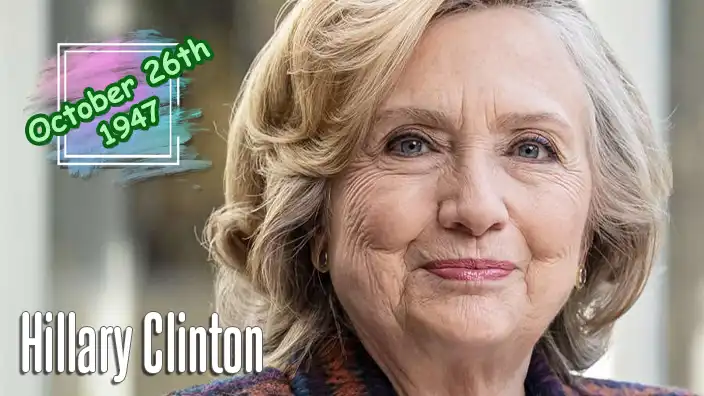
October 26, 1947, in Chicago, Illinois

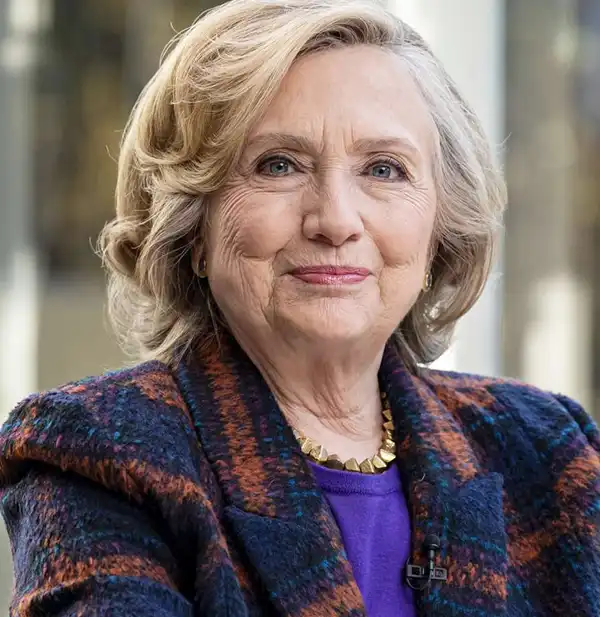
Hillary Diane Rodham Clinton, born on October 26, 1947, in Chicago, Illinois, is an American attorney, author, diplomat, and political figure whose career has included some of the most prominent positions in the United States government. She served as First Lady of the United States from 1993 to 2001, represented New York in the U.S. Senate from 2001 to 2009, and served as the nation's 67th Secretary of State from 2009 to 2013. In 2016, she became the first woman nominated for president by a major American political party, marking a significant milestone in the history of American presidential elections. Her decades in public life have brought political achievements, international recognition, vigorous criticism, and controversies that continue to generate debate. Few American political figures have occupied so many different positions of national prominence, and fewer still have inspired so many books, documentaries, congressional hearings, and spirited conversations around the Thanksgiving dinner table.
Clinton grew up in Park Ridge, Illinois, a suburb of Chicago, as the eldest child of Hugh Ellsworth Rodham and Dorothy Howell Rodham. Her father operated a textile business, while her mother emphasized education, independence, and the importance of overcoming personal difficulties. Growing up in a politically engaged household, Hillary developed an early interest in public affairs, academic achievement, and community involvement. She participated in the Girl Scouts, performed well in school, and became involved in student activities. Her political views during adolescence were influenced partly by her father's Republican beliefs, and she supported Republican presidential candidate Barry Goldwater during the 1964 election. Her political outlook would change considerably during her college years, demonstrating that youthful political convictions are not always permanent, particularly when accompanied by extensive reading, university debates, and the discovery that other people occasionally have persuasive arguments.
In 1965, Clinton entered Wellesley College in Massachusetts, where she studied political science and became increasingly active in student government and national political discussions. The late 1960s were a period of enormous social and political upheaval in the United States, marked by the civil rights movement, opposition to the Vietnam War, and growing demands for changes in American institutions. Clinton's political thinking evolved during this period, and she became more closely associated with the Democratic Party. In 1969, she was selected as the first student to deliver a commencement address at Wellesley, an achievement that attracted national attention after she responded critically to portions of an earlier speech by Senator Edward Brooke. Her address demonstrated an ability to communicate confidently before a large audience, a skill that would become particularly useful during the many political campaigns and public appearances awaiting her.
After graduating from Wellesley, Clinton attended Yale Law School, earning her law degree in 1973. At Yale, she developed a particular interest in children's rights, family law, and legal assistance for disadvantaged communities. She worked with organizations associated with children's welfare and became acquainted with Marian Wright Edelman, a prominent advocate for children's rights and founder of the Children's Defense Fund. During her time at Yale, she also met fellow law student Bill Clinton, an ambitious young man from Arkansas whose interest in politics matched her own. Their relationship would eventually become one of the most closely examined marriages in American political history. At the time, however, they were simply two law students discussing legal questions, political ambitions, and presumably whose turn it was to buy the coffee.
Following law school, Hillary Rodham worked on issues involving children's welfare and legal advocacy. In 1974, she joined the staff assisting the House Judiciary Committee during its investigation into President Richard Nixon's conduct in the Watergate scandal. The investigation contributed to the political crisis that culminated in Nixon's resignation in August 1974. Her involvement provided firsthand experience with congressional oversight, constitutional questions, and the complex relationship between political power and legal accountability. It also introduced her to the workings of Washington during an unusually turbulent period. The experience would prove valuable in later years, although it is doubtful that anyone involved imagined how frequently the name Clinton would eventually appear in American political headlines.
Later in 1974, Rodham moved to Arkansas, where Bill Clinton was beginning his political career. She taught law at the University of Arkansas and subsequently joined the Rose Law Firm in Little Rock, establishing herself as a practicing attorney. The couple married on October 11, 1975, and their daughter, Chelsea, was born in 1980. Hillary continued pursuing her professional career while her husband served as Arkansas attorney general and later governor. Her decision to maintain an independent legal career attracted attention at a time when political spouses were generally expected to concentrate on ceremonial and domestic responsibilities. She eventually became the first female partner at the Rose Law Firm, building a reputation in Arkansas legal and business circles while balancing professional obligations with family life.
During Bill Clinton's years as governor, Hillary served as First Lady of Arkansas and became involved in education reform, children's welfare, and community organizations. She chaired the Arkansas Educational Standards Committee, which examined ways to improve the state's public education system, including curriculum requirements and teacher standards. She also helped establish Arkansas Advocates for Children and Families and participated in organizations supporting healthcare and children's services. Her involvement in education reform attracted both support and criticism, particularly as proposals affected teachers, administrators, and local school districts. These experiences provided practical exposure to public policy development and the challenges of implementing reforms that appeared straightforward in committee meetings but became considerably more complicated when introduced to the people expected to follow them.
When Bill Clinton won the presidential election in November 1992, Hillary Clinton became First Lady of the United States, assuming the role in January 1993. Unlike many of her predecessors, she entered the White House with an established professional career and extensive experience in law and public policy. President Clinton appointed her to lead the Task Force on National Health Care Reform, an ambitious effort to develop a comprehensive proposal for expanding health insurance coverage. The resulting plan became one of the administration's most controversial early initiatives, encountering opposition from Republicans, insurance industry representatives, business organizations, and some Democrats. Critics raised concerns about its complexity, costs, and proposed government requirements, while supporters argued that major reform was necessary to address gaps in healthcare coverage. The legislation failed to secure sufficient congressional support and was abandoned in 1994, becoming an important lesson in the political difficulties surrounding American healthcare reform.
Despite that setback, Clinton continued advocating for children's healthcare, education, and family welfare throughout her years as First Lady. She supported efforts that contributed to the establishment of the Children's Health Insurance Program in 1997, which expanded access to health coverage for eligible children in families whose incomes exceeded Medicaid limits but who could not necessarily afford private insurance. She also supported adoption and foster care reforms, including legislation intended to improve opportunities for children awaiting permanent homes. Her work brought attention to issues that were sometimes overshadowed by larger political disputes. Supporters viewed her involvement as an example of an engaged and policy-oriented First Lady, while critics questioned the extent to which an unelected presidential spouse should participate directly in government decision-making.
In September 1995, Clinton delivered one of her most widely remembered speeches at the United Nations Fourth World Conference on Women in Beijing, China. Speaking about the treatment of women and girls around the world, she emphasized that women's rights should be understood as fundamental human rights. Her address criticized abuses including violence, discrimination, and restrictions on educational and economic opportunities. The speech became an important reference point in international discussions about women's rights and helped strengthen Clinton's reputation as an advocate for gender equality. Its influence extended beyond the immediate conference, with portions frequently quoted in later debates concerning women's participation in political, economic, and social institutions.
The Clinton administration also experienced major controversies that placed the First Lady under intense public scrutiny. Questions surrounding the Clintons' earlier Whitewater real estate investment prompted investigations into possible financial and legal misconduct. Although the investigations produced convictions of several individuals associated with related matters, neither Bill nor Hillary Clinton was criminally charged in connection with the Whitewater investment. The administration subsequently faced the scandal involving President Clinton's relationship with White House intern Monica Lewinsky, which contributed to his impeachment by the House of Representatives in 1998. The Senate acquitted him in 1999. Hillary Clinton's responses to these events attracted considerable attention, with observers expressing sharply different views about her public statements, political loyalty, and handling of personal circumstances. The controversies illustrated the unusual pressures experienced by a presidential family whose private and professional lives were subjected to extraordinary public examination.
In 2000, Hillary Clinton entered electoral politics in her own right, running for the United States Senate from New York. Her campaign attracted national attention because she was seeking public office while still serving as First Lady. She defeated Republican candidate Rick Lazio in the November election, becoming the first First Lady elected to the U.S. Senate and the first woman elected to represent New York in the chamber. Taking office in January 2001, she began a new phase of her career as a legislator responsible for representing a large and politically diverse state. Her transition from the White House to Capitol Hill was historically unusual, but it demonstrated her determination to pursue public office independently rather than remain identified exclusively through her husband's presidency.
The terrorist attacks of September 11, 2001, became a defining event during Clinton's early Senate service. Representing New York, she advocated for federal assistance to support recovery efforts, rebuilding, and healthcare for emergency responders exposed to hazardous conditions at the World Trade Center site. She worked with members of both political parties on issues involving national security, veterans' services, economic development, and healthcare. Her Senate committee assignments included Armed Services, Environment and Public Works, and Health, Education, Labor and Pensions. These responsibilities allowed her to participate in debates involving military policy, environmental protection, healthcare access, and national economic priorities. Her legislative record reflected a combination of Democratic policy positions and efforts to negotiate with Republican colleagues on selected issues.
One of the most consequential decisions of Clinton's Senate career came in October 2002, when she voted to authorize the use of military force against Iraq. The authorization preceded the American-led invasion in March 2003 and subsequently became a major source of political controversy as the war continued and the intelligence claims used to justify it were challenged. Clinton later described her vote as a mistake, acknowledging the serious consequences of the decision. Critics regarded her original support as evidence of flawed judgment on a major foreign policy question, while defenders pointed to the information and political circumstances presented to lawmakers at the time. The issue remained important during her later presidential campaigns, particularly among Democratic voters who opposed the war.
After winning reelection to the Senate in 2006, Clinton announced her candidacy for the Democratic presidential nomination in January 2007. She entered the race with extensive political experience, national recognition, and a substantial fundraising organization. Her principal opponent eventually became Senator Barack Obama of Illinois, whose campaign attracted widespread attention through its emphasis on political change and grassroots participation. The Democratic primary contest extended through numerous states and became one of the most closely followed nomination battles in modern American history. Clinton won several major state primaries but ultimately fell short of the delegates needed to secure the nomination. In June 2008, she suspended her campaign and endorsed Obama, later campaigning for the Democratic ticket during the general election.
Following Obama's presidential victory, he nominated Clinton to serve as Secretary of State. She was confirmed by the Senate and assumed office on January 21, 2009, becoming the third woman to hold the position after Madeleine Albright and Condoleezza Rice. As America's chief diplomat, Clinton became responsible for helping develop and implement foreign policy, managing diplomatic relationships, and representing the United States in negotiations with foreign governments. Her appointment brought together two former presidential rivals in the same administration, an arrangement that attracted considerable public attention. Their professional relationship became an important feature of the Obama administration's foreign policy organization.
During her tenure as Secretary of State, Clinton traveled extensively, visiting 112 countries and participating in diplomatic discussions involving international security, economic cooperation, human rights, and regional conflicts. She promoted an approach frequently described as smart power, combining traditional diplomacy with economic assistance, development programs, international partnerships, and other tools of American influence. Her work included efforts to strengthen relationships with Asian and Pacific nations, support diplomatic pressure concerning Iran's nuclear program, and encourage international cooperation on security matters. She also continued emphasizing women's participation in political and economic life, arguing that opportunities for women and girls were closely connected to broader social and economic development.
Clinton's tenure included major international crises, particularly the political uprisings commonly known as the Arab Spring. She participated in administration discussions concerning American responses to events in Egypt, Libya, Syria, and other countries experiencing political instability. In 2011, she supported international intervention in Libya as the government of Muammar Gaddafi confronted an armed uprising. The intervention helped bring about Gaddafi's removal, but Libya subsequently experienced prolonged instability and conflict. Supporters of the intervention emphasized the immediate threat to civilians, while critics questioned the planning for Libya's political future and the consequences of removing the existing government. The episode became an important subject in later assessments of Clinton's foreign policy record.
Another major controversy emerged following the September 11, 2012, attack on American diplomatic facilities in Benghazi, Libya, which killed Ambassador Christopher Stevens and three other Americans. The attack prompted extensive investigations into diplomatic security arrangements, intelligence assessments, and the administration's public explanations. An independent State Department review identified serious security and management failures, while congressional inquiries examined the responsibilities of senior officials. Clinton testified before Congress and defended aspects of the administration's response while acknowledging the tragedy and the need for improved security. The investigations generated substantial political disagreement, but they did not establish that Clinton had personally ordered security assistance withheld during the attack. Benghazi remained a prominent issue in national political debate for years afterward.
Clinton left the State Department in February 2013 and returned to writing, public speaking, and political activity. In 2015, she announced another campaign for the presidency, seeking the Democratic nomination for the 2016 election. Her principal primary opponent was Senator Bernie Sanders of Vermont, whose campaign emphasized economic inequality, campaign finance reform, and a more progressive approach to domestic policy. Clinton's campaign focused on issues including healthcare, economic opportunity, education, national security, and the continuation of selected policies associated with the Obama administration. The nomination contest highlighted divisions within the Democratic Party over economic policy, political strategy, and the direction of the party's future.
In July 2016, Clinton made American political history when she became the first woman formally nominated for president by a major political party. She selected Senator Tim Kaine of Virginia as her vice-presidential running mate and campaigned against Republican nominee Donald Trump. The election became one of the most contentious presidential contests in modern American history, featuring sharp disagreements over immigration, trade, healthcare, foreign policy, and the qualifications of the candidates. Clinton's campaign also faced continuing controversy concerning her use of a private email server while serving as Secretary of State. FBI Director James Comey publicly criticized her handling of classified information but announced that the bureau would not recommend criminal charges. The investigation and subsequent public statements became significant subjects of debate during the campaign.
The November 2016 presidential election produced an unusual result. Clinton received approximately 65.9 million popular votes, nearly 2.9 million more than Trump, but lost the Electoral College by 304 electoral votes to 227. Under the American constitutional system, the presidency is determined by electoral votes rather than the national popular vote, and Trump consequently became president. Clinton conceded the election and subsequently reflected publicly on the campaign, its outcome, and the political divisions it revealed. Her candidacy nevertheless represented a historic milestone for women seeking the nation's highest elected office, while the election itself continued to generate debate about campaigning, polling, political communication, and the Electoral College.
Following the election, Clinton remained involved in public discussions about American politics, international affairs, democracy, and women's participation in government. She published What Happened in 2017, offering her account of the presidential campaign and its aftermath. Her other books include It Takes a Village, Living History, Hard Choices, and Something Lost, Something Gained. In 2021, she collaborated with Canadian novelist Louise Penny on the political thriller State of Terror, drawing upon her experience in government to create a fictional story involving international security and political intrigue. Her writing career has provided opportunities to examine personal experiences, public policy, and contemporary political questions beyond the demands of elected office.
Clinton has also continued working with educational and international organizations. In 2020, she became Chancellor of Queen's University Belfast in Northern Ireland, the first woman to hold that position. Her association with Northern Ireland reflected her longstanding interest in the peace process and the role of women in negotiations surrounding the 1998 Good Friday Agreement. She later became a professor of practice at Columbia University's School of International and Public Affairs and helped establish its Institute of Global Politics. These appointments provided opportunities to participate in discussions about diplomacy, international cooperation, and the education of future public leaders. Her continued involvement in public affairs demonstrated that leaving elected office did not necessarily mean retiring from political discussions, particularly for someone who had spent much of her adult life participating in them.
In January 2025, President Joe Biden awarded Clinton the Presidential Medal of Freedom, the nation's highest civilian honor, recognizing her public service and contributions to American civic life. She continued participating in educational, charitable, and political activities, including work associated with the Clinton Foundation and initiatives supporting women and girls. In October 2026, she received the Financial Women's Association Global Trailblazer and Visionary Award, recognizing her public career and international advocacy. She also joined journalist Kara Swisher for a limited podcast series, High Stakes, examining political issues surrounding the 2026 midterm elections. These activities reflected her continuing participation in public debate, even after stepping away from electoral candidacy.
Throughout her career, Clinton has been the subject of sharply contrasting political assessments. Supporters emphasize her work on children's healthcare, women's rights, international diplomacy, and the historic barriers she broke as a candidate and elected official. Critics point to policy decisions including her Iraq War authorization, the handling of government communications, aspects of American foreign policy during her State Department tenure, and questions concerning transparency and political accountability. Her public career illustrates the complexity of evaluating political leadership over several decades, particularly when decisions involve competing priorities, uncertain information, and consequences that become clearer only with time. Regardless of political perspective, her influence on American electoral history and public policy has been substantial.
Hillary Clinton's place in American history is defined by an unusually varied public career encompassing law, advocacy, elected office, diplomacy, presidential politics, and authorship. From her early work involving children's rights to her years in the White House, Senate, and State Department, she participated in many of the major political debates of her era. Her 2016 presidential nomination marked a historic development in women's participation in American national politics, while her policy decisions and controversies continue to be examined by historians, journalists, and political observers. Her career provides an extensive record of achievement, disagreement, persistence, and public scrutiny. And after decades of campaigns, international negotiations, political arguments, and congressional investigations, one thing seems reasonably certain: Hillary Clinton has probably attended enough meetings to last several lifetimes, although nobody should be surprised if she still has another appointment on her calendar.