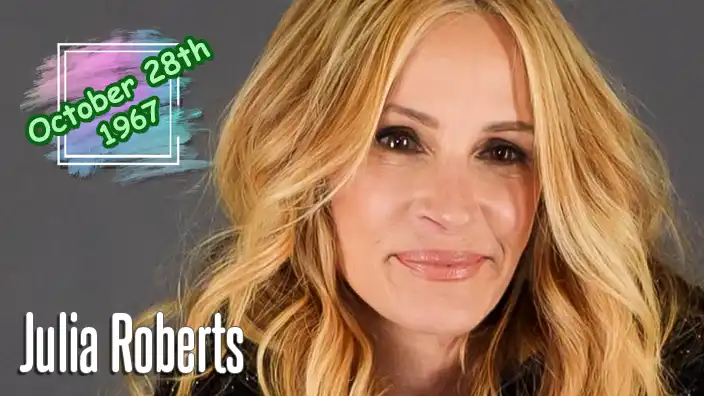
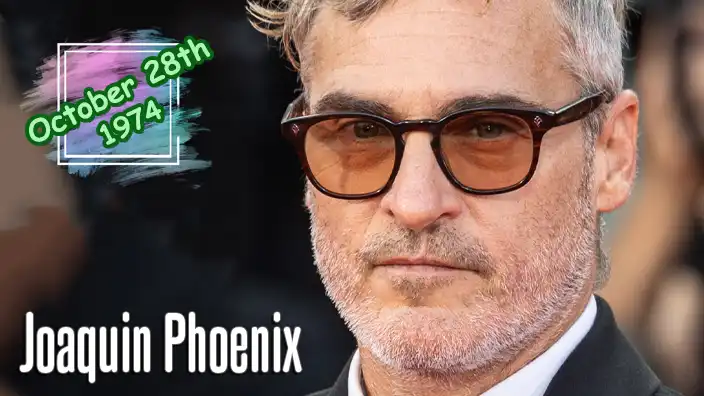
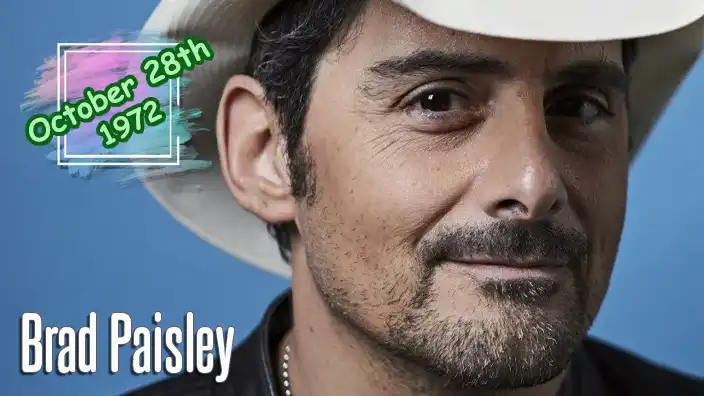
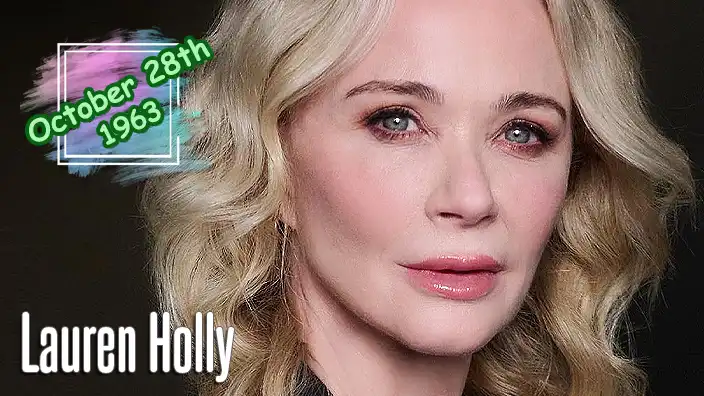
October 28, 1963, in Bristol, Pennsylvania

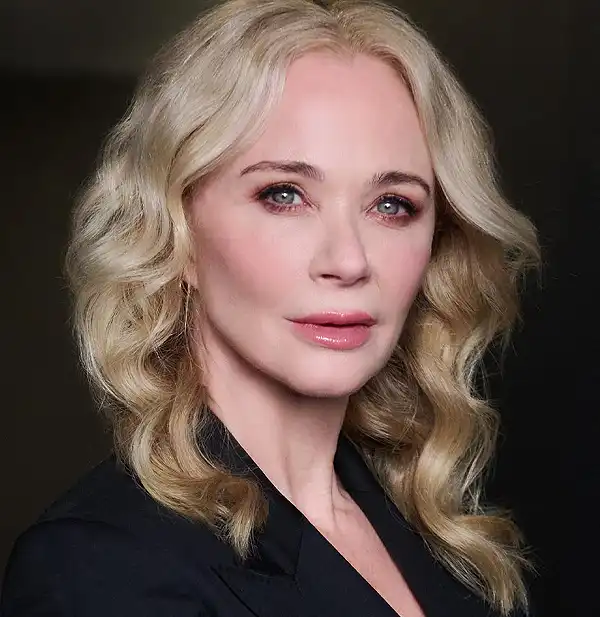
Lauren Michael Holly was born on October 28, 1963, in Bristol, Pennsylvania, and grew up in Geneva, New York, surrounded by education, literature, and the arts. Her father, Grant Holly, was a professor of English literature and a screenwriter, while her mother, Michael Ann Holly, pursued a distinguished academic career in art history. Growing up in a household where intellectual curiosity and creative expression were encouraged gave Lauren an appreciation for storytelling long before she began appearing on television screens. Although she eventually became internationally recognized for her performances in Dumb and Dumber, Picket Fences, and NCIS, her early life was more closely associated with classrooms, books, and the quiet surroundings of upstate New York than Hollywood premieres and celebrity interviews.
Holly's childhood included experiences that extended well beyond her hometown. She traveled in Europe with her family and spent a year living in London, where she studied languages and flute at the Sarah Siddons School. Her interest in performance was also influenced by her family's theatrical heritage, particularly her great-grandmother, who had participated in musical theater in England. These experiences helped develop Holly's appreciation for different cultures and artistic traditions. Back in New York, she attended Geneva High School, where she participated in school activities and developed an outgoing personality that would later serve her well as an actress. Her academic upbringing provided an interesting foundation for a career that would eventually involve playing everything from a determined police officer to a woman pursued across America by two spectacularly incompetent travelers.
After graduating from high school in 1981, Holly attended Sarah Lawrence College in Bronxville, New York, where she studied English literature and earned her bachelor's degree in 1985. Her choice of college reflected her family's strong academic background, but she increasingly became interested in acting as a professional career. Rather than following her parents into teaching or academic research, Holly decided to pursue opportunities in the entertainment industry. After completing her education, she moved to Los Angeles, where she began attending auditions and searching for television and film roles. Like many aspiring performers, she faced the challenge of establishing herself in an industry filled with talented newcomers, uncertain opportunities, and casting decisions that could change a career overnight.
Holly's professional acting career began during the 1980s, with early appearances in film and television. One of her first feature films was Seven Minutes in Heaven (1985), a teenage romantic comedy-drama exploring friendship, relationships, and the complications of adolescence. She also appeared in Band of the Hand (1986), a crime drama produced by Michael Mann. Although these early projects did not immediately establish her as a major Hollywood star, they provided valuable experience and helped introduce her to the practical demands of professional acting. Her performances demonstrated an ability to portray confident, intelligent young women, qualities that would become recurring characteristics of many of her later roles.
A significant early breakthrough came when Holly joined the ABC daytime soap opera All My Children, portraying Julie Rand Chandler from 1986 to 1989. The long-running series provided an excellent training ground for a young actress, requiring performers to master substantial amounts of dialogue while navigating constantly evolving storylines and complicated relationships. Holly's character became involved in romantic conflicts and family dramas typical of daytime television, allowing her to develop her emotional range and screen presence. Her work attracted attention and earned her a Daytime Emmy Award nomination for Outstanding Ingenue in a Drama Series in 1988. The experience helped establish her reputation as a dependable performer capable of handling demanding production schedules. Soap operas, after all, rarely allow their characters a peaceful afternoon when a surprise marriage, mysterious relative, or unexpected betrayal might be waiting around the corner.
Following her success on All My Children, Holly appeared in several television productions, including the sitcom My Two Dads. In 1990, she portrayed Betty Cooper in the television movie Archie: To Riverdale and Back Again, based on the familiar characters from Archie Comics. The production imagined Archie Andrews and his friends returning to Riverdale as adults, revisiting old friendships and romantic complications. Holly's portrayal of Betty allowed her to bring warmth and personality to a character already familiar to generations of comic-book readers. That same year, she appeared in the action comedy The Adventures of Ford Fairlane, starring Andrew Dice Clay. Although the film received unfavorable reviews and did not become a major commercial success, it provided another opportunity for Holly to gain experience in feature films and work alongside established entertainment personalities.
Her major television breakthrough arrived in 1992 when she was cast as Deputy Sheriff Maxine Stewart in the CBS drama Picket Fences. Created by David E. Kelley, the series followed the residents of Rome, Wisconsin, a fictional small town where unusual crimes, complicated moral questions, and eccentric personalities frequently disrupted everyday life. Holly starred alongside Tom Skerritt, Kathy Baker, Fyvush Finkel, and an ensemble of talented performers. Her character, Maxine Stewart, was a capable and determined deputy whose professional responsibilities frequently placed her in the middle of the town's increasingly bizarre investigations. The series combined police drama, family relationships, social commentary, and dark humor, creating a distinctive television experience that attracted critical praise and a devoted audience.
Picket Fences ran from 1992 to 1996 and became one of the most critically acclaimed television dramas of its era, winning numerous awards, including fourteen Primetime Emmy Awards during its run. Holly's portrayal of Maxine Stewart contributed significantly to the show's success, demonstrating her ability to balance dramatic intensity with natural humor. Her character was intelligent, independent, and willing to challenge authority when circumstances demanded it, although working in Rome, Wisconsin, frequently meant confronting situations that no police academy could reasonably have anticipated. Holly received recognition for her performance, including a Viewers for Quality Television Award, and became a familiar face to audiences who appreciated the show's unusual combination of serious storytelling and eccentric small-town life.
While appearing in Picket Fences, Holly expanded her film career with an important role in Dragon: The Bruce Lee Story (1993). Directed by Rob Cohen, the biographical drama starred Jason Scott Lee as legendary martial artist Bruce Lee, with Holly portraying his wife, Linda Lee Cadwell. The film explored Bruce Lee's early life, martial arts career, experiences with discrimination, and rise to international recognition. Holly's performance provided an emotional foundation for the story, portraying Linda as a supportive but independent woman who faced the challenges associated with her husband's ambitions and growing fame. Her chemistry with Jason Scott Lee helped make the relationship believable, while her portrayal emphasized the personal sacrifices and determination involved in building a life together. The film introduced Holly to a wider international audience and demonstrated her ability to handle substantial dramatic roles in major Hollywood productions.
The defining moment of Holly's early film career arrived in 1994 with the release of Dumb and Dumber, directed by Peter Farrelly and starring Jim Carrey and Jeff Daniels. Holly portrayed Mary Swanson, a wealthy woman who inadvertently becomes the object of affection for Lloyd Christmas, played by Carrey. After Mary leaves a briefcase at an airport, Lloyd and his equally clueless friend Harry Dunne embark on a cross-country journey to return it, completely misunderstanding the dangerous circumstances surrounding its contents. The film's absurd humor, outrageous situations, and deliberately ridiculous characters made it a major box-office success. Holly's performance provided an essential contrast to the antics of Carrey and Daniels, portraying Mary as a relatively sensible individual surrounded by two men whose combined intelligence occasionally appeared insufficient to operate a toaster.
Dumb and Dumber became one of the most recognizable comedy films of the 1990s, earning more than $247 million worldwide and establishing an enduring following among audiences who appreciated its outrageous humor. Holly's portrayal of Mary Swanson helped anchor the film's increasingly ridiculous storyline, providing a believable romantic interest for Lloyd while maintaining the character's dignity amid the chaos. Her ability to react naturally to Carrey's exaggerated physical comedy demonstrated impressive comic timing and professional discipline. Although the film was hardly designed to impress scholars of sophisticated cinema, its popularity helped establish Holly as a recognizable Hollywood actress. It also demonstrated that an actor does not necessarily need to deliver the funniest lines to make a comedy successful; sometimes the greatest skill involves maintaining a convincing expression while everyone else behaves like complete idiots.
The production also brought Holly into a romantic relationship with Jim Carrey, whose career was experiencing an extraordinary period of commercial success. The two actors eventually married in September 1996, attracting considerable media attention because of their celebrity status and their memorable collaboration in Dumb and Dumber. Their marriage was relatively brief, ending in divorce in 1997. Although their relationship became a frequent subject of entertainment journalism, Holly continued pursuing professional opportunities independently of the publicity surrounding her personal life. Her career had already included substantial television and film achievements, and she remained determined to establish herself through a variety of performances rather than become permanently associated with one romantic relationship or comedy film.
During the mid-1990s, Holly appeared in several additional feature films that demonstrated her versatility. In Beautiful Girls (1996), directed by Ted Demme, she portrayed Darian Smalls, a married woman whose past relationship with the film's central character creates emotional complications during a reunion of old friends. The ensemble drama featured Timothy Hutton, Matt Dillon, Uma Thurman, Natalie Portman, and Rosie O'Donnell, exploring themes of nostalgia, romantic uncertainty, and the challenges of adulthood. Holly also appeared in the military comedy Down Periscope (1996), starring Kelsey Grammer as an unconventional submarine commander. She portrayed Lieutenant Emily Lake, a naval officer assigned to a crew whose operational methods were frequently more imaginative than regulations would normally permit. The film gave Holly another opportunity to demonstrate her comic abilities, this time in a setting where the occasional questionable decision could result in considerably more trouble than a misplaced briefcase.
Holly also starred in the romantic comedy A Smile Like Yours (1997), opposite Greg Kinnear, portraying a woman navigating the emotional difficulties of marriage and attempts to start a family. The film explored relationships, misunderstandings, and the challenges couples face when personal expectations conflict with reality. Although it did not achieve the commercial success of Dumb and Dumber, the production allowed Holly to portray a central character in a story focused on adult relationships. She subsequently appeared in No Looking Back (1998), directed by Edward Burns, further expanding her experience in independent and character-driven films. These projects reflected her willingness to explore different genres rather than concentrate exclusively on the broad comedy that had brought her international recognition.
Another significant television opportunity arrived when Holly joined the medical drama Chicago Hope, once again working with creator David E. Kelley. She portrayed Dr. Jeremy Hanlon, a surgeon whose professional and personal experiences contributed to the series' exploration of ethical dilemmas and complicated relationships within a major hospital. The show featured an ensemble cast and frequently addressed challenging medical situations, professional rivalries, and the emotional demands placed on healthcare workers. Holly's involvement reunited her with the creative environment that had helped establish her success on Picket Fences, while providing an opportunity to portray a character whose responsibilities required intelligence, authority, and emotional resilience. After spending years investigating crimes and surviving romantic comedy disasters, performing surgery represented another interesting addition to her fictional résumé.
Holly continued working in feature films during the late 1990s and early 2000s. She appeared in Oliver Stone's football drama Any Given Sunday (1999), which explored the intense pressures surrounding professional American football. The film featured an ensemble cast including Al Pacino, Cameron Diaz, Dennis Quaid, and Jamie Foxx. Holly also appeared in the romantic comedy What Women Want (2000), starring Mel Gibson and Helen Hunt. The film followed an advertising executive who unexpectedly gains the ability to hear women's thoughts, creating numerous humorous and uncomfortable situations. Holly's role as Gigi contributed to the movie's exploration of relationships, workplace behavior, and romantic misunderstandings. The production became a major commercial success and further expanded her experience working alongside prominent Hollywood performers.
In 2001, Holly provided the English-language voice of Chihiro's mother, Yūko Ogino, in the acclaimed Japanese animated film Spirited Away, directed by Hayao Miyazaki. The film follows a young girl who enters a mysterious supernatural world after her parents undergo an extraordinary transformation. Spirited Away became one of the most celebrated animated films in cinema history, winning the Academy Award for Best Animated Feature. Holly's participation in the English-language adaptation introduced her voice to audiences who might not have been familiar with her live-action performances. The role also added animation to her already diverse professional experience, demonstrating that even a brief vocal performance could contribute to a production with extraordinary international recognition.
Throughout the early 2000s, Holly continued appearing in independent films, television movies, and dramatic productions. Her credits included King of Texas (2002), The Chumscrubber (2005), The Godfather of Green Bay (2005), and Raising Flagg (2006), in which she worked alongside Alan Arkin. She also appeared in Fatwa (2006), a political thriller in which she served as both actress and producer. These projects reflected her interest in participating in productions outside the traditional Hollywood studio system, where smaller budgets and independent creative teams often provided opportunities to explore unusual stories and characters. Her work as a producer also demonstrated an interest in the filmmaking process beyond performing in front of the camera.
In 2005, Holly joined the CBS crime drama NCIS, portraying Director Jennifer "Jenny" Shepard, the head of the Naval Criminal Investigative Service. Her character replaced former director Thomas Morrow and became a central figure in the series' increasingly complicated investigations. Jenny Shepard had previously worked alongside Special Agent Leroy Jethro Gibbs, portrayed by Mark Harmon, and their shared history created ongoing personal tension beneath their professional relationship. Holly brought authority, intelligence, and emotional complexity to the role, portraying a woman responsible for managing a federal investigative agency while confronting unresolved issues from her past. Her arrival introduced new storylines involving international espionage, political intrigue, and the difficult decisions associated with leading a law enforcement organization.
Holly appeared as Jenny Shepard during the third, fourth, and fifth seasons of NCIS, becoming an important member of the show's ensemble cast. Her character frequently challenged Gibbs' unconventional investigative methods, creating a professional relationship characterized by mutual respect, occasional disagreement, and complicated personal history. Jenny's leadership style contrasted with Gibbs' preference for direct action, providing opportunities for dramatic tension and occasional humor. The character also became involved in storylines connected to arms dealer René Benoit, known as La Grenouille, and the lingering consequences of past intelligence operations. Holly's performance helped establish Jenny Shepard as more than a conventional television authority figure, giving her personal vulnerabilities and motivations that influenced her professional decisions.
Jenny Shepard's storyline reached a dramatic conclusion in the 2008 episode Judgment Day, when the character was killed during a violent confrontation connected to her past undercover work. Her departure became one of the series' memorable character exits, leaving lasting consequences for Gibbs and the other members of the investigative team. Holly's portrayal remained familiar to longtime NCIS viewers, particularly those who appreciated the character's complicated relationship with Gibbs and her determined approach to leadership. Although her time on the series was relatively brief compared with some of its longest-serving cast members, she contributed significantly to an important period in the show's development. Her departure also demonstrated a familiar danger of television crime dramas: becoming the director of a fictional federal agency rarely guarantees a comfortable retirement.
Following NCIS, Holly continued appearing in television movies and independent productions, maintaining a steady career across different entertainment formats. She starred in projects such as The Final Storm (2010), Chasing 3000 (2010), and You're So Cupid! (2010), while also appearing in television productions designed for family and holiday audiences. Her work included Hallmark films such as Santa, Jr. (2002), Before You Say 'I Do' (2009), Call Me Mrs. Miracle (2010), and A Country Wedding (2015). These productions allowed Holly to explore lighter romantic and family-centered stories, offering a contrast to the investigations, violence, and professional conflicts associated with her crime drama roles.
One of Holly's most substantial later television roles came in the Canadian police procedural Motive, which aired from 2013 to 2016. The series followed homicide investigators in Vancouver and distinguished itself from conventional crime dramas by revealing the killer and victim at the beginning of each episode. Rather than focusing exclusively on identifying the murderer, the stories explored the motivations and circumstances leading to the crime. Holly portrayed Dr. Betty Rogers, the medical examiner whose forensic expertise helped investigators understand the physical evidence surrounding suspicious deaths. Working alongside Kristin Lehman, Louis Ferreira, and Brendan Penny, Holly brought dry humor and professional authority to the character. Her performance helped balance the show's serious subject matter with occasional moments of levity, demonstrating that even a medical examiner surrounded by unpleasant circumstances could maintain a remarkably sharp sense of humor.
Motive became a successful Canadian television production and attracted international audiences through broadcasts and streaming services. Holly's portrayal of Betty Rogers provided another memorable example of her ability to play intelligent professional women whose personalities extended beyond their occupations. The character frequently offered observations that combined scientific knowledge with practical common sense, making her an essential part of the investigative team. Her involvement in the series also reflected her growing professional connections with Canada's entertainment industry, where she had established a home and continued developing her career. The role represented an interesting progression from her earlier work on Picket Fences and NCIS, bringing her back into crime-related storytelling from the perspective of forensic medicine rather than police work or agency leadership.
Holly's Canadian television career expanded further through appearances in productions such as Designated Survivor, Lucifer, Good Witch, and Tiny Pretty Things. In the Netflix drama Tiny Pretty Things (2020), she portrayed Monique DuBois, the formidable director of an elite ballet academy where ambition, competition, and personal secrets create a dangerous environment for aspiring dancers. The role allowed Holly to portray a powerful and demanding authority figure whose professional expectations frequently overshadowed personal relationships. Her performance contributed to the show's atmosphere of intrigue and institutional pressure, demonstrating that a prestigious dance school could generate almost as much conflict as a federal criminal investigation.
Another significant role arrived with the Canadian legal drama Family Law, which premiered in 2021. Holly portrayed Joanne Kowalski, the mother of attorney Abigail Bianchi, played by Jewel Staite. The series explored the complicated relationships within a family of legal professionals, combining courtroom cases with personal conflicts and emotional challenges. Holly's character contributed to the show's examination of family history, reconciliation, and the difficulties of maintaining relationships when past mistakes continue influencing present circumstances. The role allowed her to explore maternal relationships in a contemporary drama, drawing upon the emotional range she had developed through decades of television and film performances.
Holly also continued appearing in holiday entertainment and streaming productions. In 2024, she portrayed Jane Miller in the Netflix romantic comedy Hot Frosty, a lighthearted Christmas film about a snowman who unexpectedly comes to life. The production offered an entertaining departure from the serious crime dramas that had become an important part of her career. She also appeared in Christmas Under the Northern Lights (2024), continuing her association with seasonal romantic productions. Her ability to move between crime investigations, psychological thrillers, family dramas, and Christmas comedies reflected the versatility that had characterized her career since the 1980s. Few performers can convincingly portray a federal agency director one moment and participate in a cheerful holiday romance the next without making audiences wonder whether someone has misplaced the script.
Her later film work included Loathe Thy Neighbor (2025) and Broad Trip (2026), the latter a comedy about a mother and daughter whose road trip becomes an opportunity to confront complicated family relationships. In Broad Trip, Holly portrayed Jeanie, a free-spirited mother whose romantic decisions concern her more conventional daughter. The production continued her exploration of family-centered comedy, providing opportunities to combine humor with emotional storytelling. These roles demonstrated her continuing professional activity and willingness to participate in projects that reflect different stages of life and changing audience interests.
Away from the screen, Holly has experienced a personal life that has occasionally attracted considerable media attention. She was married to actor Danny Quinn from 1991 to 1993 and to Jim Carrey from 1996 to 1997. In 2001, she married investment banker Francis Greco, with whom she adopted three sons, Alexander, George, and Henry. The marriage ended in divorce in 2014. Holly has spoken about the importance of motherhood and her decision to prioritize her children while maintaining her professional career. Her family life has remained an important part of her identity, particularly as she balanced acting commitments with raising three boys. Anyone familiar with the demands of parenting will appreciate that managing a household with three sons can occasionally require organizational abilities comparable to directing a federal investigative agency.
Holly developed strong ties to Canada after relocating to the Toronto area with her family and obtaining Canadian citizenship while retaining her American citizenship. Her decision to establish a home in Canada reflected both personal considerations and the professional opportunities available through the country's expanding film and television industry. Toronto and Vancouver have become important production centers for international entertainment, providing work for actors, directors, writers, and technical professionals. Holly's involvement in Canadian productions such as Motive and Family Law helped strengthen her connection to the country's entertainment community while allowing her to continue working on projects distributed internationally.
One of the more personal aspects of Holly's life involves the memory of her younger brother, Alexander Innes Holly, who died in 1992. Her family established the A Fund in his memory, supporting educational opportunities connected to architecture and archaeology, subjects associated with his interests. The charitable initiative reflected the family's commitment to education and their desire to create a lasting tribute through opportunities for students. Holly's involvement in charitable activities has also included support for causes connected to children, families, and community welfare. These interests reflect the importance of education and public service within her upbringing, providing continuity between her family's academic background and her later experiences as an internationally recognized actress.
Throughout her career, Holly has received recognition for her television performances and contributions to ensemble productions. Her early Daytime Emmy nomination for All My Children established her potential as a dramatic performer, while her work on Picket Fences attracted critical praise and industry attention. She also received an MTV Movie Award for Best Kiss, shared with Jim Carrey for Dumb and Dumber, a particularly amusing honor considering the film's generally ridiculous romantic circumstances. Her later performances in Canadian television and independent films have continued attracting recognition, demonstrating that her professional achievements extend beyond the roles most frequently associated with her name.
Holly's acting style is distinguished by her ability to portray intelligent, independent women while maintaining emotional accessibility and natural humor. Her characters frequently occupy positions of responsibility, whether serving as a deputy sheriff, leading a federal investigative agency, performing medical examinations, or managing a demanding professional environment. Yet she has also demonstrated considerable skill in romantic comedy, family drama, and lighter entertainment. Her performances rarely depend on exaggerated theatrical gestures; instead, she frequently communicates emotion through subtle expressions, conversational dialogue, and carefully controlled reactions. This approach has helped make her characters believable even when the stories surrounding them become increasingly unusual.
Her career also illustrates the importance of adaptability within the entertainment industry. Holly began working during an era dominated by network television and traditional studio filmmaking, but she successfully transitioned into cable dramas, Canadian productions, independent films, and streaming entertainment. Her ability to remain professionally active across these changing formats reflects both her versatility and her willingness to accept different kinds of roles. While some actors become permanently associated with one successful character, Holly has established several recognizable performances across different decades, allowing audiences to discover her work through entirely different productions.
Lauren Holly's enduring popularity is closely connected to the diversity of her filmography. Fans of 1990s comedy remember her as Mary Swanson in Dumb and Dumber, while viewers of acclaimed television drama associate her with Deputy Maxine Stewart in Picket Fences. Admirers of military crime dramas recognize her as Jenny Shepard in NCIS, and Canadian television audiences remember her forensic work as Betty Rogers in Motive. Her performances in Dragon: The Bruce Lee Story, Chicago Hope, Family Law, and numerous independent films further demonstrate the breadth of her career. Each role has allowed her to explore different personalities and emotional experiences, contributing to a professional reputation built on consistency rather than reliance on a single successful production.
From her academic upbringing in New York to her Hollywood breakthrough and successful television career, Lauren Holly has followed an impressive professional journey. Her work has encompassed comedy, drama, crime investigation, romance, animation, and independent filmmaking, establishing her as a versatile actress capable of adapting to changing entertainment trends. Whether portraying a determined law enforcement officer, a supportive wife in a biographical drama, or the unfortunate romantic interest of two spectacularly foolish travelers, Holly has consistently brought intelligence, warmth, and personality to her performances. Hollywood may remember her for Dumb and Dumber, but her extensive career demonstrates that there has never been anything remotely foolish about her professional choices.