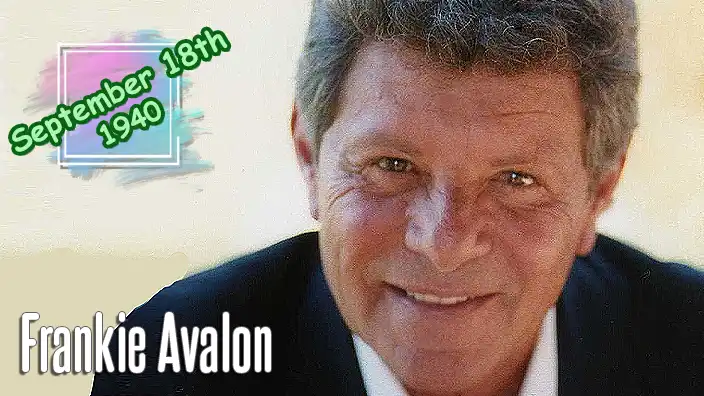
September 18, 1940, in Philadelphia, Pennsylvania
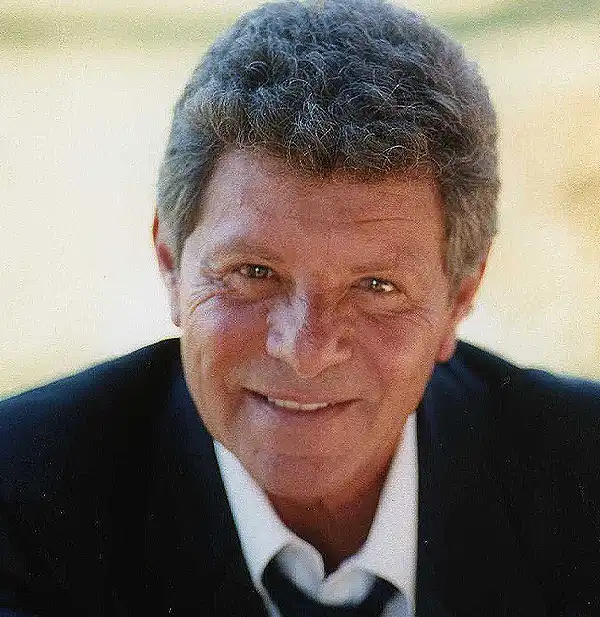
Frankie Avalon emerged from Philadelphia at precisely the right moment in American popular culture. Rock and roll had overturned the furniture, teenagers had become an enormously important audience, television could transform a handsome young performer into a national celebrity almost overnight, and record companies were eagerly searching for singers capable of causing adolescent pandemonium without frightening anybody's parents too badly.
Avalon fit the bill beautifully.
Yet describing him merely as a manufactured teen idol overlooks something important. Long before the record executives, movie cameras and screaming fans arrived, Frankie Avalon was a serious young musician.
Born Francis Thomas Avallone on September 18, 1940, in Philadelphia, Pennsylvania, Avalon grew up in an Italian-American family and showed musical ability remarkably early. His first instrument was the trumpet, which he studied diligently as a boy. His talent was sufficiently impressive that a member of the Philadelphia Orchestra took an interest in teaching him.
Avalon entered amateur contests and became an accomplished young trumpet player. Before his singing career had even begun, he was appearing on national television as a musician, including an appearance on The Jackie Gleason Show.
In other words, before anybody cared what his hair looked like, the boy could play.
As a youngster he also performed with Rocco and the Saints, a Philadelphia-area group that included another future teen idol, Bobby Rydell. Philadelphia during this period seemed to possess an unusually efficient production line for young male singers. Avalon, Rydell, Fabian and James Darren would all emerge from the city and become familiar faces on television, records and bedroom walls across America.
Avalon's transition from trumpet player to singer came through record producer and manager Bob Marcucci, who signed him to Chancellor Records. Early releases did not immediately turn him into a national sensation, but “Dede Dinah” changed matters considerably.
Released in the late 1950s, “Dede Dinah” became a major hit and established Avalon as a recording star. Songs including “Ginger Bread” and “Bobby Sox to Stockings” followed, but 1959 would become the year that permanently attached Frankie Avalon to American pop history.
That was the year of “Venus.”
Written by Ed Marshall and performed with Avalon's smooth, romantic delivery, “Venus” reached No. 1 on the Billboard Hot 100. The record transformed Avalon from a successful young singer into one of the country's biggest teen idols.
The song was very different from the harder-edged rock and roll associated with performers such as Little Richard or Jerry Lee Lewis. Avalon represented a polished strain of teenage pop: romantic, clean-cut and carefully presented. He could appeal to teenagers while remaining sufficiently respectable that parents did not feel compelled to lock up the family automobile.
“Venus” spent several weeks at the top of the American chart and became his signature recording. Decades later, people who could not name another Frankie Avalon song could frequently identify that one within a few notes.
And Avalon wasn't finished.
Later in 1959 came “Why,” another enormous success that also reached No. 1. In fact, Avalon accumulated an extraordinary collection of hits during this brief but intense period. His official biography notes that he had six Top 40 hits during 1959 alone.
Other recordings included “Just Ask Your Heart,” “I'll Wait for You,” “A Boy Without a Girl” and “Bobby Sox to Stockings.” The titles themselves provide a fairly accurate snapshot of the teenage market being served. Nobody was singing about pension plans.
Avalon's success arrived during a fascinating transitional period in American popular music. The explosive first wave of rock and roll had produced Elvis Presley, Chuck Berry, Buddy Holly, Little Richard and others, but by the end of the 1950s circumstances had removed or temporarily sidelined several of those figures.
Into that changing landscape came a wave of polished young singers, many of them marketed directly toward teenagers. Avalon became one of the most successful.
His appearance certainly helped. He possessed the clean-cut good looks required of a teen idol, and television magnified the effect. But his musical background distinguished him from performers who had been assembled primarily around an image.
Avalon understood music because he had been a musician first.
Then Hollywood called.
His film career initially took him considerably farther from the beach than later audiences might expect. Avalon appeared with Alan Ladd in Guns of the Timberland and had a role in John Wayne's epic The Alamo in 1960.
Playing alongside John Wayne was not a bad way for a young pop singer to demonstrate that there might be another career available when teenagers eventually stopped screaming.
Avalon appeared in several other films, but the screen partnership that came to define his movie career began in 1963 with Beach Party.
His co-star was Annette Funicello.
Funicello had become famous as one of the original Mouseketeers on Walt Disney's Mickey Mouse Club before developing her own successful recording and acting career. Pairing her wholesome image with Avalon's was inspired casting.
Beach Party placed attractive young people on the California coast with surfing, dancing, music, romance and just enough teenage rebellion to make things interesting without causing civilization to collapse.
The movie was successful enough to create a series.
Avalon and Funicello appeared together in films including Muscle Beach Party, Bikini Beach, Beach Blanket Bingo and How to Stuff a Wild Bikini. The plots were generally less important than the formula. There would be sand. There would be music. There would be teenagers. Somebody would become romantically confused. Motorcycles might appear. Eventually everything would be sorted out before the closing credits.
Avalon usually played the male romantic lead, often called Frankie, while Funicello's character was generally Dee Dee.
The films were cheerful, colorful and knowingly ridiculous. They captured a fantasy version of California beach culture at a time when surfing had become a national craze far beyond the coastline.
Interestingly, neither Avalon nor Funicello was fundamentally a product of California surf culture. Avalon was a Philadelphia boy who had begun as a trumpet player, while Funicello had grown up in Southern California after being born in New York.
Never mind. Hollywood had found them a beach.
The chemistry between Avalon and Funicello became central to the films. Their screen personas complemented each other: wholesome enough for parents, attractive enough for teenagers and playful enough to survive increasingly silly plots.
The beach movies also surrounded them with an extraordinary assortment of performers. Actors and musicians including Don Rickles, Harvey Lembeck, Buddy Hackett, Stevie Wonder and various rock and pop acts appeared throughout the series.
One particularly memorable recurring character was Eric Von Zipper, played by Harvey Lembeck, leader of an incompetent motorcycle gang called the Rat Pack. Von Zipper provided the sort of threat one might reasonably expect to encounter in a universe where serious danger was forbidden from interfering with the next musical number.
Avalon did not restrict himself entirely to the beach. He appeared in other films during the decade, including Ski Party, Dr. Goldfoot and the Bikini Machine and Voyage to the Bottom of the Sea.
But changing musical tastes eventually caught up with the teen-idol generation.
The British Invasion arrived, led by the Beatles, and popular music changed dramatically. The carefully groomed American teen idols of the late 1950s suddenly found themselves competing with four young men from Liverpool whose hair alone appeared capable of causing parental concern.
Avalon's recording-chart dominance faded, but unlike many teen sensations, he successfully adapted.
He continued performing, acting and appearing on television. The hits became nostalgia favorites, while the beach movies found new generations through television.
Then, in 1978, Avalon received one of the most memorable roles of his career—and one that brilliantly played upon the image he had established two decades earlier.
He became the Teen Angel in Grease.
The film, starring John Travolta and Olivia Newton-John, was a nostalgic musical recreation of 1950s teenage life. During Frenchy's disastrous attempt at beauty school, Avalon appears in a dream sequence dressed magnificently in white and sings “Beauty School Dropout.”
The casting was perfect.
Here was an authentic teen idol from the period being presented almost literally as an angel from the age of teenage idols.
Avalon initially had reservations about taking the role. He did not want the character to become a parody that made him the joke. Director Randal Kleiser and producer Allan Carr worked with him to shape the Teen Angel into something closer to Avalon's own style.
The result became one of Grease's best-remembered musical sequences.
For audiences who had grown up with “Venus,” the appearance was affectionate nostalgia. For younger audiences encountering Avalon for the first time, the Teen Angel became an introduction to a performer whose career had begun long before John Travolta pulled on Danny Zuko's leather jacket.
Grease proved remarkably durable. Its continuing popularity meant that Avalon acquired yet another generation of fans.
He later performed the Teen Angel role in stage productions of Grease, bringing the character full circle from movie screen to theater.
Avalon also reunited with Annette Funicello for Back to the Beach in 1987.
The film cleverly revisited the beach-party phenomenon rather than simply attempting to reproduce it. Avalon and Funicello played former teenage sweethearts who were now married adults with children of their own.
The joke was obvious and affectionate: the perpetually youthful inhabitants of those 1960s beaches had finally grown up.
Back to the Beach included numerous appearances and references designed for audiences who remembered the original films, while also poking fun at the conventions that had made them famous.
Avalon continued to perform his old hits and became part of another successful nostalgia venture with fellow Philadelphia teen idols Bobby Rydell and Fabian. Performing as the Golden Boys, the three singers toured together, bringing the music of their era to audiences who had grown up with them.
There was something particularly appropriate about the combination. These were performers who had once competed for space on the charts and in teenage magazines, now sharing the same stage decades later.
Avalon's career also extended into business. He developed health and beauty products and became a familiar presence on television shopping channels. He later published Frankie Avalon's Italian Family Cookbook, drawing upon another enduring part of his life: his Italian-American family traditions. Through it all, he continued performing.
That longevity is perhaps the most interesting aspect of Frankie Avalon's career. Teen idols are supposedly temporary creatures. The very description implies an expiration date. Popular culture finds a handsome young singer, teenagers scream for a few years, fashions change and somebody else appears. Avalon somehow escaped that fate.
Part of the reason was his willingness to adapt. When the recording hits slowed, he acted. When the beach movies ended, he performed in nightclubs and on television. When nostalgia for the 1950s became fashionable, he embraced it without allowing himself to become merely a museum exhibit.
Grease introduced him to one generation. Back to the Beach reintroduced him to another. Tours with the Golden Boys kept the music alive before live audiences. And “Venus” remained.
It is easy to look back at the teen-idol era and see only photographs of carefully groomed young men surrounded by screaming girls. Frankie Avalon certainly participated enthusiastically in that world.
But beneath the image was the boy who had learned the trumpet seriously enough to perform on national television before most children had decided what they wanted to be when they grew up.
That musician became a singer. The singer became a teen idol. The teen idol became a movie star. The movie star became a Teen Angel. And somehow, after all those decades, Frankie Avalon never entirely left the beach.