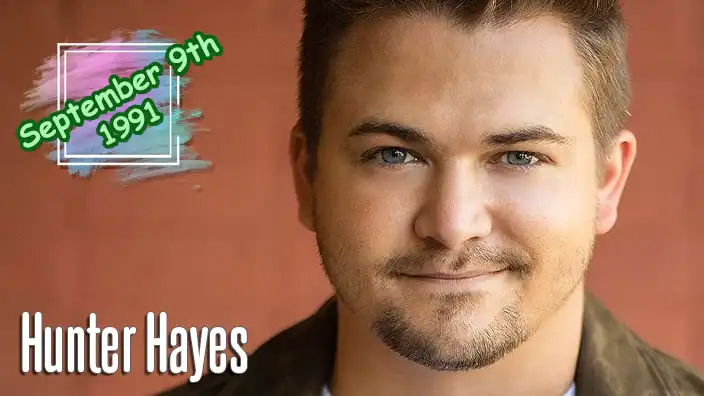
September 9, 1991, in Breaux Bridge, Louisiana
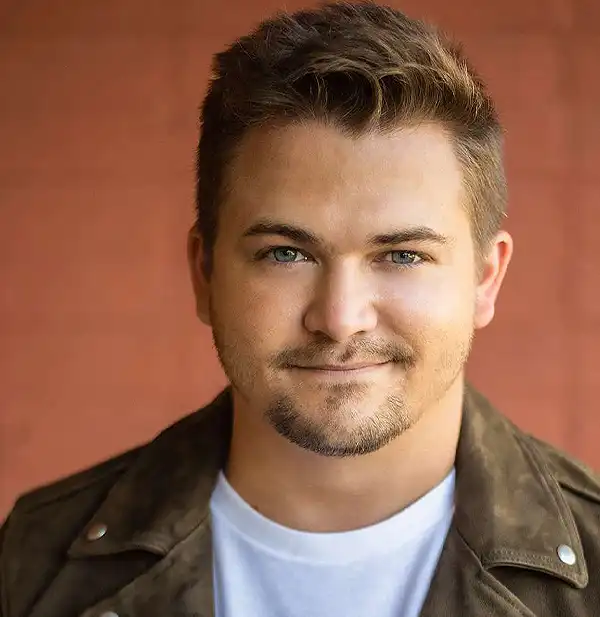
Hunter Easton Hayes was born on September 9, 1991, in Breaux Bridge, Louisiana, a town in the heart of Cajun country. Raised by his parents, Leo and Lynette Hayes, he grew up surrounded by the music of southern Louisiana, where accordion melodies, fiddles, and lively dance rhythms are as much a part of the local culture as good food and a willingness to turn an ordinary gathering into a celebration. His family recognized his musical interest almost immediately, and his grandmother gave him a toy accordion for his second birthday. It was an unusually effective present: instead of being forgotten in a cupboard, it helped launch a professional music career.
Hayes began learning the accordion while still very young and quickly demonstrated an extraordinary ability to understand and reproduce music. By the time he was four, he was performing publicly, and his childhood appearances attracted attention throughout Louisiana. He appeared on local television and at festivals, playing Cajun music with a confidence that seemed remarkable for someone who had only recently mastered the business of being a toddler. His early performances also introduced him to the discipline of playing for live audiences, where enthusiasm is welcome but the band still has to keep time.
One of his most memorable childhood experiences came when he appeared on Maury and performed “Jambalaya (On the Bayou)” for Hank Williams Jr. Hayes also appeared in the film The Apostle in 1997, starring Robert Duvall, and performed with musicians including Charlie Daniels. These opportunities gave him exposure to professional entertainers and helped establish his reputation as a young musical prodigy. He was not simply a child who could play a few tunes for relatives; he was already developing the confidence and technical ability needed to perform alongside experienced musicians.
As Hayes grew older, his musical interests expanded well beyond the accordion. He learned guitar, piano, drums, bass, and numerous other instruments, developing a fascination with the way different sounds could be combined in a recording. He also began writing songs and experimenting with home recording equipment. His interest in production became as important as his ability to perform, allowing him to understand how a song could be built from its first idea to a finished recording. While many teenagers were learning three guitar chords, Hayes was apparently wondering whether the arrangement needed another twelve instruments.
His early recordings included independently released albums such as Through My Eyes in 2000 and Make a Wish in 2001. These projects reflected his Cajun roots and his growing interest in songwriting. He continued performing at festivals and local events, gaining experience and developing a following. His family supported his ambitions, and he made regular trips to Nashville to meet songwriters and music industry professionals. The city’s songwriting culture appealed to him, offering a place where his love of storytelling and his technical interest in music could develop together.
After graduating from high school, Hayes moved to Nashville to pursue music professionally. He signed a publishing agreement with Universal Music Publishing Group and began working as a songwriter. One of his early professional credits was co-writing “Play” for the Rascal Flatts album Nothing Like This in 2010. The experience gave him an opportunity to work within the Nashville music industry and learn from established writers and producers. It also demonstrated that his talent extended beyond performing his own material; he could contribute songs to other artists and understand the collaborative process that lies behind many successful recordings.
Hayes signed with Atlantic Records Nashville and began work on his major-label debut album. Released in October 2011, the self-titled Hunter Hayes introduced him to a national audience and established him as one of country music’s most promising new performers. He co-wrote every song on the album and shared production duties with Dann Huff. Most remarkably, Hayes performed the instrumental parts himself, using approximately thirty different instruments during the recording process. The achievement reflected his long-standing fascination with studio production and gave the album a sound shaped by his own musical instincts. It also meant that the recording studio was probably one of the few workplaces where the entire band could take a lunch break at exactly the same time.
The album’s first single, “Storm Warning,” introduced Hayes’s energetic country-pop style, combining a memorable melody with a story about a woman whose arrival is compared to a powerful storm. The song helped establish him on country radio, but it was the second single, “Wanted,” that transformed his career. Released in 2012, the ballad became a major hit and reached number one on Billboard’s Hot Country Songs chart. It also crossed over to the pop charts, reaching the top twenty of the Billboard Hot 100. The song’s success made Hayes the youngest solo male artist to top the Hot Country Songs chart, a distinction that placed him in the country music record books.
“Wanted” was inspired by Hayes’s desire to express his feelings to a young woman he knew. He has explained that the song began as a personal love letter, written because he found it difficult to communicate what he wanted to say directly. The romantic effort did not produce the relationship he had hoped for, but it did produce a hit single that would be heard by millions of people. It is difficult to imagine a more successful consolation prize. The song’s heartfelt lyrics and soaring chorus connected with listeners, becoming a signature part of his repertoire and helping establish his reputation as a songwriter capable of combining youthful emotion with polished musical craftsmanship.
The success of Hunter Hayes brought major industry recognition. At the 2013 Grammy Awards, Hayes received nominations for Best New Artist, Best Country Album, and Best Country Solo Performance for “Wanted.” He later earned additional nominations for “I Want Crazy” and “Invisible,” bringing his total to five Grammy nominations. He also received the Country Music Association Award for New Artist of the Year in 2012 and recognition from the Academy of Country Music. These honors confirmed that his success was not limited to a single hit, but reflected the emergence of an artist with considerable musical ability and commercial appeal.
Touring became an important part of Hayes’s early career. He opened for Taylor Swift on her Speak Now World Tour and later toured with Rascal Flatts and Carrie Underwood. These opportunities introduced him to large audiences and allowed him to develop his stage presence in major venues. His live performances showcased his ability to move between instruments, sing demanding material, and connect with audiences through both energetic songs and quieter ballads. Although he could record an entire band’s worth of instruments himself, performing live required a group of musicians who could help bring those arrangements to the stage. Even Hunter Hayes cannot play the drums, guitar, piano, and bass simultaneously without creating a serious health and safety concern.
In 2013, Hayes released Hunter Hayes (Encore), an expanded version of his debut album featuring additional songs and collaborations. The release included “I Want Crazy,” an upbeat country-pop single that became another major hit and earned a Grammy nomination. It also featured a new version of “Everybody’s Got Somebody but Me” with Jason Mraz. The collaboration brought together two artists known for melodic songwriting and an approachable vocal style, creating a song that combined humor with the familiar frustration of being the only single person in a room full of couples.
His second major-label studio album, Storyline, arrived in 2014. The project represented an important step in his development, as Hayes recorded with his touring band rather than performing every instrumental part himself. The change gave the music a broader, more collaborative sound while allowing him to explore themes of identity, relationships, and personal growth. The album included “Invisible,” a song addressing bullying and the experience of feeling excluded or misunderstood. Hayes performed it at the 2014 Grammy Awards, using the platform to deliver a message of encouragement to people who had experienced similar difficulties.
“Invisible” became one of Hayes’s most personally meaningful songs. Drawing on his own experiences of feeling different while growing up, he used the lyrics to address isolation and the importance of recognizing one’s own worth. The song demonstrated that his writing could move beyond romantic themes and engage with broader emotional experiences. It also showed his willingness to use his public platform to speak about subjects that mattered to him, particularly those affecting young listeners. The message was straightforward: being different does not mean being without value, even when the people around you have not yet worked that out.
Storyline also included “Tattoo,” another successful single that combined country-pop production with romantic imagery. Hayes continued touring and performing, building on the momentum of his first two albums. In 2014, he undertook an unusual promotional challenge called the 24 Hour Road Race to End Child Hunger, performing ten shows in ten cities over a twenty-four-hour period. The effort raised awareness and funds for child hunger relief through Feeding America and earned him a Guinness World Record for the most concerts played in multiple cities in twenty-four hours. It was an impressive feat of logistics, stamina, and musical commitment, although the tour bus driver may have deserved an award of his own.
In 2015, Hayes released The 21 Project, a collection featuring different versions of seven songs, including studio, acoustic, and live recordings. The project allowed him to explore how the same material could change through arrangement and performance. Songs such as “21” and “Young and in Love” reflected his interest in energetic, contemporary country-pop, while the acoustic versions highlighted the underlying songwriting. The release also demonstrated his continuing fascination with the recording process and his willingness to experiment with different ways of presenting his music.
As his career developed, Hayes began to explore a wider range of musical influences. His sound increasingly incorporated elements of pop, rock, R&B, and electronic production, reflecting the music he had grown up listening to and the creative possibilities available to him as a producer. He has spoken about the importance of artistic freedom and the need to evolve rather than repeat the same formula indefinitely. This approach sometimes meant moving away from the expectations associated with his early country hits, but it allowed him to pursue music that reflected his changing interests and experiences.
The Wild Blue project marked a significant stage in that evolution. Hayes released Wild Blue (Part I) in 2019, followed by Wild Blue (Complete) in 2021. The music explored themes of heartbreak, self-discovery, and personal change, with songs such as “Heartbreak,” “Dear God,” and “One Good Reason” reflecting a more introspective approach. The project also incorporated a broader range of production styles, moving beyond traditional country arrangements while retaining his emphasis on melody and emotional storytelling. Hayes described the music as part of a process of rediscovering his creative identity and learning to approach songwriting with greater honesty.
In 2020, Hayes appeared on the third season of The Masked Singer, performing as the Astronaut. The elaborate costume concealed his identity while allowing him to showcase his voice in a different entertainment format. He reached the later stages of the competition before being eliminated and revealed. The appearance introduced him to viewers who may not have been familiar with his country music career and gave him an opportunity to perform without the expectations attached to his name. It also proved that a man who has spent years mastering musical instruments can still find himself performing while dressed as a space traveler.
Hayes continued releasing music independently, including the album Red Sky in 2023. The project featured songs such as “The One That Got Away,” “If You Change Your Mind,” and “Missing You,” exploring themes of relationships, resilience, and personal transformation. He described the album as a reflection of a period of change and creative rediscovery. The music incorporated pop and alternative influences while maintaining the melodic songwriting that had been central to his earlier work. His independent approach gave him greater control over the direction of his recordings and the way he connected with listeners.
In 2024, Hayes released the Lost & Found EP, revisiting earlier songs and presenting them in new arrangements. The project included fresh interpretations of familiar material, allowing him to explore how his relationship with his own music had changed over time. Revisiting a successful song can be a delicate exercise for an artist, particularly when listeners have strong memories of the original, but Hayes approached the project as an opportunity to rediscover the songs rather than simply reproduce them.
His musical evolution continued with Evergreen, released in March 2026. The ten-song album introduced another chapter in his work, combining his established songwriting strengths with contemporary production and a renewed emphasis on creative independence. The project included songs such as “Wait,” “Around the Sun,” and “Too Late,” and was accompanied by a behind-the-scenes documentary series titled The Road to Evergreen. Hayes also continued touring in support of the album, performing for audiences across the United States and beyond. The release demonstrated that his career remained an active process of exploration rather than a nostalgic return to his earliest successes.
Throughout his career, Hayes has maintained a reputation as an unusually accomplished multi-instrumentalist. Guitar remains his primary instrument, but his ability to work with piano, drums, bass, accordion, and numerous other instruments has shaped both his recordings and his live performances. He has described the studio as a place where he can experiment with ideas and build arrangements from the ground up. His technical knowledge allows him to communicate effectively with other musicians and producers, while his songwriting provides the emotional foundation for the finished music. The combination of these skills has been central to his identity as an artist.
Hayes has also been involved in charitable work, including support for Feeding America and efforts to raise awareness of child hunger. His music has addressed subjects such as bullying, self-acceptance, and emotional resilience, and he has used interviews and public appearances to discuss the importance of mental well-being and creative expression. These activities reflect his interest in connecting with listeners beyond the entertainment value of his songs, particularly when his own experiences can offer encouragement to others.
Despite his early success, Hayes has often spoken about the challenges of growing up in the music industry and finding a balance between public expectations and personal development. His career began with the label of child prodigy, followed by the pressures of becoming a young country star. As he matured, he faced the task of defining himself beyond those early descriptions and finding a musical direction that felt authentic. His willingness to experiment, release independent projects, and revisit earlier material has been part of that process.
Hunter Hayes’s career is a remarkable example of how early talent can develop into a lasting professional life through dedication and curiosity. From a young accordion player in Louisiana to a Grammy-nominated singer-songwriter and producer, he has built a body of work that crosses musical boundaries while remaining rooted in his love of melody and storytelling. His recordings demonstrate both technical skill and emotional openness, and his live performances continue to showcase the energy that first attracted attention to him as a child.
His birthday offers an opportunity to celebrate the musician behind the hits as well as the songs themselves. “Wanted” may remain the recording most closely associated with his name, but his career includes far more than one romantic ballad. It encompasses Cajun music, country-pop success, ambitious studio production, independent experimentation, and a continuing desire to learn. The accordion his grandmother gave him as a child may have started the journey, but Hunter Hayes has spent the years since proving that one instrument was never going to be enough.