November 13, 1969, in Paisley, Renfrewshire, Scotland

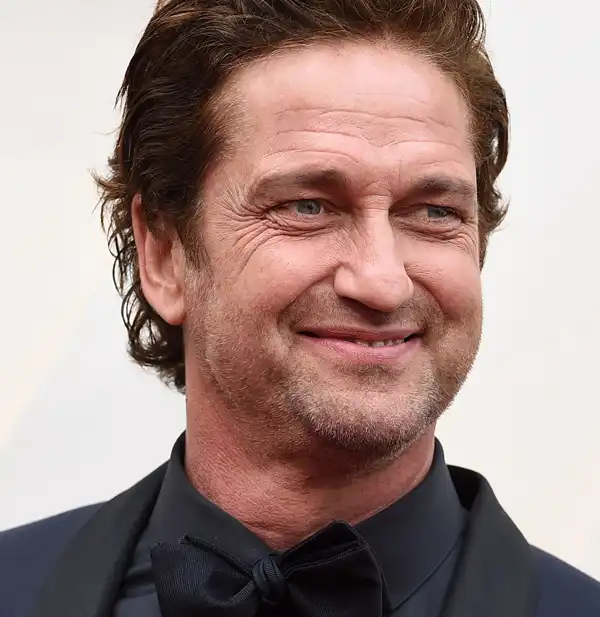
Gerard Butler is a Scottish actor and film producer whose commanding screen presence, distinctive voice, and remarkable versatility have made him one of Hollywood's most recognizable leading men. Best known for portraying King Leonidas in 300, Secret Service agent Mike Banning in Olympus Has Fallen, and the mysterious title character in The Phantom of the Opera, Butler has enjoyed a career spanning historical epics, romantic comedies, animated adventures, and explosive action thrillers. Born Gerard James Butler on November 13, 1969, in Paisley, Renfrewshire, Scotland, he originally trained for a career in law before discovering that pretending to fight entire armies was considerably more appealing than arguing over legal documents. His journey from aspiring solicitor to international movie star is an entertaining story of ambition, unexpected opportunities, and a willingness to abandon a perfectly respectable profession for the unpredictable world of show business.
Butler was the youngest of three children born to Margaret and Edward Butler, and his early childhood involved considerable family upheaval. When he was an infant, his family moved to Montreal, Canada, where his father pursued business opportunities. Following his parents' separation, his mother returned to Scotland with Gerard and his siblings, raising them primarily in Paisley. Butler grew up with a strong sense of Scottish identity, and his upbringing helped develop the independence and determination that would later characterize his professional life. Although his family circumstances were sometimes difficult, he performed well academically and demonstrated an early interest in acting. He participated in youth theater productions, but a career in entertainment initially seemed far less practical than obtaining a conventional education and securing a reliable profession.
Following his secondary education at St Mirin's and St Margaret's High School, Butler attended the University of Glasgow, where he studied law and became president of the university's Law Society. His academic achievements suggested that he was heading toward a promising legal career, and he eventually obtained a law degree. However, Butler's enthusiasm for acting never entirely disappeared, and he spent time exploring opportunities outside the legal profession. After graduating, he traveled to California before returning to Scotland to begin training as a solicitor at an Edinburgh law firm. Unfortunately, the combination of personal difficulties, heavy drinking, and dissatisfaction with his chosen career created serious problems. He was dismissed shortly before completing his legal training, bringing an abrupt end to his ambitions of becoming a practicing lawyer. For most people, losing a promising professional career would represent a major setback. For Butler, it eventually became the unexpected beginning of something much bigger.
Determined to pursue acting, Butler moved to London and began searching for opportunities in theater and film. His early experiences were far from glamorous, involving temporary employment, auditions, and the considerable uncertainty faced by performers trying to establish themselves. A chance encounter with actor and director Steven Berkoff helped open an important door when Butler secured a role in a stage production of Shakespeare's Coriolanus. Although he lacked the extensive formal theatrical training enjoyed by some of his contemporaries, his natural intensity and enthusiasm impressed those who worked with him. His early stage appearances provided valuable experience, teaching him how to command an audience and develop believable characters. The journey was hardly a guaranteed route to success, but it offered something that his legal career had not: a profession he genuinely wanted to pursue.
Butler made his feature-film debut in the 1997 historical drama Mrs Brown, starring Judi Dench and Billy Connolly. The film explored the relationship between Queen Victoria and her Scottish servant John Brown, and Butler appeared in a supporting role as Archie Brown. Although his appearance was relatively brief, the production provided an important introduction to professional filmmaking. That same year, he appeared in the James Bond adventure Tomorrow Never Dies, starring Pierce Brosnan, playing a Royal Navy sailor aboard HMS Devonshire. His early film credits were modest, but they allowed him to gain experience alongside established performers and filmmakers. He also appeared in Tale of the Mummy (1998), continuing to develop a screen career that would gradually move beyond supporting parts.
His first significant leading roles arrived around the turn of the millennium, when he portrayed the legendary vampire Count Dracula in Dracula 2000 and the historical conqueror Attila the Hun in the television miniseries Attila (2001). These performances demonstrated his ability to portray commanding, physically imposing characters with considerable dramatic intensity. He subsequently appeared in the post-apocalyptic fantasy Reign of Fire (2002), alongside Christian Bale and Matthew McConaughey, and the action adventure Lara Croft: Tomb Raider – The Cradle of Life (2003), starring Angelina Jolie. In Timeline (2003), based on Michael Crichton's novel, Butler played an archaeologist caught in a dangerous journey into medieval France. These projects helped establish him as a dependable performer in action-oriented entertainment, although Hollywood had not yet discovered just how enthusiastically he could shout at an enemy army.
An important turning point came when Butler was cast as the Phantom in director Joel Schumacher's 2004 film adaptation of Andrew Lloyd Webber's musical The Phantom of the Opera. The role required him to portray Erik, a disfigured musical genius living beneath the Paris Opera House who becomes obsessed with the young singer Christine Daaé, played by Emmy Rossum. Unlike many established musical performers, Butler had limited professional singing experience, making his casting an unconventional choice. He undertook vocal training to prepare for the demanding role, combining his naturally powerful voice with the Phantom's emotional intensity and troubled personality. The film received mixed reviews, particularly regarding its vocal performances, but Butler's portrayal introduced him to a different audience and demonstrated his willingness to tackle roles far removed from conventional action cinema. After all, a man who can terrify an entire opera company while wearing half a mask deserves some credit for theatrical commitment.
Butler's international breakthrough arrived with Zack Snyder's historical fantasy action film 300, released in 2006 in the United States in March 2007. Based on Frank Miller and Lynn Varley's graphic novel, the film offered a highly stylized interpretation of the Battle of Thermopylae in 480 BCE, when a Greek force led by Spartan King Leonidas resisted the invading Persian army of Xerxes I. Butler portrayed Leonidas with ferocious intensity, delivering speeches, leading spectacular battle sequences, and demonstrating a level of physical conditioning that made ordinary gym memberships seem embarrassingly inadequate. His declaration, "This is Sparta!" became one of the most recognizable lines in modern action cinema, inspiring countless parodies, internet memes, and enthusiastic impressions from people who probably should not have been shouting in public places.
Preparing for 300 required Butler to undertake an exceptionally demanding physical training program designed to create the muscular appearance associated with the film's Spartan warriors. The production combined rigorous workouts, stunt preparation, combat choreography, and extensive use of digital effects to create its distinctive visual style. Although the film took considerable artistic liberties with ancient Greek history, it became a major commercial success, earning more than $450 million worldwide and establishing Butler as an international action star. His performance earned him an MTV Movie Award for Best Fight, and his portrayal of Leonidas became a defining moment in his career. Few actors can claim that one film transformed them into a global celebrity while simultaneously inspiring an entire generation of people to shout at dinner guests.
Following the enormous success of 300, Butler demonstrated that his talents extended beyond historical warfare by appearing in a series of romantic comedies and dramatic films. In P.S. I Love You (2007), he starred opposite Hilary Swank as Gerry Kennedy, a devoted husband whose letters help his wife cope with grief following his death. The emotionally charged film revealed a gentler side of Butler's screen personality and attracted audiences who preferred romance to sword fights. He subsequently appeared in Nim's Island (2008), The Ugly Truth (2009), and The Bounty Hunter (2010), the latter opposite Jennifer Aniston. These productions allowed Butler to explore humor, romantic chemistry, and family-friendly adventure, demonstrating that the actor who once commanded Spartan soldiers could also convincingly portray a man struggling with relationships. Whether he was more successful at romance than defending Greece is probably best left to the individual viewer.
Butler returned to darker dramatic territory in the 2009 thriller Law Abiding Citizen, starring alongside Jamie Foxx. He portrayed Clyde Shelton, a grieving father who launches an elaborate campaign of revenge against the justice system after the murder of his family. The film explored themes of justice, corruption, punishment, and moral responsibility, providing Butler with a complex character whose intelligence and determination made him both compelling and deeply unsettling. He also served as a producer on the project, reflecting his growing involvement in the creative and business aspects of filmmaking. The performance further established his ability to portray morally ambiguous characters rather than conventional heroes, proving that his commanding screen presence could be equally effective when audiences were uncertain whether they should sympathize with him or fear what he might do next.
In 2010, Butler introduced himself to an entirely different audience by voicing Stoick the Vast in DreamWorks Animation's How to Train Your Dragon. Stoick is the formidable Viking chief of Berk, a powerful warrior who initially struggles to understand his son Hiccup's unusual friendship with a dragon. Butler's rich Scottish accent and commanding delivery made him a natural choice for the character, while the film's emotional storyline allowed him to express warmth and vulnerability beneath Stoick's intimidating exterior. He returned for How to Train Your Dragon 2 (2014) and How to Train Your Dragon: The Hidden World (2019), helping establish the franchise as one of modern animation's most successful adventure series. The role also provided an amusing contrast to his earlier performances: after spending years battling enemies with swords and firearms, Butler was now playing a Viking who eventually discovered that dragons were not necessarily the problem.
Butler's association with the franchise continued when he reprised the role of Stoick in the 2025 live-action adaptation of How to Train Your Dragon, directed by Dean DeBlois. Returning to a character he had previously portrayed through voice acting presented an unusual opportunity to bring a familiar animated personality into a physical performance. His portrayal preserved Stoick's imposing presence and complicated relationship with Hiccup while introducing the character to a new generation of moviegoers. The film reinforced Butler's versatility and his enduring connection to a franchise that had become an important part of his career. It also meant that, after years of lending his voice to a Viking chief, he finally had the opportunity to wear the elaborate costume himself.
Another defining chapter began with the 2013 action thriller Olympus Has Fallen, in which Butler portrayed Mike Banning, a former Secret Service agent forced to defend the White House after a devastating terrorist attack. The film starred Aaron Eckhart as the American president and Morgan Freeman as the Speaker of the House, with Butler delivering the kind of determined, physically demanding performance that had become his specialty. The movie's commercial success launched a franchise, followed by London Has Fallen (2016) and Angel Has Fallen (2019). Across the three films, Banning repeatedly finds himself confronting heavily armed enemies, elaborate conspiracies, and situations that would make an ordinary security officer seriously reconsider his career choices. The franchise helped cement Butler's reputation as a modern action hero capable of carrying large-scale thrillers through a combination of physical intensity, humor, and relentless determination.
Butler continued exploring action and suspense through films including Geostorm (2017), Den of Thieves (2018), Hunter Killer (2018), and Greenland (2020). In Geostorm, he played an engineer attempting to prevent catastrophic weather disasters caused by a malfunctioning satellite system, while Hunter Killer placed him in command of an American submarine during an international military crisis. His performance as hard-driving detective Nick O'Brien in Den of Thieves offered a grittier interpretation of law enforcement, portraying a flawed investigator pursuing a sophisticated criminal organization. Meanwhile, Greenland cast Butler as structural engineer John Garrity, an ordinary father desperately attempting to protect his family as fragments of a comet threaten civilization. The film emphasized human survival and family relationships alongside spectacular disaster sequences, allowing Butler to combine action with emotional storytelling.
His involvement in filmmaking has increasingly extended into production through G-BASE Film Production, the company he established with producer Alan Siegel. Through this venture, Butler has participated in developing and producing projects including Law Abiding Citizen, Olympus Has Fallen, Den of Thieves, and Greenland. Producing allows him to contribute to decisions involving scripts, casting, financing, and the overall direction of a project, giving him greater creative influence than acting alone. His work behind the camera reflects an interest in developing commercially appealing stories built around compelling characters and high-stakes situations. Although audiences primarily recognize him as the man facing danger on screen, his production responsibilities demonstrate that he is also involved in arranging the danger in the first place.
Butler's later film career has continued to emphasize physically demanding performances and suspenseful storytelling. In Plane (2023), he portrayed commercial airline pilot Brodie Torrance, whose emergency landing on a dangerous island forces him to protect his passengers while confronting armed criminals. That same year, he appeared in Kandahar, playing an undercover CIA operative attempting to escape Afghanistan after his identity is compromised. He returned as Nick O'Brien in Den of Thieves 2: Pantera (2025), continuing the crime-thriller storyline established in the original film. In Greenland 2: Migration (2026), Butler reprised his role as John Garrity, following the family's struggle to survive in a devastated world after the events of the first film. These projects demonstrate his continued popularity in action cinema, where his characters regularly face situations that most sensible people would avoid by staying home and locking the front door.
Outside his professional work, Butler has supported several charitable causes and humanitarian organizations. He has been involved with Mary's Meals, a Scotland-based charity that provides school meals to children in some of the world's poorest communities, and has visited charitable projects to draw attention to their work. He has also supported disaster relief and environmental initiatives, using his public profile to encourage awareness and assistance. His involvement in humanitarian causes reflects an interest in issues extending beyond the entertainment industry, while his international career has allowed him to connect with audiences and communities across the world.
Butler has also spoken openly about the challenges of maintaining a demanding acting career, particularly the physical toll of performing action sequences. His work has involved extensive stunt preparation, combat training, and physically exhausting filming schedules, sometimes resulting in injuries and difficult recovery periods. In 2011, he was hospitalized after a surfing accident while preparing for the film Chasing Mavericks, when powerful waves dragged him underwater during filming near Northern California. The experience highlighted the genuine dangers sometimes associated with action-oriented productions, even when elaborate safety precautions are in place. Nevertheless, Butler continued pursuing physically demanding roles, demonstrating a professional determination that has become one of his defining characteristics.
Gerard Butler's career represents an unusual and impressive journey from Scottish law graduate to internationally recognized film star. His performances have taken audiences from the battlefields of ancient Greece to the catacombs of the Paris Opera House, from the White House under siege to Viking villages populated by dragons. Along the way, he has established himself as a versatile entertainer capable of combining physical intensity, emotional vulnerability, romantic charm, and an unmistakable Scottish personality. His success demonstrates that unconventional career decisions can sometimes lead to extraordinary opportunities, even when they involve abandoning a promising legal profession. And considering the number of fictional disasters Butler has survived, perhaps the safest place in Hollywood is anywhere his character happens to be standing—provided you remain well clear of the explosions.
References & Sources