August 28, 1957, in Bethesda, Maryland
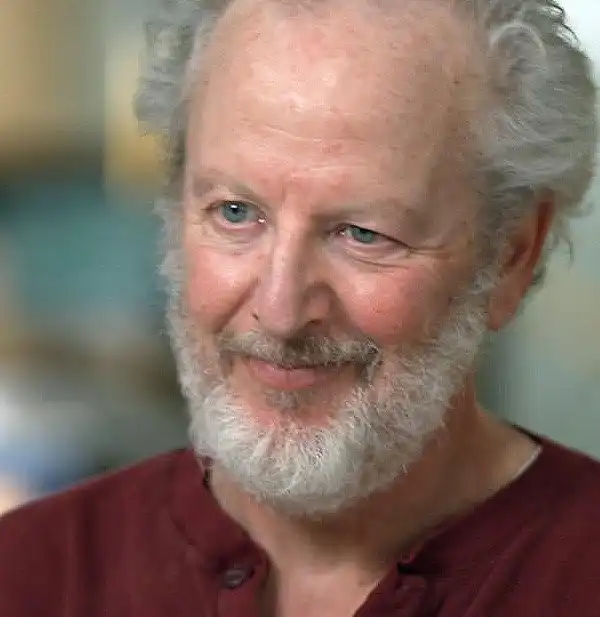
Daniel Jacob Stern was born on August 28, 1957, in Bethesda, Maryland, and grew up in the Washington, D.C., area. His father worked as a social worker and his mother managed a day-care center, while Stern developed an interest in performing during his school years. He attended Bethesda-Chevy Chase High School and appeared in theatrical productions, discovering that acting offered considerably more appeal than following a conventional academic route. Rather than attending college, Stern pursued acting professionally, eventually moving to New York and finding work in theater. It was the beginning of a career that would take him from serious drama to broad comedy, television narration and, eventually, one of the most repeatedly injured villains in Christmas movie history.
Stern made his film debut in 1979 in Breaking Away, playing Cyril, one of four working-class young men in Bloomington, Indiana, struggling to determine what came next after high school. Directed by Peter Yates, the film starred Dennis Christopher, Dennis Quaid, Jackie Earle Haley and Stern as the group of friends known locally as "Cutters." Breaking Away was both a critical and commercial success, winning the Academy Award for Best Original Screenplay and receiving a nomination for Best Picture. For a young actor making his movie debut, Stern had landed in remarkably distinguished company, and his performance established him immediately as a capable character actor rather than simply another hopeful newcomer.
During the early 1980s, Stern built an increasingly varied résumé. He appeared in Woody Allen's Stardust Memories and Claudia Weill's It's My Turn, and in 1982 he played Laurence "Shrevie" Schreiber in Barry Levinson's Diner. The ensemble comedy-drama followed a group of young Baltimore men confronting adulthood as the 1950s drew to a close. Stern's character was married but still emotionally attached to the carefree world of his friends, and one memorable argument with his wife concerned the proper organization of his record collection. It was funny because the dispute was ridiculous and painfully believable at the same time. Diner became an influential ensemble film and helped establish the careers of several members of its young cast, including Stern, Kevin Bacon, Mickey Rourke, Steve Guttenberg, Tim Daly and Paul Reiser.
Stern continued working steadily throughout the decade, appearing in films including Blue Thunder, Hannah and Her Sisters, The Milagro Beanfield War and the horror-comedy Leviathan. His performances demonstrated an ability to move comfortably between drama and comedy, but it was comedy that eventually made him internationally recognizable. In 1990, Stern was cast opposite Joe Pesci in a Christmas movie about two burglars who make the exceptionally poor decision to rob a suburban Chicago house occupied by an eight-year-old boy with a remarkable talent for improvised defensive engineering.
In Home Alone, Stern played Marv Murchins, the taller and considerably dimmer half of the "Wet Bandits," alongside Pesci's Harry Lyme. Their intended victim, Kevin McCallister, played by Macaulay Culkin, responds to the attempted burglary by turning his family home into something resembling a residential obstacle course designed by a particularly vindictive military engineer. Marv steps on ornaments, falls downstairs, gets struck by an iron, loses his shoes and socks, walks barefoot across freezing snow and encounters a large tarantula placed directly on his face. Stern's astonishing scream during the tarantula scene became one of the film's funniest moments, and the physical comedy performed by Stern and Pesci was crucial to transforming the burglars from genuinely threatening criminals into cartoon-like villains capable of surviving punishment that should probably have required several ambulances.
Home Alone became an enormous international success and one of the defining family films of the 1990s. Stern returned as Marv in Home Alone 2: Lost in New York in 1992, where the Wet Bandits escape prison, encounter Kevin again and apparently learn absolutely nothing from their previous experience. Marv endures another remarkable assortment of injuries involving bricks, electricity, falling objects and various traps. The sequel pushed the physical comedy even further, and Stern committed himself completely to Marv's spectacular misfortune. Decades later, his performance remains closely associated with the Christmas season, ensuring that every December Daniel Stern is once again hit in the face, electrocuted and dropped from great heights in living rooms around the world.
Yet Stern had another major comedy success almost immediately after the original Home Alone. In 1991, he appeared alongside Billy Crystal and Bruno Kirby in City Slickers. Stern played Phil Berquist, one of three middle-aged friends who leave New York for a cattle-driving vacation in the American West while struggling with assorted personal crises. Phil is trapped in a miserable marriage and eventually finds himself confronting the collapse of both his domestic and professional lives during the trip. The film balanced broad comedy with a surprisingly thoughtful examination of middle age, friendship and the uneasy realization that adulthood does not necessarily arrive with instructions.
City Slickers became another substantial box-office success, and Stern's chemistry with Crystal and Kirby was central to the film. He returned with Crystal for City Slickers II: The Legend of Curly's Gold in 1994, although Kirby did not return for the sequel. By that point Stern had become a familiar face in mainstream American comedy, appearing in several prominent films during a relatively short period. The remarkable thing is that Marv and Phil could hardly be more different: one is a spectacularly incompetent criminal repeatedly assaulted by household objects, while the other is an ordinary middle-aged man confronting genuine emotional problems. Stern made both convincing.
At roughly the same time, millions of television viewers were hearing Stern every week without necessarily seeing him. From 1988 to 1993, he served as the adult voice of Kevin Arnold on the television series The Wonder Years. Stern narrated the memories of the adult Kevin as the younger version, played by Fred Savage, navigated adolescence, family, friendships and first love during the late 1960s and early 1970s. His warm, reflective narration became an essential element of the series, frequently providing the emotional perspective that young Kevin himself could not yet understand. Stern also directed several episodes of The Wonder Years, expanding his work behind the camera.
Directing became an increasingly important part of Stern's career. He directed television episodes as well as the 1993 feature film Rookie of the Year, a family comedy about a young Chicago Cubs fan whose healed arm suddenly allows him to throw a baseball at extraordinary speed. Stern also appeared in the film as pitching coach Phil Brickma, a character whose approach to professional baseball coaching could generously be described as unconventional. The movie became a favorite among younger audiences and added yet another widely remembered comic character to Stern's résumé.
Stern continued acting throughout the 1990s in films including Celtic Pride, Bushwhacked and Very Bad Things. Bushwhacked gave him the leading role of Max Grabelski, a deliveryman who becomes entangled in a murder investigation and ends up masquerading as a scout leader while attempting to escape the authorities. The film allowed Stern to carry a broad physical comedy himself, drawing on some of the frantic energy that had made Marv so memorable without simply repeating the character.
His later career included television and film appearances while also allowing Stern to pursue interests beyond Hollywood. He appeared in series such as Manhattan, Shrill and For All Mankind, demonstrating that the actor so strongly associated with broad 1990s comedy remained capable of substantial dramatic work. In Apple TV+'s For All Mankind, Stern played NASA administrator Eli Hobson, placing him in an alternate-history drama about the space race—a considerable distance from being struck in the face by a paint can.
Stern has also devoted significant attention to sculpture. Away from acting, he became an accomplished artist working primarily in bronze, creating sculptures ranging from human figures to pieces celebrating everyday life and community. His public artworks have been installed in several locations across the United States. It is an interesting second career for an actor whose most famous screen character was spectacularly unsuccessful at interacting safely with physical objects.
Stern married Laure Mattos in 1980, and they have three children. Their son, Henry Stern, pursued a very different public career, entering California politics and serving in the California State Senate. Stern has generally maintained a considerably lower public profile than many performers associated with films as famous as Home Alone, periodically returning to acting while pursuing his art and family life away from Hollywood.
Daniel Stern's career is consequently much broader than the role for which he is most instantly recognized. Breaking Away and Diner established him as part of two respected ensemble films before Home Alone turned him into an internationally familiar comic actor. City Slickers demonstrated his ability to mix comedy with genuine emotion, The Wonder Years made his voice an important part of one of television's most nostalgic series, and his directing and sculpture revealed creative interests extending well beyond acting.
Still, Marv Murchins is unlikely ever to disappear from the public imagination. Every Christmas, another generation watches him step onto a nail, encounter that tarantula and discover once again that an eight-year-old left home without adult supervision is apparently more dangerous than the entire Chicago Police Department.
There are worse ways for an actor to achieve immortality.