September 22, 1982, in Swindon, England
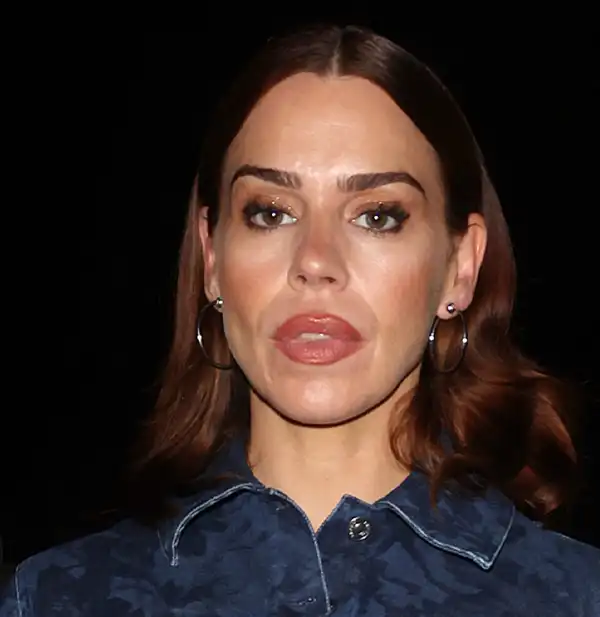
Billie Paul Piper was born on September 22, 1982, in Swindon, Wiltshire, England. Originally named Leian Paul Piper, she was officially renamed Billie by her parents while still a baby. Performing entered her life early, and she attended the Sylvia Young Theatre School in London, an institution famous for preparing young performers for careers in entertainment. Piper's first taste of national exposure came through appearances on the Saturday morning children's television program Scratchy & Co., but television presenting was merely the opening act. Before long, she had entered the music business and was about to become one of Britain's youngest pop stars.
In 1998, Piper released her debut single, "Because We Want To," under the name Billie. It went straight to number one on the UK Singles Chart, making her the youngest female artist at the time to debut at number one with a single in Britain. Her follow-up, "Girlfriend," also reached number one. Suddenly, the teenager from Swindon was appearing on magazine covers, television programs and stages across the country while surrounded by the full machinery of late-1990s British pop music. Her debut album, Honey to the B, produced further successful singles including "She Wants You" and the title track.
A second album, Walk of Life, arrived in 2000 and included another major hit, "Day & Night." Yet the apparently glamorous existence of a teenage pop star was considerably more complicated behind the scenes. Piper later spoke candidly about the pressures of becoming famous so young, the intense workload and the personal difficulties she experienced during that period. After several frenetic years, she stepped away from recording. What might easily have become the familiar story of a former teenage singer disappearing from public view instead became the beginning of a considerably more substantial second career.
Piper turned seriously toward acting, initially encountering the skepticism that often greets pop performers attempting to cross into drama. She appeared in productions including The Canterbury Tales and Bella and the Boys, gradually establishing that acting was not simply something she had decided to try between albums. Then came the role that permanently changed public perceptions of her abilities and simultaneously introduced her to an entirely new generation of viewers.
In 2005, the BBC revived Doctor Who after the series had been absent from regular television production for years. Christopher Eccleston was cast as the Ninth Doctor, and Piper became Rose Tyler, a young shop assistant living on a London council estate with her mother, Jackie. Rose's ordinary existence ends rather abruptly when she encounters murderous shop-window mannequins, a mysterious stranger calling himself the Doctor and a blue police box whose interior displays a rather cavalier attitude toward conventional architecture.
Rose was crucial to the success of the revived series because audiences effectively reentered the universe of Doctor Who through her. The Doctor already understood alien civilizations, time travel and why one should become concerned when an apparently harmless statue started behaving suspiciously. Rose did not. Her wonder, fear, curiosity and increasing confidence provided an emotional bridge between the extraordinary world of the Doctor and viewers discovering—or rediscovering—it at home.
Piper's chemistry with Eccleston helped establish the revived program immediately, but the series underwent a potentially dangerous transition after only one season when Eccleston departed and David Tennant became the Tenth Doctor. Rose remained aboard the TARDIS, giving viewers continuity while the central character changed his face, personality and wardrobe. Piper and Tennant developed a particularly popular partnership, with Rose's relationship with the Doctor evolving into something much deeper than that of a passenger accompanying an eccentric alien on sightseeing excursions.
Her original departure in the 2006 episode "Doomsday" became one of the defining emotional moments of modern Doctor Who. Rose is separated from the Doctor and trapped in a parallel universe, leading to their farewell at Bad Wolf Bay. The sequence demonstrated how far Piper had traveled as an actress since her pop career. A performer once associated primarily with upbeat teenage singles was now carrying one of British television's most memorable dramatic scenes, while viewers throughout the country discovered that a program involving Daleks and Cybermen could also leave grown adults staring suspiciously at something in their eyes.
Piper later returned to Doctor Who on several occasions. Rose reappeared during the fourth series and played an important role in the 2008 finale. Piper also participated in the program's 50th-anniversary special, The Day of the Doctor, in 2013, although she was not simply playing Rose Tyler. Instead, she portrayed the interface adopted by a devastatingly powerful Gallifreyan weapon known as the Moment, which chose Rose's appearance from the Doctor's future. Doctor Who being Doctor Who, even returning as your old character can involve technically not being your old character at all.
Leaving the TARDIS also allowed Piper to tackle material aimed very definitely at adults. In 2007, she took the leading role in ITV2's Secret Diary of a Call Girl, based on the writings published under the pseudonym Belle de Jour. Piper played Hannah Baxter, a London woman leading a double life as a high-end escort named Belle. The series combined comedy and drama while frequently breaking the fourth wall, allowing Hannah to speak directly to viewers about her work, relationships and carefully separated identities.
The role was deliberately far removed from Rose Tyler and demonstrated Piper's determination not to remain confined by the character who had made her a television favorite. Secret Diary of a Call Girl ran for four series, with Piper carrying the show throughout. Hannah could be confident, funny and apparently in control as Belle while her private life revealed vulnerability and complications that could not be neatly separated from her professional identity. The series gave Piper another highly recognizable television role without requiring a sonic screwdriver, which was probably reassuring for everyone involved.
Her television work continued to move in increasingly challenging directions. Piper starred in Penny Dreadful, the gothic horror series created by John Logan, playing Brona Croft and later Lily Frankenstein. The series assembled characters and ideas from Victorian literature into a dark supernatural drama populated by figures associated with Frankenstein, Dracula and Dorian Gray. Piper's transformation from Brona into Lily gave her material ranging from tragedy and horror to fury and rebellion, earning considerable critical attention.
She later starred in Collateral, David Hare's BBC drama examining the repercussions of a murder in London, and co-created and starred in I Hate Suzie. The latter, created with writer Lucy Prebble, cast Piper as Suzie Pickles, an actress whose life erupts after private photographs are stolen from her phone and released publicly. Although fictional, the series drew upon the pressures surrounding celebrity, privacy and public identity with a sharpness that benefited from Piper's own long experience of growing up under intense media scrutiny.
Piper and Prebble continued Suzie's story with I Hate Suzie Too, further exploring a woman attempting to rebuild a life while personal disaster and public entertainment become increasingly difficult to distinguish. Piper's performance combined comedy with anger, humiliation, selfishness and vulnerability, refusing to make Suzie conveniently lovable. It was precisely the sort of complicated character that Piper increasingly seemed drawn toward: people whose rough edges are not politely sanded away for the comfort of the audience.
Theater became another major part of her career and produced some of her greatest critical acclaim. Piper appeared in productions including Treats, Reasons to Be Pretty and The Effect, but her performance in Simon Stone's adaptation of Federico García Lorca's Yerma proved especially significant. Playing a woman whose desire for a child becomes consuming and destructive, Piper delivered an intense performance that won major theatrical honors, including the Olivier Award for Best Actress.
Her success in Yerma was remarkable not simply because of the award but because it completed one of the more unusual transformations in modern British entertainment. The teenager who had once bounced through "Because We Want To" had become one of the country's most acclaimed stage performers. Piper also received recognition from the Evening Standard Theatre Awards and Critics' Circle Theatre Awards for the production, demonstrating that her transition from pop singer to serious actor had moved well beyond novelty.
Piper eventually added filmmaker to her collection of occupations. She wrote, directed and starred in Rare Beasts, her feature directing debut, playing Mandy, a single mother navigating work, parenthood and a difficult romantic relationship. The film was deliberately abrasive and unconventional, examining modern relationships and conflicting expectations rather than attempting to provide a comfortable romantic comedy. After spending decades interpreting other people's material, Piper had moved behind the camera and taken control of the entire production.
Her career has continued to move between mainstream projects and more challenging material. In 2024, she appeared in the Netflix film Scoop, portraying television producer Sam McAlister in the dramatization of the events surrounding the BBC Newsnight interview with Prince Andrew. The following year brought another intriguing connection with Doctor Who when Piper appeared unexpectedly at the conclusion of the 2025 season. The precise meaning of that appearance was deliberately left unresolved onscreen, immediately giving Doctor Who viewers another mystery to argue about—a traditional recreational activity among fans of the program.
What makes Billie Piper's career particularly striking is how thoroughly she escaped the limitations that could easily have been imposed upon her. She might have remained remembered primarily as a teenage pop singer. She might then have become permanently identified as Rose Tyler. Instead, she followed one successful reinvention with another, moving into adult television drama, gothic horror, experimental comedy, prestigious theater, writing and directing.
Rose Tyler will nevertheless remain an important part of her legacy. Piper helped introduce a revived Doctor Who to a new generation and gave the fantastic adventures an emotional center grounded in an ordinary young woman's life. Yet the career that followed demonstrated something equally important: leaving the TARDIS did not mean the adventure was over. Billie Piper simply discovered that there were plenty of other strange worlds available—and some of them did not even require running down corridors while being chased by aliens.