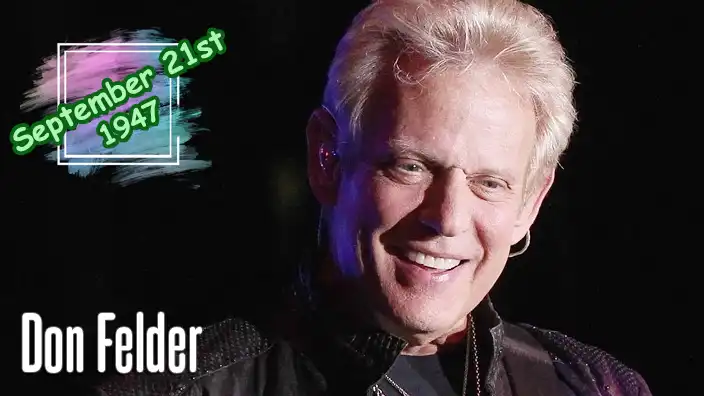
September 21, 1947, in Gainesville, Florida
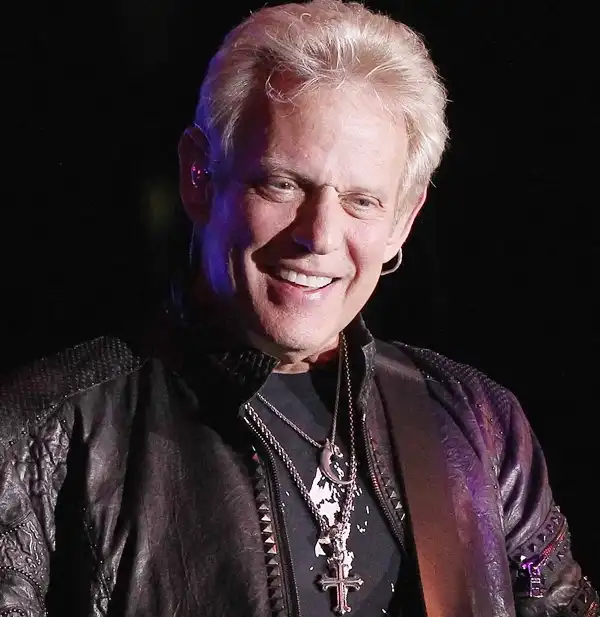
Donald William Felder was born on September 21, 1947, in Gainesville, Florida, and grew up in a part of the country that produced a remarkable collection of musicians. Long before Los Angeles, platinum records and stadium tours entered the picture, Felder was fascinated by music and particularly by the guitar. He has recalled first becoming captivated by the instrument after watching Elvis Presley on television, an encounter that helped set him on a path toward becoming one of rock music's most recognizable guitarists.
Felder obtained his first guitar while still a boy and began teaching himself to play. Gainesville offered a surprisingly fertile environment for an aspiring young musician. Among the other musicians emerging from the area was Tom Petty, who would eventually become one of America's most successful rock performers. Felder has recalled giving the young Petty guitar lessons, an almost absurd concentration of future rock history for one Florida town. Somewhere in Gainesville, apparently, it was possible to walk down the street in the 1960s and accidentally bump into somebody who would later sell millions of records.
As a teenager, Felder played in a Gainesville band called the Continentals, which also included Stephen Stills for a time. Stills later departed and eventually became part of Buffalo Springfield and Crosby, Stills & Nash, while Felder continued developing as a musician. Felder subsequently joined the Maundy Quintet, another popular regional group. Those early years exposed him to rock, blues, rhythm and blues and the increasingly adventurous musical possibilities of the 1960s.
Another important influence came through Bernie Leadon, whom Felder knew before either man became a member of the Eagles. Leadon was already an accomplished multi-instrumentalist and helped Felder develop his knowledge of different guitar styles. Their paths would eventually cross again under circumstances neither could have realistically predicted when they were young musicians in Florida.
Felder spent time in New York and later Boston, broadening his musical experience before moving west. Like many accomplished instrumentalists, he found work both in bands and as a session musician. By the early 1970s, the American music industry was changing rapidly, and Southern California had become one of its most important centers. A distinctive mixture of rock, country and folk was emerging from Los Angeles, driven by artists including Jackson Browne, Linda Ronstadt and a relatively new band called the Eagles.
The Eagles had formed in 1971 around Glenn Frey, Don Henley, Bernie Leadon and Randy Meisner. Their early albums established an enormously successful country-rock sound built around vocal harmonies, acoustic instruments and carefully crafted songwriting. Songs including "Take It Easy," "Peaceful Easy Feeling" and "Desperado" helped define that sound. But as the band developed, Frey and Henley increasingly wanted a stronger rock component.
That desire helped bring Don Felder into the Eagles.
Felder was initially invited to add slide guitar to "Good Day in Hell" during the recording of the band's 1974 album On the Border. His playing impressed the group, and he was invited to become a full member. His arrival altered the Eagles' musical possibilities considerably. Felder brought a more muscular electric-guitar approach, giving the band another dimension without eliminating the harmonies and songwriting that had already made it successful.
The change could be heard increasingly clearly on One of These Nights, released in 1975. Felder co-wrote "Visions" with Don Henley and also sang lead on the track, making it the only Eagles song released on one of their studio albums with Felder handling the principal vocal. More importantly, his guitar work was helping move the Eagles from their country-rock beginnings toward the heavier, more elaborate rock sound that would dominate their next album.
Bernie Leadon left the group in 1975 and was replaced by Joe Walsh, already well known from the James Gang and his solo career. The addition created one of rock's most formidable guitar combinations. Felder and Walsh had different styles but complemented each other exceptionally well. Walsh brought an instantly recognizable rawness and eccentricity, while Felder was precise, melodic and technically versatile. Together they could weave guitar lines around each other rather than simply taking turns playing louder.
Then came a piece of music Felder recorded at home.
While experimenting with a 12-string guitar, Felder developed a chord progression and melody that caught his attention. He recorded a demo of the instrumental idea and sent it to Don Henley and Glenn Frey along with other musical sketches. The piece was initially known informally as "Mexican Reggae" because of its feel. Henley and Frey began developing lyrics around the music, transforming Felder's instrumental foundation into something considerably larger.
The result was "Hotel California."
Released as the title track of the Eagles' 1976 album, "Hotel California" was credited to Don Felder, Don Henley and Glenn Frey. Henley sang the lead vocal and wrote much of the lyric with Frey, while Felder's original musical framework supplied the distinctive harmonic structure. The lyrics created a surreal journey through a luxurious but unsettling California landscape, filled with images that invited interpretation without providing a simple explanation. It could be heard as a story about excess, fame, the music industry, California mythology or the darker side of the American dream, and its refusal to explain itself neatly became part of its lasting appeal.
Felder also devised the song's famous guitar arrangement, and the recording culminated in the extraordinary extended exchange between Felder and Joe Walsh. The two guitarists trade phrases before their parts eventually join in harmonized lines. Rather than feeling like a solo pasted onto the end of a song, the sequence functions almost as a final movement, resolving the tension created throughout the recording.
That ending became one of the most celebrated guitar passages in rock history. It also demonstrated why having two distinctive lead guitarists could be more interesting than simply having one exceptionally fast one. Felder and Walsh seemed to converse through their instruments, alternately answering, challenging and supporting each other before finally converging. Countless guitarists subsequently attempted to reproduce the passage, thereby ensuring a continuing worldwide market for guitar tablature, replacement strings and patient neighbors.
"Hotel California" became a No. 1 single in the United States and won the Grammy Award for Record of the Year. The album itself became one of the Eagles' defining works, producing other major songs including "New Kid in Town" and "Life in the Fast Lane." The Recording Academy credits "Hotel California" with the 1978 Record of the Year Grammy, an award shared by the Eagles and producer Bill Szymczyk.
Felder's contributions extended well beyond that single song. He co-wrote "Victim of Love," another track from Hotel California, with Henley, Frey and J.D. Souther. The song reinforced the harder rock direction that had developed following Felder's arrival and Walsh's addition to the band. Felder also contributed extensively as a guitarist across the Eagles' recordings and live performances, moving between electric, acoustic and slide guitar as the material required.
The extraordinary success of Hotel California, however, came with increasing pressure inside the band. The Eagles had evolved from a successful group into one of the world's largest rock acts, and that transformation brought enormous expectations. Recording the follow-up album, The Long Run, became a prolonged and difficult process. Released in 1979, the album nevertheless produced major hits including "Heartache Tonight," "I Can't Tell You Why" and its title track.
Felder co-wrote "Those Shoes" with Henley and Frey, another track demonstrating the band's darker late-1970s sound. The recording prominently used talk-box guitar effects, adding an unusual texture that suited the song's atmosphere. By this point, the Eagles sounded considerably removed from the easygoing country-rock group responsible for "Take It Easy" earlier in the decade. Felder had played an important role in that transformation.
Relationships within the band, unfortunately, had become increasingly strained. The Eagles broke apart in 1980 after years of touring, recording pressures and interpersonal conflict. The split became legendary enough that when Henley was asked when the band might reunite, he famously suggested it would happen when hell froze over.
Hell apparently experienced an unexpected cold snap in 1994.
The Eagles reunited for the Hell Freezes Over project and tour, with Felder returning alongside Henley, Frey, Walsh and Timothy B. Schmit. The reunion became enormously successful and introduced the band to another generation of concert audiences. A new acoustic arrangement of "Hotel California" became one of the project's highlights, opening with an extended flamenco-influenced guitar introduction before moving into the familiar song.
The reunion did not permanently resolve the group's internal disagreements. Felder was dismissed from the Eagles in 2001, beginning a bitter legal dispute between him and Eagles Ltd., Henley and Frey. Felder filed lawsuits challenging his termination and alleging unfair treatment within the band's business arrangements. The opposing sides disputed the claims, and the litigation was eventually settled out of court in 2007. The details of the settlement were not publicly disclosed.
Felder subsequently discussed his experiences in his memoir Heaven and Hell: My Life in the Eagles (1974–2001). His account described both the extraordinary success of the band and the tensions that accompanied it. As with many histories of bands containing strong personalities, different participants have offered different perspectives on events. What is beyond dispute is that Felder's years with the Eagles encompassed the group's most commercially explosive period and some of its most enduring recordings.
After leaving the Eagles, Felder continued performing and recording as a solo artist. His solo career had actually begun while he was still associated with the band. In 1981 he released Airborne, and his song "Heavy Metal (Takin' a Ride)" appeared on the soundtrack to the animated film Heavy Metal. Decades later, he returned with Road to Forever in 2012 and American Rock 'n' Roll in 2019, collaborating with an assortment of notable musicians and demonstrating that leaving one of the world's most famous bands did not require leaving the guitar in its case.
Felder was inducted into the Rock & Roll Hall of Fame as a member of the Eagles in 1998. The induction reunited past and present members of the group for the ceremony, creating the remarkable sight of multiple generations of Eagles standing together and performing. The Hall of Fame recognizes the Eagles as one of the defining American bands of the 1970s, and Felder's role in the group's transformation into a harder-edged rock act forms an important part of that history.
His legacy is inevitably dominated by "Hotel California," but being permanently associated with one of rock music's most recognizable recordings is hardly a minor problem. The song has endured because nearly every element is distinctive: the opening chords, Henley's vocal, the mysterious lyrics, the arrangement and finally that extraordinary exchange between Felder and Walsh.
Felder's original musical idea became the foundation upon which Henley and Frey built the song, and his guitar work helped give the finished recording its identity. It is a useful reminder that songwriting is not always somebody sitting at a piano with a completed lyric. Sometimes it begins with a guitarist alone at home, playing around with a chord progression and deciding that this particular idea might be worth recording before it disappears.
In Don Felder's case, it didn't disappear.
Nearly half a century later, somebody somewhere is almost certainly picking up a guitar, playing those opening chords and discovering that everyone else in the room knows exactly what comes next.