September 5, 1939, in Albany, New York
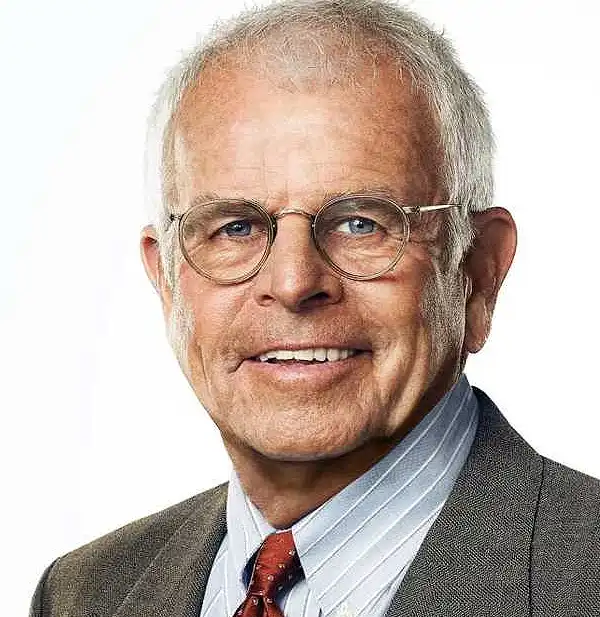
William Joseph Devane was born on September 5, 1939, in Albany, New York. He grew up in the Albany area and eventually pursued acting seriously, studying at the American Academy of Dramatic Arts in New York City. Like many performers of his generation, Devane learned his craft through stage work before television made his face familiar in living rooms across America. It was a traditional route into acting: training, theater, small roles and persistence, rather than waking up one morning with three million social-media followers and announcing a movie career.
Devane's early professional experience included work with Joseph Papp's New York Shakespeare Festival, giving him the opportunity to perform classical material before moving increasingly into film and television. His rugged appearance, distinctive voice and naturally authoritative presence made him particularly suited to complicated men in positions of responsibility. Hollywood would eventually discover that if a script required a senator, cabinet secretary, corporate executive or president who looked capable of handling a national emergency before lunch, William Devane was an extremely useful telephone number to have.
One of the performances that first brought him substantial attention came in the 1974 television movie The Missiles of October. Devane portrayed President John F. Kennedy during the Cuban Missile Crisis, with Martin Sheen playing Attorney General Robert F. Kennedy. The production dramatized the tense 1962 confrontation between the United States and Soviet Union over Soviet nuclear missiles in Cuba, an event that brought the world frighteningly close to nuclear war. Devane's performance captured Kennedy's combination of political calculation and enormous responsibility and established him as an actor capable of carrying serious historical drama.
That same year brought another important role when Devane appeared in Alfred Hitchcock's final film, Family Plot. Released in 1976, the darkly comic thriller cast Devane as Arthur Adamson, a successful jeweler concealing a considerably less respectable occupation. Working for Hitchcock placed Devane in the final chapter of one of cinema's most celebrated directing careers, and his controlled performance suited a story in which apparently ordinary people were rarely quite what they seemed.
Devane continued building a strong film résumé during the 1970s. One of his most memorable performances came opposite Tommy Lee Jones in the 1977 thriller Rolling Thunder. Devane played Major Charles Rane, an American prisoner of war who returns home from Vietnam after years of captivity and struggles to adjust to civilian life. When brutal violence strikes his family, Rane embarks upon a grim campaign of revenge. The film developed a substantial cult following, and Devane's quiet, emotionally contained performance remains one of the most admired of his career.
He also appeared in Marathon Man, the 1976 thriller starring Dustin Hoffman and Laurence Olivier, and continued moving easily between feature films and television. Devane rarely seemed dependent upon being the conventional leading man. Instead, he became one of those invaluable actors who could enter a production and immediately give a character history, intelligence and credibility. He could play sympathetic, dangerous, charming or thoroughly calculating, sometimes managing several of those qualities before the commercial break.
Television provided another notable historical role in 1975 when Devane portrayed President Kennedy again in The Missiles of October era of his career, reinforcing an association with political figures that would follow him for decades. He would later play other figures of authority so frequently that viewers could reasonably have assumed he maintained an office somewhere in Washington between acting assignments.
In 1983, Devane joined the CBS prime-time soap opera Knots Landing as Greg Sumner, the role that would make him a household name. A spin-off from Dallas, Knots Landing had begun in 1979 and followed several families living in a California cul-de-sac. As the series developed, its stories expanded into business rivalries, political intrigue, marriages, betrayals and the wonderfully complicated personal disasters that kept prime-time soap operas functioning efficiently throughout the 1980s.
Greg Sumner was a politician and businessman whose ambitions, relationships and questionable decisions made him an ideal addition to the series. Devane gave Greg considerable charm without ever allowing audiences to become entirely comfortable with him. He could be witty and likable one moment and ruthlessly calculating the next, often while wearing an expression suggesting that everybody else in the room was several moves behind.
Greg became particularly important through his relationships with several of the show's central characters, including Laura Avery and Abby Cunningham. His connection with Abby, played by Donna Mills, brought together two characters who understood power, money and manipulation rather well. Devane's chemistry with the established cast helped Greg evolve from an important newcomer into one of the defining characters of the show's later years.
Devane remained with Knots Landing for roughly a decade, appearing from 1983 until the series ended in 1993. By then, Greg Sumner had become so closely associated with him that the character followed Devane through much of his subsequent career. He returned for the 1997 reunion miniseries Knots Landing: Back to the Cul-de-Sac, proving that in soap opera territory, leaving town does not necessarily mean anybody has finished with you.
After Knots Landing, Devane continued appearing regularly in both television and film. He starred in the short-lived series Phenom and Turks and made appearances across a wide variety of programs. His ability to convey authority continued to make him an obvious choice for military officers, government officials and powerful businessmen. Casting directors apparently looked at William Devane and thought, “That man either runs the company or knows where the bodies are buried.” Frequently, both possibilities seemed equally plausible.
His feature-film work included Payback with Mel Gibson, Space Cowboys with Clint Eastwood, Tommy Lee Jones, Donald Sutherland and James Garner, and Hollow Man with Kevin Bacon. Space Cowboys, released in 2000, surrounded Devane with an extraordinary collection of veteran performers in a story about aging former test pilots finally receiving an opportunity to travel into space. Devane played NASA flight director Eugene Davis, once again occupying the sort of command position that seemed to fit him as comfortably as a well-tailored suit.
A new generation of television viewers discovered Devane when he joined the enormously successful action series 24. He first appeared in 2005 as James Heller, the United States Secretary of Defense and father of Audrey Raines, played by Kim Raver. Heller quickly became entangled in the dangerous world surrounding counterterrorism agent Jack Bauer, portrayed by Kiefer Sutherland. On 24, even being Secretary of Defense did not guarantee a quiet office, sensible working hours or an uninterrupted lunch.
James Heller was exactly the sort of character Devane played particularly well: experienced, politically powerful, stubborn and capable of standing his ground against Jack Bauer, which was not generally recommended for anyone hoping to enjoy a peaceful afternoon. Heller's relationship with his daughter Audrey and his complicated dealings with Bauer gave the character a personal dimension beyond his government position.
Devane returned to the role several times and became particularly important in 24: Live Another Day in 2014. By then, James Heller had become President of the United States. Considering Devane had portrayed John F. Kennedy decades earlier, his promotion to fictional president felt almost overdue. Heller faced an international crisis in London while also confronting serious personal challenges, giving Devane substantial dramatic material alongside the series' familiar ticking-clock suspense.
His association with political power continued elsewhere. Devane portrayed the President of the United States in Christopher Nolan's 2012 film The Dark Knight Rises, although the character is not named on screen. It was a relatively small role, but his presence immediately communicated the required authority. By that stage of his career, filmmakers did not need to spend much time persuading an audience that William Devane could be president. He merely had to walk into the room.
Devane subsequently joined another major Christopher Nolan production, Interstellar, released in 2014. He played a member of NASA involved in the secret effort to find a future for humanity as Earth faces environmental collapse. Once again, Devane found himself surrounded by government secrecy, enormous responsibility and potentially catastrophic consequences. Apparently nobody was interested in casting him as a retired florist enjoying a peaceful weekend.
His later television work included appearances in NCIS, Revenge and other productions, while decades of performances ensured that he remained instantly recognizable even to viewers who could not immediately remember where they had first encountered him. That is one of the peculiar achievements of a successful character actor: the face becomes part of the landscape of film and television.
Devane also became familiar to television audiences through commercials, particularly advertisements connected with precious metals. His authoritative screen persona translated rather naturally to advertising. After spending decades portraying presidents, cabinet officials and powerful businessmen, he had acquired the ability to discuss almost anything as though national security might depend upon the viewer paying attention.
What distinguishes Devane's career is not simply its length but its consistency. He has rarely relied upon theatrical exaggeration. Much of his effectiveness comes from restraint: the measured voice, the skeptical glance and the impression that his character has already considered several possibilities before anybody else has finished explaining the problem. That quality made Greg Sumner fascinating, James Heller believable and his numerous political and military characters immediately convincing.
His work also spans an extraordinary period in American television and film. Devane began his career when stage training and television anthology dramas still shaped many actors, became a major figure during the golden age of the prime-time soap, moved into blockbuster films and then found another large audience during the serialized television boom of the 2000s. Few performers manage to remain relevant across so many changes in the entertainment business.
For longtime Knots Landing viewers, he will probably always be Greg Sumner, the ambitious businessman and politician who could charm somebody while simultaneously planning three moves ahead. For fans of 24, he is James Heller, one of the relatively few authority figures capable of facing Jack Bauer without immediately being reduced to nervous perspiration. Film audiences may remember Rolling Thunder, Space Cowboys, Interstellar or one of the many other productions in which Devane brought his unmistakable presence to the screen.
On September 5, William Devane's birthday provides an opportunity to celebrate a veteran actor whose career has stretched across more than half a century and through almost every imaginable level of fictional authority. He has played presidents, cabinet officials, politicians, businessmen, military men and the occasional character whose motives required considerably closer inspection.
If Hollywood ever needs somebody to announce that the situation is under control while making it perfectly clear that the situation is absolutely not under control, William Devane remains one of the finest men for the job.