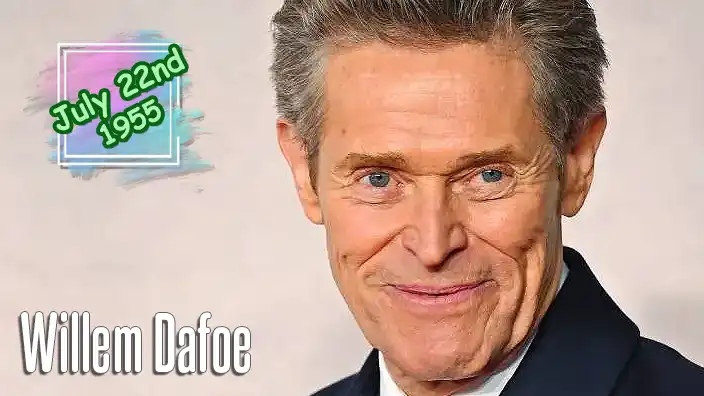
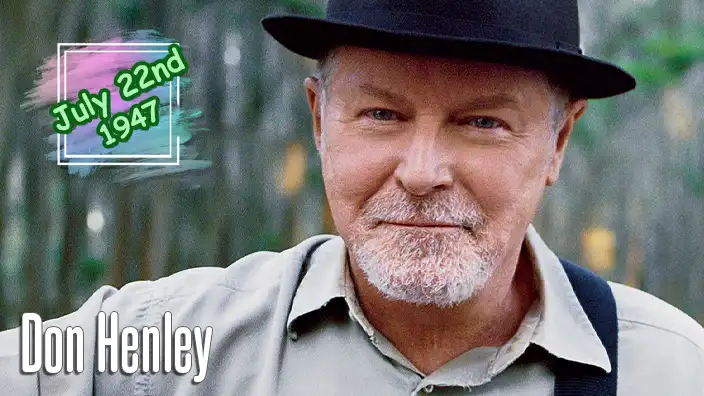
July 22, 1955, in Appleton, Wisconsin
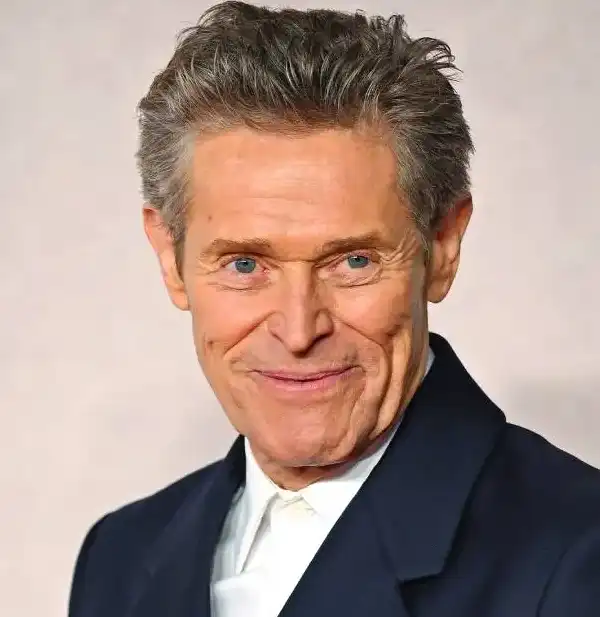
Willem Dafoe is one of the most respected and versatile actors of his generation. Known for his remarkable intensity, distinctive voice, expressive features, and willingness to take on unconventional roles, he has built a career spanning more than four decades. From war dramas and psychological thrillers to fantasy adventures, superhero blockbusters, and independent films, Dafoe has demonstrated an extraordinary ability to disappear into almost any character.
Born William James Dafoe in Appleton, Wisconsin, he was one of eight children in a large family. The nickname "Willem" originated during his youth when friends used the Dutch version of William, and it eventually became the professional name recognized around the world.
Dafoe attended the University of Wisconsin–Milwaukee, where he studied drama before leaving school to pursue acting full time. During the late 1970s, he became involved with the experimental theater company Theatre X in Milwaukee before moving to New York City. There, he joined the renowned performance group The Wooster Group, where his commitment to challenging and innovative productions helped shape his unique acting style.
His first film appearances came in the early 1980s, but it was Oliver Stone's Academy Award-winning Vietnam War drama Platoon (1986) that introduced him to a worldwide audience. Playing Sergeant Elias Grodin, Dafoe portrayed a compassionate leader caught in the moral complexities of war. His unforgettable performance earned him his first Academy Award nomination for Best Supporting Actor and remains one of the defining roles of his career.
Following Platoon, Dafoe became known for choosing demanding and often unpredictable projects. He starred opposite Gene Hackman in Mississippi Burning (1988), portraying an FBI agent investigating the murders of civil rights workers in Mississippi. The film earned widespread acclaim and further established Dafoe as one of Hollywood's finest dramatic actors.
Throughout the 1990s, he appeared in an impressive variety of films, including Born on the Fourth of July, Wild at Heart, Light Sleeper, The English Patient, Existenz, The Boondock Saints, and Shadow of the Vampire. In the latter, he portrayed actor Max Schreck, who may—or may not—actually be a vampire during the filming of the silent classic Nosferatu. The performance earned Dafoe his second Academy Award nomination and demonstrated his remarkable talent for blending horror, humor, and mystery.
Many younger audiences first came to know Dafoe as Norman Osborn, better known as the Green Goblin, in Sam Raimi's Spider-Man (2002). His energetic and often terrifying portrayal became one of the most memorable comic book villains ever brought to the screen. More than twenty years later, he returned to the role in Spider-Man: No Way Home (2021), receiving praise for delivering another powerful performance while performing many of his own physically demanding scenes.
Although blockbuster films increased his popularity, Dafoe never abandoned independent cinema. He has frequently collaborated with acclaimed directors including Wes Anderson, Robert Eggers, Lars von Trier, Abel Ferrara, Julian Schnabel, and Yorgos Lanthimos. These collaborations have allowed him to explore unusual characters that many actors would hesitate to attempt.
In 2018, Dafoe received his third Academy Award nomination for portraying motel manager Bobby Hicks in The Florida Project. His warm, compassionate performance contrasted with many of the darker characters he had played throughout his career, reminding audiences of his remarkable emotional range.
He earned his fourth Academy Award nomination for portraying Vincent van Gogh in At Eternity's Gate (2018). Rather than presenting the famous artist as a tragic stereotype, Dafoe delivered a deeply human performance that explored Van Gogh's creativity, loneliness, and determination despite personal struggles.
Dafoe continued receiving acclaim for later performances in films such as The Lighthouse, Nightmare Alley, The Northman, Inside, and Yorgos Lanthimos' award-winning Poor Things. In Poor Things, he portrayed the eccentric Dr. Godwin Baxter, a brilliant yet unconventional scientist whose unusual experiments drive much of the story. His imaginative performance earned praise from critics and showcased his gift for making even the strangest characters feel believable.
One of Dafoe's greatest strengths is his fearlessness. He rarely avoids difficult, unusual, or morally complex characters. Instead, he embraces roles that require emotional vulnerability, physical transformation, or psychological intensity. This willingness to take creative risks has earned him admiration from filmmakers around the world.
Despite often portraying villains, Dafoe is widely regarded by colleagues as thoughtful, humble, and highly collaborative. Directors frequently praise his professionalism, preparation, and enthusiasm for exploring every aspect of a character. Younger actors often describe working alongside him as both inspiring and educational.
Outside of acting, Dafoe has maintained a lifelong interest in theater and continues to value stage performance alongside his film career. His background in experimental theater remains evident in his willingness to challenge audiences and approach each role from a fresh perspective.
His distinctive appearance has become one of Hollywood's greatest assets rather than a limitation. Dafoe has often joked about being cast as unusual characters, yet his expressive face and commanding presence have helped create some of cinema's most memorable performances.
With four Academy Award nominations, countless memorable films, and a reputation for artistic integrity, Willem Dafoe has become one of the world's most respected character actors. Whether portraying a heroic soldier, a troubled artist, a comic book supervillain, or an eccentric inventor, he consistently delivers performances that audiences remember long after the credits roll.
Rather than chasing fame or predictable leading-man roles, Dafoe has spent his career pursuing fascinating characters and compelling stories. That commitment has made him not only one of Hollywood's finest actors but also one of its most consistently surprising.