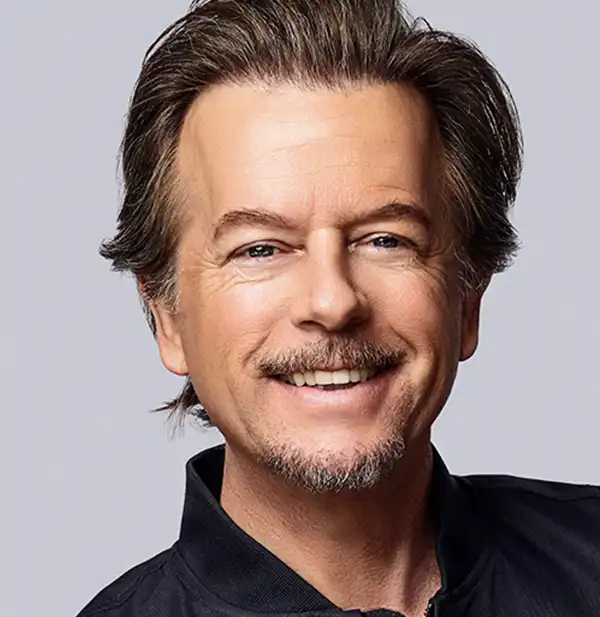
David Spade has perfected an art form few comedians dare attempt—delivering an insult so sharp that you laugh before realizing you might have been the target. Armed with impeccable timing, a permanently unimpressed expression, and enough sarcasm to power a small city, he's spent decades proving that sometimes the funniest person in the room is the one quietly standing in the corner with a perfectly timed one-liner.
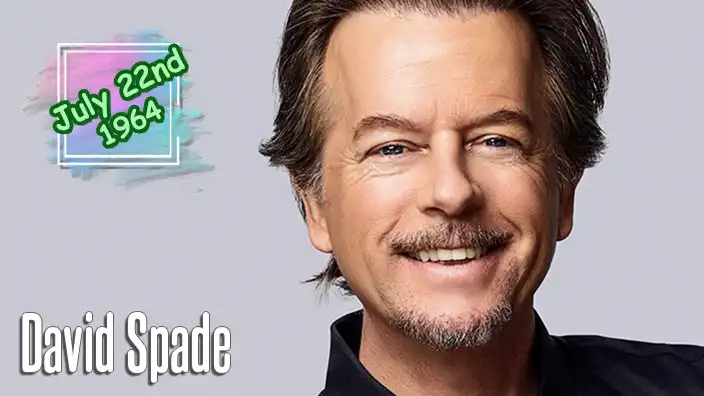
David Spade is an American comedian, actor, writer, television personality, and producer whose quick wit and unmistakable sarcastic delivery have made him one of comedy's most recognizable performers. Best known for his years on Saturday Night Live, his starring role in Just Shoot Me!, and a long list of successful comedy films, Spade has remained a popular figure in American entertainment for more than three decades.
David Wayne Spade was born on July 22, 1964, in Birmingham, Michigan. Following his parents' divorce, he moved with his mother and brothers to Scottsdale, Arizona, where he spent most of his childhood. Growing up in modest circumstances, Spade developed the dry sense of humor and observational style that would later become his trademark.
After graduating from Saguaro High School, he attended Arizona State University, earning a degree in business. While in college, he began performing stand-up comedy in local clubs, quickly discovering that audiences appreciated his understated delivery and razor-sharp sarcasm.
His growing reputation led to appearances in comedy clubs across the country, eventually attracting the attention of talent scouts from Saturday Night Live. In 1990, Spade joined the legendary NBC sketch comedy series, becoming part of a new generation of comedians that included Chris Farley, Adam Sandler, Rob Schneider, Chris Rock, and Tim Meadows.
Although he appeared in numerous sketches, Spade became especially famous for his "Hollywood Minute" segments on Weekend Update. In these brief celebrity commentaries, he delivered biting jokes about actors, musicians, and public figures with a straight face and impeccable comic timing. The feature became one of the show's most talked-about recurring segments.
His friendship with fellow comedian Chris Farley became one of the defining partnerships of 1990s comedy. Together they starred in the films Tommy Boy (1995) and Black Sheep (1996). Their contrasting personalities—Farley's energetic physical comedy paired with Spade's sarcastic, straight-man approach—created a comedy duo that remains beloved by audiences today.
The success of Tommy Boy has only grown over the years, becoming a comedy classic that continues to attract new fans through television broadcasts and streaming services. Many consider it one of the funniest buddy comedies ever made.
Spade enjoyed further success on television beginning in 1997 when he was cast as Dennis Finch in the NBC sitcom Just Shoot Me!. Playing the arrogant, self-absorbed assistant at a fashion magazine, Spade delivered one of the most memorable performances of his career. His work on the series earned Emmy and Golden Globe nominations while making Finch one of television's most popular sitcom characters.
Throughout the late 1990s and 2000s, Spade continued starring in successful comedies including Joe Dirt, Dickie Roberts: Former Child Star, The Emperor's New Groove, The Benchwarmers, Grown Ups, Grown Ups 2, The Wrong Missy, and numerous other films.
One of his most memorable voice performances came in Disney's animated hit The Emperor's New Groove, where he voiced Emperor Kuzco. His sarcastic personality proved a perfect match for the spoiled young emperor, helping make the film one of Disney's most popular modern animated comedies.
Television remained an important part of Spade's career. After Just Shoot Me!, he starred in the sitcom Rules of Engagement alongside Patrick Warburton, Oliver Hudson, Bianca Kajlich, and Megyn Price. The series ran for seven successful seasons and introduced Spade to a new generation of viewers.
He later hosted the Comedy Central series Lights Out with David Spade, where his dry humor and experience in entertainment made him a natural late-night host. He has also appeared frequently on comedy specials, podcasts, talk shows, and streaming productions.
Despite his success in television and film, Spade has never abandoned stand-up comedy. He continues touring across North America, performing observational comedy centered on celebrity culture, everyday life, relationships, and the absurdities of modern society. His performances remain known for their sharp writing rather than loud delivery, allowing his jokes to build gradually before landing with precision.
Spade has also demonstrated remarkable resilience in his personal life. Following the tragic death of his close friend Chris Farley in 1997, he largely avoided discussing the subject publicly for many years. In later interviews and documentaries, he has spoken with honesty and affection about their friendship, helping preserve Farley's legacy for future generations of comedy fans.
Outside of entertainment, Spade has quietly supported numerous charitable causes. He has donated significant sums to organizations assisting victims of natural disasters, law enforcement families, medical research, and community relief efforts. While not always publicizing his philanthropy, his generosity has earned widespread respect.
One of the reasons David Spade has remained successful for so long is his consistency. Comedy trends have changed dramatically since the early 1990s, yet his unique style—dry, sarcastic, understated, and brilliantly timed—continues to connect with audiences. Rather than reinventing himself, he has refined what he does best.
Today, David Spade remains one of America's most recognizable comedians. Whether delivering unforgettable one-liners on Saturday Night Live, starring in beloved sitcoms, voicing animated characters, or headlining stand-up tours, he continues to prove that a perfectly timed sarcastic remark can be just as memorable as the biggest punchline.