November 20, 1959, in Louisville, Kentucky

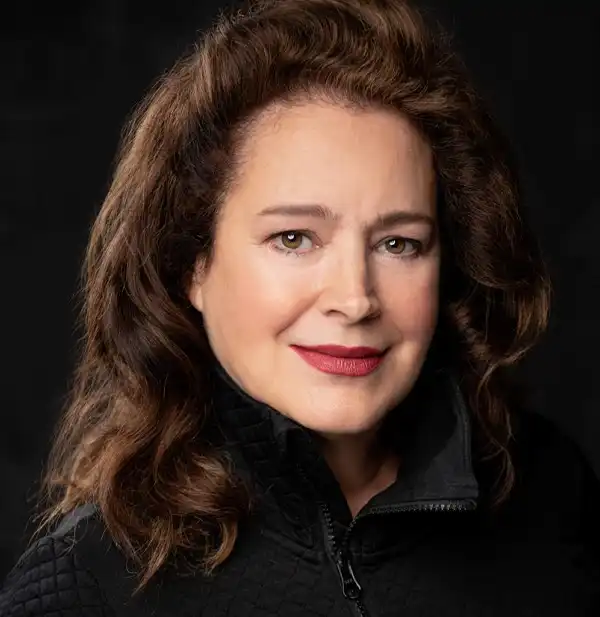
Sean Young was born Mary Sean Young on November 20, 1959, in Louisville, Kentucky. Her parents were both involved in the media industry, giving her an early connection to the world of entertainment and communications. Her father, Donald Young Jr., was an Emmy Award-winning television news producer and journalist, while her mother, Lee Guthrie, worked as a screenwriter, public relations executive, and journalist. Young grew up primarily in Cleveland, Ohio, alongside her siblings, in a family environment where storytelling and television production were familiar subjects. Although she would eventually become internationally recognized for portraying mysterious women, science-fiction characters, and complicated romantic interests, her earliest ambitions were centered on dance rather than acting. Hollywood would have to wait while she mastered the considerably more demanding business of pointing her toes in the correct direction.
During her teenage years, Young attended Cleveland Heights High School before transferring to the prestigious Interlochen Arts Academy in Michigan. The school provided specialized training for talented young performers, and Young concentrated on developing her abilities as a dancer. She subsequently studied at the School of American Ballet in New York City, an institution associated with some of the finest classical ballet training in the United States. Her dance education demanded discipline, physical endurance, and an understanding of movement that would later contribute to her distinctive screen presence. Ballet is not generally considered preparation for battling futuristic criminals or dealing with eccentric pet detectives, but it certainly teaches performers how to remain composed while everyone around them is making life unnecessarily difficult.
After completing her dance training, Young explored modeling opportunities in New York City. Her appearance and confidence attracted professional attention, but she soon discovered that acting offered greater opportunities for creative expression. She began auditioning for film roles, eventually securing her motion-picture debut in the 1980 drama Jane Austen in Manhattan. Directed by James Ivory, the film explored rival theatrical productions inspired by an early work of the celebrated English novelist. Young portrayed Ariadne Charlton, gaining valuable experience in a production associated with the respected Merchant Ivory filmmaking partnership. Although the film did not transform her into an overnight celebrity, it introduced her to professional cinema and established the beginning of a career that would soon bring considerably greater recognition.
Her first significant commercial success arrived in 1981 with the military comedy Stripes, directed by Ivan Reitman and starring Bill Murray and Harold Ramis. The film followed two irresponsible friends who enlist in the United States Army and discover that military discipline is considerably less entertaining than they had imagined. Young portrayed Louise Cooper, a military police officer who becomes romantically involved with Murray's character. The comedy became a box-office success and introduced Young to a broad audience, allowing her to demonstrate a natural ability to combine charm, confidence, and humor. Her character was considerably more competent than the film's principal recruits, although that was hardly an extraordinary achievement considering their apparent belief that military training was an extended recreational holiday.
Working alongside Bill Murray and Harold Ramis gave Young an opportunity to experience the improvisational atmosphere associated with some of the most successful American comedies of the period. Stripes relied heavily on the contrast between established military authority and the chaotic behavior of its central characters, creating situations in which Young's relatively composed performance helped balance the surrounding absurdity. Her appearance in the film demonstrated that she could hold her own opposite established comedians while maintaining a convincing character. The experience also provided a useful introduction to mainstream Hollywood filmmaking, where the ability to adapt quickly to changing circumstances can be almost as important as remembering the script.
In 1982, Young secured the role that would define much of her professional legacy when director Ridley Scott cast her as Rachael in Blade Runner. Based loosely on Philip K. Dick's novel Do Androids Dream of Electric Sheep?, the film presented a dark, futuristic vision of Los Angeles in which genetically engineered artificial humans, known as replicants, were created to perform dangerous or undesirable work. Harrison Ford portrayed Rick Deckard, a specialized investigator responsible for tracking down replicants who had escaped their assigned roles. Young's character, Rachael, worked for the powerful Tyrell Corporation and initially believed herself to be human, unaware that her memories and identity had been artificially constructed.
Rachael became one of the film's most emotionally significant characters because her discovery challenged the boundaries between human experience and artificial life. Young portrayed her with a combination of elegance, vulnerability, and carefully controlled emotion, creating a character whose apparent confidence gradually gave way to uncertainty about her own existence. Her distinctive appearance, including meticulously styled dark hair, dramatic makeup, and clothing inspired by classic Hollywood fashion, contributed to the film's atmospheric visual design. The performance required Young to communicate complicated emotions while maintaining the reserved manner of someone who had been raised to believe she belonged to a world that was not entirely what it seemed.
The relationship between Rachael and Deckard formed an important emotional thread throughout Blade Runner. As Deckard began questioning the morality of his assignment, Rachael confronted the devastating possibility that her memories, relationships, and personal history had been manufactured. Their developing connection raised questions about identity, consciousness, compassion, and what it truly means to be human. Young's restrained performance provided an effective contrast to Harrison Ford's weary, cynical detective, helping create one of science-fiction cinema's most memorable screen relationships. For viewers expecting a straightforward futuristic action adventure, the film offered the considerably more complicated proposition that the person sitting beside you might have been assembled in a laboratory and still possess a more convincing emotional life than most of your relatives.
Although Blade Runner received mixed reviews and achieved only modest commercial success during its original theatrical release, its reputation grew enormously over subsequent decades. The film became a landmark of science-fiction cinema, influencing filmmakers, production designers, writers, and visual artists around the world. Its rain-soaked streets, towering advertisements, elaborate cityscapes, and philosophical themes helped establish the visual language associated with cyberpunk storytelling. Young's portrayal of Rachael became inseparable from that legacy, with her character frequently appearing in discussions of the film's treatment of artificial intelligence and human identity. What initially appeared to be an unusual science-fiction production eventually became one of the most extensively analyzed films of its era.
The production of Blade Runner was not without difficulties. Ridley Scott's demanding visual approach, complicated filming conditions, and the pressure of creating an ambitious science-fiction world contributed to tensions among members of the cast and crew. Young later discussed the challenges she experienced while working on the film, including difficulties in her professional relationships. Nevertheless, the completed performance remains among her most widely admired achievements. Whatever complications occurred behind the cameras, the character of Rachael emerged as an essential part of the film's emotional and philosophical impact. Hollywood productions occasionally resemble small wars fought with expensive lighting equipment, but the results can still become extraordinary works of cinema.
Young also appeared in the 1982 comedy Young Doctors in Love, directed by Garry Marshall. The film parodied the increasingly dramatic medical television programs and soap operas popular during the period, presenting a hospital populated by eccentric doctors, romantic complications, and patients whose problems frequently became secondary to the personal adventures of the medical staff. Young portrayed Dr. Stephanie Brody, contributing to an ensemble cast that included Michael McKean, Sean Young's future Dune colleague Patrick Macnee, and numerous other performers. The film allowed her to return to comedy after the emotional intensity of Blade Runner, demonstrating that she could move comfortably between dramatically different genres. Apparently, after confronting the mysteries of artificial life, the logical next assignment was a hospital where the medical professionals needed almost as much supervision as their patients.
In 1984, Young entered another ambitious science-fiction production when she portrayed Chani in Dune. Directed by David Lynch and adapted from Frank Herbert's influential novel, the film followed the political, religious, and ecological struggles surrounding the desert planet Arrakis, the only known source of the valuable substance called spice. Young's character was a member of the Fremen, the indigenous desert population whose knowledge and survival skills were essential to the story. Chani became an important companion and romantic interest for Paul Atreides, portrayed by Kyle MacLachlan, as he became involved in the struggle for control of the planet.
The production of Dune was an enormous undertaking, featuring elaborate costumes, unusual creatures, extensive sets, and a complicated fictional universe that proved difficult to compress into a conventional feature film. Young's character required her to participate in a story involving political intrigue, desert warfare, ancient prophecies, and the extraordinary importance of a substance that everyone in the galaxy seemed determined to possess. The film received mixed reviews and struggled commercially, but it gradually developed a dedicated following among science-fiction enthusiasts. Young's participation placed her in another influential genre production, reinforcing her association with ambitious stories about unfamiliar worlds and complicated human relationships.
The contrasting receptions of Blade Runner and Dune also demonstrated how unpredictable the long-term reputation of a film can become. Both productions were initially greeted with uncertainty by critics and audiences, yet each eventually gained recognition for its influence on science-fiction filmmaking. Young's presence in both movies gave her a distinctive place in the history of the genre. Few actresses can claim significant roles in two such ambitious science-fiction adaptations within a relatively short period. It also meant that she had spent a remarkable amount of her early career dealing with futuristic technology, dangerous political organizations, and men who appeared to believe that saving the universe was a perfectly reasonable occupation.
In 1985, Young appeared in Baby: Secret of the Lost Legend, a fantasy adventure involving the discovery of supposedly surviving dinosaurs in Africa. She portrayed Susan Matthews-Loomis, a scientist investigating the extraordinary creatures alongside her husband, played by William Katt. The film combined adventure, science-fiction elements, and family entertainment, offering Young another opportunity to portray an intelligent, independent woman confronting an unusual situation. Although the production did not become a major commercial success, it contributed to her growing filmography and demonstrated her willingness to participate in projects outside conventional romantic drama. By this stage, she had encountered replicants, desert warriors, and prehistoric animals, which suggests that an ordinary office comedy might have seemed disappointingly uneventful.
One of Young's most successful dramatic performances arrived in 1987 with No Way Out, directed by Roger Donaldson. The film starred Kevin Costner as Lieutenant Commander Tom Farrell, a naval officer whose romantic involvement with Susan Atwell, portrayed by Young, becomes entangled in a dangerous political conspiracy. Gene Hackman played Secretary of Defense David Brice, whose secret relationship with Susan creates a series of increasingly desperate attempts to conceal the truth. The film combined romance, espionage, political corruption, and a carefully constructed mystery, producing a suspenseful thriller that attracted favorable reviews and strong audience interest.
Young's performance as Susan Atwell was central to the film's dramatic tension. Her character was confident, independent, and emotionally complicated, becoming involved with powerful men whose professional responsibilities concealed dangerous personal secrets. The chemistry between Young and Kevin Costner helped establish the romantic relationship that triggered the story's escalating crisis. Their scenes together contributed to the film's reputation as an intelligent adult thriller, while Young's portrayal gave Susan a personality that extended beyond her role in the conspiracy. No Way Out helped demonstrate that she could carry a substantial dramatic role in a commercially successful film without relying on elaborate science-fiction costumes or futuristic special effects.
The film also became particularly memorable for its elaborate suspense sequences and unexpected revelations. As Farrell attempted to uncover the truth while avoiding suspicion himself, the story developed into a complex examination of political power and deception. Young's character played an essential role in establishing the emotional stakes, even as the narrative increasingly focused on the dangerous investigation surrounding her death. Her performance contributed to the film's critical success and reinforced her standing as one of Hollywood's promising leading actresses. For audiences accustomed to seeing her in science-fiction settings, No Way Out offered a reminder that ordinary Washington politics could produce enough intrigue to make an alien invasion seem relatively straightforward.
That same year, Young appeared in Oliver Stone's acclaimed financial drama Wall Street, starring Michael Douglas and Charlie Sheen. The film explored corporate greed, financial ambition, and the moral compromises associated with the aggressive investment culture of the 1980s. Young portrayed Kate Gekko, the wife of Michael Douglas's ruthless financier Gordon Gekko. Although her role was relatively small, the film became one of the defining cinematic examinations of Wall Street excess, and Douglas received the Academy Award for Best Actor for his performance. Young's participation added another major production to her increasingly impressive list of credits, even if her character had considerably less opportunity to deliver memorable speeches about money and morality.
Young later discussed disagreements with director Oliver Stone during the production, and her role was reportedly reduced from its original scope. These accounts became part of a growing pattern of media coverage focusing on her professional relationships as much as her performances. The entertainment industry has a long history of complicated personalities and difficult productions, but Young's willingness to speak openly about disagreements frequently attracted particular attention. Her experiences also highlighted the challenges faced by performers attempting to maintain control over their careers in an industry where directors, producers, and studios possess considerable influence over the final result. Whatever happened behind the scenes, Wall Street remained an important entry in her filmography.
In 1988, Young starred opposite James Woods in The Boost, a drama examining the destructive consequences of cocaine addiction. The film followed a successful couple whose lives deteriorate as substance abuse begins undermining their relationships, finances, and personal stability. Young portrayed Linda Brown, a woman struggling with the consequences of addiction alongside her husband, played by Woods. The role required her to explore emotional vulnerability and personal collapse in a story considerably darker than many of her previous projects. Although the film was not a major commercial success, it offered another example of her willingness to accept challenging dramatic material.
The production also became associated with a widely publicized personal dispute between Young and Woods. Following their relationship, Woods filed a lawsuit alleging harassment, accusations that Young denied. The dispute was eventually settled outside court, but the publicity had a lasting effect on media coverage of her career. Rather than treating the allegations as established facts, it is important to recognize that they were contested claims arising from a personal conflict. The episode nevertheless contributed to Young's increasingly complicated public reputation, demonstrating how off-screen controversies can overshadow an actor's professional achievements. Hollywood gossip has never been particularly enthusiastic about allowing the facts to interfere with an entertaining headline.
Young returned to romantic comedy in 1989 with Cousins, directed by Joel Schumacher and starring Ted Danson, Isabella Rossellini, and William Petersen. The film followed two people who discover an unexpected emotional connection after learning that their respective spouses have been romantically involved. Young portrayed Tish Kozinski, one of the characters whose relationships create the film's central complications. The production offered a lighter alternative to her recent thrillers and dramas, allowing her to participate in an ensemble story exploring love, marriage, loyalty, and the unpredictable consequences of romantic decisions. As Hollywood romantic comedies frequently demonstrate, the easiest way to complicate a perfectly ordinary family gathering is to invite several people who have been keeping important secrets.
During this period, Young was also considered for the role of Vicki Vale in Tim Burton's Batman. She was initially cast in the production but suffered an injury while preparing for the role, leading to her replacement by Kim Basinger. Losing the opportunity was a significant professional disappointment because Batman became one of the biggest box-office successes of its era. The incident also became one of the most frequently discussed missed opportunities of Young's career. Hollywood actors regularly lose roles because of scheduling conflicts, creative disagreements, or changes in production plans, but being replaced after an accident is particularly frustrating when the resulting film becomes an international phenomenon.
Young's association with the Batman franchise continued when she publicly expressed interest in portraying Catwoman in the 1992 sequel Batman Returns. In one of the more unusual audition efforts in Hollywood history, she appeared wearing a homemade Catwoman costume while attempting to attract the attention of the filmmakers. The publicity stunt became a widely reported entertainment story, although Michelle Pfeiffer ultimately received the role. Young's unconventional campaign demonstrated her determination and willingness to take risks, even when those risks attracted ridicule. Most aspiring actors submit photographs and attend auditions; Young decided that arriving dressed as the character might help eliminate any uncertainty about which part she wanted.
In 1990, Young appeared in the military action film Fire Birds, starring Nicolas Cage and Tommy Lee Jones. She portrayed Billie Lee Guthrie, an Army helicopter pilot involved in a mission against drug traffickers. The film emphasized aerial combat, military technology, and the demanding training required to operate advanced attack helicopters. Young's character was part of the professional aviation environment surrounding the central story, offering her another opportunity to portray a capable woman in a traditionally male-dominated occupation. Although the film received mixed reviews, it contributed to her extensive range of roles and demonstrated that her career could move from futuristic detectives to military pilots without requiring much adjustment beyond the wardrobe.
In 1991, Young took on the unusual challenge of portraying twin sisters in A Kiss Before Dying, a psychological thriller based on Ira Levin's novel. The film starred Matt Dillon as an ambitious young man whose determination to acquire wealth leads him into dangerous and murderous behavior. Young played Dorothy and Ellen Carlsson, two sisters whose relationships with Dillon's character become central to the story. Performing dual roles required her to distinguish the characters through personality, behavior, and emotional expression, offering an opportunity to demonstrate technical versatility. Unfortunately, the film received largely negative reviews, and Young was awarded Golden Raspberry Awards for Worst Actress and Worst Supporting Actress. It was an unusually efficient achievement, although probably not the sort of double victory her agent had envisioned.
The early 1990s brought a series of varied projects, including the crime drama Love Crimes, the mystery comedy Once Upon a Crime, and the thriller Blue Ice, in which she appeared opposite Michael Caine. These films demonstrated her continued willingness to explore different genres, although they did not recreate the commercial success of her earlier work. She also appeared in Even Cowgirls Get the Blues, directed by Gus Van Sant, and the comedy Fatal Instinct, directed by Carl Reiner. The latter parodied popular erotic thrillers and crime dramas, giving Young an opportunity to embrace the exaggerated conventions of the genre. After years of appearing in serious thrillers involving deception and dangerous relationships, she was finally able to participate in a film that openly admitted how ridiculous some of those stories could become.
In 1994, Young introduced herself to an entirely different audience through the enormously successful comedy Ace Ventura: Pet Detective. The film starred Jim Carrey as Ace Ventura, an eccentric private investigator specializing in missing animals. Young portrayed Lieutenant Lois Einhorn, a stern Miami police officer who regards Ventura's investigative methods with understandable suspicion. The story follows the disappearance of the Miami Dolphins' mascot, a dolphin named Snowflake, and the increasingly absurd investigation that follows. While Carrey delivered an energetic performance involving exaggerated facial expressions, outrageous physical comedy, and an almost complete disregard for normal social behavior, Young played her character with the seriousness necessary to make the surrounding nonsense even funnier.
Her performance as Lieutenant Einhorn was an important element of the film's comedic structure. By portraying the police officer as disciplined, intimidating, and thoroughly unimpressed by Ventura's antics, Young provided an effective contrast to Carrey's unpredictable character. Their confrontations created some of the film's most memorable moments, with Einhorn attempting to maintain professional authority while Ventura behaved as though police procedure were merely an optional suggestion. Young's ability to remain composed while Carrey unleashed increasingly ridiculous behavior demonstrated the value of a strong supporting performance in broad comedy. After all, somebody had to act like an adult, even if the script had absolutely no intention of rewarding them for it.
Ace Ventura: Pet Detective became a major commercial success and helped establish Jim Carrey as one of the most recognizable comedy stars of the 1990s. The film's popularity introduced Young to younger audiences who might never have encountered Blade Runner, Dune, or No Way Out. However, its climactic revelation concerning Lieutenant Einhorn's identity has attracted substantial criticism over the years for relying on jokes about gender identity and using humiliation as a source of comedy. Those elements reflect attitudes prevalent in some mainstream comedies of the period but are widely regarded as offensive today. Young's performance remains part of the film's history, while modern discussions of the production often distinguish its energetic comic style from the more troubling aspects of its humor.
Following Ace Ventura, Young continued appearing in independent films, television productions, and genre projects. Her credits included the 1995 comedy Dr. Jekyll and Ms. Hyde, which offered a gender-swapping variation on Robert Louis Stevenson's classic story. The film starred Tim Daly as a scientist whose experiment produces an unexpected transformation, with Young portraying the confident and ambitious Helen Hyde. The comedy relied on exaggerated personality differences, workplace complications, and the familiar dangers of scientific experimentation conducted by people who probably should have read the instructions more carefully. Although the film received poor reviews, it provided another opportunity for Young to demonstrate her willingness to embrace unconventional roles.
During the following years, Young appeared in numerous smaller productions, including Poor White Trash, Sugar & Spice, Mockingbird Don't Sing, and Headspace. These films offered opportunities to work outside the major studio system, often with smaller budgets and more experimental storytelling approaches. Independent filmmaking can provide performers with greater creative flexibility, although it rarely offers the financial resources or promotional campaigns associated with Hollywood blockbusters. Young's continued participation demonstrated her commitment to acting despite changes in her commercial standing. Her career had become less predictable than during the 1980s, but she remained willing to explore new characters and professional opportunities.
Television also became an increasingly important part of Young's career. In 2010, she joined the CBS daytime drama The Young and the Restless, portraying Meggie McClain, a mysterious Canadian bartender whose involvement with established characters created considerable intrigue. The role allowed Young to participate in one of American television's longest-running soap operas, introducing her to audiences familiar with the show's elaborate relationships and constantly evolving storylines. Her performance demonstrated that she could adapt to the demanding production schedules of daytime television, where characters routinely experience enough romantic complications, family disputes, and unexpected revelations to keep an entire community of detectives employed.
Young also appeared in reality television programs, including Gone Country 2, which brought together celebrities exploring country music, and Skating with the Stars, where she attempted the considerably more dangerous activity of performing figure-skating routines before a television audience. Her participation in these programs reflected a willingness to step outside conventional acting assignments and embrace entertainment formats that required a different kind of public exposure. In Gone Country 2, she even participated in a demolition derby, an activity that involves deliberately crashing automobiles into one another. Considering some of the futuristic vehicles featured in Blade Runner, it was perhaps inevitable that she would eventually find herself behind the wheel of something heading toward an expensive collision.
In 2015, Young appeared in the acclaimed Western horror film Bone Tomahawk, starring Kurt Russell, Patrick Wilson, Matthew Fox, and Richard Jenkins. The film combined traditional Western storytelling with disturbing horror elements, following a group of men attempting to rescue captives from a dangerous and isolated community. Young portrayed Mrs. Porter in a supporting role, contributing to a production that attracted attention for its atmospheric direction and unusual combination of genres. The film demonstrated her continuing presence in projects that appealed to dedicated cinema audiences, particularly those interested in unconventional storytelling. It also confirmed that her professional adventures were not limited to futuristic cities and modern police departments; the American frontier could be every bit as unpleasant.
A particularly significant moment arrived in 2017 with the release of Blade Runner 2049, directed by Denis Villeneuve and starring Ryan Gosling and Harrison Ford. The sequel returned audiences to the dystopian world established by Ridley Scott's original film, exploring questions of identity, memory, and artificial life several decades after the events of the first story. Young's character, Rachael, made a brief but emotionally important appearance through a sophisticated combination of visual effects, archival references, and a performance by body double Loren Peta. Young participated in the recreation as an acting coach, helping ensure that the character's movements and expressions remained consistent with her original portrayal.
The recreation of Rachael became one of the film's most discussed technical achievements, demonstrating the extraordinary advances in digital filmmaking since the original Blade Runner. Young's involvement provided a direct connection between the two productions and helped preserve the character's distinctive personality. The sequence also raised interesting questions about the future of screen performance, particularly the possibility of digitally recreating actors and characters from earlier films. For an actress whose most famous role involved a humanlike artificial being, returning through advanced visual effects was a remarkably appropriate development. Science fiction had finally reached the point where the technology used to create the movie was almost as mysterious as the technology depicted within it.
Young continued working in film and television, appearing in projects such as The Alienist, Darling, Future '38, and various independent thrillers and dramas. Her later career included productions that allowed her to explore unusual characters, work with emerging filmmakers, and maintain connections with audiences who appreciated her earlier performances. In 2023, she appeared in the Off-Broadway production Ode to the Wasp Woman, a theatrical work examining the lives of women associated with Hollywood's golden age. The stage appearance represented a return to the live-performance environment connected with her early training, demonstrating that her professional interests extended beyond motion pictures and television.
Young's career has also been marked by personal difficulties and public controversies, including disputes with colleagues, legal problems, and struggles involving alcohol. She has spoken publicly about aspects of these experiences and participated in treatment-oriented television programming. Such episodes attracted extensive media attention, sometimes overshadowing her professional achievements and contributing to an image of an actress whose private life was as unpredictable as her film roles. Her experiences illustrate the complicated relationship between celebrity, personal vulnerability, and entertainment journalism, particularly during periods when public discussion of addiction and mental health was frequently less sympathetic than it is today. Although these difficulties form part of her public history, they do not erase the significance of her performances or the influence of her best-known films.
In her personal life, Young married actor and musician Robert Lujan in 1990. The couple had two sons, Rio and Quinn, before divorcing in 2002. They later reconciled and remarried in 2011, an unusual development in a city where former spouses sometimes struggle to remain in the same restaurant. Young has spoken about the importance of her family and the experience of raising children while navigating the demands of an unpredictable entertainment career. Her personal circumstances have evolved alongside her professional work, demonstrating that life away from the cameras can be considerably more complicated than even the most elaborate Hollywood screenplay.
Recognition for Young's contribution to cinema has continued beyond her years as a major studio leading actress. In 2014, she received a star on the Walk of Fame associated with Germany's Oldenburg International Film Festival, acknowledging her career and lasting connection with independent filmmaking. The honor reflected the continued appreciation of audiences and filmmakers who recognized the significance of her work in productions such as Blade Runner and No Way Out. Her participation in film festivals, interviews, and retrospective events has also provided opportunities to discuss her experiences and reflect on the changing entertainment industry.
One of the most interesting aspects of Young's career is the extraordinary variety of filmmakers with whom she has worked. Her credits include productions directed by Ridley Scott, David Lynch, Oliver Stone, James Ivory, Ivan Reitman, Garry Marshall, Joel Schumacher, Carl Reiner, and Denis Villeneuve. These directors represent dramatically different approaches to storytelling, ranging from elaborate science-fiction worlds and psychological dramas to broad comedy and independent cinema. Young's involvement in their projects illustrates both the promise of her early career and her ability to adapt to different creative environments. Few performers can claim to have worked with such a diverse collection of directors while portraying characters as varied as replicants, military officers, doctors, detectives, and desert warriors.
Her portrayal of Rachael remains especially influential because the character helped shape popular discussions about artificial intelligence, consciousness, and the relationship between humans and machines. As technology continues advancing, the philosophical questions explored in Blade Runner have become increasingly relevant to contemporary audiences. Rachael's uncertainty about her memories and identity challenges viewers to consider whether human experience can be defined entirely by biological origins or whether emotional awareness and personal relationships are equally important. Young's performance gave those abstract questions a recognizable human face, contributing to the film's lasting emotional impact. It is a remarkable achievement for a character who initially appears to be little more than an elegant employee in an extremely unusual corporation.
Her role in Ace Ventura: Pet Detective represents almost the opposite end of the entertainment spectrum, demonstrating how an actress associated with serious science-fiction drama could participate in one of the most exaggerated comedies of the 1990s. The contrast between Rachael and Lieutenant Einhorn is particularly striking: one character quietly questions the nature of existence, while the other attempts to maintain police authority in the presence of a man who communicates with animals and treats every investigation as an opportunity for physical comedy. Both performances required different skills, yet each became closely associated with a film that developed a lasting cultural presence. That versatility remains one of the defining characteristics of Young's filmography.
As November 20 brings another celebration of Sean Young's birthday, her career offers an opportunity to revisit some of the most distinctive films of the 1980s and 1990s. From the philosophical mysteries of Blade Runner to the political intrigue of No Way Out, the desert landscapes of Dune, and the outrageous comedy of Ace Ventura: Pet Detective, she has contributed to productions that continue attracting audiences decades after their original release. Her professional journey has included remarkable successes, missed opportunities, difficult controversies, and a continuing commitment to performance. Hollywood has never provided Sean Young with an entirely straightforward career, but it has certainly given her an extraordinary collection of stories. And considering that she once played a replicant who questioned whether her memories were real, perhaps a little unpredictability was inevitable.
References & Sources