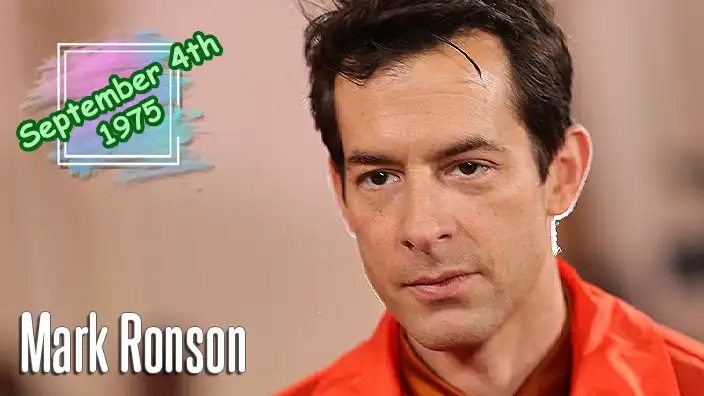
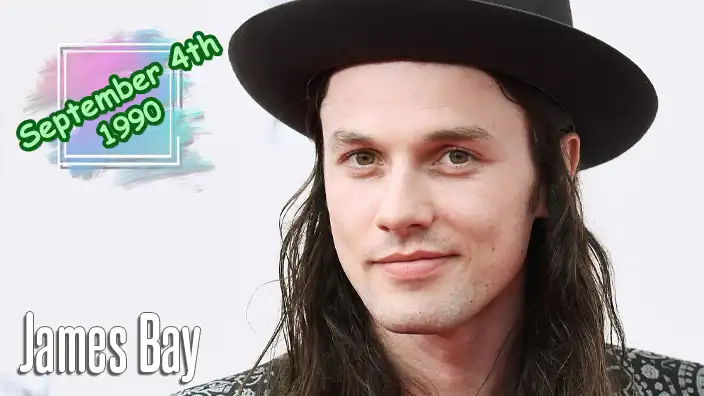
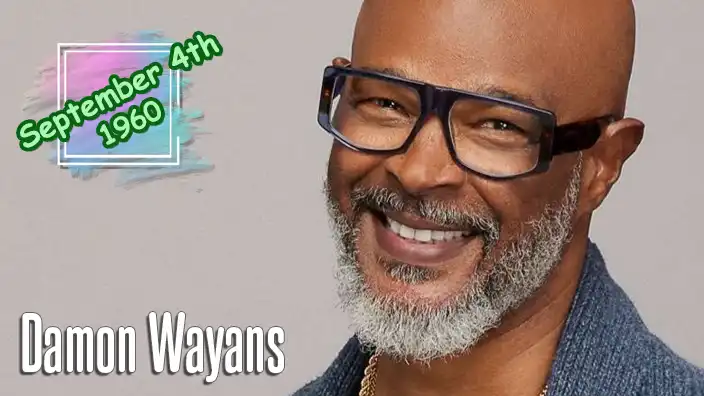
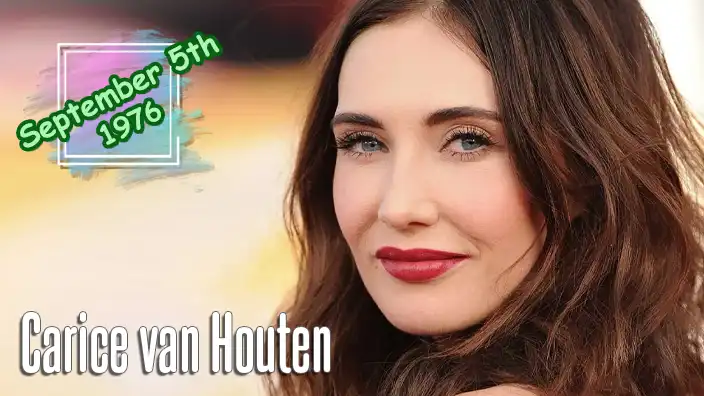
September 4, 1975, in London, England
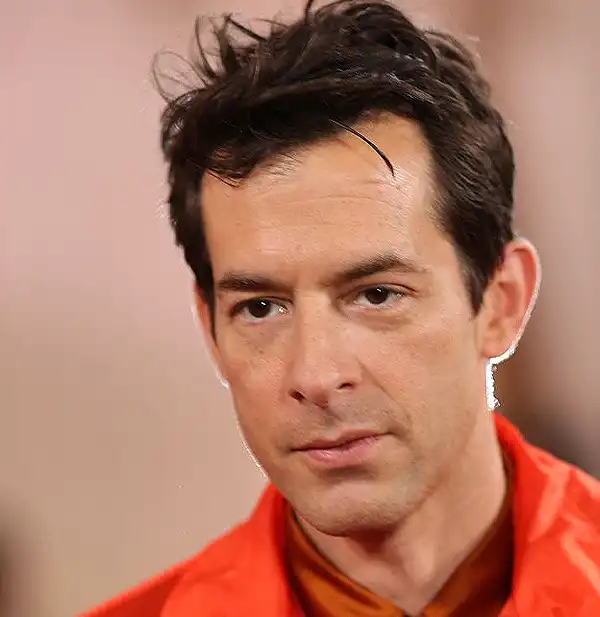
Mark Daniel Ronson was born on September 4, 1975, in London, England, into a family already surrounded by music, business and entertainment. His father, Laurence Ronson, was a music manager and property developer, while his mother, Ann Dexter-Jones, became a prominent socialite, writer and jewelry designer. His parents divorced when Mark was young, and his mother later married Mick Jones, the guitarist and co-founder of the rock band Foreigner. Having a successful rock musician as a stepfather did little to discourage Ronson's growing interest in music.
Ronson moved with his mother and sisters to New York City when he was a child. His younger twin sisters, Charlotte and Samantha Ronson, would also establish careers in creative industries, with Charlotte becoming a fashion designer and Samantha becoming a DJ and musician. Mark consequently grew up in an environment where popular music was not some distant world populated by mysterious figures on record covers. Musicians were actual people who occasionally appeared around the family, which must rather change a child's definition of an interesting dinner guest.
He attended the private Collegiate School in Manhattan before studying at Vassar College and later New York University. While attending college, Ronson became increasingly involved in New York's club scene and started working as a DJ. This was long before laptop software made it possible for almost anyone to announce that he was a DJ after purchasing headphones and locating the play button. Ronson built his reputation the old-fashioned way, learning how to read a room, select records and keep people dancing.
His musical tastes were unusually broad. Hip-hop was central to his early DJ work, but Ronson had also grown up listening to rock, funk, soul and pop. Rather than treating musical genres as territories separated by fences, he developed a habit of combining them. A hip-hop beat might meet an old soul record, while a rock song could suddenly find itself sharing space with funk. That willingness to mix traditions eventually became one of the defining qualities of his production work.
By the 1990s, Ronson had become a prominent DJ on the New York club circuit, performing at fashionable venues and private events and attracting celebrity clients. His growing reputation led to work in recording studios, where he began producing tracks for other artists. He eventually moved from simply playing records to helping create them.
Ronson released his debut studio album, Here Comes the Fuzz, in 2003. The record demonstrated his love of collaboration, featuring performers including Sean Paul, Nate Dogg, Ghostface Killah, Mos Def, Jack White and Rivers Cuomo. Commercially, the album was not the enormous breakthrough Ronson might have hoped for, but it established the formula that would become fundamental to his career: Mark Ronson records rarely require Mark Ronson to be the person standing at the microphone.
His fortunes changed dramatically during the middle of the decade when he began working with a young British singer named Amy Winehouse.
Ronson produced several tracks for Winehouse's 2006 album Back to Black, including "Rehab," "You Know I'm No Good," "Back to Black," "Love Is a Losing Game" and "Wake Up Alone." Working alongside Winehouse and the musicians of the Dap-Kings, Ronson helped develop a sound that drew heavily upon 1960s soul while remaining unmistakably contemporary. Horns, live instrumentation and vintage recording influences gave the album a timeless quality without reducing it to nostalgia.
The collaboration became one of the defining partnerships of both careers. Back to Black achieved enormous international success, and Winehouse's remarkable voice combined with Ronson's production helped bring classic soul textures back into mainstream popular music. The album won five Grammy Awards for Winehouse in 2008, while Ronson received the Grammy for Producer of the Year, Non-Classical.
That same period produced another major success for Ronson himself.
His second album, Version, was released in 2007 and consisted largely of reworked versions of songs by other artists. Ronson approached familiar material as a producer rather than simply covering it, rearranging rock and pop songs using horns, funk rhythms and soul influences. The album included his version of The Smiths' "Stop Me If You Think You've Heard This One Before," featuring Daniel Merriweather, and a cover of Kaiser Chiefs' "Oh My God" featuring Lily Allen.
The most enduring track from Version, however, was Ronson's cover of The Zutons' "Valerie," featuring Amy Winehouse. Her vocal performance transformed the song, while Ronson's arrangement turned it into a joyous retro-soul recording. "Valerie" became a huge British hit and remains closely associated with Winehouse despite originating with another band.
At the 2008 BRIT Awards, Ronson became the first artist to win British Male Solo Artist without being primarily a singer. It was an appropriate distinction. By then, he had become famous for making records while happily allowing somebody else to do the singing. For a profession traditionally located behind the studio glass, record production had acquired an unusually visible representative.
Ronson's third studio album, Record Collection, arrived in 2010 under the name Mark Ronson & The Business Intl. The album featured another extensive collection of collaborators, including Boy George, Simon Le Bon, Q-Tip and Andrew Wyatt. It demonstrated his continuing refusal to remain inside any single musical category, but even Ronson could not have anticipated the scale of what would happen with his next album.
In 2014, Mark Ronson released "Uptown Funk," featuring Bruno Mars.
Calling it successful would be rather like describing Buckingham Palace as a reasonably large house.
Built around funk traditions associated with artists such as Prince, Morris Day and the Time and the Minneapolis sound, "Uptown Funk" became an international phenomenon. Bruno Mars delivered the vocal performance while Ronson handled production and shared songwriting duties. The track combined horns, bass, drums, handclaps and an irresistible groove into approximately four and a half minutes during which remaining completely motionless became surprisingly difficult.
"Uptown Funk" topped the Billboard Hot 100 for 14 consecutive weeks in the United States and reached No. 1 in numerous countries, including Britain. It became one of the biggest-selling singles of the decade and accumulated billions of views and streams. Weddings, sporting events, parties, school dances and supermarkets were conquered. For several years, escaping "Uptown Funk" required either determination or an extremely remote cabin.
The song earned Ronson and Mars the Grammy Award for Record of the Year in 2016, while "Uptown Funk" also won Best Pop Duo/Group Performance. Ronson's album Uptown Special, released in 2015, reached No. 1 on the UK Albums Chart and included collaborations with Stevie Wonder, Kevin Parker of Tame Impala, Mystikal and Andrew Wyatt.
Ronson had reached the unusual position of being a superstar producer whose name itself could sell a record. Yet he continued working extensively behind the scenes with other artists.
His production and songwriting credits have included Adele, Paul McCartney, Duran Duran, Queens of the Stone Age, Miley Cyrus, Lady Gaga and numerous others. Ronson co-produced much of Lady Gaga's 2016 album Joanne, helping her move toward a more stripped-back mixture of rock, country and pop influences.
His collaboration with Lady Gaga subsequently carried him somewhere even a shelf full of Grammy Awards could not: the Academy Awards.
Ronson co-wrote "Shallow" with Lady Gaga, Andrew Wyatt and Anthony Rossomando for the 2018 film A Star Is Born. Performed by Gaga and Bradley Cooper, the song became one of the movie's defining moments and an international hit. At the 2019 Academy Awards, "Shallow" won the Oscar for Best Original Song.
Ronson also received a Golden Globe and another Grammy for the song. Suddenly, the DJ who had begun spinning records at New York clubs had an Academy Award sitting among his collection of music trophies. There are worse outcomes from spending one's youth refusing to leave the turntables alone.
In 2018, Ronson formed the electronic duo Silk City with producer Diplo. Their single "Electricity," featuring Dua Lipa, became another major success and won the 2019 Grammy Award for Best Dance Recording. The collaboration demonstrated once again Ronson's remarkable ability to adapt his production style to different performers without completely disappearing from the finished record.
His fifth studio album, Late Night Feelings, followed in 2019. The album leaned heavily into what Ronson described as "sad bangers"—dance music built around heartbreak and melancholy. Miley Cyrus appeared on "Nothing Breaks Like a Heart," while other collaborators included Camila Cabello, Alicia Keys, Angel Olsen, King Princess, Lykke Li and Yebba.
"Nothing Breaks Like a Heart" became another international hit, combining Cyrus' country-influenced vocal with Ronson's pop production. It was an excellent example of his ability to identify what makes another artist distinctive and construct a record around it rather than forcing every singer into a predetermined Mark Ronson sound.
That quality is central to understanding his success as a producer. Ronson clearly has musical preferences—funk, soul, live instrumentation and vintage recording techniques recur throughout his work—but his strongest productions tend to emphasize the performer rather than the producer. Amy Winehouse still sounds unmistakably like Amy Winehouse. Bruno Mars sounds like Bruno Mars. Lady Gaga sounds like Lady Gaga.
Ronson's production work continued prominently into the 2020s. He served as executive producer of the soundtrack for Greta Gerwig's 2023 film Barbie, working with Andrew Wyatt and helping assemble one of the year's most successful collections of pop music. The soundtrack featured artists including Dua Lipa, Billie Eilish, Nicki Minaj, Ice Spice, Charli XCX, Lizzo and Ryan Gosling.
Yes, Ryan Gosling.
Ronson co-wrote and produced "I'm Just Ken," performed by Gosling in the film. The gloriously theatrical power ballad became an unexpected cultural phenomenon and earned an Academy Award nomination for Best Original Song. Ronson also produced Billie Eilish's "What Was I Made For?" for the soundtrack, a song that went on to win the Academy Award for Best Original Song, although Ronson was not among its credited songwriters and therefore did not receive that particular Oscar.
The Barbie soundtrack brought Ronson additional Grammy recognition and introduced his work to yet another generation. It also confirmed that after decades in popular music, he remained capable of understanding precisely what a project required—whether that was Amy Winehouse singing vintage soul, Bruno Mars commanding a funk track or Ryan Gosling passionately explaining the emotional difficulties of being Ken.
Away from the recording studio, Ronson has spoken openly about the obsessive nature of production and the extraordinary amount of work that can go into a few minutes of music. Producers may spend hours adjusting sounds that most listeners would never consciously identify, chasing the precise drum sound, bass line or vocal texture that makes a recording suddenly feel right.
That attention to detail has helped make Ronson one of the most successful producers of his generation. His career stretches from New York hip-hop clubs through British soul, rock, funk, dance music, Hollywood soundtracks and global pop. He has succeeded not by predicting one musical trend and remaining attached to it, but by understanding the traditions underneath changing fashions.
Mark Ronson has now spent more than three decades proving that the person behind the mixing desk can have every bit as much influence on popular music as the person standing at the microphone. He has helped shape some of the most recognizable records of the twenty-first century while maintaining a career under his own name.
He has Grammys, a Golden Globe, a BRIT Award and an Academy Award.
And somewhere on Earth, at this very moment, "Uptown Funk" is probably playing at a wedding.