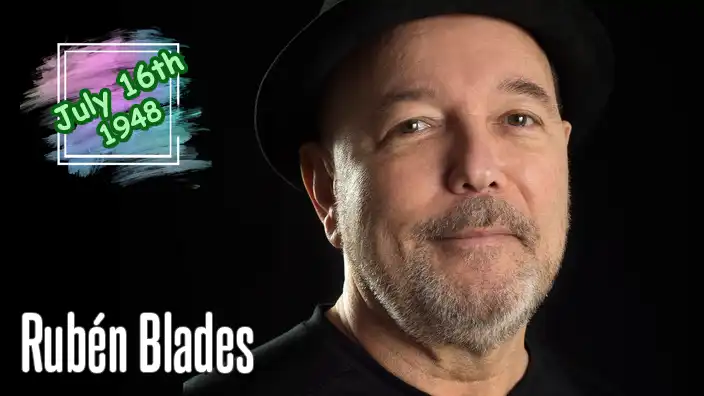
July 16, 1948, in Panama City, Panama
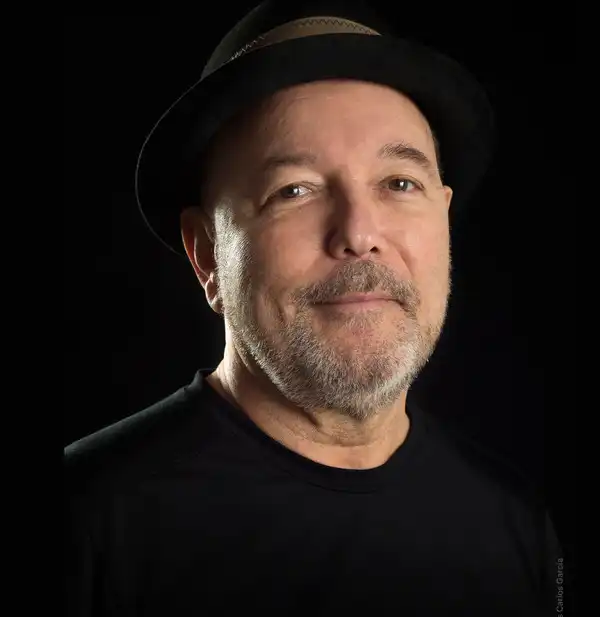
Born Rubén Blades Bellido de Luna in Panama City, Panama, Rubén Blades has built one of the most remarkable careers in modern Latin American culture. A celebrated singer, songwriter, actor, lawyer, and public servant, Blades is widely recognized as one of the greatest figures in salsa music and a pioneer in blending Afro-Cuban rhythms with thoughtful, socially conscious storytelling. His influence extends far beyond music, reaching film, politics, and humanitarian causes across the Americas.
Music surrounded Blades from an early age. His father, Rubén Darío Blades Sr., was a police officer and accomplished percussionist, while his mother, Anoland Díaz, performed as a singer, pianist, and actress. Growing up in a musical household exposed him to a rich mixture of Latin rhythms, jazz, folk traditions, and popular music that would later shape his own distinctive style.
Although deeply passionate about music, Blades also valued education. He earned a law degree from the University of Panama before moving to the United States to pursue a musical career. While establishing himself in New York City, he briefly worked in the mailroom of Fania Records, the record label that would become synonymous with the golden age of salsa music.
His talent as both a songwriter and performer quickly attracted attention. Throughout the 1970s, Blades collaborated with legendary trombonist and bandleader Willie Colón, producing a series of albums that transformed salsa from primarily dance music into a powerful vehicle for storytelling and social commentary.
Their landmark 1978 album Siembra became one of the best-selling salsa albums of all time. Filled with memorable melodies and thoughtful lyrics, it explored themes such as poverty, migration, corruption, and everyday life while remaining irresistibly danceable. The album demonstrated that popular music could entertain while encouraging listeners to think about the world around them.
One of Blades' signature songs, Pedro Navaja, became an international sensation. Inspired in part by classic storytelling traditions, the song follows the lives of ordinary people whose paths unexpectedly collide on a city street. Its cinematic style, vivid characters, and surprising ending helped elevate Latin songwriting to new artistic heights and remain among the most celebrated works in salsa history.
Unlike many popular performers who focused primarily on romance, Blades frequently wrote about social justice, political change, and human dignity. His lyrics explored issues affecting working people throughout Latin America, earning him admiration not only as an entertainer but also as an important cultural voice.
As his reputation grew, Blades expanded into acting. Over the years he appeared in dozens of films and television productions, demonstrating that his talents reached well beyond the recording studio. His film credits include The Milagro Beanfield War, Predator 2, The Devil's Own, Safe House, and numerous independent productions.
Television audiences also came to know Blades through memorable roles in series such as Fear the Walking Dead, where he portrayed Daniel Salazar, a resourceful and complex survivor whose intelligence and determination made him one of the show's most popular characters.
Despite his success in entertainment, Blades never abandoned his interest in public service. Deeply committed to improving life in his native Panama, he entered politics and even ran for president in 1994. Although he did not win the election, his campaign emphasized transparency, education, and democratic reform.
From 2004 to 2009, Blades served as Panama's Minister of Tourism, helping promote the country's natural beauty, history, and cultural heritage. His work demonstrated that his commitment to public service extended beyond campaign speeches and into practical government leadership.
Throughout his musical career, Blades has continued experimenting with different styles while remaining rooted in salsa. His recordings blend Afro-Cuban rhythms with jazz, rock, folk, Brazilian influences, and world music, creating a sound that is both traditional and innovative.
His extraordinary contributions have been recognized with numerous honors, including multiple Grammy Awards and Latin Grammy Awards. These awards celebrate not only his outstanding musicianship but also his influence as one of Latin music's most respected composers and performers.
Blades has also been recognized for his humanitarian work, educational advocacy, and efforts to preserve Latin American culture. Universities and cultural organizations have honored him for demonstrating how music can educate, inspire, and unite people across national and cultural boundaries.
What makes Rubén Blades particularly unique is the breadth of his accomplishments. Few individuals have achieved lasting success as internationally acclaimed recording artists, respected film actors, trained lawyers, political candidates, cabinet ministers, and cultural ambassadors. Each chapter of his career reflects the same commitment to creativity, integrity, and public service.
Today, Blades continues to perform, record music, lecture, and advocate for cultural understanding around the world. His songs remain staples of salsa orchestras everywhere, while younger musicians continue drawing inspiration from his sophisticated songwriting and fearless willingness to address important social issues.
Rubén Blades' legacy reaches far beyond record sales or awards. He helped redefine salsa music by proving it could be intellectually engaging without sacrificing rhythm or excitement. As an artist, actor, and public servant, he has demonstrated that creativity and civic responsibility can work hand in hand, leaving an enduring impact on music, film, and public life throughout the Americas.