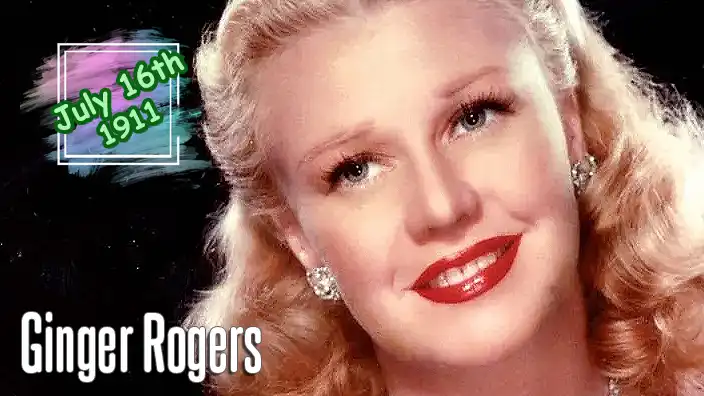
July 16, 1911, in Independence, Missouri
 April 25, 1995, in Rancho Mirage, California
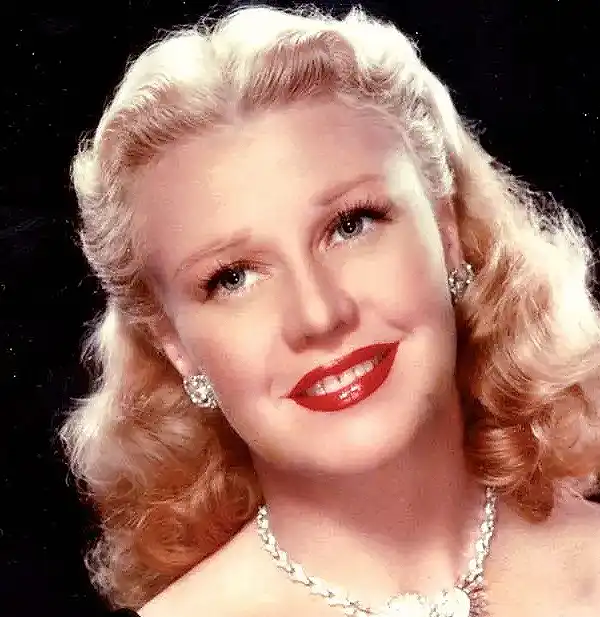
Born Virginia Katherine McMath in Independence, Missouri, Ginger Rogers became one of Hollywood's brightest stars during the Golden Age of cinema. An accomplished actress, singer, and dancer, she enjoyed a career spanning more than six decades and appeared in over 70 films. Although many remember her for her legendary partnership with Fred Astaire, Rogers also proved herself to be a gifted dramatic actress, winning the Academy Award for Best Actress and building a career that extended far beyond musicals.
Rogers' parents divorced while she was very young, and she was largely raised by her mother, Lela, and her grandparents. Her mother worked as a newspaper reporter, screenwriter, and theatrical producer, exposing Ginger to the entertainment industry from an early age. The nickname "Ginger" reportedly originated when a young cousin struggled to pronounce "Virginia," accidentally calling her "Ginger" instead.
Her career began almost by accident. At just fourteen years old, Rogers entered a Charleston dance competition in Texas and won. The victory launched a professional career that quickly took her onto the vaudeville stage, where she gained valuable experience as both a dancer and entertainer.
During the late 1920s, Rogers appeared in Broadway productions, steadily building her reputation. One of her breakthrough roles came in the hit musical Girl Crazy, where she introduced audiences to songs by George and Ira Gershwin while sharing the stage with another rising star—Ethel Merman.
Hollywood soon came calling. Rogers transitioned successfully into motion pictures during the early years of sound films, demonstrating that she possessed not only dancing ability but also natural acting talent and excellent comic timing.
Her life changed dramatically when she was paired with Fred Astaire in Flying Down to Rio (1933). Although they were not the film's leading stars, their brief dance performance captivated audiences and studio executives alike. Recognizing their remarkable chemistry, RKO Pictures quickly reunited the pair.
Between 1933 and 1949, Astaire and Rogers appeared together in ten films, including classics such as The Gay Divorcee, Top Hat, Swing Time, Shall We Dance, and Carefree. Their elegant dance routines became some of the most celebrated moments in movie history and helped define the American musical.
Their partnership succeeded because each performer brought unique strengths. Astaire choreographed many routines with extraordinary precision, while Rogers matched his athleticism with grace, personality, and remarkable technical skill. Together, they created performances that appeared effortless despite requiring countless hours of rehearsal and exceptional physical endurance.
The famous observation that Rogers "did everything Fred Astaire did, only backward and in high heels" has become part of Hollywood folklore. While the exact wording evolved over time, it reflects the widespread admiration for her ability to perform complex choreography with elegance under demanding conditions.
As wonderful as the dance numbers were, Rogers refused to become known solely as a dancer. She deliberately pursued dramatic and comedic roles that allowed audiences to appreciate her versatility as an actress.
Her determination paid off in 1940 when she starred in Kitty Foyle, portraying a working woman forced to choose between love and independence. The emotionally rich performance earned Rogers the Academy Award for Best Actress, proving she could stand alongside Hollywood's finest dramatic performers.
Throughout the 1940s and 1950s, Rogers continued appearing in successful films across a wide variety of genres. Whether starring in romantic comedies, mysteries, wartime dramas, or lighthearted musicals, she consistently demonstrated warmth, intelligence, and natural screen presence.
Away from the camera, Rogers maintained interests beyond acting. She supported numerous charitable causes, entertained American troops during World War II, and remained active in theater, television, and live performances long after many of her contemporaries had retired.
Unlike some Hollywood stars whose popularity faded with changing tastes, Rogers adapted successfully to television and stage work. She appeared in Broadway productions, guest-starred on television, and continued performing well into her later years, introducing her talent to entirely new audiences.
Her influence on dance remains extraordinary. The ballroom style perfected by Astaire and Rogers established a standard for movie musicals that inspired generations of performers, choreographers, and filmmakers. Their routines combined technical brilliance with storytelling, allowing dance to become an emotional part of the narrative rather than simply entertainment between scenes.
Modern dancers continue studying their performances for lessons in timing, musical interpretation, posture, and partnership. Many of their routines remain instantly recognizable, even to audiences unfamiliar with classic Hollywood films.
Ginger Rogers received numerous honors recognizing her contributions to American entertainment. She was celebrated by film organizations, dance societies, and theater groups throughout her lifetime, while the American Film Institute ranked her among the greatest female stars of classic American cinema.
Ginger Rogers passed away on April 25, 1995, at the age of 83. Her remarkable career demonstrated that true versatility could outlast changing fashions and evolving audiences. Whether dancing across an elegant ballroom floor, delivering dramatic dialogue, or making audiences laugh, she brought intelligence, warmth, and professionalism to every performance.
Today, Ginger Rogers remains one of Hollywood's most beloved entertainers. Her unforgettable partnership with Fred Astaire transformed the movie musical into an art form, while her Academy Award-winning acting proved she was far more than an exceptional dancer. Her films continue to delight audiences around the world, ensuring her place among the enduring legends of American cinema.