Celebrating America's Seagoing Guardians
The United States Navy has spent nearly 250 years proving that "calm seas" are often just a rumor. From wooden sailing ships battling the British Empire to nuclear-powered aircraft carriers patrolling the world's oceans, America's sailors have protected trade routes, defended allies, responded to disasters, and occasionally reminded pirates that career changes are healthy. Navy Birthday is the perfect time to salute the men and women who have kept watch over the seas—often while everyone else was asleep.
What Is The Navy Birthday?
Navy Birthday is an annual observance held on October 13 to commemorate the founding of the United States Navy. It honors the day in 1775 when the Second Continental Congress voted to establish the Continental Navy, creating America's first organized naval force during the Revolutionary War. Every October 13, active-duty sailors, veterans, military families, and patriotic Americans pause to recognize the Navy's long history of protecting the nation at sea.
The Continental Congress initially authorized the purchase of two armed sailing vessels to intercept British supply ships carrying weapons and provisions. While the fleet was small by today's standards, the decision reflected a growing understanding that controlling the seas would be just as important as winning battles on land. Those first ships marked the beginning of a naval tradition that has continued for nearly two and a half centuries.
Following the Revolutionary War, the original Continental Navy was gradually disbanded as the new nation struggled with limited financial resources. However, increasing threats to American merchant ships eventually convinced Congress that a permanent naval force was essential. In 1794, the Naval Act authorized the construction of six powerful frigates, including the famous USS Constitution, affectionately known as "Old Ironsides." These ships became the foundation of the modern United States Navy.
Today, Navy Birthday is celebrated throughout the fleet and at naval bases around the world with ceremonies, formal birthday balls, educational events, historical displays, and community activities. Sailors often participate in traditional cake-cutting ceremonies, where the oldest and youngest service members share the first slices as a symbol of passing knowledge, experience, and responsibility from one generation to the next.
More than just an anniversary, Navy Birthday is a celebration of the courage, professionalism, innovation, and sacrifice of the millions of men and women who have served aboard America's ships, submarines, and aircraft. It is an opportunity to reflect on the Navy's vital role in defending freedom, protecting international commerce, responding to humanitarian disasters, and maintaining peace and stability across the world's oceans.
The Evolution of America's Navy
The story of the United States Navy is one of constant innovation. What began in 1775 with a handful of wooden sailing ships armed with smoothbore cannons has evolved into one of the most technologically advanced naval forces in the world. Every generation of sailors has embraced new ideas, new equipment, and new challenges, ensuring the Navy remained ready to protect America's interests wherever the seas might lead.
During the American Revolutionary War, naval vessels relied entirely on wind power and skilled seamanship. Captains fought battles at close range with rows of heavy cannons, while crews climbed towering masts to adjust sails in all kinds of weather. As the young nation expanded, the Navy protected American commerce, fought pirates in the Mediterranean, and defended the country's coastline during conflicts such as the War of 1812.
The nineteenth century brought dramatic change. Steam engines began replacing sails, ironclad warships revolutionized naval warfare during the Civil War, and steel hulls eventually replaced wood. Advances in engineering allowed ships to travel farther, carry heavier weapons, and operate with greater reliability, transforming the Navy into a truly modern fighting force.
The twentieth century introduced technologies that earlier generations could scarcely imagine. Submarines became powerful weapons beneath the waves, naval aviation allowed aircraft to strike targets hundreds of miles away, and aircraft carriers emerged as the centerpiece of modern fleets. During World War II, the United States Navy played a decisive role in both the Atlantic and Pacific theaters, helping secure Allied victory through massive naval operations and amphibious landings.
The Cold War ushered in another era of innovation with the arrival of nuclear-powered submarines and nuclear-powered aircraft carriers. Guided missiles, sophisticated radar systems, sonar, satellite communications, and advanced electronics dramatically increased the Navy's capabilities. These technologies allowed ships to remain at sea longer, travel farther, and respond more quickly to emerging threats around the globe.
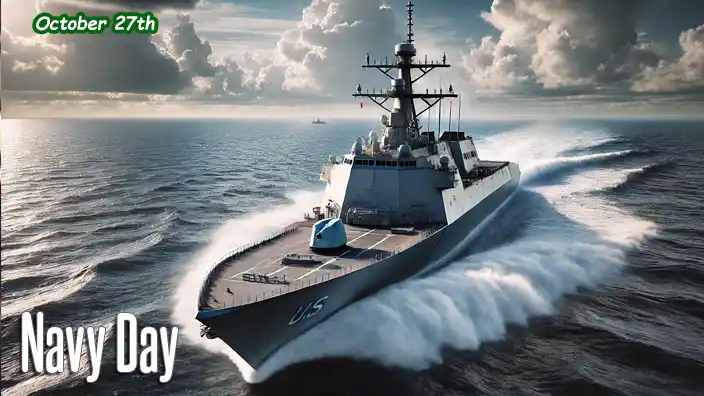
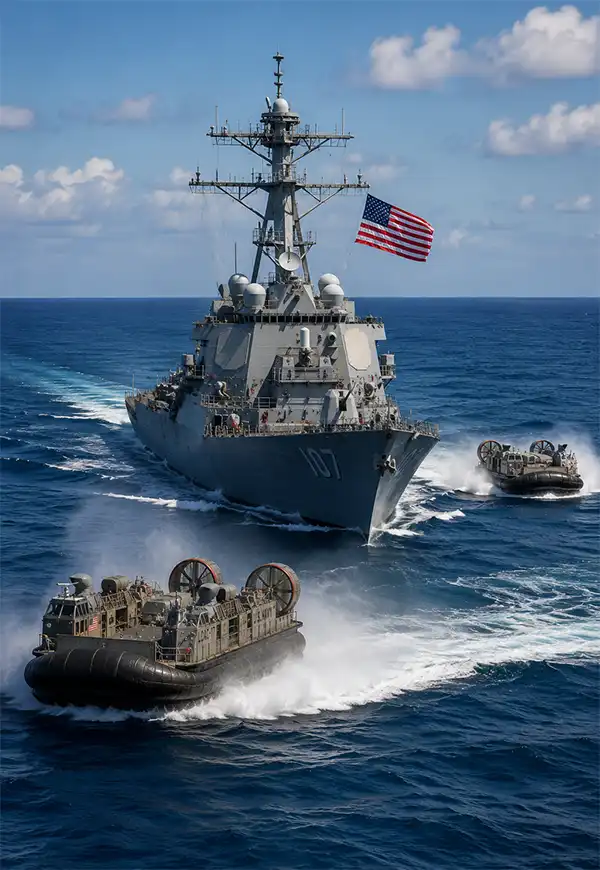
Today's Navy combines centuries of seamanship with cutting-edge technology. Sailors operate stealth destroyers, guided missile cruisers, amphibious assault ships, ballistic missile submarines, attack submarines, aircraft carriers, unmanned aerial systems, and some of the world's most advanced naval aircraft. Cybersecurity, artificial intelligence, autonomous systems, and space-based communications now play an increasingly important role in modern naval operations.
Despite these remarkable advances, one thing has remained unchanged since 1775—the dedication of the sailors who serve. While the ships may look very different from those that first sailed during the American Revolution, the Navy's mission of protecting the nation, defending freedom of the seas, and supporting allies around the world continues to guide every voyage.
More Than Fighting Wars
Although the United States Navy is always prepared to defend the nation during times of conflict, much of its mission takes place long before the first shot is ever fired. Every day, thousands of sailors are deployed around the globe protecting vital shipping lanes, deterring aggression, gathering intelligence, supporting allies, and ensuring that the world's oceans remain open for lawful commerce. Simply maintaining a visible naval presence can prevent conflicts from escalating and reassure friendly nations during times of uncertainty.
One of the Navy's most important responsibilities is safeguarding international trade. Nearly 90 percent of global commerce travels by sea at some point in its journey, making secure shipping routes essential to the world's economy. U.S. Navy ships routinely patrol strategic waterways, escort commercial vessels when necessary, conduct freedom of navigation operations, and work alongside allied navies to discourage piracy, smuggling, terrorism, and other threats to maritime security.
The Navy also plays a leading role in humanitarian assistance and disaster relief. When hurricanes, tsunamis, earthquakes, volcanic eruptions, or other natural disasters strike, naval vessels are often among the first to arrive. Aircraft carriers, amphibious assault ships, and hospital-equipped vessels can provide emergency medical care, clean drinking water, food, engineering support, helicopters for search-and-rescue missions, and supplies to communities whose infrastructure has been severely damaged.
Scientific research is another important part of the Navy's mission. Oceanographers, meteorologists, engineers, and other specialists study the oceans, weather patterns, underwater environments, and emerging technologies that improve navigation, communications, and maritime safety. Many innovations developed for naval operations have later found valuable civilian applications in transportation, medicine, engineering, and communications.
International cooperation is equally important. The Navy regularly participates in joint exercises and training missions with allied nations, helping strengthen partnerships, improve interoperability, and prepare for shared security challenges. These operations build trust between countries and ensure that friendly navies can work together effectively during both military operations and humanitarian emergencies.
In today's interconnected world, the Navy also protects interests in domains that extend well beyond the ocean's surface. Sailors and civilian specialists help defend military networks from cyberattacks, safeguard critical communications systems, and support space-based technologies that modern navigation, intelligence gathering, and global operations depend upon.
Whether delivering disaster relief after a devastating storm, rescuing mariners in distress, escorting humanitarian aid, protecting global trade, or standing watch to deter potential adversaries, the United States Navy serves as a powerful force for security and stability. While its ability to fight and win wars remains essential, its everyday contributions to peace, commerce, science, and international cooperation are equally important parts of its enduring mission.
Life at Sea
Life aboard a U.S. Navy ship has never been easy, but it has changed beyond recognition since the nation's first sailors put to sea in 1775. From cramped wooden sailing vessels powered by the wind to today's floating cities equipped with nuclear reactors, satellite communications, and modern comforts, every generation of sailors has faced unique challenges while sharing the same commitment to serving their country.
During the age of sail, life was physically demanding and often dangerous. Sailors slept in canvas hammocks, worked exhausting shifts, and climbed towering masts in storms to adjust sails hundreds of feet above the deck. Fresh food was a luxury, so meals often consisted of salted meat, dried peas, hardtack biscuits, and whatever could survive months at sea. Clean drinking water was limited, disease spread easily, and voyages frequently lasted for months with little or no contact with home.
As steam-powered and steel warships replaced sailing ships during the nineteenth century, conditions slowly improved. Mechanical engines reduced the dependence on wind, ships became larger and more reliable, and advances in medicine, sanitation, and food preservation made life at sea healthier. Even so, sailors still endured long deployments, demanding workloads, and the constant challenge of operating complex machinery in every kind of weather.
The twentieth century brought another revolution. Aircraft carriers, submarines, and advanced warships required highly trained specialists capable of maintaining sophisticated weapons, electronics, propulsion systems, and aircraft. Sailors received better living quarters, improved medical care, more nutritious meals, and expanded recreational facilities, helping make extended deployments more manageable.
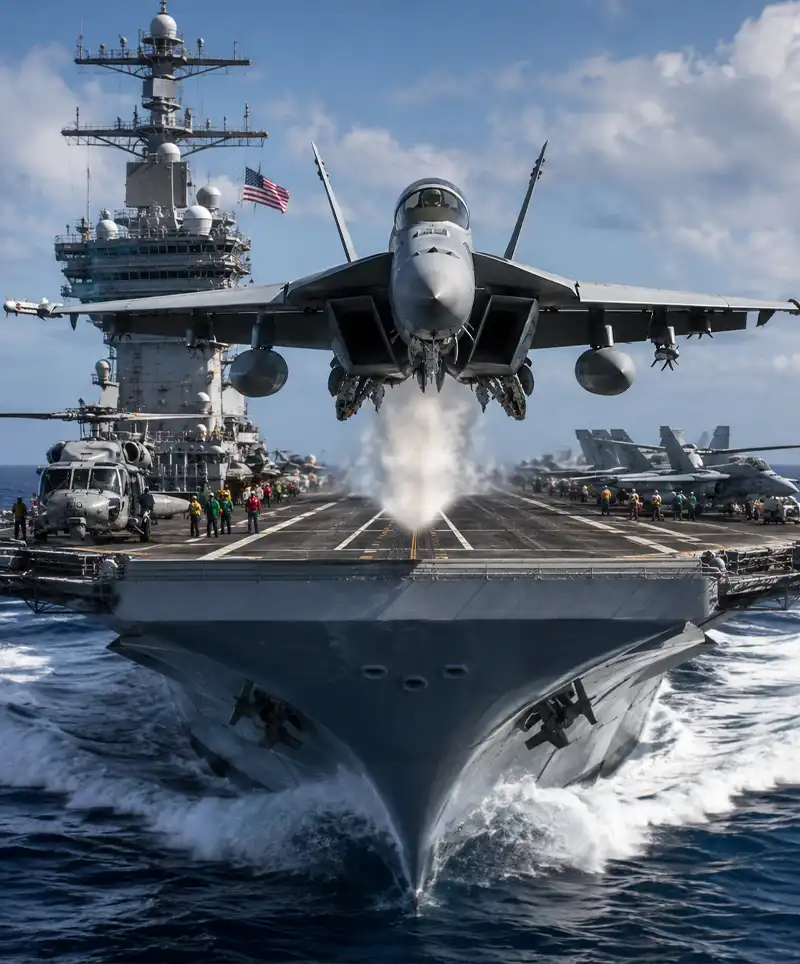
Today's Navy ships are technological marvels. A modern aircraft carrier can house more than 5,000 sailors and aircrew, complete with dining facilities, gyms, medical clinics, laundry services, chapels, libraries, barber shops, and even coffee bars. While space is still carefully managed and privacy remains limited, living conditions are far more comfortable than those experienced by sailors of previous centuries.
Communication with loved ones has also transformed life at sea. In the days of wooden warships, a sailor might not hear from family for many months—or even years. Today, while operational security sometimes limits communications, many deployed sailors can send emails, make occasional phone or video calls, and stay connected with family in ways their predecessors could never have imagined.
Despite these advances, some aspects of naval life have remained remarkably consistent. Sailors still stand watch around the clock, train relentlessly, respond instantly to emergencies, and rely on one another for their safety. Living and working together in the confined environment of a ship creates a unique bond that has always been one of the Navy's greatest strengths.
Whether serving aboard a Revolutionary War sloop, a World War II destroyer, a Cold War submarine, or a modern nuclear-powered aircraft carrier, sailors have shared the same spirit of teamwork, discipline, and dedication. While technology has transformed how they live and work, the pride of serving at sea—and the willingness to answer the call whenever duty demands—continues to define life in the United States Navy.
Naval Traditions That Continue Today
One of the most remarkable aspects of the United States Navy is its respect for tradition. While today's sailors operate some of the most advanced ships ever built, many of the customs they observe have been passed down through generations of seafarers. These traditions help preserve the Navy's history, strengthen unit pride, and remind every sailor that they are part of something far larger than themselves.
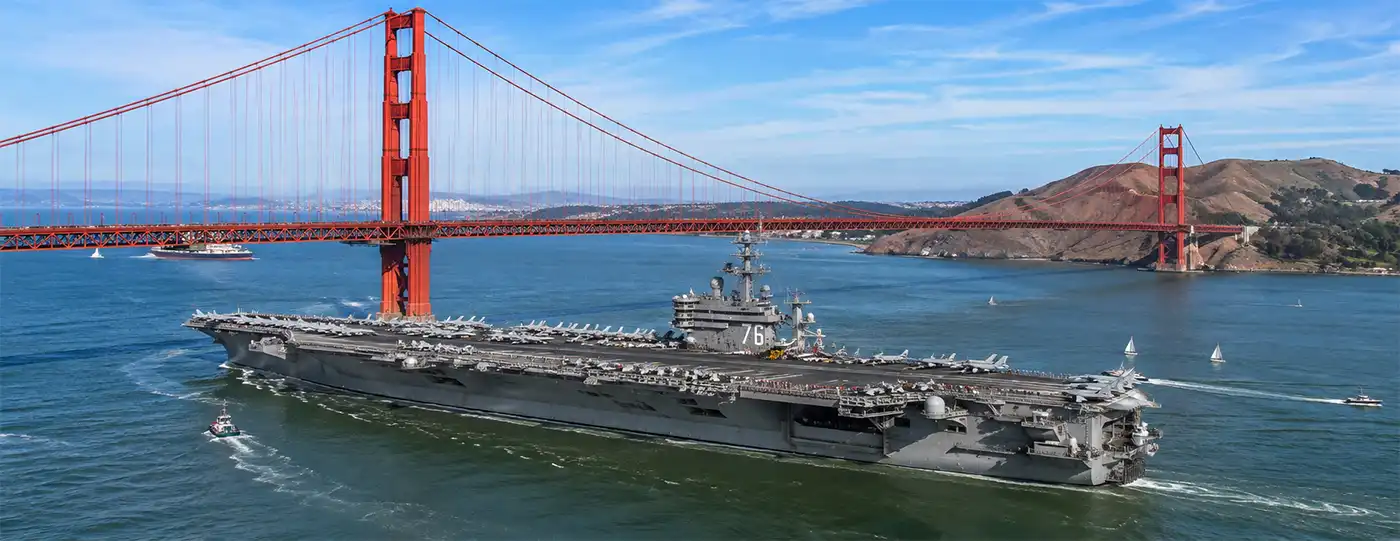
Perhaps the most recognizable naval tradition is the commissioning ceremony, where a newly built ship officially enters active service. During the ceremony, the ship's crew "brings the ship to life" by boarding and taking their stations for the first time. It is a proud moment that marks the beginning of a vessel's operational career and often becomes a cherished memory for everyone involved.
Another long-standing custom is the Navy Birthday Cake Cutting Ceremony held every October 13. Following military tradition, the oldest sailor present is typically served the first slice of cake, symbolizing experience and wisdom. That sailor then presents a slice to the youngest sailor, representing the passing of knowledge, responsibility, and the Navy's enduring legacy from one generation to the next.
Among the oldest and most colorful traditions is the Crossing the Line Ceremony. When a ship crosses the Equator for the first time during a deployment, sailors who have never crossed before—known as Pollywogs—take part in a lighthearted initiation before being welcomed into the ranks of Shellbacks. While modern ceremonies are carefully supervised and emphasize camaraderie over hardship, the tradition dates back centuries and remains a memorable milestone in many naval careers.
The Navy also places great importance on honoring the national ensign and the Union Jack. Every morning aboard ships in port, sailors participate in the ceremonial raising of the American flag, known as Morning Colors, and each evening they observe Evening Colors as the flags are respectfully lowered. Whether on a massive aircraft carrier or a small patrol vessel, these daily ceremonies reinforce pride, discipline, and respect for the nation they serve.
Ceremonial honors remain an important part of naval life. Side honors, passing honors, change-of-command ceremonies, retirements, memorial services, and promotions all follow traditions that have evolved over generations. These occasions recognize achievement, celebrate leadership, and pay tribute to those who have served before.
The Navy is also famous for its unique language and expressions. Terms such as "Aye, aye, Sir," "All hands," "Secure," "Belay that," "Head," and "Galley" remain common aboard ship. Many nautical expressions have even entered everyday English, including "learning the ropes," "show your true colors," "taken aback," "by and large," and "three sheets to the wind." Few people realize they're using centuries-old seafaring terminology in ordinary conversation.
Perhaps the greatest tradition of all is one that cannot be found in any manual or ceremony—the unwavering bond between sailors. Life at sea demands trust, teamwork, and mutual respect. Crews learn to rely on one another in every situation, from routine maintenance to emergency response. That shared experience creates friendships and a sense of family that often lasts long after a sailor's final voyage.
Although technology continues to transform the Navy, these traditions remain a vital link between today's fleet and the generations of sailors who sailed before them. They preserve the Navy's rich heritage while reminding every sailor that they are continuing a story that began more than two centuries ago.
Famous American Naval Leaders
Throughout its history, the United States Navy has been shaped by extraordinary leaders whose courage, innovation, and determination helped define the service. Their decisions influenced battles, inspired generations of sailors, and established traditions that continue throughout the fleet today. While countless men and women have served with distinction, a handful of names have become legendary in American naval history.
Perhaps the most famous is John Paul Jones, often called the Father of the American Navy. During the Revolutionary War, Jones became a national hero after refusing to surrender his heavily damaged ship during a fierce battle with the British. His reported declaration, "I have not yet begun to fight!" has become one of the most celebrated quotations in American military history and continues to symbolize the Navy's fighting spirit.
Another early naval hero was Stephen Decatur, whose daring exploits during the First Barbary War made him one of the nation's first military celebrities. His successful raid to destroy the captured USS Philadelphia in Tripoli Harbor was praised throughout Europe and demonstrated the courage and professionalism of the young American Navy.
During the Civil War, Admiral David Glasgow Farragut became famous for his bold leadership during the Battle of Mobile Bay in 1864. When Confederate mines—then called torpedoes—threatened to halt the Union fleet, Farragut reportedly ordered, "Damn the torpedoes, full speed ahead!" His decisive action secured one of the Union Navy's most important victories and cemented his place among America's greatest naval commanders.
No discussion of naval leadership would be complete without Fleet Admiral Chester W. Nimitz. As Commander in Chief of the U.S. Pacific Fleet during World War II, Nimitz directed many of the conflict's most significant naval campaigns, including the pivotal Battle of Midway, often regarded as the turning point of the Pacific War. His calm leadership and strategic brilliance played a major role in the Allied victory over Japan.
The modern Navy also owes much to Admiral Arleigh Burke, one of the most respected officers of the twentieth century. A highly decorated World War II commander, Burke later served as Chief of Naval Operations and championed advances in missile technology, fleet modernization, and Cold War readiness. Today, the Navy's highly capable Arleigh Burke-class guided missile destroyers proudly bear his name.
Equally influential was Admiral Hyman G. Rickover, widely known as the Father of the Nuclear Navy. Rickover's relentless pursuit of excellence led to the development of the world's first nuclear-powered submarine, USS Nautilus, and forever transformed naval operations. His work laid the foundation for today's fleet of nuclear-powered submarines and aircraft carriers, allowing the Navy to remain at sea for extended periods with unmatched endurance.
These legendary leaders represent only a small part of the Navy's remarkable history. Every conflict, every deployment, and every generation has produced sailors whose leadership, innovation, and dedication have strengthened the service. Their legacy lives on not only in history books and museums, but also in the values, traditions, and professionalism demonstrated by the men and women serving in the United States Navy today.
The Navy Around the World
The United States Navy maintains a continuous presence across the globe, operating in the Atlantic, Pacific, Indian, Arctic, and Southern Oceans, as well as the Mediterranean Sea, the Persian Gulf, and countless other strategic waterways. Its mission extends far beyond defending America's coastline. By maintaining ships and aircraft in key regions, the Navy helps protect international trade, deter aggression, respond to emerging crises, and reassure allies that the United States remains committed to global security.
One of the Navy's most important responsibilities is ensuring freedom of navigation. Every day, commercial vessels transport billions of dollars' worth of goods across the world's oceans. By helping keep vital sea lanes open and secure, the Navy supports the global economy and ensures that commerce can move safely between nations. This presence also discourages piracy, smuggling, terrorism, and other threats that could disrupt international shipping.
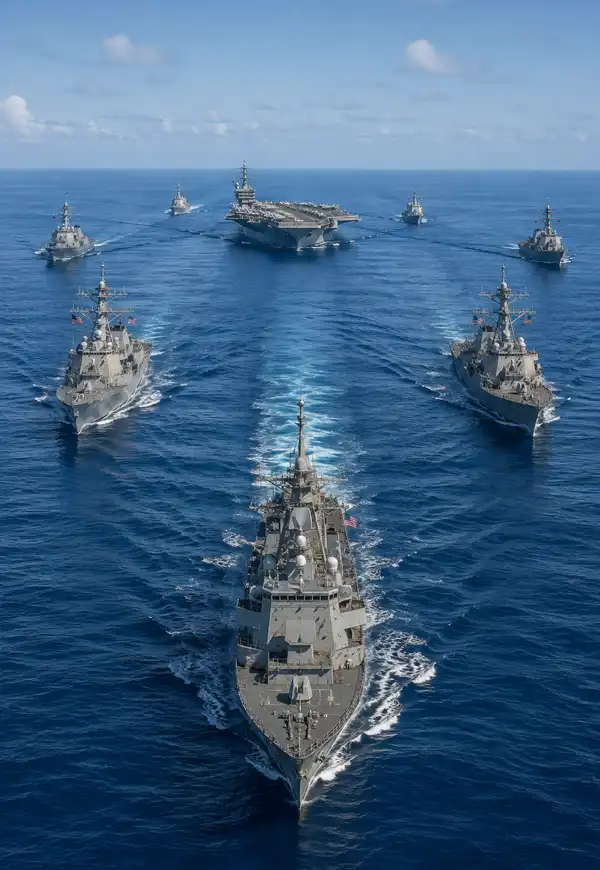
Modern naval operations are rarely conducted alone. The United States Navy regularly trains, patrols, and conducts exercises alongside the navies of allied and partner nations, including those of Canada, the United Kingdom, Australia, Japan, France, Germany, Italy, South Korea, and many others. These multinational operations strengthen military cooperation, improve communication, and ensure that allied fleets can work together effectively during both military operations and humanitarian missions.
Large international exercises such as RIMPAC (Rim of the Pacific Exercise) bring together dozens of nations to practice everything from search-and-rescue operations and anti-submarine warfare to disaster response and carrier strike group operations. These exercises build trust between allies while allowing sailors to share experience, tactics, and new technologies.
The Navy also works closely with organizations such as NATO, supporting collective security and participating in joint operations around the world. Whether escorting merchant ships, enforcing international sanctions, conducting maritime patrols, or responding to humanitarian emergencies, American sailors frequently serve alongside military personnel from friendly nations, reflecting the importance of international partnerships in maintaining peace and stability.
When natural disasters strike, these relationships become especially valuable. Naval forces from multiple countries often combine their ships, aircraft, medical teams, and logistics capabilities to deliver emergency aid to communities affected by hurricanes, earthquakes, tsunamis, and other catastrophic events. Working together allows relief to reach those in need more quickly and efficiently than any single nation could accomplish alone.
The Navy's worldwide presence also supports scientific research, diplomatic outreach, and international goodwill. Port visits provide opportunities for sailors to engage with local communities, strengthen relationships between nations, and represent the United States abroad. These visits often include community service projects, educational exchanges, and cultural events that reinforce friendships built over decades of cooperation.
From conducting freedom of navigation operations in contested waters to sailing alongside allied fleets during multinational exercises, the United States Navy plays a vital role in promoting security, stability, and cooperation around the world. Its strength lies not only in the power of its ships and aircraft, but also in the enduring partnerships it has built with fellow maritime nations—partnerships that help keep the world's oceans safe for everyone.
Ways to Celebrate Navy Birthday
Celebrating Navy Birthday doesn't require a uniform or a ship at sea. The day is about recognizing the dedication, sacrifice, and professionalism of the men and women who have served in the United States Navy. Whether you have a personal connection to the Navy or simply appreciate its role in protecting the nation, there are many meaningful ways to take part.
- Thank a Sailor or Veteran – If you know someone who has served in the Navy, take a moment to thank them for their service. A simple conversation or heartfelt expression of appreciation can mean more than you might imagine.
- Visit a Naval Museum or Historic Ship – Many museums and preserved warships offer an opportunity to experience naval history firsthand. Walking the decks of a historic vessel provides a unique glimpse into the lives of sailors from generations past.
- Learn About Naval History – Read about famous battles, legendary ships, and remarkable naval leaders such as John Paul Jones, Chester W. Nimitz, or Hyman G. Rickover. Understanding the Navy's history offers a greater appreciation for its role in shaping the United States.
- Attend a Navy Birthday Celebration – Naval bases, veterans' organizations, museums, and civic groups often host ceremonies, birthday balls, educational programs, or public events to commemorate the occasion. These celebrations honor both today's sailors and those who served before them.
Above all, Navy Birthday is an opportunity to reflect on nearly two and a half centuries of service, courage, and innovation. It is a day to remember that while ships and technology continue to evolve, the Navy's greatest strength has always been the sailors who stand the watch, wherever duty calls.
Frequently Asked Questions
Before we weigh anchor, here are answers to some of the questions people most frequently ask about Navy Birthday. Whether you're curious about the history of the celebration, why it is observed on October 13, or how the United States Navy commemorates the occasion, these quick answers provide a helpful overview of one of America's oldest military traditions.
When is Navy Birthday?
Navy Birthday is celebrated every year on October 13.
Why is October 13 significant?
It marks the day in 1775 when the Continental Congress established the Continental Navy during the American Revolution.
Is Navy Birthday a federal holiday?
No. It is an official observance celebrated by the Navy, veterans, military families, and supporters.
Is Navy Birthday different from Memorial Day and Veterans Day?
Yes. Navy Birthday celebrates the founding and history of the U.S. Navy. Memorial Day honors those who died while serving, while Veterans Day recognizes everyone who has served in the U.S. Armed Forces.
Can civilians celebrate Navy Birthday?
Absolutely. Many people honor sailors by attending public events, visiting naval museums, learning about naval history, or simply thanking those who have served.
One More Voyage
For nearly two and a half centuries, the United States Navy has protected America's interests wherever the sea reaches. Whether standing watch aboard an aircraft carrier, navigating beneath the Arctic ice in a submarine, flying over the ocean, or delivering aid after disaster strikes, sailors continue a tradition that began with just two small ships in 1775. That's a birthday well worth saluting.