A Nutty Celebration for All
Every September 13, National Peanut Day gives us an excuse to celebrate one of the world's most familiar foods—and immediately correct one of the world's most familiar botanical mistakes. The peanut is not actually a nut. It is a legume, putting it in the same family as peas, beans, lentils, and other foods that rarely receive the honor of being roasted, salted, covered in chocolate, or sold by the bag at baseball games.
Technicalities aside, peanuts have earned their place in the snack cupboard. They can be roasted, boiled, ground into peanut butter, pressed for oil, baked into cookies, scattered over salads, transformed into sauces, buried inside candy, or eaten directly from the shell. Few foods manage to appear equally at home in a lunchbox, a ballpark, a Southern roadside stand, an Asian restaurant, and a bowl sitting on the bar.
Their importance goes well beyond snacking. Peanuts are a major agricultural crop, an important source of protein and fat, and an ingredient used in cuisines throughout the world. They also have a fascinating history involving ancient South American farmers, global trade, African culinary traditions, American agriculture, wartime shortages, scientific research, and one particularly famous gentleman named George Washington Carver.
So grab a handful—assuming, of course, that peanuts are safe for you—and let's give this little underground legume the attention it deserves.
What Exactly Is a Peanut?
Despite spending its entire public career pretending otherwise, the peanut is not actually a nut. Botanically known as Arachis hypogaea, it belongs to the legume family, Fabaceae, making it a relative of beans, peas, lentils, chickpeas, and soybeans. True tree nuts such as walnuts and pecans develop very differently, while peanuts grow on small annual plants close to the ground. The name has been with us for so long that nobody is likely to start asking for a bag of salted legumes at the ballpark, but from a botanical standpoint, that's exactly what we're eating.
What makes the peanut particularly unusual is the way it produces its crop. The plant begins conventionally enough, growing green leaves and small yellow flowers above the soil. Once a flower has been pollinated and fertilized, however, the peanut abandons the normal-looking part of the operation. A slender structure called a peg begins to grow downward from the fertilized flower toward the earth. The peg pushes several inches into the soil, where the developing ovary at its tip begins forming the peanut pod. This remarkable process is known as geocarpy, meaning that the plant's fruit develops underground. Most plants are perfectly content to produce their fruit where everybody can see it; the peanut apparently prefers a little privacy.
The rough shell we crack open is actually the peanut's pod, and the familiar kernels inside are its seeds. A pod commonly contains two seeds, although the number varies according to the peanut type and growing conditions. Each kernel is covered by the thin, papery skin that may be reddish, pinkish, tan, or another shade depending upon the variety. Inside is the nutrient-rich seed that can eventually become another peanut plant—or, more commonly from our point of view, peanut butter, roasted peanuts, brittle, candy, sauce, or something else considerably more appetizing than agricultural reproduction.
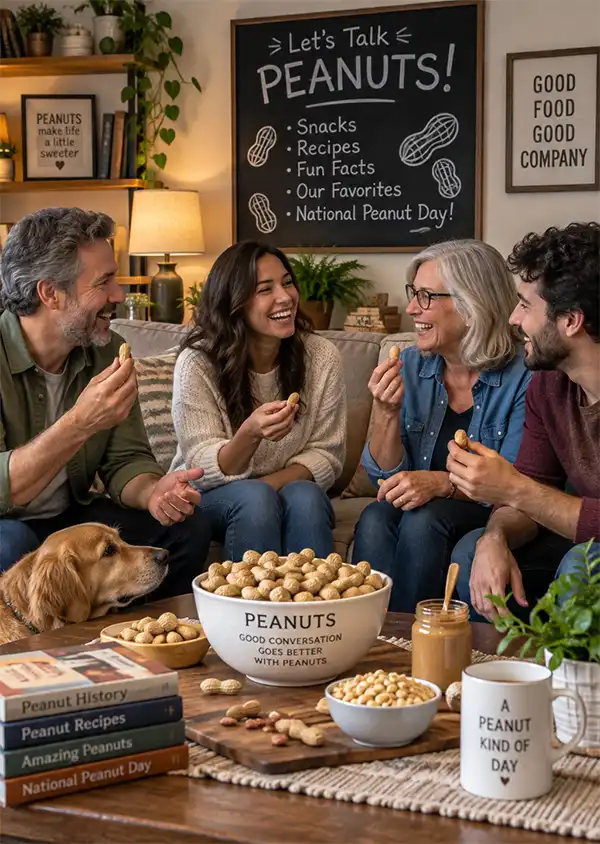
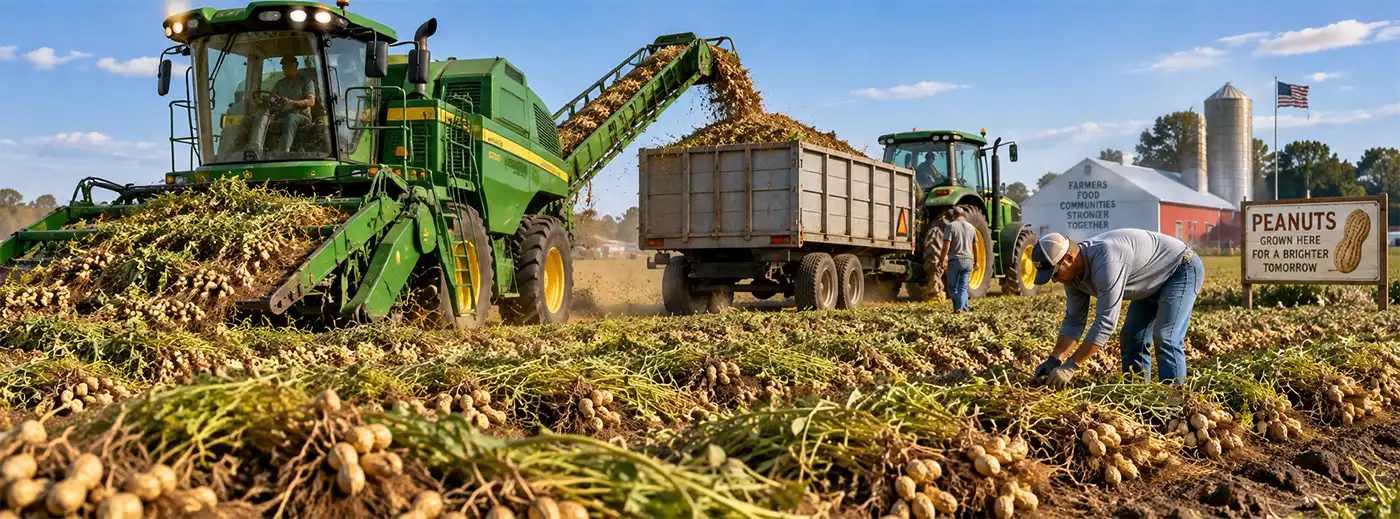
Growing underground also means peanuts must be harvested differently from tree nuts and many other crops. Farmers cannot simply shake a tree or pluck mature pods from branches. At harvest time, the entire peanut plant must be loosened and lifted from the earth so its underground pods can be exposed. Modern harvesting equipment digs beneath the plants, lifts them, shakes away excess soil, and typically turns them over so the peanuts can begin drying before being collected. It is an elaborate ending to one of agriculture's stranger growing processes: flowers appear above ground, their offspring deliberately burrow beneath it, and months later a farmer comes along and digs the whole operation back up.
So while we happily call them peanuts, include them in mixed nuts, and treat them as honorary members of the nut world, peanuts are doing something entirely different beneath the surface. They are legumes with an unusual reproductive strategy, a remarkably useful crop, and botanical impostors so successful that practically everyone has agreed to stop arguing about the name.
Where Did Peanuts Come From?
Long before peanuts appeared in American ballparks, candy bars, lunchboxes, or jars labeled "creamy" and "crunchy," they were being cultivated in South America. The peanut's earliest history is associated with tropical and subtropical regions of the continent, particularly areas encompassing parts of present-day Bolivia, Paraguay, Brazil, Peru, and neighboring countries. Scientists believe the cultivated peanut developed through the combination and domestication of wild peanut species native to South America. Indigenous farmers then selected and cultivated the plants over generations, gradually producing the crop that would eventually travel around the world.
Archaeological evidence shows that peanuts have been part of human diets in South America for thousands of years. Peanut remains have been discovered at ancient sites in Peru, while peanuts and recognizable representations of them appear in pottery and other archaeological material associated with pre-Columbian cultures. Their presence demonstrates that peanuts were not merely wild plants occasionally gathered when somebody happened to stumble across them. They had become established agricultural foods, deliberately cultivated and incorporated into everyday life long before Europeans knew the Americas existed.
It isn't difficult to understand why early farmers valued them. Peanuts provide considerable energy and contain protein and fat in a compact package, while dried peanuts can be stored and transported more easily than many fresh foods. They could be eaten in different forms and incorporated into other dishes, making them useful as both a crop and a dependable food source. Their ability to thrive in warm climates also helped them become established across different parts of South America as agriculture and trade connected communities throughout the continent.
Peanuts also left traces beyond the dinner table. Archaeologists have found peanut-shaped vessels and artistic representations demonstrating that the plant was familiar enough to become part of the material culture of ancient South American societies. Such discoveries give us a glimpse of just how deeply established the peanut was centuries before anyone thought of grinding it into a sandwich spread. The peanut may seem like an ordinary modern snack, but its relationship with people reaches back through civilizations that flourished long before the rise of the modern nations now associated with it.
The peanut's transformation from regional South American crop into an international food began after Europeans reached the Americas in the late fifteenth and early sixteenth centuries. Spanish and Portuguese explorers and traders encountered crops that were completely unfamiliar to Europeans and began carrying many of them across the Atlantic. Peanuts joined a remarkable movement of foods between continents that also included crops such as tomatoes, potatoes, maize, cacao, and peppers. Once aboard those ships, the peanut was about to acquire a passport with an impressive collection of stamps.
From its beginnings in South America, it would spread through European trading networks into Africa and Asia, where farmers adopted it and cooks incorporated it into entirely new culinary traditions. Eventually, peanuts would cross the Atlantic yet again and become firmly established in North America. Today they may seem inseparable from American culture, but the peanut had already enjoyed thousands of years of history before America ever got its hands on the peanut butter jar.
How Peanuts Traveled Around the World
The peanut's journey beyond South America began during the great expansion of European maritime trade following voyages to the Americas in the late fifteenth and early sixteenth centuries. Spanish and Portuguese sailors encountered peanuts alongside many other unfamiliar crops and carried them aboard ships traveling between the Americas, Europe, Africa, and Asia. Peanuts themselves found only limited success in much of Europe, where the climate was not particularly well suited to large-scale cultivation, but European trading networks gave the crop access to warmer parts of the world where it could thrive. What had spent thousands of years as a South American food was suddenly embarking on a global tour.
 Africa became one of the most important destinations in that journey. Portuguese traders introduced South American peanuts into parts of western Africa, where the crop grew successfully in warm conditions and became increasingly important to local agriculture. Peanuts were commonly known as groundnuts, an appropriately sensible name for something that produces its pods beneath the soil. They were incorporated into established African food traditions and used in soups, stews, sauces, porridges, and other dishes. Over time, groundnuts became economically important crops in several regions of Africa, eventually becoming so thoroughly integrated into local cuisines that it can be easy to forget their ancestors originally came from another continent.
The peanut also traveled eastward through Portuguese and Spanish trade routes. It reached India, China, Southeast Asia, and other parts of the region, where farmers adopted it and cooks discovered just how cooperative peanuts could be in the kitchen. China eventually became one of the world's largest peanut-producing countries, while India also developed enormous peanut-growing regions. Across Asia, peanuts found their way into stir-fries, sauces, noodles, chutneys, snacks, sweets, and countless regional dishes. Different cultures roasted them, boiled them, ground them, crushed them, pressed them for oil, or combined them with chilies, spices, vegetables, meats, and grains. The peanut had discovered that international travel was very good for its résumé.
Its route into North America was more complicated and considerably darker. Peanuts were known in parts of colonial North America, but their establishment in the American South was strongly influenced by enslaved Africans brought across the Atlantic through the slave trade. Those men and women carried agricultural knowledge, cooking techniques, and food traditions from regions where groundnuts had become familiar crops. Their knowledge helped establish peanuts within Southern foodways, where the crop found suitable soil and climate and gradually became an increasingly important part of regional agriculture and cuisine.
This transatlantic movement also influenced language. The word goober, still occasionally used for peanuts in the American South, is generally traced to African words for the groundnut, particularly terms from languages of Central Africa such as Kongo. It is a small linguistic reminder of the people and cultures that played an important role in bringing peanut traditions into North America. Long before branded jars and supermarket snack aisles, peanuts were traveling alongside human migration, commerce, colonization, and forced displacement, accumulating new names and new uses wherever they went.
By the eighteenth and nineteenth centuries, peanuts could be found across large portions of the tropical and subtropical world. Farmers on several continents had made the crop their own, while regional cuisines had developed peanut dishes bearing little resemblance to one another. A groundnut stew in West Africa, a peanut preparation in India, a Chinese dish scattered with roasted peanuts, and peanuts grown in the American South all shared an ancient botanical ancestry in South America, yet each had become part of a distinct culinary tradition.
Few foods illustrate the complicated movement of crops around the world quite as clearly. The peanut began its story in South America, crossed the Atlantic to Africa and Europe, traveled onward to Asia, and reached North America through several routes, including one inseparably connected with the history of slavery. By the time peanuts became a familiar American snack, they had already completed a remarkable journey spanning oceans, cultures, languages, and centuries. Not bad for a little legume that spends most of its growing life underground.
Peanuts in Early America
Peanuts were grown in colonial North America, particularly in the South, but for generations they remained a relatively minor crop. They were sometimes called groundnuts or goobers and were grown for household consumption, livestock feed, and local markets rather than as the enormous commercial crop they would later become. Cultivation and harvesting required considerable manual labor, which limited large-scale production before better agricultural equipment became available.
The peanut became more widely familiar during the nineteenth century, particularly around the time of the Civil War. Peanuts were inexpensive, filling, portable, and could be roasted and carried without much trouble, making them useful food for soldiers and civilians alike. Troops moving through peanut-growing regions encountered them and helped spread their popularity beyond the South. After the war, demand continued to grow as vendors sold roasted peanuts at fairs, circuses, city streets, and eventually sporting events. The smell of freshly roasted peanuts became part of the experience—and probably sold considerably more peanuts than any advertising campaign could have managed.
Commercial production expanded rapidly as farming machinery improved during the late nineteenth and early twentieth centuries. Equipment designed for planting, digging, harvesting, and processing peanuts reduced some of the enormous amount of hand labor previously required. Railroads and expanding distribution networks also made it possible to move peanuts farther from the farms where they were grown, opening larger markets for growers and processors.
By the beginning of the twentieth century, peanuts were becoming firmly established in American agriculture and popular culture. They were being sold as snacks, pressed for oil, incorporated into candy and other foods, and increasingly processed into peanut butter. Yet Southern farmers still depended heavily upon cotton, a dependence that would become increasingly troublesome as depleted soils and the destructive boll weevil threatened their livelihoods. That agricultural crisis helped set the stage for a scientist and educator whose name would become almost inseparable from the peanut: George Washington Carver.
George Washington Carver and the Peanut
Few names are more closely associated with peanuts than George Washington Carver, although the popular version of his story often gets the important part wrong. Carver was an agricultural scientist and educator who joined the faculty of Tuskegee Institute, now Tuskegee University, in Alabama in 1896. His primary concern was not creating amusing things from peanuts but helping Southern farmers improve their land, diversify their crops, and reduce their dangerous dependence on cotton.
Years of repeatedly growing cotton had depleted nutrients from much of the South's farmland, while the arrival of the boll weevil created another serious threat to the region's cotton economy. Carver encouraged farmers to rotate cotton with crops such as peanuts, cowpeas, and sweet potatoes. Legumes such as peanuts could play a valuable role in crop rotation because of their relationship with nitrogen-fixing bacteria in the soil. Carver also promoted practical farming methods that could be used by poor farmers who had little money to spend on fertilizers, equipment, or other improvements.
There was, however, an obvious economic problem. Convincing farmers to grow fewer acres of cotton meant finding worthwhile uses and markets for whatever they planted instead. Carver therefore experimented extensively with peanuts and promoted numerous ways they could be used in foods, household products, and industrial materials. His agricultural bulletins offered recipes and practical information, while his demonstrations helped attract public attention to the possibilities of alternative Southern crops.
Carver is frequently said to have invented more than 300 uses for peanuts, ranging from foods and oils to soaps, dyes, cosmetics, and other products. The reality is a little more complicated. Many were experimental applications, some were variations on existing products, and not all became commercially practical. Carver also generally placed greater importance on helping farmers than on securing patents or building a personal business empire. His work helped demonstrate that peanuts could have value far beyond being eaten straight from the shell.
And despite one of the most persistent stories in American food history, George Washington Carver did not invent peanut butter. Ground peanut preparations existed long before his research, and several inventors were developing and patenting processes associated with modern peanut butter during roughly the same historical period. Carver certainly promoted peanuts enthusiastically, but the peanut butter jar belongs to a much more complicated family tree.
His real contribution was arguably more important anyway. Carver helped promote crop diversification, soil conservation, agricultural education, and greater economic possibilities for Southern farmers at a time when many desperately needed alternatives. Peanut butter would have found its way onto the sandwich eventually. Helping farmers understand that there was life after cotton was the considerably bigger achievement.
The poor man has been credited with that often enough that he should probably receive royalties anyway.
Who Invented Peanut Butter?
So, if George Washington Carver didn't invent peanut butter, who did? The frustrating answer is that no single person can honestly claim the entire jar. Humans had been crushing and grinding peanuts into pastes long before modern peanut butter appeared. Indigenous peoples of South America prepared ground peanuts centuries before Europeans reached the Americas, so the basic concept of turning peanuts into something spreadable was hardly a nineteenth-century revelation.
One of the earliest important names in the modern story is Marcellus Gilmore Edson, a Canadian pharmacist from Montreal. In 1884, Edson received a U.S. patent for a process that produced a peanut paste by milling roasted peanuts between heated surfaces. He described a product with a consistency somewhat like butter, which gives him a strong claim as one of the pioneers of modern processed peanut butter. His creation, however, wasn't yet the familiar jarred spread waiting beside the jelly in today's supermarket.
Another important figure was Dr. John Harvey Kellogg, the physician and health-food advocate whose surname should sound familiar to anyone who has wandered down a breakfast cereal aisle. In 1895, Kellogg patented a process for producing a food substance from nuts. At his Battle Creek Sanitarium in Michigan, nut-based pastes were promoted as nutritious sources of protein, particularly for patients who had difficulty chewing solid foods. Peanut preparations became part of this emerging health-food movement, although Kellogg's work was one chapter in the story rather than the moment peanut butter suddenly sprang into existence.
Then came Dr. Ambrose Straub, who patented a peanut-butter-making machine in 1903, followed by improvements in commercial processing that allowed manufacturers to produce the spread more efficiently. Peanut butter received additional public exposure at the 1904 World's Fair in St. Louis, where it was among the foods introduced to large numbers of visitors. As production increased, manufacturers continued solving one particularly annoying problem: peanut oil naturally separates from the ground solids, leaving an oily layer at the top and a dense mass underneath.
During the 1920s, businessman Joseph Rosefield developed an improved process that helped prevent this separation by using hydrogenated oil to stabilize peanut butter. His methods helped create a smoother, more consistent product with a longer shelf life—the sort of peanut butter that could be manufactured, shipped, stored, and sold nationwide. Rosefield later created the Skippy brand, while other companies helped turn peanut butter into an American household staple.
So who invented peanut butter? If we're looking for a neat answer, Marcellus Gilmore Edson deserves considerable credit for his 1884 patented peanut paste, but modern peanut butter was really the result of centuries of food preparation followed by several inventors and manufacturers improving the process. Edson helped develop the paste, Kellogg promoted nut preparations as food, Straub improved the machinery, and Rosefield helped solve the commercial problem of separation.
George Washington Carver, meanwhile, was busy doing something else entirely. Yet somehow he got blamed for the peanut butter. History can be sticky like that.
How Peanuts Grow
At first glance, there is nothing particularly remarkable about a peanut plant. It is a low-growing, leafy annual that thrives in warm conditions and produces small yellow flowers above the ground. Those flowers are self-pollinating and don't last very long, but once fertilization has taken place, the peanut begins doing something that separates it from almost everything else in the vegetable garden. A slender stalk called a peg develops beneath the fertilized flower and begins bending downward. Instead of reaching for more sunshine, it heads directly toward the soil, eventually pushing beneath the surface. The developing peanut pod forms at the tip of this buried peg, where it matures underground. This unusual method of producing fruit beneath the soil is known as geocarpy, and it explains the "ground" in the old-fashioned name groundnut rather nicely.
Peanuts need a relatively long period of warm weather to complete this process, generally taking several months from planting to harvest depending upon the variety and growing conditions. During that time, a healthy plant can send numerous pegs into the surrounding soil, each potentially producing a pod. The pods usually develop a few inches beneath the surface, where the familiar rough shell forms around the seeds we eventually eat. Loose, well-drained soil is particularly helpful because the pegs must be able to penetrate the ground and the developing pods need room to mature. Too much moisture can encourage disease, while drought at the wrong stage can interfere with pod development, so peanut farming requires rather more attention than simply throwing a few seeds into the dirt and returning several months later with a jar.
Harvesting presents another challenge because the valuable part of the crop is hidden underground. Farmers must judge when enough pods have reached maturity and then use specialized equipment to loosen the soil beneath the plants and lift them without leaving too many peanuts behind. A peanut digger typically cuts beneath the roots, shakes away excess soil, and turns the plants upside down in rows with the pods exposed to the air. They remain there for a period of drying, or curing, before another machine collects the plants and separates the peanuts from the vines. From planting a seed to digging up the mature crop, peanut farming is therefore an unusual combination of conventional agriculture and underground treasure hunt. The peanut spends months carefully hiding its harvest beneath the soil, only for the farmer to arrive with a machine specifically designed to find it.
From the Field to the Peanut Jar
Once peanuts have been dug from the ground and allowed to begin curing, their journey is far from over. The harvested peanuts must be separated from the vines, cleaned, dried to an appropriate moisture level, and inspected before they can head toward the foods we recognize on supermarket shelves. At processing facilities, peanuts are commonly sorted and graded according to factors such as size, quality, and intended use. Some will remain in their shells and eventually become the roasted peanuts we crack open ourselves, while others are shelled and destined for peanut butter, candy, baked goods, cooking oil, or one of the many other products that have learned to make good use of them.
Roasting is one of the most important steps in creating the flavor most of us associate with peanuts. Raw peanuts have a noticeably different taste, but heating them produces the rich aroma, deeper color, and familiar roasted flavor that can make walking past a freshly opened container surprisingly difficult. Peanuts may be roasted in their shells or after shelling, depending upon their eventual purpose. Those intended for further processing can also be blanched, a process that removes the thin skins surrounding the kernels, before being sorted again to remove damaged or unsuitable peanuts. By this point, the dusty underground crop that left the farm is beginning to look considerably more like something we'd willingly put in a bowl.
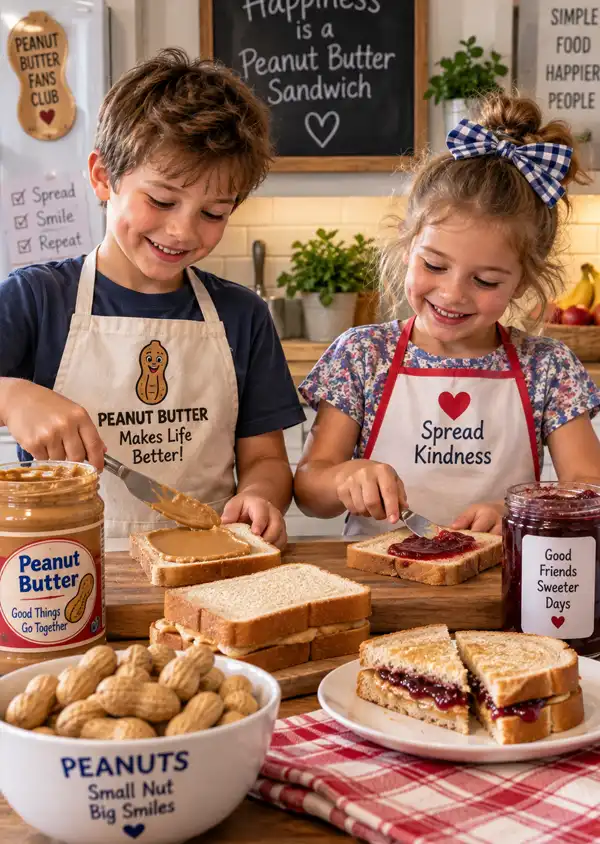
Peanut butter requires another transformation altogether. Roasted peanuts are ground until their natural oils are released and the solid pieces gradually become a thick paste. Depending upon the manufacturer and style, salt, sweeteners, stabilizers, or other ingredients may then be added. Natural peanut butter may contain little more than peanuts and salt, which is why the oil often rises to the top while the heavier solids settle beneath it. Many conventional commercial varieties use stabilizing ingredients to keep the mixture smooth and prevent significant separation, producing the consistent texture consumers expect when they open the jar.
Finally, the peanut butter is packaged, sealed, labeled, and sent into distribution, ready to become sandwiches, cookies, sauces, smoothies, or an emergency meal eaten directly from a spoon while standing in front of an open cupboard. It is quite a transformation: a yellow flower sends a peg underground, a pod develops beneath the soil, a farmer digs it back up, processors clean, roast, and grind the contents—and eventually somebody spreads the result on toast. Considering everything the peanut has been through to reach the jar, licking the spoon afterward seems like the least we can do.
Boiled Peanuts and the American South
Drive along enough back roads in the American South and sooner or later you'll encounter a hand-painted sign announcing BOILED PEANUTS, sometimes accompanied by "HOT," "CAJUN," or a spelling of "P-NUTS" that saves valuable sign space. Boiled peanuts are particularly associated with states including Georgia, South Carolina, Alabama, and Florida, where roadside stands, convenience stores, farmers markets, festivals, and backyard gatherings have kept the tradition alive. To Southerners who grew up eating them, they're comfort food. To an unsuspecting visitor expecting something crisp and roasted, opening that first warm, damp shell can produce the unmistakable expression of someone wondering whether the peanuts have suffered a plumbing accident.
Boiled peanuts are generally made using freshly harvested green peanuts, which have not been dried, or raw peanuts that have been properly soaked before cooking. They are simmered in heavily salted water for hours until the shells soften and the kernels inside become tender. The peanuts absorb the salty cooking liquid, producing a soft texture and flavor quite unlike roasted peanuts. Recipes range from straightforward salt and water to highly seasoned versions containing Cajun spices, hot peppers, garlic, or other flavorings. Eating them is an appropriately messy business: crack the softened shell, retrieve the peanuts, deal with the inevitable trickle of salty liquid, and repeat until either the bag is empty or your shirt has joined the celebration.
The Southern tradition has deep historical roots and is closely connected with African and African American foodways. Peanuts reached North America through several routes, but enslaved Africans brought with them knowledge of groundnuts and established culinary traditions involving boiled and cooked peanuts. During the nineteenth century, peanuts became increasingly common across the South, and boiling freshly harvested peanuts provided a practical way to prepare them before they had been dried for storage. What began as a seasonal food associated with the peanut harvest gradually developed into a distinctive regional tradition.
By the late nineteenth and early twentieth centuries, boiled peanuts were appearing at social gatherings, community events, roadside stands, and other informal occasions throughout peanut-growing areas. Their association with Southern life became strong enough that South Carolina officially designated the boiled peanut as its state snack in 2006. Elsewhere across the region, no government proclamation was necessary. Generations had already decided the matter with large pots, plenty of salt, and absolutely no concern about whether outsiders understood the attraction.
Boiled peanuts remain one of those foods that inspire unusually firm opinions. Devotees appreciate their salty flavor, tender texture, and the ritual of cracking open one shell after another. People raised exclusively on roasted peanuts may require a little more convincing. But that's part of their charm. Boiled peanuts aren't trying to be sophisticated, tidy, or universally understood. They're warm, messy, inexpensive, deeply rooted in Southern food culture, and best eaten without worrying too much about the liquid running down your fingers.
Just bring napkins. More than you think you'll need.
Peanut Farming and the Soil Beneath It
Peanuts are now grown across warm regions of the world, with major production concentrated in Asia, Africa, and the Americas. China and India rank among the largest producers globally, while substantial crops are also grown in countries across Africa and South America. In the United States, commercial peanut farming is concentrated largely across the South and Southeast, where the long, warm growing season provides suitable conditions for the crop. Georgia dominates American production, while Alabama, Florida, Texas, North Carolina, South Carolina, Virginia, Arkansas, Oklahoma, and other peanut-growing states contribute to an industry supplying everything from snack peanuts and peanut butter to candy, cooking oil, and food ingredients.
Not every peanut grown in those fields is quite the same. American growers commonly work with four principal market types: Runner, Virginia, Spanish, and Valencia. Runner peanuts account for a large share of U.S. production and are particularly important to the peanut butter industry because of their relatively uniform kernels. Virginia peanuts are known for their larger kernels and are frequently sold as premium snack peanuts, while Spanish peanuts tend to have smaller kernels with reddish-brown skins and are used in candies, snacks, and other products. Valencia peanuts often contain three or more kernels in a pod and are popular for boiling as well as certain specialty markets. Farmers choose varieties according to climate, soil, growing conditions, disease resistance, and the market they intend to supply.
One of the peanut's agricultural advantages lies beneath the ground, and not merely because that's where it keeps the crop. Like other legumes, peanut plants form a relationship with particular bacteria that live in nodules on their roots. These bacteria are capable of biological nitrogen fixation, taking nitrogen from the atmosphere and converting it into forms that can be used within the plant-soil system. Nitrogen is essential for plant growth, and this relationship means peanuts can obtain much of their nitrogen through this natural process rather than depending entirely upon nitrogen fertilizer.
That doesn't mean a peanut field magically fertilizes itself forever or that planting peanuts instantly restores exhausted farmland. Soil fertility involves far more than nitrogen, and farmers must still manage nutrients, water, pests, diseases, weeds, and soil conditions carefully. However, peanuts can be valuable within a well-planned crop rotation. Alternating peanuts with crops such as cotton can help interrupt certain pest and disease cycles, diversify farm production, and contribute to better long-term management of agricultural land.
This was one of the principles George Washington Carver promoted more than a century ago when he encouraged Southern farmers to reduce their dependence on continuous cotton production. Cotton had been planted repeatedly on the same land, contributing to declining soil productivity while leaving farmers economically vulnerable to a single crop. Carver advocated rotations involving peanuts, cowpeas, sweet potatoes, and other crops as part of a broader approach to improving farms and providing additional sources of food and income.
Modern peanut farming is considerably more mechanized and scientifically managed than it was in Carver's day, but the underlying principle remains familiar: healthy agriculture depends upon taking care of the land that produces the crop. The peanut contributes to that relationship while simultaneously producing a valuable harvest beneath the farmer's feet.
Not bad for a plant that begins by burying its own fruit.
Peanut Allergies
For millions of people, peanuts are not simply a favorite snack or sandwich ingredient. Peanut allergy can cause serious and potentially life-threatening reactions, and even a small amount of peanut protein may be enough to trigger symptoms in someone who is highly sensitive. Reactions vary considerably from person to person and can include itching, hives, swelling of the lips, face, or throat, stomach pain, vomiting, coughing, wheezing, difficulty breathing, dizziness, or a sudden drop in blood pressure. The most severe reaction, anaphylaxis, is a medical emergency that can develop rapidly and requires immediate treatment.
People who have been diagnosed with a peanut allergy are generally advised to avoid peanuts and foods containing peanut ingredients and to follow the individual treatment and emergency plan provided by their healthcare professional. Those considered at risk of anaphylaxis may be prescribed epinephrine, often supplied in an auto-injector, and instructed to keep it readily available. Epinephrine is the first-line treatment for anaphylaxis, and emergency medical assistance should be sought when a serious allergic reaction occurs. Antihistamines may help with some mild allergic symptoms, but they are not substitutes for epinephrine when anaphylaxis is developing.
Avoiding peanuts can be more complicated than simply refusing a bowl of them. Peanut ingredients may appear in candy, baked goods, sauces, desserts, cereals, snack foods, and dishes where their presence is not immediately obvious. Cross-contact can also occur when peanut proteins are transferred to another food through shared equipment, utensils, preparation surfaces, cooking oil, or manufacturing processes. Food labels therefore matter enormously to people managing peanut allergies, as does clear communication when eating at restaurants, attending parties, traveling, or accepting food prepared by somebody else.
It is also important to distinguish peanuts from tree nuts such as almonds, walnuts, pecans, cashews, pistachios, and hazelnuts. Peanuts are legumes rather than tree nuts, so an allergy to peanuts does not automatically mean someone is allergic to tree nuts. However, some people are allergic to both, and cross-contact between peanuts and tree nuts can occur during processing or food preparation. For that reason, simply replacing peanuts with another type of nut is not automatically a safe alternative. When feeding someone with a known food allergy, guessing is never a good strategy.
Research into peanut allergy has changed considerably in recent years. Medical guidance concerning the introduction of peanut-containing foods during infancy has evolved as researchers have learned that, for some children, introducing age-appropriate peanut foods early in life may actually reduce the likelihood of developing peanut allergy. Treatments are also available for certain people that can help reduce sensitivity and lower the risk from accidental exposure, although these approaches do not necessarily mean that a person can freely begin eating peanuts. Decisions about prevention, diagnosis, and treatment belong with qualified healthcare professionals because allergy risks differ from one individual to another.
National Peanut Day should therefore come with one sensible qualification: not everybody can safely join the feast. For those who can, September 13 can involve peanut butter, roasted peanuts, boiled peanuts, brittle, cookies, sauces, and whatever else can reasonably accommodate a peanut. For someone with a peanut allergy, however, the best celebration may be leaving the peanuts entirely alone—and making sure everyone around them understands why.
Shelling Out Some Knowledge
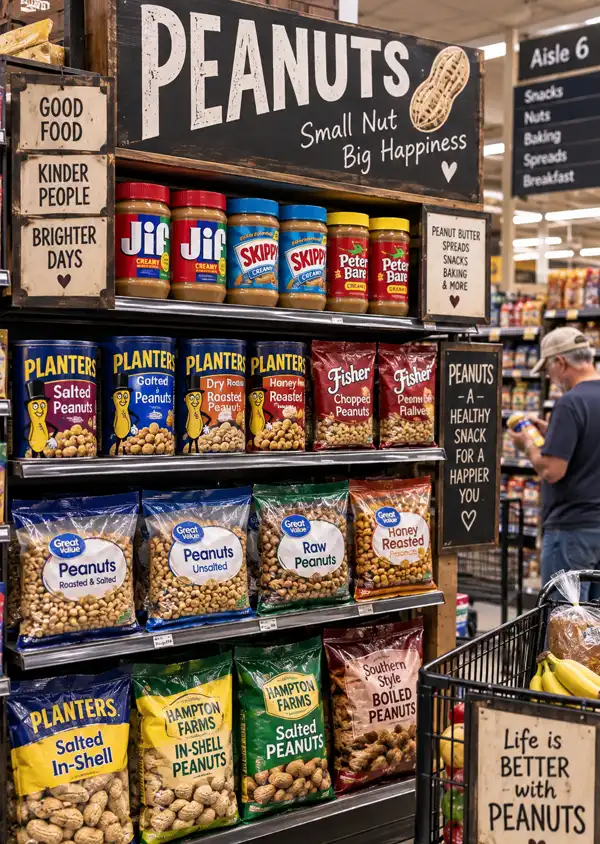
Peanuts have accumulated plenty of interesting facts during their long journey from South American crop to worldwide pantry regular.
- Peanuts aren't nuts. They are legumes and are botanically related to beans, peas, and lentils.
- Peanuts develop underground. Their flowers appear above ground, but after fertilization, pegs grow downward and the pods mature beneath the soil.
- George Washington Carver didn't invent peanut butter. His importance came largely from agricultural research, crop diversification, education, and promoting alternative uses for crops such as peanuts and sweet potatoes.
- There are different types of peanuts. Runner, Virginia, Spanish, and Valencia are the principal market types commonly grown in the United States.
- Georgia is America's peanut powerhouse. The state is routinely the country's leading peanut producer.
- Peanuts have been cultivated for thousands of years. Their agricultural history began in South America long before European contact.
- Baseball helped make peanuts an American cultural institution. Their portability and low cost made roasted peanuts ideal food for sporting events and other public entertainment.
- The peanut plant is a nitrogen-fixing legume. Its relationship with soil bacteria can make it useful within agricultural crop rotations.
- Peanut shells aren't where the plant begins. The peanut we eat is actually the seed contained inside the underground pod.
- Peanut butter had several pioneers. Its development involved multiple inventors, physicians, machinery designers, and food manufacturers rather than one universally accepted creator.
The peanut may not qualify botanically as a nut, but after several thousand years of successful marketing, correcting the name now seems rather ambitious.
How to Celebrate National Peanut Day
National Peanut Day doesn't require elaborate preparations. If you can open a jar, crack a shell, or locate the snack aisle, you're already dangerously close to being qualified.
Start with the simplest celebration: enjoy your favorite peanuts. Try roasted and salted peanuts, honey-roasted peanuts, Virginia peanuts, Spanish peanuts, or whatever variety normally disappears suspiciously quickly after entering your house.
You could also conduct the great peanut butter experiment. Compare creamy and crunchy varieties, natural peanut butter, different roast levels, or freshly ground peanut butter. Spread them on bread, toast, crackers, apples, bananas, celery, or whatever else seems capable of supporting peanut butter without structural failure.
Better still, make your own. Roasted peanuts can be processed until their natural oils transform them from crumbs into a paste. Salt, honey, or other flavorings can be added according to taste. The process provides an excellent demonstration of how something that initially looks like peanut rubble suddenly becomes recognizable peanut butter.
National Peanut Day is also an excellent excuse to cook. Make peanut butter cookies, peanut brittle, peanut butter pie, peanut noodles, satay sauce, groundnut stew, peanut chicken, peanut candy, or another dish from one of the many cuisines that use peanuts.
Southerners—or brave visitors—can prepare boiled peanuts. Find green or raw peanuts suitable for boiling, add plenty of water and salt, and give them time. This isn't fast food. Boiled peanuts operate according to Southern time, which means they'll be ready when they're good and ready.
If baseball is being played nearby, the traditional celebration practically organizes itself. Find a game, buy a bag of peanuts, settle into your seat, and spend several innings producing a small mountain of shells while confidently explaining to everyone around you what the manager should have done.
You could also use the day to learn about peanut agriculture. Discover where peanuts are grown in your state or country, visit a farmers market, investigate the different peanut varieties, or show children how the unusual peanut plant produces its crop underground.
And National Peanut Day provides an appropriate opportunity to learn more about food allergies. Families, schools, workplaces, and restaurants can review how they accommodate people with peanut allergies and make sure celebrations don't accidentally exclude—or endanger—someone.
The best food celebrations are the ones everybody can enjoy safely.
Nutty FAQ
After several thousand words devoted to something that isn't technically a nut, there are inevitably a few questions still rattling around inside the shell. Here are some quick answers to common questions about peanuts, peanut butter, growing peanuts, and National Peanut Day.
When is National Peanut Day?
National Peanut Day is celebrated each year on September 13. It is an informal food observance celebrating peanuts and the many ways they are grown, prepared, and enjoyed.
Are peanuts really nuts?
No. Peanuts are legumes, making them botanical relatives of beans, peas, lentils, chickpeas, and soybeans. Unlike tree nuts such as walnuts and pecans, peanuts grow on low plants and develop their pods underground. They've been calling themselves nuts for so long, however, that correcting every menu, candy bar, and snack bowl would now require an unreasonable amount of paperwork.
Why do peanuts grow underground?
After a peanut flower is fertilized above ground, a structure called a peg grows downward and pushes into the soil. The peanut pod then develops underground at the end of the peg. This unusual process of producing fruit beneath the soil is called geocarpy.
Where did peanuts originally come from?
Peanuts originated in South America, where their wild ancestors grew and where Indigenous peoples domesticated and cultivated them thousands of years ago. They later spread around the world through exploration, trade, migration, and colonization, becoming important crops in Africa, Asia, and North America.
Did George Washington Carver invent peanut butter?
No. Carver conducted extensive research involving peanuts and promoted them as an alternative crop for Southern farmers, but he did not invent peanut butter. Ground peanut preparations existed long before his lifetime, and several inventors contributed to the development of modern commercial peanut butter during the nineteenth and early twentieth centuries.
So who did invent peanut butter?
There isn't one undisputed inventor. Canadian pharmacist Marcellus Gilmore Edson patented a process for producing peanut paste in 1884, while John Harvey Kellogg, Ambrose Straub, Joseph Rosefield, and others later contributed processes, machinery, and manufacturing improvements. Modern peanut butter was therefore more of a group project than one person's sudden flash of peanut-flavored inspiration.
What is the difference between green peanuts and raw peanuts?
Green peanuts are freshly harvested and still contain considerable moisture. Raw peanuts have generally been dried but have not been roasted. The distinction is particularly important when making boiled peanuts, for which fresh green peanuts are traditionally prized.
Why are boiled peanuts so popular in the South?
Boiled peanuts have deep roots in Southern food culture and are connected with African and African American culinary traditions. Fresh peanuts are simmered in salty water until the kernels become soft and flavorful. They remain especially popular in peanut-growing areas of Georgia, South Carolina, Alabama, Florida, and neighboring states.
What are the main types of peanuts grown in the United States?
The four principal U.S. market types are Runner, Virginia, Spanish, and Valencia. Runner peanuts are widely used for peanut butter, Virginia peanuts are known for their large kernels, Spanish peanuts commonly appear in candies and snacks, and Valencia peanuts are particularly popular for boiling and specialty uses.
Are peanuts good for you?
Peanuts provide plant-based protein, mostly unsaturated fats, fiber, and several vitamins and minerals. They are also calorie-dense, and flavored varieties may contain significant amounts of salt or sugar. As with most foods, what accompanies the peanut matters. A handful of plain peanuts and a chocolate-covered peanut cluster may share an ancestor, but nutritionally they're heading in rather different directions.
Can someone with a peanut allergy eat tree nuts?
Possibly, but that decision should be based on individual medical advice rather than assumption. Peanuts are legumes and are biologically different from tree nuts such as almonds, walnuts, and cashews. However, some people are allergic to both peanuts and tree nuts, and cross-contact can also be a concern.
What is the easiest way to celebrate National Peanut Day?
Enjoy peanuts in whatever form you like best: roasted, boiled, made into peanut butter, baked into cookies, added to a savory dish, or turned into peanut brittle. You could also learn about peanut farming, try making homemade peanut butter, experiment with a peanut dish from another culture, or simply make a classic peanut butter and jelly sandwich.
Just remember the one fact National Peanut Day has now thoroughly established: you may spend September 13 celebrating peanuts, talking about peanuts, eating peanuts, and even going a little nutty.
But the peanut itself still isn't a nut.
A Little Legume with Big Dreams
For something routinely thrown into a bowl beside the television, the peanut has led an extraordinary life.
It began as an ancient South American crop, crossed oceans, became established throughout Africa and Asia, traveled into North America, helped diversify Southern agriculture, found its way into factories and kitchens, became inseparable from baseball, conquered the sandwich, and somehow persuaded generations of people to continue calling it a nut despite having all the botanical credentials of a legume.
It can become peanut butter before breakfast, sauce at lunch, a ballpark snack in the afternoon, stew for dinner, and peanut brittle afterward. It can be roasted, boiled, crushed, ground, pressed, seasoned, sweetened, salted, or covered in chocolate.
Few foods have managed quite so much while spending the first part of their lives underground. So on September 13, raise a peanut, crack a shell, make a sandwich, boil a pot, or attack the peanut butter jar with a spoon.
National Peanut Day is here. Go nuts. Botanically speaking, of course, you can't.