Celebrating America's Sailors, Ships, and Seafaring Traditions
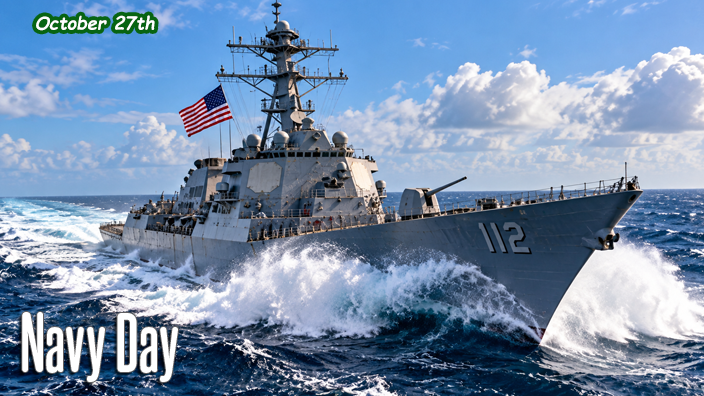
Every October 27, Navy Day gives Americans an opportunity to salute the men and women who have spent more than two centuries defending the nation from the world's oceans. From wooden sailing ships armed with cannons to nuclear-powered aircraft carriers and submarines capable of remaining underwater for months, the United States Navy has certainly come a long way. Yet some traditions remain remarkably unchanged: sailors still take pride in their ships, the ocean still refuses to cooperate with everyone's plans, and Navy coffee continues to enjoy a reputation as a substance capable of dissolving a spoon. Navy Day celebrates naval history, maritime service, technological achievement, and the extraordinary people who make America's fleet work — even when the nearest patch of dry land is several thousand miles away.
From Revolutionary Beginnings to a Global Navy
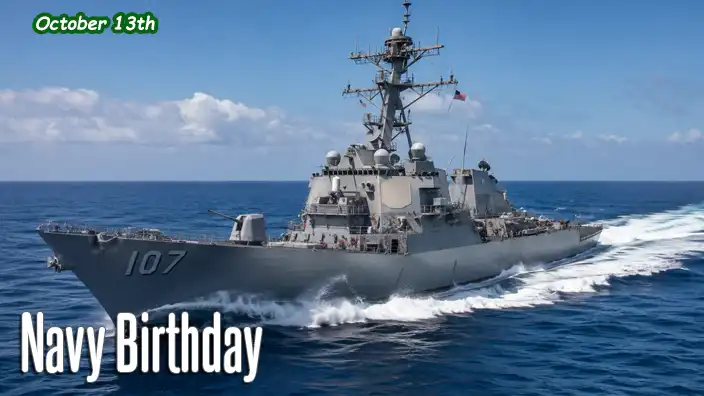
The history of the United States Navy begins on October 13, 1775, when the Continental Congress authorized the purchase and outfitting of two armed vessels to intercept British supply ships during the American Revolutionary War. The fledgling Continental Navy was hardly an intimidating maritime powerhouse. Britain's Royal Navy possessed enormous experience, established naval bases, and a fleet that vastly outnumbered anything the American colonies could assemble. Nevertheless, the Americans recognized that disrupting British shipping could help their struggle for independence. Naval commanders such as John Paul Jones demonstrated remarkable determination, particularly during his celebrated 1779 battle aboard Bonhomme Richard against HMS Serapis. Jones became one of America's earliest naval heroes, proving that a smaller navy could still make an enormous impression, especially when its captains refused to acknowledge that the odds were dreadful.
Following the Revolutionary War, the Continental Navy was disbanded, leaving the young republic without a permanent naval fleet. That situation became increasingly uncomfortable as American merchant vessels encountered threats from pirates and foreign powers. Congress responded with the Naval Act of 1794, authorizing construction of six frigates and establishing the foundations of the modern United States Navy. Among those vessels was USS Constitution, launched in 1797 and destined to become one of the most celebrated warships in American history. During the War of 1812, the frigate earned the nickname Old Ironsides after British cannonballs were reportedly seen bouncing off her exceptionally sturdy wooden hull. Despite the nickname, the ship was not actually made of iron, which must have been a considerable disappointment to anyone hoping the Navy had invented armored warships several decades ahead of schedule. Today, USS Constitution remains the world's oldest commissioned naval warship still afloat.
Throughout the 19th century, American naval power expanded alongside the nation's commercial interests and growing international presence. Steam propulsion gradually replaced dependence on wind, iron and steel transformed warship construction, and naval artillery became increasingly powerful. During the Civil War, the 1862 Battle of Hampton Roads between USS Monitor and CSS Virginia demonstrated the military significance of armored steam-powered vessels. Later, the Spanish-American War of 1898 highlighted America's emergence as a major naval power, with decisive victories at Manila Bay and Santiago de Cuba. The days when sailors depended entirely on favorable winds and an optimistic weather forecast were disappearing, although the sea itself remained just as capable of making everyone miserable.

Why Navy Day Is Celebrated on October 27
Unlike the Navy's official birthday on October 13, Navy Day is traditionally observed on October 27, a date selected for a very particular historical reason. In 1922, the Navy League of the United States established Navy Day to recognize the Navy's contributions to national security, international commerce, and American maritime heritage. The organization deliberately chose October 27 because it was the birthday of President Theodore Roosevelt, who had championed American naval development and understood the strategic importance of maintaining a capable fleet. Roosevelt had served as Assistant Secretary of the Navy before becoming president, and his enthusiasm for naval power was hardly a secret. He believed a strong navy could protect American interests, discourage potential adversaries, and demonstrate the nation's growing international influence.
Roosevelt's most memorable naval demonstration came in 1907, when he dispatched the Great White Fleet on a voyage around the world. Consisting of 16 battleships and accompanying support vessels, the fleet traveled approximately 43,000 miles before returning in 1909. Its ships, painted white for peacetime service, visited foreign ports and displayed America's expanding maritime capabilities. The voyage was both a diplomatic undertaking and an extraordinary logistical achievement, requiring extensive planning for coal, supplies, maintenance, and thousands of sailors. In an era before modern satellite navigation and global communications, sending a fleet around the planet was considerably more complicated than entering a destination into a GPS and hoping someone remembered to pack sandwiches.
Navy Day quickly became a popular patriotic observance during the 1920s and 1930s. Communities organized parades, public ceremonies, educational programs, and visits to naval installations, while ships opened their decks to visitors whenever practical. Newspapers published stories about naval achievements, schools introduced students to maritime history, and veterans gathered to remember their experiences. Although Navy Day originated as a civilian initiative rather than a federal holiday, its observance received considerable public and institutional support. It offered Americans an opportunity to recognize the Navy's contributions during wartime and peacetime while strengthening public understanding of the people, ships, and specialized skills required to maintain an effective naval service.
Navy Day, Armed Forces Day, and the Navy's Birthday
Following World War II, the United States reorganized its military establishment, and the Department of Defense introduced Armed Forces Day in 1949. First observed in 1950, Armed Forces Day was designed to recognize the military services collectively rather than relying entirely on separate branch-specific observances. Celebrated on the third Saturday in May, it became a national occasion for acknowledging the Army, Navy, Air Force, and, through the broader military community, the Marine Corps and other service members. This change reduced the prominence of the traditional October Navy Day observance, but it did not erase its history or significance.
The Navy League and other maritime organizations continued to recognize October 27, preserving a tradition closely associated with Theodore Roosevelt and American naval heritage. Meanwhile, October 13 became firmly established as the official birthday of the United States Navy, commemorating the Continental Congress's 1775 authorization of the first naval vessels. The two dates serve different purposes: October 13 celebrates the Navy's founding, while October 27 honors its service, achievements, and historic relationship with the American public. There is no need to choose between them. After all, an organization that has spent more than 250 years defending American interests at sea has probably earned the right to be appreciated more than once a year.

From Battleships to Aircraft Carriers
The 20th century transformed naval warfare on a scale that would have astonished the sailors of the Revolutionary War. Battleships dominated naval thinking during the early decades, but World War II demonstrated the decisive importance of aircraft carriers, submarines, radar, and coordinated operations involving ships and aircraft. The attack on Pearl Harbor on December 7, 1941, brought the United States into World War II, while subsequent Pacific campaigns revealed how naval aviation could shape entire military operations. At the Battle of Midway in June 1942, American carrier-based aircraft helped destroy four Japanese aircraft carriers, delivering a major strategic victory. Naval personnel also supported amphibious landings, protected supply convoys, rescued survivors, and maintained the immense logistical network necessary to sustain Allied operations across the oceans.
Modern American aircraft carriers are among the most complex machines ever constructed. Nuclear-powered carriers of the Nimitz and Gerald R. Ford classes serve as mobile airfields, accommodating thousands of personnel and numerous aircraft while operating far from established land bases. Their flight decks resemble extraordinarily busy airports, except the runways move, the weather can be dreadful, and pilots must land on a comparatively small patch of steel surrounded by ocean. Below decks, carriers contain extensive medical facilities, workshops, kitchens, communications centers, and other services needed to support extended deployments. Their effectiveness depends not only on pilots and commanding officers but also on aviation maintenance crews, engineers, cooks, logistics specialists, and countless other sailors whose work rarely receives the same dramatic Hollywood treatment.
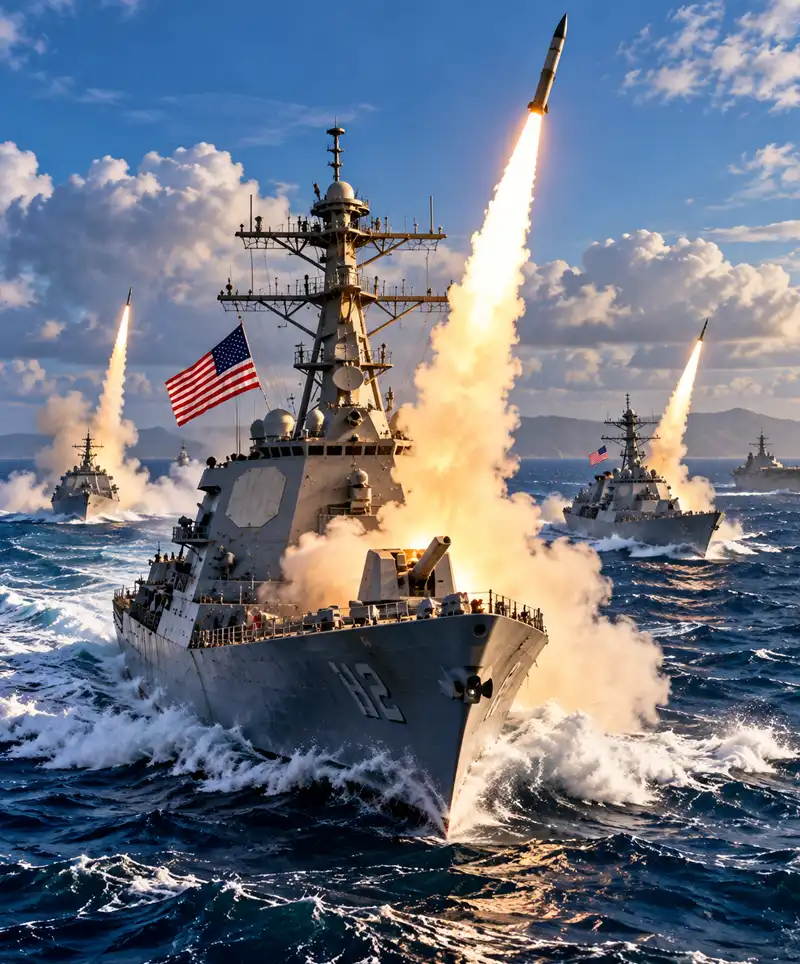
Destroyers, cruisers, amphibious warfare ships, and support vessels perform equally essential roles throughout the fleet. Guided-missile destroyers can provide air and missile defense, conduct antisubmarine operations, and support other naval missions. Amphibious ships transport Marines, equipment, and aircraft, while replenishment vessels deliver fuel, food, ammunition, and supplies to ships operating far from home. Without these supporting ships and their crews, even the most impressive aircraft carrier would eventually become an exceptionally expensive floating parking lot. Naval operations depend on teamwork, coordination, and the ability to keep complex equipment functioning under demanding conditions.
Submarines: The Silent Service
Beneath the world's oceans operates one of the most sophisticated and strategically important components of the United States Navy: the submarine force, appropriately nicknamed the Silent Service. Unlike aircraft carriers and surface warships, which can demonstrate their presence rather spectacularly, submarines rely on remaining undetected. Their ability to operate quietly beneath the waves makes them essential to national defense, intelligence gathering, maritime surveillance, and nuclear deterrence. American submarines can track hostile vessels, gather information, launch precision strikes, and conduct missions in areas where surface ships might face considerable danger. Their greatest advantage is often that nobody knows exactly where they are. It's rather difficult to argue with a warship when you can't even find it.
The American submarine service has a fascinating history stretching back to the Revolutionary War. In 1776, inventor David Bushnell developed Turtle, a small, human-powered underwater vessel intended to attack British ships in New York Harbor. Although its mission failed to achieve its objective, Turtle demonstrated the remarkable possibilities of underwater warfare. More than a century later, USS Holland (SS-1), acquired by the Navy in 1900, became America's first commissioned submarine. Early submarines were cramped, mechanically temperamental, and considerably more dangerous than their modern descendants. Crews operated in confined spaces surrounded by experimental machinery, limited ventilation, and enough potential hazards to make an ordinary sailor reconsider his career choices. Nevertheless, these pioneering vessels established the foundations of a naval force that would eventually transform warfare at sea.
During World War II, American submarines played a decisive role in the Pacific campaign against Japan. Operating thousands of miles from their home ports, submarine crews attacked enemy merchant shipping and warships, disrupting supply routes and weakening Japan's ability to sustain its military operations. Although American submarines represented a relatively small portion of the Navy's personnel, they were responsible for sinking more than half of Japan's merchant shipping tonnage lost during the war. These achievements came at a terrible cost. Fifty-two American submarines were lost during World War II, and more than 3,500 submariners died. Their sacrifice remains an important part of American naval history, commemorated through memorials, museums, and the traditions of the submarine community. The Silent Service earned its reputation through extraordinary courage, persistence, and a willingness to undertake missions from which some crews never returned.
The arrival of nuclear propulsion revolutionized submarine operations. In 1954, USS Nautilus (SSN-571) became the world's first operational nuclear-powered submarine, dramatically changing what underwater vessels could accomplish. Unlike conventional diesel-electric submarines, nuclear-powered submarines do not need to surface or snorkel regularly to operate their propulsion systems. In 1958, Nautilus made history again by completing the first submerged voyage beneath the North Pole, demonstrating the ability of submarines to travel through regions previously inaccessible to naval vessels. Modern nuclear-powered submarines can remain submerged for extended periods, with food supplies, equipment maintenance, and human requirements generally determining how long a deployment can continue. Their reactors provide propulsion and electrical power, while onboard systems produce oxygen and fresh water. Unfortunately, nobody has yet invented a reactor capable of producing unlimited fresh pizza.
The modern U.S. submarine fleet includes several specialized types of vessels. Fast-attack submarines, including the Los Angeles, Seawolf, and Virginia classes, perform missions involving antisubmarine warfare, intelligence collection, surveillance, and strikes against targets at sea or ashore. Ohio-class guided-missile submarines, designated SSGNs, were converted from ballistic-missile submarines to carry conventional cruise missiles and support special operations. Ballistic-missile submarines, designated SSBNs and commonly called boomers, serve a particularly important strategic purpose. Equipped with submarine-launched ballistic missiles, they form the sea-based component of America's nuclear triad, alongside land-based intercontinental ballistic missiles and strategic bombers. Their ability to remain hidden while conducting deterrent patrols helps preserve a credible retaliatory capability, making them an essential element of American nuclear defense strategy.
The people who serve aboard submarines belong to one of the Navy's most demanding professional communities. Submariners must understand complex mechanical, electrical, navigation, weapons, and life-support systems, while maintaining the discipline necessary to operate safely in an environment where mistakes can have serious consequences. Crew members stand watches around the clock, conduct drills, maintain equipment, and practice emergency procedures until their responses become almost instinctive. A submarine cannot simply pull into the nearest harbor when something goes wrong, and calling roadside assistance is unlikely to produce much enthusiasm when the breakdown occurs several hundred feet beneath the Atlantic Ocean.
Life aboard a submarine requires a special kind of adaptability. Space is limited, passageways are narrow, and personal belongings must fit into storage areas that would make an airline's carry-on baggage allowance seem generous. Sailors may spend weeks or months without seeing natural daylight, while their working schedules continue regardless of whether the sun is rising or setting somewhere above them. Meals, sleep, maintenance, and watchkeeping must all fit into the submarine's carefully organized routine. Privacy is scarce, and crew members learn quickly that cooperation is not merely desirable but essential. Yet submarine crews frequently develop exceptionally strong bonds through shared experiences, mutual dependence, and the knowledge that everyone aboard contributes directly to the safety and success of the mission.
One of the submarine service's most recognizable traditions is the award of the Submarine Warfare Insignia, commonly known as the dolphins. Despite the name, the insignia depicts two dolphins flanking the bow and conning tower of a submarine. Earning dolphins signifies that a sailor has demonstrated the knowledge and qualifications required to become a fully qualified member of the submarine community. It is a source of considerable professional pride and symbolizes the trust placed in every qualified submariner. Within the Silent Service, competence matters enormously, because a crew's survival depends on far more than simply knowing which button to press when an alarm sounds.
Submarines may lack the visual spectacle of a carrier launching aircraft or a destroyer cutting through heavy seas, but their importance to modern naval operations is difficult to overstate. Their stealth, endurance, technological sophistication, and strategic capabilities make them among the most valuable assets in America's naval arsenal. Behind every successful submarine patrol are highly trained sailors performing demanding duties in an environment most people will never experience. On Navy Day, the Silent Service deserves a particularly enthusiastic salute — although, naturally, the submariners themselves would probably prefer that nobody reveal exactly where they are.
The Sailors Who Keep the Fleet Moving
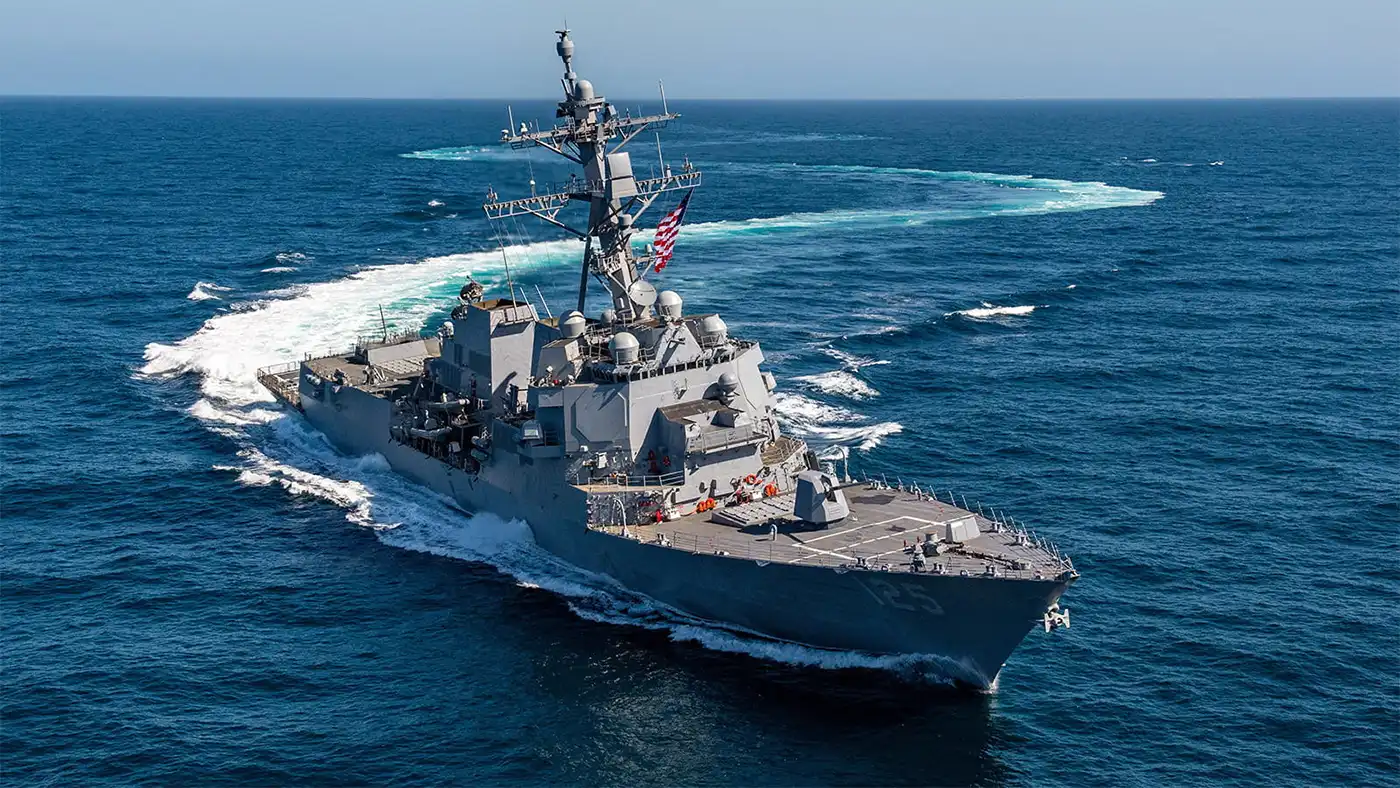
Behind every successful naval mission are sailors representing an extraordinary range of occupations and specialties. Aviation technicians maintain aircraft, engineers operate propulsion systems, information specialists protect communications networks, and culinary specialists prepare thousands of meals under conditions that would challenge even the most experienced restaurant kitchen. Boatswain's mates supervise essential seamanship duties, while damage-control personnel train to respond to fires, flooding, and other emergencies. Medical professionals provide care, navigators guide ships through crowded waterways, and supply specialists ensure that necessary equipment reaches the right place at the right time. A modern warship is effectively a small, highly specialized community where everyone's work matters.
Life aboard ship follows routines shaped by watch schedules, maintenance requirements, operational duties, and training exercises. Sailors may spend extended periods away from their families, miss important celebrations, and experience the physical demands of working at sea. Even routine tasks can become difficult when a vessel is rolling through rough weather. Carrying a tray of food across a moving mess deck, for example, can suddenly resemble an Olympic event for which nobody bothered to provide medals. Maintaining morale, supporting families, and providing access to medical and mental health resources are important parts of sustaining naval readiness. Behind the uniforms and impressive vessels are individuals balancing demanding professional responsibilities with the same personal concerns experienced by people ashore.
Navy Traditions, Sea Stories, and Seriously Strong Coffee
Naval service has developed a language and culture all its own. Ships have decks rather than floors, walls are bulkheads, and doors may be called hatches. The front of a vessel is the bow, the rear is the stern, and sailors distinguish port from starboard rather than relying on left and right. These terms have practical value, especially when people must communicate quickly and accurately in confined spaces or difficult conditions. Of course, to an unsuspecting civilian, the terminology can make an ordinary request for directions sound like instructions for assembling a complicated piece of furniture.
The Navy's traditions also include ceremonies marking changes of command, promotions, retirements, and significant events in a sailor's career. The crossing-the-line ceremony, associated with ships crossing the equator, has a long maritime history, although modern versions are expected to follow established safety and conduct standards. Naval uniforms, signal flags, bells, and ceremonial customs connect today's sailors with generations who served before them. Such traditions provide continuity within a profession that has otherwise changed almost beyond recognition since the age of wooden ships.
And then there is Navy coffee. Generations of sailors have depended on it during long watches, early mornings, and exhausting operations, while its legendary strength has inspired countless jokes. A traditional Navy shower, meanwhile, conserves fresh water by briefly wetting the body, turning off the water while washing, and then rinsing. Water conservation remains important aboard ships, even though modern vessels may produce fresh water through desalination systems. Naval humor often emerges from these everyday experiences: cramped quarters, unpredictable weather, endless maintenance, and the realization that the ocean has absolutely no interest in anyone's carefully prepared schedule. Sea shanties also remain part of broader maritime heritage, although their original purpose was to coordinate labor aboard sailing vessels rather than provide background music for a modern destroyer's engine room.
Beyond Combat: Humanitarian Missions and Disaster Relief
Although national defense remains the Navy's primary mission, American naval forces also contribute to humanitarian assistance and disaster relief operations. Ships, helicopters, medical personnel, and logistics teams can deliver supplies, evacuate people, and support recovery efforts after hurricanes, earthquakes, tsunamis, and other emergencies. Hospital ships such as USNS Mercy and USNS Comfort have provided medical support during military operations and humanitarian missions, while amphibious vessels can transport helicopters, vehicles, and supplies into regions where local infrastructure has been damaged.
These operations demonstrate the value of maritime mobility and the ability to bring personnel and equipment to affected areas. Naval forces also participate in multinational exercises, maritime security operations, and efforts to protect international shipping. Because so much global commerce travels by sea, safe and accessible maritime routes are essential to economies around the world. The Navy's responsibilities therefore extend well beyond dramatic battles and spectacular aircraft launches. Sometimes the most important cargo aboard a ship consists of emergency medical supplies, clean drinking water, or equipment needed by communities recovering from disaster.
How to Celebrate Navy Day
Celebrating Navy Day on October 27 doesn't require owning a boat, understanding naval navigation, or knowing the difference between a destroyer and a cruiser. The occasion is about recognizing naval service, learning about American maritime history, and appreciating the sacrifices made by sailors and their families. Whether you live beside a major naval installation or hundreds of miles from the nearest coastline, there are plenty of ways to participate. And unlike an actual deployment, most of these activities allow you to return home in time for dinner.
- Visit a naval museum or historic ship. Explore American naval history aboard preserved warships, submarines, and aircraft carriers. Museums such as the USS Constitution Museum in Boston and the National Museum of the United States Navy in Washington, D.C., offer opportunities to discover how naval technology and traditions have evolved.
- Thank a sailor or Navy veteran. A personal message, conversation, or simple expression of appreciation can mean a great deal to someone who has served.
- Fly the American flag. Display the Stars and Stripes in recognition of the Navy's contributions to American history and national defense.
- Learn about a famous naval battle. Explore the Battle of Midway, the Battle of Hampton Roads, or the remarkable adventures of John Paul Jones. History offers plenty of drama without Hollywood needing to invent any.
- Support military families. Consider contributing to reputable organizations that assist active-duty sailors, veterans, and their families.
- Watch a naval documentary or movie. Discover the realities of life at sea, historic naval operations, or the development of modern warships. Top Gun is entertaining, but remember that most sailors don't spend their working days wearing aviator sunglasses and playing beach volleyball.
- Share a Navy story. If you know someone who served, invite them to share their experiences. Just be prepared: a sailor's five-minute sea story has occasionally been known to last considerably longer.
Interesting Facts About the United States Navy
The U.S. Navy has accumulated an impressive collection of achievements, innovations, and peculiar traditions throughout its history. Here are a few facts worth remembering on Navy Day.
- The Continental Congress established the Continental Navy on October 13, 1775.
- The modern U.S. Navy traces its permanent foundation to the Naval Act of 1794.
- USS Constitution, launched in 1797, remains the oldest commissioned naval warship afloat.
- The Great White Fleet completed its historic voyage around the world between 1907 and 1909.
- The Battle of Midway in June 1942 became a major turning point in the Pacific War.
- USS Nautilus, commissioned in 1954, was the world's first operational nuclear-powered submarine.
- In 1958, USS Nautilus became the first vessel to complete a submerged transit beneath the North Pole.
- The Navy's official motto is often popularly given as Non sibi sed patriae — “Not for self, but for country” — although the service has no officially adopted motto.
A Final Salute to America's Navy
Navy Day is much more than a celebration of enormous ships, powerful aircraft, and sophisticated technology. It recognizes the generations of sailors who have protected American interests, supported allies, responded to emergencies, and maintained the maritime traditions that helped shape the nation. From the determined crews of the Continental Navy to today's highly trained professionals operating across the world's oceans, naval service has always demanded courage, technical skill, discipline, and an extraordinary ability to work together under difficult circumstances.
So, on October 27, take a moment to remember those who have served, those who continue to serve, and the families who support them from shore. Raise the flag, share a naval story, or simply offer a word of thanks. And if you happen to meet an old sailor, don't be surprised if the conversation involves distant ports, spectacular storms, questionable food, and a commanding officer who apparently never understood anything. Some Navy traditions, it seems, are destined to survive forever.
Fair winds and following seas — and Happy Navy Day!