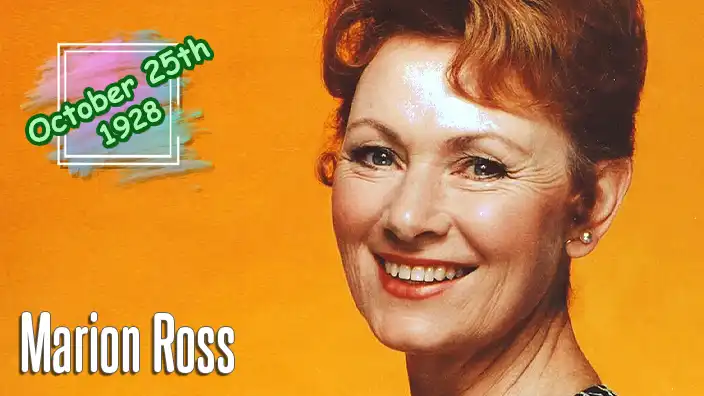
October 25, 1928, in Watertown, Minnesota

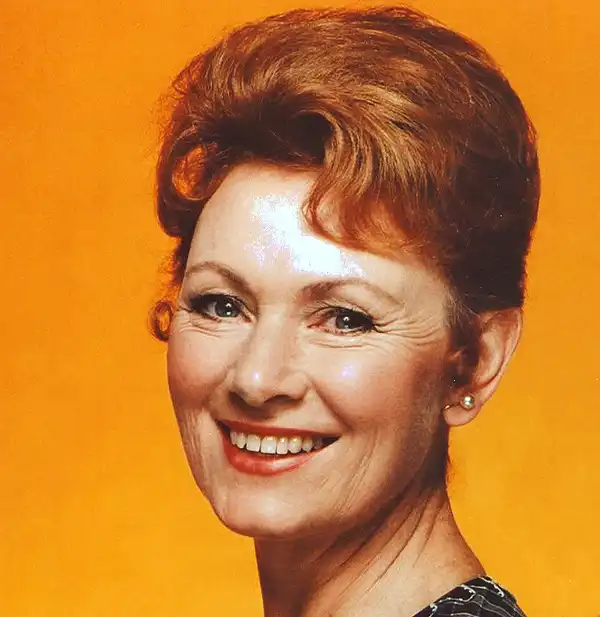
Marion Ross was born Marian Ellen Ross on October 25, 1928, in Minnesota, where her childhood was shaped by modest circumstances, family life, and an ambition that developed long before Hollywood knew her name. Accounts of her birthplace differ, with some biographical sources listing Watertown and others Albert Lea, but there is no disagreement about the determination that carried her from the Midwest to the entertainment industry. Her parents were Gordon Alexander Ross and Ellen Alicia Hamilton Ross, and the family eventually moved west to California. As a young girl, Marion became fascinated with acting and was so convinced that she belonged on the stage that she reportedly changed the spelling of her first name from Marian to Marion at approximately thirteen, believing the revised version would look better on a theater marquee. Most youngsters were worrying about homework and whether their friends liked them; Marion was already making decisions about how her name would appear in lights.
Growing up in Minnesota, Ross pursued opportunities to develop her theatrical interests, including earning money for drama lessons at the MacPhail Center in Minneapolis. Her family's eventual relocation to San Diego brought her closer to the entertainment industry and gave her access to additional training. She graduated from Point Loma High School and attended San Diego State College, now San Diego State University, where she participated in theatrical productions and developed the skills that would become the foundation of her professional career. Her education emphasized performance, discipline, and the practical demands of acting, qualities that would prove essential during the years when she worked steadily without becoming a household name. By the early 1950s, her talent and determination had attracted attention in Hollywood, and she secured a contract with Paramount Pictures. For a young woman who had once dreamed of seeing her name on a marquee, the opportunity represented an extraordinary achievement, although the unpredictable business of show business still had plenty of surprises waiting.
Ross made her feature-film debut in Forever Female (1953), a comedy starring Ginger Rogers and William Holden. The following year, she appeared in two notable Hollywood productions: The Glenn Miller Story (1954), starring James Stewart and June Allyson, and Sabrina (1954), directed by Billy Wilder and featuring Audrey Hepburn, Humphrey Bogart, and William Holden. Although her early roles were generally supporting parts, working in such prestigious productions gave Ross valuable experience alongside established stars and accomplished filmmakers. She continued building her film résumé with appearances in Lust for Life (1956), the Vincent van Gogh biography starring Kirk Douglas, Teacher's Pet (1958), featuring Clark Gable and Doris Day, Some Came Running (1958), and Operation Petticoat (1959), the popular submarine comedy starring Cary Grant and Tony Curtis. Long before audiences welcomed her into their living rooms as Mrs. Cunningham, Ross had already shared the screen with an impressive collection of Hollywood royalty.
Television provided Ross with an even broader range of opportunities during the 1950s and 1960s. She appeared in the family sitcom Life with Father and accumulated guest appearances on numerous programs, including The Lone Ranger, Perry Mason, The Donna Reed Show, The Brady Bunch, The Outer Limits, Dr. Kildare, Mannix, and Ironside. These assignments frequently cast her as nurses, teachers, secretaries, wives, and mothers, roles that demanded convincing performances even when the characters appeared only briefly. Ross became one of those dependable working actresses whom producers could trust to bring warmth, credibility, and professionalism to almost any production. Her work also reflected the realities facing many women in Hollywood at the time, when substantial leading roles were often scarce and a successful career required considerable flexibility. She was steadily employed, but the widespread recognition she had dreamed about remained elusive. Fortunately, television was about to introduce her to a family whose problems usually involved teenage dating, school dances, or a leather-jacketed young man with an extraordinary relationship with jukeboxes.
The turning point arrived through the anthology comedy series Love, American Style, which featured a segment titled Love and the Happy Days. Filmed in the early 1970s, the segment introduced the Cunningham family and helped establish the concept that producer Garry Marshall would develop into the sitcom Happy Days. Ross portrayed Marion Cunningham, with Ron Howard playing her son Richie and Harold Gould appearing as her husband Howard. When the concept became a regular ABC television series in 1974, Ross and Howard returned to their roles, while Tom Bosley took over as Howard Cunningham. The program premiered on January 15, 1974, presenting a nostalgic portrait of family life in Milwaukee during the 1950s and early 1960s. Its combination of teenage adventures, familiar domestic situations, memorable characters, and affectionate humor gradually made it one of American television's most recognizable sitcoms. For Ross, the role represented the breakthrough she had spent more than two decades preparing for, proving that an acting career does not necessarily follow the timetable suggested by Hollywood's publicity departments.
As Marion Cunningham, Ross became the emotional center of the Cunningham household, bringing intelligence, kindness, humor, and occasional exasperation to a character who might otherwise have been written as a conventional television housewife. Her on-screen family included husband Howard, played by Tom Bosley; son Richie, portrayed by Ron Howard; daughter Joanie, played by Erin Moran; and the occasionally remembered eldest son Chuck, whose mysterious disappearance from the series became one of television comedy's enduring curiosities. The family's extended circle included Potsie Weber, Ralph Malph, and, most famously, Arthur Fonzarelli, better known as the Fonz, played by Henry Winkler. While most characters addressed Fonzie by his nickname, Marion affectionately called him Arthur, reinforcing the special relationship between the tough-talking neighborhood celebrity and the woman who treated him like another member of the family. The character's warmth never prevented her from expressing a firm opinion, however, and Ross frequently demonstrated that the most effective authority in the Cunningham household did not necessarily belong to the person sitting behind the hardware-store counter.
The success of Happy Days transformed Ross into one of America's most familiar television mothers. The series ran for eleven seasons, concluding in 1984, and became an influential part of popular culture, generating catchphrases, memorable musical moments, merchandising, and several successful spin-offs. Its popularity helped launch or strengthen the careers of numerous performers, including Ron Howard, Henry Winkler, and Scott Baio, while introducing characters and situations that remained recognizable long after the original broadcasts ended. Ross's performance earned two Primetime Emmy Award nominations for Outstanding Lead Actress in a Comedy Series, recognition of her ability to make a seemingly ordinary sitcom mother both believable and entertaining. Her chemistry with Tom Bosley became an essential element of the show's appeal, although Ross later acknowledged that their working relationship was not immediately comfortable. Over time, they developed a lasting friendship, demonstrating that even television's happiest marriages sometimes require a little patience behind the scenes.
Although Happy Days became her defining role, Ross never allowed Marion Cunningham to represent the full extent of her abilities. After the series concluded, she returned to theater, film, and television, taking opportunities to portray characters who differed considerably from the cheerful Milwaukee homemaker. Her stage work included productions of Steel Magnolias, The Glass Menagerie, Long Day's Journey Into Night, Barefoot in the Park, and Pippin. In 1987, she appeared on Broadway in a revival of Arsenic and Old Lace alongside Jean Stapleton, another performer closely associated with an unforgettable television character. Ross also toured with a one-woman theatrical presentation portraying poet Edna St. Vincent Millay, demonstrating her interest in demanding dramatic material and literary performance. Such work allowed audiences to appreciate the actress beyond the familiar kitchen table, proving that she could handle serious drama and sophisticated comedy just as comfortably as she could welcome Fonzie through the front door.
One of Ross's most acclaimed post-Happy Days performances came in the CBS comedy-drama Brooklyn Bridge, which aired from 1991 to 1993. Created by Gary David Goldberg and inspired by his childhood, the series followed a Jewish American family living in Brooklyn during the 1950s. Ross portrayed Sophie Berger, the outspoken, loving, and frequently opinionated grandmother whose presence helped anchor the family. The character gave Ross an opportunity to explore a different cultural background, employ a distinctive accent, and portray a woman with considerably more bite than Marion Cunningham. Her performance earned consecutive Primetime Emmy nominations in 1992 and 1993 and two Viewers for Quality Television awards. Although the critically admired series never achieved the commercial longevity of Happy Days, it remains an important example of Ross's dramatic range and her ability to create memorable family characters without simply repeating earlier successes. Mrs. C. might have offered you cookies and sensible advice; Sophie Berger was more likely to offer advice first and make sure you understood every word of it.
Ross continued appearing in feature films, including The Evening Star, the sequel to Terms of Endearment. Playing Rosie Dunlop opposite Shirley MacLaine, she earned a Golden Globe nomination for Best Supporting Actress, adding another distinction to a career already filled with notable achievements. She also appeared in Superhero Movie (2008), demonstrating a willingness to participate in broad comedy and popular entertainment rather than limiting herself to prestigious dramatic productions. Throughout this period, television remained a major part of her professional life. She appeared in The Drew Carey Show, Touched by an Angel, That '70s Show, Gilmore Girls, Brothers & Sisters, Grey's Anatomy, Nurse Jackie, Hot in Cleveland, and The Middle, among numerous other programs. Her guest appearances often made playful use of her reputation as America's favorite television mother, sometimes presenting characters who were considerably less patient, affectionate, or understanding than Marion Cunningham. Apparently, after spending eleven seasons keeping the peace in Milwaukee, she had earned the right to play somebody who occasionally enjoyed causing trouble.
Her recurring appearance as Bernice Forman, Red Forman's mother on That '70s Show, was particularly entertaining because the character was hardly the comforting maternal figure audiences remembered from Happy Days. Bernice was difficult, demanding, and capable of creating tension simply by entering a room, providing Ross with an opportunity to turn her wholesome image upside down. She also portrayed Lorelai "Trix" Gilmore, the formidable grandmother of Richard Gilmore, on Gilmore Girls, later appearing as Richard's cousin Marilyn in the same series. These performances introduced her to younger audiences who might not have watched Happy Days during its original run, while reminding longtime admirers that her comic talents extended well beyond smiling approvingly at her television children. Her appearance on Touched by an Angel also brought her a fifth Primetime Emmy nomination, further demonstrating the industry's appreciation for her continued work.
Ross found another successful chapter in animation and voice acting, a field in which her distinctive voice and expressive delivery proved especially valuable. She became known to younger viewers as Grandma SquarePants on SpongeBob SquarePants, providing the voice of the affectionate grandmother who treats SpongeBob with the same overwhelming devotion that grandmothers everywhere reserve for their favorite grandchildren. Her animated work also included King of the Hill, Family Guy, Handy Manny, and Scooby-Doo! productions, along with other television projects. The role of Grandma SquarePants was particularly amusing given her earlier fame, effectively allowing Ross to become a beloved television grandmother to an entirely different generation. She once observed that children who had never heard of Marion Cunningham could become tremendously excited when they discovered she voiced SpongeBob's grandmother. Few performers can claim to have earned affection from audiences who grew up watching black-and-white television and from children whose favorite fictional character lives in a pineapple under the sea.
Away from acting, Ross raised two children, Jim Meskimen and Ellen, both of whom developed careers in entertainment. Jim became an actor, comedian, and impressionist, while Ellen worked as a television writer and producer. Ross's personal life included marriage to Freeman Meskimen, which ended in divorce, and a long relationship with actor Paul Michael, who died in 2011. Her experiences balancing professional ambitions, motherhood, financial uncertainty, and relationships gave her a perspective that differed considerably from the carefully organized domestic world depicted on Happy Days. She discussed these realities openly in her memoir, My Days: Happy and Otherwise, written with David Laurell and published in 2018. The book recounts her Minnesota childhood, early struggles in Hollywood, experiences on Happy Days, friendships with fellow performers, and the personal challenges that accompanied her success. With a foreword by Ron Howard and recollections involving other members of the Happy Days family, it offered readers a fuller picture of the woman behind one of television's most recognizable characters.
Throughout her career, Ross maintained an affectionate relationship with the audiences who continued to recognize her as Mrs. C. Rather than resent being identified with one role, she embraced the connection and appreciated the lasting affection generated by Happy Days. She participated in reunions, interviews, and retrospective programs celebrating the series, frequently sharing stories about its cast and production. Her contribution to television was also recognized with a star on the Hollywood Walk of Fame, an especially appropriate honor for someone who had once adjusted the spelling of her name because she imagined it appearing on a marquee. Ross eventually stepped away from regular acting, with later screen appearances including Angels on Tap (2018) and Senior Entourage (2021), the latter filmed before her retirement. Her body of work encompasses decades of American entertainment, from the Hollywood studio system and television's early expansion to contemporary sitcoms and animated programming.
Marion Ross's enduring popularity reflects much more than nostalgia for a successful television series. Her career illustrates the value of persistence, versatility, professional discipline, and a willingness to embrace unexpected opportunities. She spent years working in supporting roles before achieving widespread recognition, then continued challenging herself through theater, drama, comedy, and voice acting rather than resting on the success of Happy Days. For millions of viewers, she will always be Marion Cunningham, the affectionate mother who welcomed an entire generation into her fictional Milwaukee home. Yet her achievements as Sophie Berger, Grandma Forman, Grandma SquarePants, and numerous other characters demonstrate the remarkable breadth of her talent. Whether offering a sympathetic smile, delivering a sharp comic remark, or reminding a certain leather-jacketed young man to mind his manners, Marion Ross helped make television a little warmer, funnier, and more memorable. And somewhere in television history, Mrs. C. is probably still wondering whether Arthur has washed his hands before dinner.