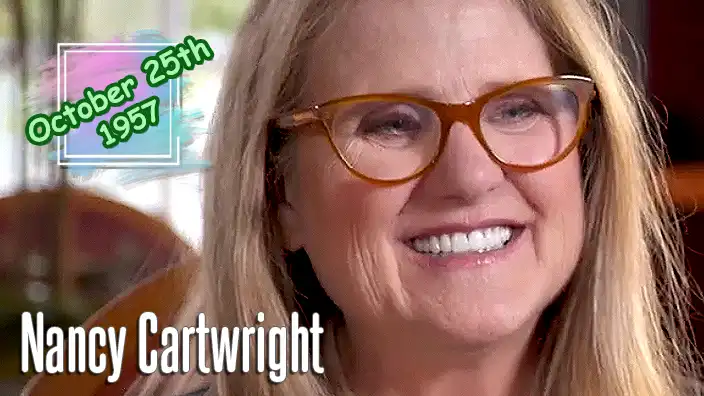
October 25, 1957, in Dayton, Ohio

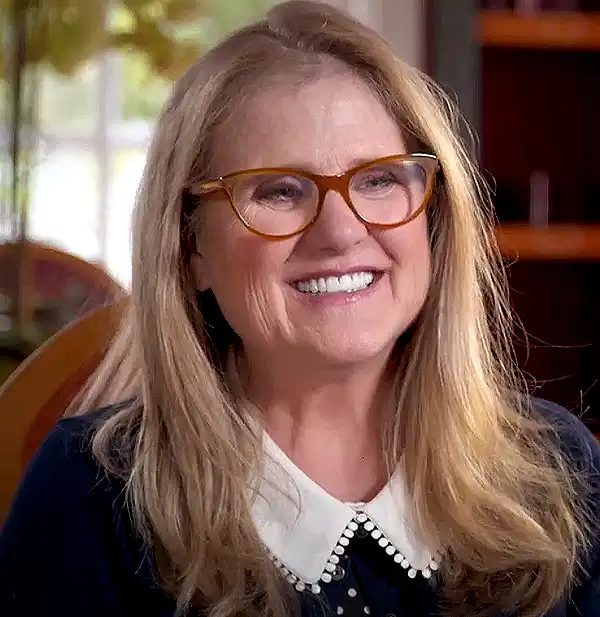
Nancy Jean Cartwright was born on October 25, 1957, in Dayton, Ohio, and grew up in nearby Kettering, where her remarkable talent for creating voices began attracting attention long before she became one of the most recognizable performers in television animation. She was raised in a large family by her parents, Frank and Miriam Cartwright, and developed an early enthusiasm for storytelling, performance, and making people laugh. As a child, Nancy discovered that she could entertain audiences by changing her voice, exaggerating character personalities, and transforming ordinary stories into lively performances. One of her earliest successes came during elementary school when she performed Rudyard Kipling's How the Camel Got His Hump in a school speech competition. Her animated delivery impressed the judges and helped convince her that performing could become something more than an enjoyable pastime. While many children dreamed of becoming astronauts, firefighters, or movie stars, Cartwright was already discovering that a particularly entertaining voice could open doors that ordinary conversation rarely managed to unlock.
During her school years, Cartwright became increasingly involved in speech competitions, drama, and public performance. She attended Fairmont West High School in Kettering, where she participated in the speech team and developed a reputation for her expressive delivery and unusual vocal abilities. She excelled in humorous interpretation competitions, winning recognition at regional and national events while learning how to build characters through timing, inflection, and personality. Judges frequently encouraged her to consider a career in animation because of her distinctive voice and ability to portray different characters. Although voice acting was not yet as publicly celebrated as it would become in later decades, Cartwright recognized that her talent might offer an unconventional professional future. Her experience in competitive speaking also taught her valuable lessons about preparation, audience response, and the importance of committing completely to a performance. These skills would eventually become essential when she was required to transform a few lines of dialogue into the unmistakable personality of a mischievous cartoon character.
After graduating from high school in 1976, Cartwright enrolled at Ohio University, where she studied communications and continued participating in speech competitions. Her interest in broadcasting led to work at WING radio in Dayton, where she gained experience recording commercial announcements and developing her vocal technique. During this period, she encountered an opportunity that would profoundly influence her career. A representative associated with the entertainment industry encouraged her to contact Daws Butler, the legendary voice actor whose performances included Yogi Bear, Huckleberry Hound, Snagglepuss, and Elroy Jetson. Cartwright reached out to Butler and began corresponding with him, eventually developing a relationship that would become one of the most important professional influences of her life. Butler recognized her talent and encouraged her to pursue voice acting seriously, providing advice about character development, performance, and the realities of the animation industry. For an aspiring performer fascinated by cartoon voices, receiving guidance from the man behind Yogi Bear was rather like an aspiring magician receiving private lessons from Merlin.
Determined to pursue opportunities in Hollywood, Cartwright transferred to the University of California, Los Angeles, in 1978, allowing her to continue her education while studying voice acting with Butler. She graduated from UCLA with a degree in theater and developed her skills through intensive practice, recording sessions, and professional auditions. Butler's approach emphasized the importance of creating believable personalities rather than simply producing unusual sounds. He taught Cartwright to consider a character's emotional background, motivations, and individual mannerisms, encouraging her to approach voice acting with the same seriousness as traditional dramatic performance. Under his guidance, she developed a professional demonstration recording showcasing her vocal range, an essential tool for securing work in animation. Her early years in Los Angeles were filled with auditions, small assignments, and the uncertainties familiar to aspiring performers. Nevertheless, her determination and distinctive abilities gradually attracted attention from casting directors. Cartwright's experience demonstrated that even in an industry devoted to make-believe, success usually requires considerable practical work before anyone starts handing out awards.
Her first significant professional animation assignment came in 1980 when she was cast as Gloria Glad in The Richie Rich/Scooby-Doo Show, beginning a career that would eventually encompass some of television's most beloved animated characters. The role provided valuable experience in professional recording sessions, where performers were required to deliver convincing dialogue while responding to direction and maintaining consistent character voices. Cartwright continued securing work in animated television productions, including The Snorks, Pound Puppies, and Galaxy High School, gradually establishing herself as a dependable performer capable of handling a wide variety of personalities. Her early assignments also demonstrated her versatility, as she could portray young boys, girls, eccentric supporting characters, and creatures whose voices bore little resemblance to her natural speaking voice. Unlike traditional screen actors, voice performers frequently work without costumes, elaborate sets, or physical interaction with other cast members, making vocal expression especially important. Cartwright embraced these challenges and developed the ability to communicate humor, emotion, and personality through sound alone. It was a particularly useful skill for someone who would eventually spend much of her professional life pretending to be a child with absolutely no interest in behaving himself.
Cartwright also pursued live-action acting during the early 1980s, appearing in television and film productions while continuing her animation work. She played the title role in the television movie Marian Rose White (1982), a drama based on the experiences of a young woman whose life is complicated by institutionalization and family circumstances. The performance demonstrated that Cartwright possessed considerable dramatic ability beyond her work with animated characters. She subsequently appeared in Twilight Zone: The Movie (1983), contributing to the segment directed by Joe Dante, and secured guest appearances on television programs including Cheers. These assignments provided opportunities to develop her on-camera acting skills and work alongside established performers, although voice acting increasingly became the central focus of her career. Her ability to move between live-action drama and animation reflected the broad training she had received during her education and early professional experiences. While audiences would eventually associate her almost exclusively with one animated character, her career was already developing along several different paths before Springfield entered the picture.
The extraordinary turning point arrived in 1987 when Cartwright auditioned for a series of animated shorts being developed for The Tracey Ullman Show. The project involved a fictional family created by cartoonist Matt Groening, whose distinctive yellow-skinned characters would appear in brief segments between the program's live-action comedy sketches. Cartwright was originally invited to audition for Lisa Simpson, the family's intelligent and musically talented daughter. However, after reading the character descriptions, she became much more interested in Bart, the mischievous ten-year-old son whose rebellious personality offered greater opportunities for comedy. She asked to audition for Bart instead and developed a voice that immediately captured Groening's attention. According to Cartwright's recollections, she was offered the role during the audition, beginning one of the most successful relationships between a performer and an animated character in television history. The decision proved enormously significant, not only because Bart became an international cultural phenomenon, but because it established Cartwright as the voice of a character whose personality would remain recognizable across generations. One can only imagine how differently television history might have developed if she had politely accepted the original invitation to audition for Lisa.
The animated Simpson family made its first appearance on The Tracey Ullman Show in April 1987, initially appearing in short segments that presented humorous glimpses of family life. The characters included Homer and Marge Simpson, their children Bart, Lisa, and Maggie, and an expanding collection of relatives, neighbors, and acquaintances. Although the early animation was comparatively rough, the family's recognizable personalities and irreverent humor quickly attracted attention. Cartwright's portrayal of Bart became a central element of the shorts, establishing his mischievous personality, sarcastic attitude, and remarkable ability to irritate adults. His distinctive voice contrasted effectively with the other characters, creating the impression of a confident, energetic child who considered rules to be interesting suggestions rather than binding instructions. The shorts became increasingly popular, eventually convincing Fox executives that the family could support a regular half-hour television series. Cartwright continued refining Bart's voice and personality throughout this period, helping transform a relatively simple cartoon troublemaker into a character with surprising emotional range and enduring appeal.
On December 17, 1989, The Simpsons premiered as a half-hour television series with the Christmas episode Simpsons Roasting on an Open Fire. The program quickly became one of the most influential comedies in television history, combining animated family situations with satire, social commentary, celebrity appearances, and an enormous collection of memorable supporting characters. Bart Simpson emerged as one of the show's earliest breakout stars, capturing public attention with his rebellious attitude, mischievous behavior, and unforgettable catchphrases. Cartwright's performance helped make Bart an international phenomenon, particularly among younger audiences who appreciated his willingness to challenge authority and question the rules imposed by adults. His image appeared on clothing, lunchboxes, posters, toys, and countless other products, while his expressions became familiar parts of popular culture. Bart's enormous popularity even generated controversy among parents and educators concerned that his behavior might encourage children to imitate his disregard for discipline. For Cartwright, the attention was an extraordinary development: a character she performed in a recording studio had become famous enough to worry school principals around the world.
Bart Simpson's personality depends heavily on Cartwright's ability to balance mischievous comedy with genuine emotion. Although Bart frequently behaves irresponsibly, plays practical jokes, and frustrates his teachers, he is also capable of kindness, loyalty, embarrassment, and vulnerability. Cartwright's vocal performance allows the character to move between defiance and sincerity without losing his recognizable personality. His relationships with Homer, Marge, Lisa, and Maggie provide opportunities for humor and emotional storytelling, while his adventures with best friend Milhouse Van Houten and schoolmates such as Nelson Muntz reflect the complicated social world of childhood. Episodes exploring Bart's academic struggles, family relationships, and personal insecurities have demonstrated that the character is more than a collection of catchphrases and practical jokes. Cartwright's ability to portray these contrasting qualities has been essential to Bart's longevity, allowing writers to develop stories that remain entertaining even after decades of familiar behavior. The challenge of keeping a fictional child interesting while preventing him from growing up has become one of the show's most remarkable achievements. Bart has repeated the fourth grade so many times that Springfield Elementary should probably consider naming a classroom after him.
The early success of The Simpsons transformed Bart into one of the most recognizable fictional characters of the 1990s. His popularity became associated with the phenomenon known as Bartmania, during which merchandise featuring his distinctive spiky hair and mischievous expressions appeared throughout the world. The character's influence extended beyond television into music, advertising, video games, and popular conversation. In 1990, the cast released The Simpsons Sing the Blues, a musical album featuring performances by several characters from the series. Cartwright performed as Bart on "Do the Bartman," a novelty song that became an international hit and reached number one on the British singles chart. The recording demonstrated how successfully Bart's personality could be translated into music, while its popularity reinforced the extraordinary cultural influence of the series. Cartwright's ability to maintain the character's voice while singing added another dimension to her performance, proving that Bart could become a successful recording artist without developing any noticeable enthusiasm for school music lessons. The song also demonstrated that a fictional troublemaker could achieve musical success while the actual performer remained largely unrecognized by the public.
Although Bart became her most famous role, Cartwright's contributions to The Simpsons extend far beyond the Simpson family's eldest son. She also provides the voices of several recurring characters, including Nelson Muntz, Ralph Wiggum, Todd Flanders, Kearney Zzyzwicz, and Database. Each character possesses a distinctive personality and vocal style, demonstrating her extraordinary versatility within the same animated universe. Nelson's aggressive confidence and mocking laughter differ considerably from Ralph Wiggum's innocent confusion, while Todd Flanders requires an entirely different approach to characterization. Cartwright's performances allow these characters to interact naturally, even when she is effectively conducting conversations with herself during recording sessions. The ability to distinguish multiple characters through vocal inflection, rhythm, and personality is an essential skill in animation, and Cartwright has developed it to an exceptional level. Her work also helps explain why voice actors are so valuable to long-running animated productions: one talented performer can populate an entire neighborhood without requiring additional dressing rooms.
Her portrayal of Ralph Wiggum became particularly beloved because of the character's unusual combination of innocence, confusion, and unexpected observations. Ralph, the son of Springfield Police Chief Clancy Wiggum, frequently misunderstands ordinary situations and responds with comments that appear completely disconnected from the surrounding conversation. Cartwright's gentle, childlike delivery makes Ralph endearing rather than simply foolish, allowing the character to become one of the show's most memorable supporting personalities. Nelson Muntz, by contrast, represents a very different aspect of childhood, using intimidation and ridicule to maintain his reputation as Springfield Elementary's resident bully. Cartwright gives Nelson a rougher, more forceful voice while occasionally revealing the character's insecurities and difficult family circumstances. These performances demonstrate her understanding that even exaggerated cartoon personalities require recognizable human qualities to remain interesting. The fact that Bart, Nelson, and Ralph can appear in the same classroom scene while being performed by the same actress is an impressive technical achievement, particularly when one considers that all three frequently have very different opinions about what constitutes appropriate behavior.
Cartwright's work on The Simpsons earned major recognition from the television industry. In 1992, she received a Primetime Emmy Award for Outstanding Voice-Over Performance for her portrayal of Bart Simpson, establishing her among the most respected performers in animation. She subsequently received an Annie Award for voice acting in 1995, further acknowledging her contribution to the series. Additional Primetime Emmy nominations followed in 2017 for the episode Looking for Mr. Goodbart and in 2020 for Better Off Ned, demonstrating the continued recognition of her work across several decades. These honors reflected not merely the popularity of Bart Simpson but the technical skill and dramatic range required to sustain an animated character through hundreds of episodes. Unlike many live-action performers, Cartwright rarely appears physically on screen in her most famous role, meaning that her success depends almost entirely on the expressive possibilities of her voice. Her awards helped reinforce the importance of voice acting as a serious professional discipline rather than a secondary form of entertainment. After all, portraying a convincing ten-year-old boy for decades requires rather more ability than simply speaking into a microphone and hoping the animation department handles everything else.
While The Simpsons became the defining achievement of her career, Cartwright continued working extensively in other animated productions. One of her most recognizable roles outside Springfield was Chuckie Finster in Rugrats, the popular Nickelodeon series about the imaginative adventures of a group of babies and toddlers. Cartwright took over the role of Chuckie in 2002 following the retirement of original voice actress Christine Cavanaugh. Chuckie, a nervous, cautious child frequently overwhelmed by the adventures proposed by his more confident friends, required a very different vocal personality from Bart Simpson. Cartwright captured the character's anxious mannerisms, emotional sensitivity, and distinctive speech patterns while preserving the qualities audiences already associated with him. She continued portraying Chuckie in Rugrats and its spin-off All Grown Up!, later returning to the character for the computer-animated revival of Rugrats that premiered in 2021. The role demonstrated her ability to take over an established animated character while respecting the performance that had originally made him popular. It also meant that Cartwright could spend one recording session playing a fearless troublemaker and another portraying a child who regarded crossing the living room as a potentially dangerous expedition.
Another significant role came with Kim Possible, the Disney Channel animated series that premiered in 2002. Cartwright voiced Rufus, the small, hairless mole-rat belonging to Ron Stoppable, the title character's best friend and frequent partner in adventure. Although Rufus rarely spoke conventional dialogue, Cartwright created a distinctive personality through squeaks, squeals, grunts, and other expressive vocal sounds. The character became a popular part of the series, providing comic relief while occasionally contributing to the success of Kim and Ron's missions. Creating an engaging personality with such limited verbal communication required exceptional control of timing and vocal expression, demonstrating another dimension of Cartwright's talent. Her performance earned a Daytime Emmy nomination for Outstanding Performer in an Animated Program, recognition of the considerable skill involved in portraying a character who communicates primarily through noises. For a performer whose most famous character could rarely be persuaded to stop talking, playing Rufus represented a particularly entertaining change of pace.
Cartwright also contributed memorable voices to Animaniacs, the influential Warner Bros. animated comedy series that premiered in 1993. She portrayed Mindy, a young girl whose adventures with her protective dog Buttons formed one of the show's recurring segments. Mindy's innocent curiosity and tendency to wander into dangerous situations created opportunities for slapstick humor, while Buttons repeatedly attempted to protect her from the consequences of her actions. Cartwright's portrayal captured the character's youthful enthusiasm and complete lack of awareness that her behavior was causing chaos. Her other animated television credits include The Critic, The Replacements, The Adventures of Jimmy Neutron, Boy Genius, and numerous guest appearances across children's entertainment and adult-oriented animation. These roles demonstrated her ability to adapt to different artistic styles, comedic approaches, and production requirements while maintaining the individual characteristics of each performance. Although Bart Simpson remained her most famous creation, Cartwright's wider body of work established her as one of animation's most versatile and dependable voice performers.
Cartwright's extensive animation career also includes feature films, where her vocal performances have helped bring a variety of characters to life. She contributed to The Little Mermaid (1989), The Chipmunk Adventure (1987), and Little Nemo: Adventures in Slumberland (1989), among other productions. Her most commercially significant animated feature appearance came with The Simpsons Movie (2007), which brought Springfield's famous family to cinemas around the world. Cartwright returned as Bart and several supporting characters, helping preserve the personalities that audiences had followed on television for nearly two decades. The film became an international box-office success, demonstrating the extraordinary appeal of the franchise beyond its regular television audience. Bart's adventures on the big screen provided Cartwright with opportunities for more elaborate comic situations and emotional moments while retaining the character's familiar rebellious spirit. The transition also reinforced the importance of consistent voice performances in animation, particularly when audiences have developed strong expectations about how beloved characters should sound. Replacing Bart's voice would have been about as welcome as discovering that Homer Simpson had suddenly developed a passion for healthy eating.
In 2000, Cartwright published her autobiography, My Life as a 10-Year-Old Boy, offering readers an entertaining account of her childhood, professional development, and experiences working on The Simpsons. The book explored her early ambitions, training with Daws Butler, the unusual circumstances surrounding her audition for Bart, and the challenges of building a career in voice acting. Its title reflected the amusing contradiction at the center of her professional life: a successful adult woman whose most famous occupation involved portraying a mischievous elementary school student. Cartwright also discussed the relationships and experiences that helped shape her career, providing insight into the entertainment industry and the development of one of television's most influential animated programs. The autobiography attracted attention from fans interested in learning more about the woman behind Bart's voice, particularly because voice performers often remain less publicly recognizable than their characters. For readers accustomed to associating Cartwright with Springfield's most troublesome student, the book provided reassurance that she had successfully completed her own education.
Cartwright subsequently adapted material from her autobiography into a one-woman theatrical production, also titled My Life as a 10-Year-Old Boy. The show combined storytelling, character voices, personal recollections, and humorous observations about her unusual professional experiences. Performing before live audiences allowed Cartwright to demonstrate the remarkable range of voices that television viewers normally hear without seeing the person responsible. She could shift between Bart Simpson, other animated personalities, and her natural speaking voice, revealing the technical control required to create convincing characters. The production also offered opportunities to discuss her professional relationship with Daws Butler and the lessons she had learned throughout her career. Her theatrical work reflected her continuing interest in live performance, an artistic discipline that had helped establish her confidence during childhood speech competitions. Unlike an animated television recording session, a stage performance provides immediate audience reactions, allowing a performer to adjust timing and delivery in response to laughter and applause. Cartwright's experience in both environments demonstrated her versatility as an entertainer and storyteller.
Her creative interests eventually expanded into film production and screenwriting. One particularly personal project was In Search of Fellini, a drama released in 2017 and inspired by experiences from Cartwright's younger years. The film follows Lucy, a sheltered young woman who becomes fascinated with the work of Italian filmmaker Federico Fellini and embarks on a journey to Italy in search of the celebrated director. Cartwright developed the story from an earlier one-woman stage production, collaborating on the screenplay and serving as a producer. The film starred Ksenia Solo, Maria Bello, and Mary Lynn Rajskub, offering a very different creative experience from the animated comedies that had established Cartwright's reputation. Its themes of artistic discovery, personal independence, and the transformative possibilities of imagination reflected interests that had been important throughout her life. The project demonstrated her determination to develop original material rather than limit herself to established television roles. It also provided the unusual opportunity for the voice of Bart Simpson to tell a story about European art cinema, a subject that would probably send Bart himself searching for the nearest skateboard.
Cartwright also became involved in producing projects through her entertainment company, Spotted Cow Entertainment, which supported creative work across film, television, and other media. Her interest in production reflected a desire to participate more directly in storytelling, from the development of an initial concept to the completion of a finished project. Voice acting had provided her with extraordinary professional success, but producing offered opportunities to explore subjects and characters that might not otherwise receive attention. Her work on In Search of Fellini demonstrated the considerable patience and organization required to bring an independent film to audiences, particularly when the project involved international locations and a story outside conventional commercial formulas. These experiences expanded her understanding of the entertainment industry and reinforced her belief that creative opportunities often require performers to take the initiative rather than wait for someone else to offer them a role. Having spent decades making fictional children behave unpredictably, Cartwright was apparently ready for the comparatively straightforward challenge of organizing a film production.
Her contributions to The Simpsons also expanded into writing. Cartwright received a writing credit for the 2019 episode Girl's in the Band, which explored Lisa Simpson's musical ambitions and the challenges of participating in a demanding youth orchestra. The episode provided an opportunity for Cartwright to contribute to the show's storytelling beyond her established vocal performances. Its focus on music and childhood ambition reflected themes familiar from her own experiences as a young performer. Writing for an established television series requires a careful understanding of its characters, humor, and narrative conventions, particularly when the program has developed an extensive fictional history. Cartwright's involvement demonstrated her familiarity with Springfield's personalities and her willingness to explore additional creative responsibilities. It also offered an amusing contrast with her best-known character, since Bart would probably regard writing an entire television script as an unacceptable amount of homework.
As The Simpsons continued its extraordinary television run, Cartwright became increasingly recognized as an important figure in the history of American animation. The series developed from short segments on The Tracey Ullman Show into one of the longest-running and most influential scripted television programs, producing hundreds of episodes and inspiring generations of writers, animators, comedians, and performers. Its satirical portrayal of American family life, politics, education, entertainment, and popular culture established a distinctive approach to animated comedy that influenced numerous subsequent programs. Bart Simpson remained one of its most recognizable characters, and Cartwright's voice became an essential part of the show's identity. The character's continued popularity demonstrated the importance of a performance that could remain consistent while adapting to changing storylines, animation techniques, and cultural references. Cartwright's ability to preserve Bart's recognizable personality across decades represented an extraordinary professional accomplishment, particularly when the fictional child remained permanently enrolled in elementary school. In Springfield, the passage of time is apparently considered an optional administrative procedure.
The show's enormous popularity also created opportunities for Cartwright to interact with fans around the world. She has participated in conventions, interviews, anniversary celebrations, and public appearances where audiences have expressed their affection for Bart and her other characters. Demonstrations of her vocal abilities frequently surprise people who have difficulty reconciling her appearance with the voice of a mischievous young boy. Cartwright has spoken about the unusual experience of possessing a voice that is more famous than her face, explaining that she can often move through public places without attracting attention until she performs Bart's distinctive speech patterns. Her appearances have helped increase public appreciation for voice acting and the remarkable skill required to create convincing animated personalities. She has also shared advice with aspiring performers, emphasizing the importance of developing original characters, understanding the craft, and approaching auditions with confidence and preparation. Her success illustrates that a voice actor's greatest professional asset is not necessarily the ability to imitate familiar sounds, but the imagination required to create an entirely believable personality.
In addition to her entertainment career, Cartwright has pursued interests in painting and sculpture, developing a substantial body of visual artwork. Her creations include colorful paintings and sculptural pieces that reflect her enthusiasm for imaginative expression and character-driven storytelling. She has exhibited her work in galleries and participated in artistic events, demonstrating that her creative abilities extend beyond performance and production. Cartwright has described art as an important outlet for personal expression, allowing her to explore ideas through color, form, and visual composition rather than dialogue. Her interest in multiple artistic disciplines reflects the broad curiosity that helped shape her professional career, from childhood storytelling competitions to Hollywood animation and independent filmmaking. Although her paintings and sculptures do not possess Bart Simpson's unmistakable voice, they reveal another dimension of the imagination that has entertained audiences for decades. It is also reassuring to discover that someone associated with so much fictional vandalism can produce artwork without involving spray paint and the side of Springfield Elementary School.
Cartwright has also devoted considerable attention to philanthropy and educational initiatives. She established a scholarship connected with Ohio University and her former high school to support students pursuing interests in speech, debate, drama, and music, reflecting her appreciation for the educational opportunities that helped shape her career. She has participated in charitable programs supporting children, literacy, and community development, including initiatives associated with her Happy House nonprofit organization. Her community involvement has earned various honors, including recognition for volunteerism and contributions to charitable causes. Cartwright's support for young performers is particularly significant because her own career developed through the encouragement of teachers, competition judges, and professional mentors who recognized her unusual abilities. Her relationship with Daws Butler remains an important example of how experienced artists can influence emerging talent, and she has sought to provide similar encouragement through educational activities and professional instruction. Her charitable work demonstrates that a career devoted to entertainment can also create opportunities to support communities and encourage the next generation of creative performers.
Cartwright's personal life has included marriage, motherhood, and the challenges of balancing family responsibilities with a demanding entertainment career. She married writer Warren Murphy in 1988, and the couple had two children before their marriage ended in divorce. Her experiences as a mother provided an interesting contrast with her professional identity as Bart Simpson, particularly because she spent her working hours portraying a fictional child whose behavior would test the patience of almost any parent. She has also spoken publicly about the importance of her religious beliefs and personal values, which have influenced aspects of her charitable and community activities. Cartwright is a member of the Church of Scientology, an affiliation she has discussed openly, although it remains separate from the professional achievements that established her reputation in animation. Her personal experiences have contributed to her perspectives on creativity, responsibility, and professional determination, themes that frequently appear in her interviews and public presentations. Throughout her career, she has maintained a strong connection with her Ohio roots, acknowledging the teachers, mentors, and early opportunities that helped her develop the confidence necessary to pursue an unconventional profession.
The technical demands of Cartwright's work are particularly impressive because animated characters require a degree of vocal consistency rarely encountered in conventional acting. Bart Simpson must remain recognizable regardless of the emotional circumstances, whether he is delivering a sarcastic remark, expressing genuine sadness, singing, shouting, or reacting to another of Homer's questionable parenting decisions. Cartwright has developed the ability to produce Bart's voice comfortably and consistently, explaining that its placement within her natural vocal range allows her to perform without the excessive strain that some unusual character voices might require. Her approach involves more than maintaining a particular pitch; she must also preserve the character's distinctive rhythm, attitude, and emotional personality. Similar challenges arise when portraying Nelson, Ralph, Todd, and her other recurring characters, each of whom requires a different vocal identity. The ability to switch rapidly between these personalities during recording sessions reflects decades of professional experience and extraordinary control of her instrument. Unlike a musician who can replace a damaged guitar string, a voice actress must take considerable care of the instrument she carries everywhere.
Her influence on the animation industry has extended to professional education and the growing recognition of voice acting as a specialized artistic discipline. Cartwright has shared her experience through interviews, workshops, instructional material, and an online MasterClass devoted to the techniques of voice performance. Her instruction emphasizes character development, vocal experimentation, professional preparation, and the importance of understanding the emotional intentions behind dialogue. She encourages aspiring performers to develop their individual abilities rather than simply imitate established cartoon voices, explaining that memorable characters emerge from distinctive personalities and believable motivations. Her educational contributions have helped introduce younger performers to the professional realities of animation, including audition techniques, recording practices, and the collaborative relationship between actors, writers, directors, and animators. Cartwright's career provides an especially useful example because it demonstrates how a performer can develop a recognizable professional identity without relying primarily on physical appearance. Her work has helped make voice acting more visible as a creative profession, even though the very nature of the medium often keeps the performers themselves out of sight.
Nancy Cartwright's legacy is inseparable from Bart Simpson, but her achievements extend across a remarkable range of animated television, feature films, live-action performances, writing, production, and visual art. Her portrayal of Springfield's mischievous fourth grader helped define one of television's most influential comedy series, while her performances as Nelson Muntz, Ralph Wiggum, Chuckie Finster, Rufus, and numerous other characters demonstrated extraordinary vocal versatility. Her Emmy and Annie Awards recognized the technical skill and creative imagination behind performances that have entertained generations of viewers. Beyond the recording studio, her work as an author, producer, artist, educator, and philanthropist reflects a determination to explore new opportunities and encourage others to develop their talents. From a young girl competing in Ohio speech contests to the internationally recognized voice of one of animation's most famous characters, Cartwright has built a career around the extraordinary possibilities of storytelling. Bart Simpson may never graduate from elementary school, but the woman who gives him his voice has accomplished more than enough to earn a lifetime of gold stars. And somewhere in Springfield, Principal Skinner is probably still wondering how one troublesome student managed to become more famous than the entire faculty.