Mark The Weeks - April

April is the month with a prank in one hand and a raincloud in the other. One minute you’re sunbathing; the next you’re negotiating with your umbrella like it owes you rent. Lawns wake up, allergies clock in, and every jacket you own is suddenly both “too light” and “too heavy.” Somewhere between tulips and tax forms, hope sprouts—and so does the dandelion you swore you pulled last year.
Week-long celebrations in April are perfectly timed: seven-day sprints that outpace the drizzle and keep spirits high. Think spring clean(-ish), fresh starts without the lecture, and traditions that pair well with rubber boots. Make a little mischief, brew something warm, and let the calendar do you a favor: a focused week is just long enough to shake off winter, but short enough that you actually finish.

- Details
Somewhere between a lecture, a shift, and a desperate search for matching socks, a student employee is holding it all together with caffeine, determination, and a schedule that looks like it was designed by a mad scientist. National Student Employment Week celebrates these everyday overachievers—the ones who prove that yes, you can do it all - but you just might need an extra cup of coffee.
Celebrated: Annually, during the Second Full Week of April
Learn about National Student Employment Week, its meaning, benefits, and how to recognize students who work while pursuing their education.


- Details
This represents the largest assembly of Indigenous tribes in North America and is a profound manifestation of Native American and Indigenous culture, tradition, and unity. This momentous event transcends a mere cultural showcase, serving as a vital conduit for the preservation and celebration of a rich heritage that spans centuries. Through traditional dances, music, and the vibrant display of regalia, the Gathering not only honors the ancestors and traditions of Indigenous peoples but also stands as a powerful statement of resilience, strength, and identity in the modern world. It's a poignant reminder of the enduring spirit of Indigenous communities and their crucial role in the tapestry of global cultures.
Celebrated: Annually, on the Last Weekend in April
Experience the Gathering of Nations, the world's largest powwow, a grand celebration of Indigenous heritage, showcasing a vibrant tapestry of cultures in a spirit of unity and respect.

- Details
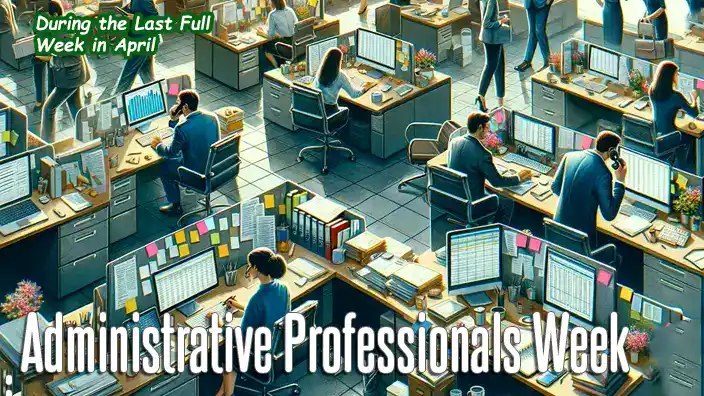
Administrative professionals are the glue that holds the office together—literally, if you count all the times they’ve rescued a last-minute presentation with a well-placed paperclip and a miracle. They have the scheduling skills of an air traffic controller, the patience of a kindergarten teacher, and the problem-solving abilities of a bomb squad technician disarming yet another Excel crisis. They can type at lightning speed, decode cryptic email requests, and somehow always know where the boss left their glasses. Without them, the workplace would descend into chaos—meetings would overlap into infinity, the supply room would become a lawless wasteland, and the office printer… well, the office printer would still be jammed, but at least they’d know how to fix it.
Celebrated: Annually, during the Last Full Week of April
An engaging history and appreciation of Administrative Professionals Week, highlighting the evolution of secretarial roles and their crucial duties.

- Details
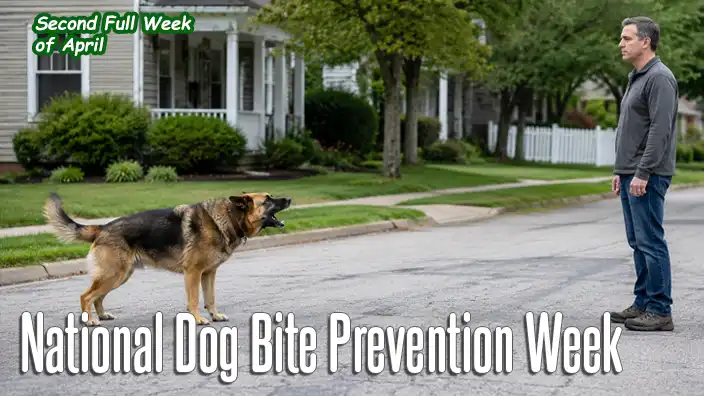
Dogs are loyal, loving, and usually delighted to see us. They are also capable of making their opinions known when someone pulls a tail, interrupts dinner, or decides a sleeping dog desperately needs a hug. National Dog Bite Prevention Week helps humans avoid these fascinating but regrettable life choices.
Celebrated: Annually, during the Second Full Week of April
Learn how National Dog Bite Prevention Week promotes safe interactions, responsible dog ownership, and dog bite prevention

- Details
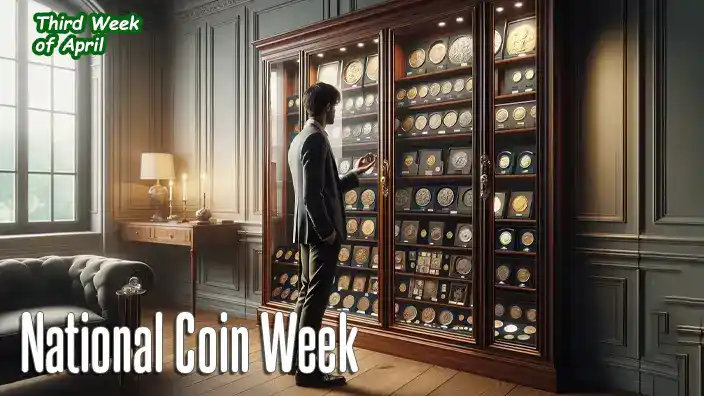
Coin collecting is the only hobby where you can literally make money while spending money—though, sadly, it doesn’t work at the grocery store. It starts innocently enough: you find an old wheat penny in your change, and suddenly you’re squinting at every coin like a detective searching for clues. Before you know it, you’re hoarding jars of spare change, debating whether to sell a rare dime or keep it just in case its value skyrockets in 50 years. You start saying things like, “Did you know the 1943 copper penny is worth thousands?” at social gatherings, and people either admire your knowledge or slowly back away. But hey, when the world goes cashless, you’ll be the one sitting on a treasure trove—assuming you don’t accidentally spend your prized coin on a vending machine snack first!
Celebrated: Annually, during the Third Week of April
Celebrate National Coin Week each April, exploring the rich history and culture behind coins, from ancient times to modern collectibles. Discover the fun!

- Details
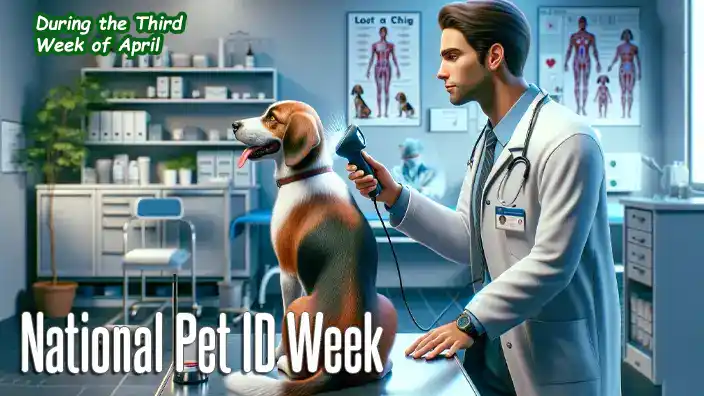
Some creatures are born wanderers—explorers of the great unknown, seekers of adventure… and then there’s your cat, who managed to get lost inside the house. Whether it’s an epic backyard jailbreak or an ill-fated journey under the couch, having a tiny metal tag jangling from their collar is the difference between a dramatic homecoming and your neighbor adopting “Mittens” because they assumed she was a stray. Sure, pets may roll their eyes (if they could) at the idea of carrying ID, but until they learn to introduce themselves properly, that tag is the only thing stopping them from becoming a very well-fed imposter at someone else’s dinner table.
Celebrated: Annually, during the Third Week of April
Discover the importance of National Pet ID Week, a time dedicated to ensuring your pet's safety and improving their chances of returning home post adventure.


- Details
If you’ve ever walked outside, glanced up, and thought, “Wow, that’s a lot of sky,” then congratulations — you’re already halfway to celebrating Sky Awareness Week like a seasoned professional. This is the one week of the year when it becomes perfectly acceptable to stare into the heavens without someone asking if you’ve lost your drone again. It’s a time to appreciate the enormous, ever-changing masterpiece stretched above our heads… and to admit that for something so massive, we don’t give it nearly enough credit. Consider this your official permission slip to gawk upward without shame.
Celebrated: Annually, during the Last Full Week of April
Discover Sky Awareness Week, a tradition born from a whimsical debate in a tavern, continuing a legacy of curiosity, appreciation, and connection with the vast, beautiful sky.


- Details
If you’re going to pretend to be a princess, you might as well go all in. That means sweeping into rooms dramatically, making grand pronouncements about the state of your kingdom (a.k.a. your living room), and insisting that your morning coffee be served in a goblet—preferably by a talking woodland creature. Need to go grocery shopping? No problem. Strut through the aisles with the regal poise of someone who just inherited half a kingdom, and when you reach the self-checkout, give a solemn nod as if bestowing royal approval upon the machine. And if anyone questions your behavior, remind them that a princess never explains—she just is.
Celebrated: Annually, during the Last Full Week of April
Celebrate National Princess Week with a week of enchantment and empowerment. Discover the origins and activities that make this royal celebration truly magical.

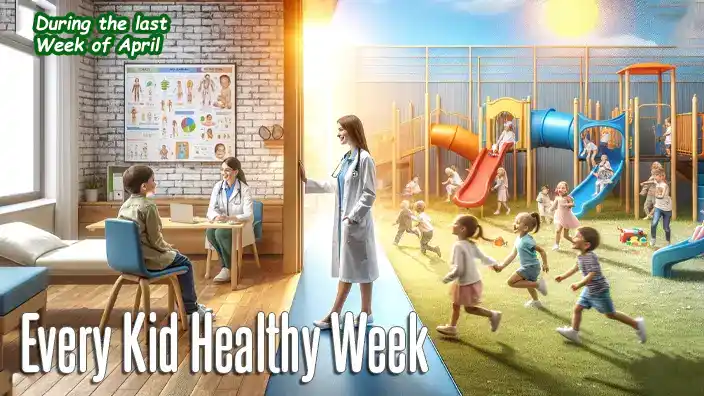
- Details
Let’s be honest—getting kids excited about healthy habits can sometimes feel like convincing a cat to take a bath. But Every Kid Healthy Week is here to flip the script! Instead of pleading with them to eat their veggies, why not turn it into a ‘Crunch-Off’ competition? Who can make the loudest crunch with a carrot? Who can keep a straight face while eating a lemon? And for the brave souls out there, the infamous ‘Mystery Smoothie Challenge’—because nothing builds character like accidentally blending spinach with orange juice and realizing… it’s actually pretty good! Healthy living has never been this entertaining (or this full of dramatic reactions).
Celebrated: Annually, during the Last Week of April
Embark on a journey into Every Kid Healthy Week, a celebration of wellness, nutrition, and fun activities for kids. Learn about the importance of healthy habits for happier, healthier children.


- Details
There are heroes among us. Not the cape-wearing, spotlight-loving kind—but the quiet, determined souls armed with plastic bags and a strong sense of duty. International Pooper Scooper Week celebrates those brave individuals who face life’s messiest moments head-on, proving that while the job may stink, the impact is downright heroic.
Celebrated: Annually, during the First Week of April
Discover why picking up after pets matters during International Pooper Scooper Week and how to celebrate responsibly.


- Details
They say music is therapy, and honestly, who needs a pricey shrink when you have a playlist that understands your soul? Had a rough day? Blast some rock and scream-sing in the car like you're headlining a sold-out tour. Feeling nostalgic? Cue the 80s ballads and dramatically stare out the window like you're in a music video. Need motivation? Nothing says get stuff done like an upbeat pop anthem convincing you that, yes, you are unstoppable. Whether it's dancing like no one's watching or crying to sad songs just because, music doesn’t judge—it just plays along and lets you feel all the feels, one beat at a time.
Celebrated: Annually, from April 10th to April 15th
World Music Therapy Week is a global celebration of the healing power of music, offering a stage for education, advocacy, and engagement with music therapy.


- Details
Medical Laboratory Professionals are the unsung heroes of healthcare, working behind the scenes in a land of test tubes, microscopes, and mysterious bodily fluids. They can identify a virus faster than you can Google your symptoms and have a superpower for deciphering illegible doctor handwriting. These lab wizards spend their days poking, prodding, and spinning samples like a DJ at a science-themed rave, all while running on caffeine and the sheer thrill of making sure your results don’t come back labeled “vampire.” If you’ve ever been diagnosed correctly, thank a lab tech—just don’t ask them what they’ve seen under a microscope. Some things can’t be unseen.
Celebrated: Annually, during the Last Full Week of April
Discover the world of lab coats and secret codes during Medical Laboratory Professionals Week, where workers battle microscopic dragons to safeguard our health.


- Details
Windows let in sunshine, fresh air, and occasionally, a nosy neighbor’s unsolicited opinions—but let’s make sure they don’t let in accidents! National Window Safety Week reminds us that while windows are great for gazing at the world, they’re not meant to double as escape hatches for adventurous toddlers or easy access points for curious raccoons. A well-placed lock, a sturdy guard, and the strategic relocation of that “perfectly climbable” chair can mean the difference between a picturesque view and an unexpected trip to the ER. So, secure those sills, check those latches, and let’s keep the only thing dramatically falling through our windows… the occasional WiFi signal.
Celebrated: Annually, during the First Full Week of April
Explore the significance of National Window Safety Week in safeguarding homes and preventing accidents. Discover the origins and crucial safety measures to protect young adventurers.


- Details
If there’s ever been a holiday that combines deep history, meaningful tradition, and the occasional “Why is this bread so flat?” moment, it’s Passover. It’s a time when families gather, stories are told, questions are encouraged, and dinner comes with both symbolism and a script. And let’s be honest—any holiday that requires you to explain your food before you eat it is already off to an interesting start.
Celebrated: Annually, beginning in late March or April (dates vary each year)
Learn about Passover traditions, history, and meaning, plus how to celebrate this important Jewish holiday.

From Our Marks Catelog
-

Peace for one hour? That’s like baking a cake and only eating the crumbs! If we can manage to...
-

There was a time when wearing pink to school might earn you a raised eyebrow, a snicker, or a...
-

Picture this: you're rummaging through a drawer, looking for a pen, but instead, you find a flip...
-

There’s nothing light about Good Friday—after all, it commemorates the darkest day in Christian...
-

Mental health is not just a personal matter—it's a global issue that affects millions of lives...
-

Having a hole in your bucket is nature’s way of saying, “You tried.” It’s the DIY version of a practical...

