Mark The Days - May

May strolls in like it’s got nowhere to be and all the time in the world. Flowers bloom, birds sing, and suddenly everyone remembers they own flip-flops. It’s the month where spring hits its stride and lawn mowers wake from hibernation with a roar. Holidays in May are all about moms, margaritas, and memorials—and sometimes all three at once if you're doing the weekend right. It’s the gentle nudge before summer’s full cannonball, and honestly, May deserves a round of applause just for making us forget how weird March was.

- Details
Singing out is one of those glorious acts of human expression that walks the fine line between brilliance and public disturbance. One minute you’re passionately belting out your favorite tune like you're headlining Madison Square Garden, and the next, your cat is hiding under the couch and your neighbor is googling noise-canceling headphones. But that’s the beauty of it—singing out isn’t about being good, it’s about being loud, proud, and just delusional enough to believe the world needs your rendition of “Total Eclipse of the Heart” at full volume on a Tuesday morning.
Celebrated: Annually, on May 25th
National Sing Out Day on May 25th is a celebration of voices where shower soloists, car crooners, and karaoke kings unite to sing without fear of judgment. Unleash your inner superstar!


- Details
Devil’s Food Cake isn’t just dessert—it’s a full-blown chocolate seduction with frosting. It’s the kind of cake that looks you straight in the eye and whispers, “Calories don’t count today.” One bite and you’re questioning your loyalty to every other dessert you’ve ever known. It’s rich, it’s decadent, and it doesn’t care if you swore off sweets on Monday. This cake has no time for moderation—it wants your fork, your plate, and possibly your soul (but mostly just your napkin, because it’s about to get messy).
Celebrated: Annually, on May 19th
Discover the sinful delight of Devil’s Food Cake, a rich, decadent treat celebrated on May 19th in the United States. Indulge in its intense chocolate flavor and luscious texture.


- Details
Celebrating Harry Potter is the only time it’s socially acceptable for grown adults to wave sticks around, shout Latin gibberish, and demand a letter from an owl. You start the day fully intending to keep things low-key—maybe just rewatch The Sorcerer’s Stone. But before you know it, you’re dressed in house robes, debating whether you could survive on pumpkin pasties alone, and dramatically whispering “Always” at anyone who will listen. And let’s not forget the Sorting Hat crisis—because no matter how many times you take the quiz, you still question if you’re truly a Ravenclaw or if the algorithm is just messing with you.
Celebrated: Annually, on May 2nd
A magical celebration awaits on International Harry Potter Day! Join muggles and wizards as they commemorate the Battle of Hogwarts and revel in the enduring magic of J.K. Rowling's beloved series. Grab your wands and immerse yourself in a whimsical world of Harry Potter festivities!


- Details
Without proper weights and measures, buying a pound of apples could mean anything from a generous bagful to a single, slightly judgmental Granny Smith—and don’t even get started on paying for gas by the "almost gallon." Accurate measurement isn't just about fairness; it's the thin line between a good deal and being swindled with a smile. And in the science lab? Well, let's just say that confusing grams with kilograms or inches with centimeters could turn a simple experiment into a fireworks display, a minor explosion, or, at the very least, a very stern conversation with the fire marshal. Precision matters—and not just because no one wants to accidentally invent a new crater in the parking lot.
Celebrated: Annually, on May 20th
Discover the fascinating world of precision and global cooperation celebrated on Weights & Measures Day. From ancient origins to modern standards, explore the significance of metrology in everyday life.


- Details
Few things unite humanity faster than the words “The pizza’s here!” Suddenly, people appear from every corner of the house like hungry magic tricks. National Pizza Party Day celebrates the glorious tradition of gathering around a cardboard box filled with melted cheese, questionable topping choices, and absolutely no regrets. Diets are postponed, friendships are strengthened, and somebody always burns the roof of their mouth because patience left the building fifteen minutes ago.
Celebrated: Annually, on the Third Friday in May
Celebrate National Pizza Party Day with the history of pizza, fun traditions, famous pizza styles, and delicious ways to enjoy the cheesiest party of the year


- Details
There’s a certain joy in not doing the dishes—a rebellious thrill in stacking that plate on the counter and walking away like you’ve just defused a bomb. For one glorious day, you get to sidestep the sudsy cycle of rinse, scrub, repeat and embrace the freedom of disposable dinnerware. No judgment. No “you missed a spot.” Just you, your microwave burrito, and a paper towel pretending to be a plate. It’s not laziness—it’s strategic energy conservation.
Celebrated: Annually, on May 18th
Discover the celebration of No Dirty Dishes Day, a day dedicated to freeing you from dishwashing duties and embracing culinary laziness with takeout and disposable plates.

- Details
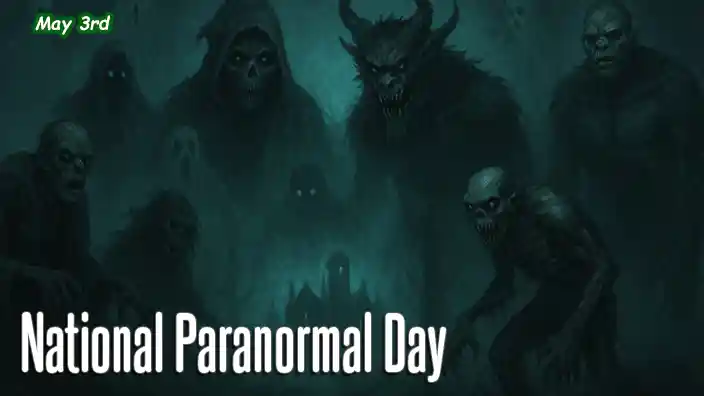
The paranormal world is like the universe’s weird uncle—mysterious, unpredictable, and probably living in a haunted RV somewhere in the desert. It’s the only field where serious investigators can say things like “the ghost seemed upset about the wallpaper” or “we confirmed the presence of a demon using a scented candle and a potato,” and still get booked for a documentary. Whether it’s ghosts with a flair for drama or aliens who can cross galaxies but still can’t figure out how to make a non-blurry entrance, the paranormal keeps us guessing—and laughing nervously in the dark.
Celebrated: Annually, on May 3rd
Look into the world of the unexplained on National Paranormal Day. Discover haunted tales, famous phenomena, and fun ways to celebrate the eerie and unexplainable.


- Details
Technology has gotten so advanced that your phone can recognize your face, your car can park itself, and your fridge might soon start judging your late-night snack choices. Meanwhile, you’re still standing there trying to remember if your password had a capital letter, a number, or the name of your first pet from 1978. National Technology Day is here to celebrate all these incredible breakthroughs—and to remind us that while technology keeps evolving at lightning speed, most of us are just doing our best to keep up without accidentally resetting something important.
Celebrated: Annually, on May 11th
Celebrate National Technology Day, without which, Mark The Day would not be possible.


- Details
For museum lovers, walking into a museum is a bit like entering a treasure chest designed by historians, scientists, and people who apparently never throw anything away. One minute you’re admiring ancient kings, the next you’re staring at a 300-year-old teapot or a dinosaur skeleton the size of a bus. Museum Lover’s Day is the perfect excuse to embrace your inner explorer, soak up fascinating facts, and wander vast halls proving that humanity has been collecting cool stuff for a very, very long time.
Celebrated: Annually, on May 5th
Museum Lover’s Day is a fun celebration of history, science, art, and culture through museums that preserve humanity’s greatest stories


- Details
Using sunscreen is the adult version of having your mom spit-wipe your face—mildly annoying but weirdly necessary. Sure, it might feel like you’re smearing mayo all over your body and end up looking shinier than a rotisserie chicken, but that’s the price of protecting yourself from turning into human beef jerky. Plus, skipping sunscreen in hopes of getting a tan faster is like skipping your seatbelt because you’re “only driving a few blocks”—technically possible, but also wildly unwise. So lather up, embrace the glow, and remember: lobster-red is not a summer fashion statement.
Celebrated: Annually, on May 27th
Discover the history of sunscreen, from ancient remedies to modern marvels, and how sun protection has evolved over the centuries. Embrace Sunscreen Day with a celebration of staying sun-safe and fabulous.


- Details
National Pack Rat Day is the one day a year when hanging on to that drawer full of twist ties, mismatched socks, and ancient phone chargers is practically a badge of honor. Sure, you haven’t used that VHS rewinder since 1998, but what if you need it someday? Decluttering experts might disagree, but pack rats know that sentimental value can be stored in every rubber band ball, broken pencil, and instruction manual for appliances you no longer own. Today, we celebrate the noble art of “I might need this... eventually.”
Celebrated: Annually, on May 17th
Explore the celebration of National Pack Rat Day on May 17th, a day to embrace our love for collecting and hoarding items while reflecting on the impact of clutter on our lives.


- Details
Where else can you get sunburned and frostbitten in the same week, politely argue over whose turn it is to hold the door, and consider hotdish a valid food group? Minnesota is that magical place where mosquitoes are big enough to have their own zip codes, winter lasts half the year, and people still say “uff da” without irony. It’s charming, chilly, and just weird enough to make you fall in love with it—preferably while wearing wool socks and eating something smothered in cream of mushroom soup.
Celebrated: Annually, on May 11th
Celebrate Minnesota's Statehood Day on May 11th, marking its official entry into the Union in 1858 as the 32nd state of the United States. Explore the rich history and vibrant culture of the Land of 10,000 Lakes.


- Details
Riding an e-bike is like discovering cheat mode in the video game of commuting. You’re pedaling—sure—but then the motor kicks in and suddenly you’re gliding up hills like some kind of smug cycling wizard. It’s exercise with an asterisk, cardio with a wink. You pass serious cyclists who are sweating bullets while you barely break a bead, grinning like you’ve just outrun the laws of physics and maybe a bit of adulthood too. Honestly, it’s the closest thing most of us will get to feeling like a superhero... if that superhero wore cargo shorts and forgot sunscreen.
Celebrated: Annually, on May 30th
Celebrate National E-Bike Day on May 30th! Discover the eco-friendly, fun world of e-bikes, their history, benefits, and different types. Join the e-bike revolution!


- Details
Some people have kids. Others have dogs… and let’s be honest, the dogs are eating better, sleeping more comfortably, and getting more daily compliments. Dog Mom Day celebrates the women who proudly introduce themselves as “Mom” to a creature that responds primarily to treats, squeaky toys, and the sound of a cheese wrapper from three rooms away. It’s not just a title—it’s a lifestyle, complete with early morning walks, spontaneous vet visits, and the ability to identify at least ten different barks, each with its own meaning.
Celebrated: Annually, on the Second Saturday in May
Join us in this fun, factual guide to honoring Dog Moms, their routines, and the special bond they share with their dogs.

- Details
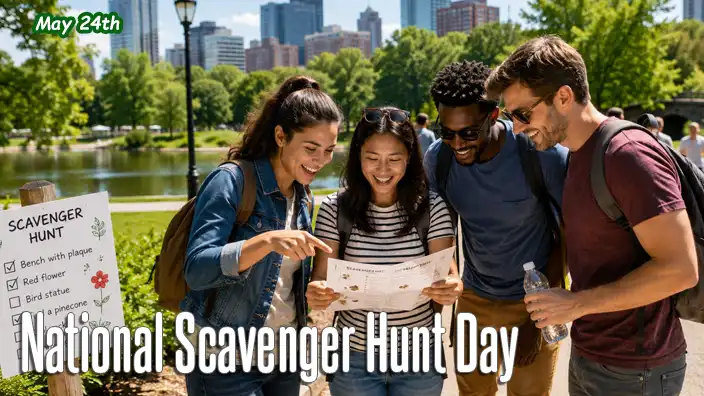
Some people are born explorers. Others can't find the television remote when it's sitting on the coffee table. National Scavenger Hunt Day celebrates both groups by turning the search itself into the fun. Whether you're tracking down hidden clues, solving clever puzzles, or arguing over whether that oddly shaped rock counts as "interesting," this is the perfect excuse to gather family and friends for an adventure where curiosity is rewarded and laughter is almost guaranteed.
Celebrated: Annually, on May 24th
Celebrate National Scavenger Hunt Day with clever clues, friendly competition, and plenty of laughs as you discover why finding hidden treasures never gets old
- Details
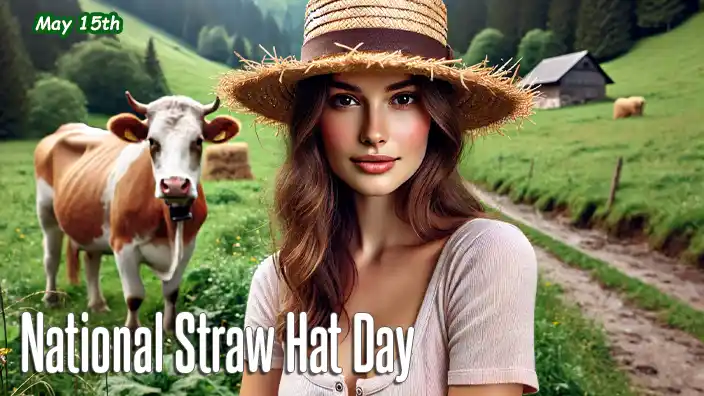
Straw hats aren't just a fashion statement; they're a survival tool for the socially awkward. Where else can you find a stylish accessory that protects you from the sun and offers a handy hiding spot from people you'd rather not talk to at summer parties? Just tilt that brim down, and voila! Instant privacy. Whether you're warding off UV rays or awkward small talk, a straw hat is your best ally—think of it as your personal shade provider and social shield rolled into one convenient package!
Celebrated: Annually, on May 15th
Discover the fascinating history and amusing quirks of National Straw Hat Day, a celebration of summer, sunshine, and laid-back living. Explore the origins and significance of the humble straw hat.

- Details
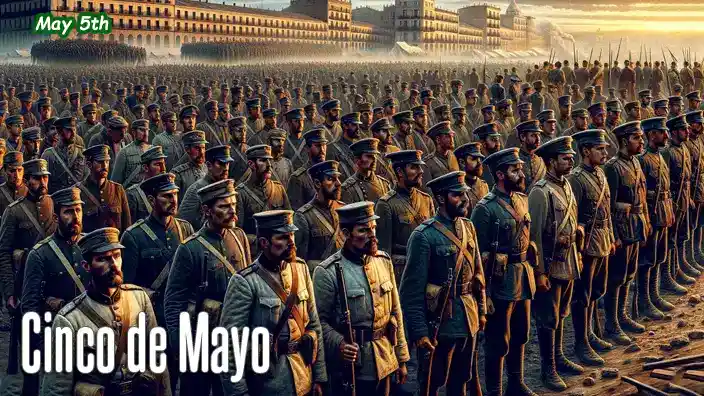
Cinco de Mayo: the one day of the year when Americans celebrate a Mexican military victory by wearing sombreros from party stores and washing down buckets of chips with questionable amounts of margaritas. Contrary to popular belief, it's not Mexican Independence Day—that’s in September—but don’t let that stop Chad from showing up in a poncho and shouting "¡Arriba!" at guacamole. The actual holiday marks the 1862 Battle of Puebla, when an outnumbered Mexican army defeated the French, and we’ve somehow turned that historic underdog moment into an excuse to eat tacos until we can’t feel feelings. Ole!
Celebrated: Annually, on May 5th
Discover the spicy history and vibrant celebrations of Cinco de Mayo, a festive occasion filled with parades, delicious food, and tequila, commemorating Mexico's victory over the French forces in 1862.

- Details
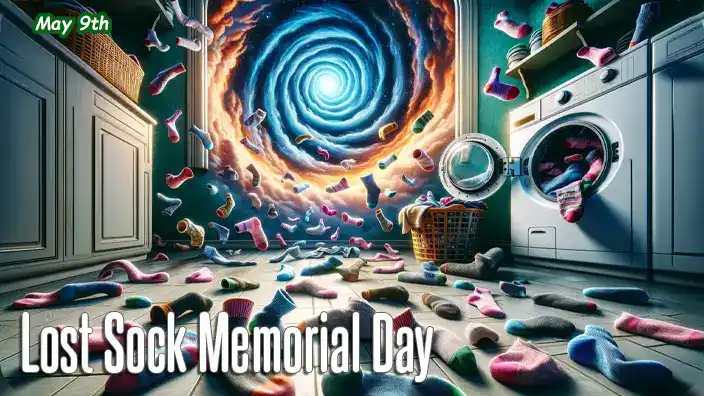
This is the day when we honor the brave socks that have ventured into the abyss of the washing machine, never to return. It's a time to remember the lefts without rights, the stripes without partners, creating mismatched monuments in our drawers. This solemn day reminds us of the mysterious sock vortex that exists somewhere between the washing and drying cycles, a place where single socks roam free, liberated from the tyranny of human feet. So, let's raise a sock to those we've lost, and maybe, just maybe, buy a new pair to fill the void.
Celebrated: Annually, on May 9th
Discover the fun of Lost Sock Memorial Day! Celebrate with crafts, sock hunts, and humorous tributes to those lone socks we've all lost in the laundry.

From Our Marks Catelog
-
Pizza is the ultimate customizable dish. It caters to all, from the staunch meat-lover who wants...
-

Your toes don't ask for much. They spend their days squeezed into shoes, dodging coffee tables,...
-

You’re trying to relax after a long day, but your dog has decided that now is the perfect time to...
-
Tiny, shiny, and unapologetically bold, these little fish have a knack for stealing the show at...
-
Horses are the comedians of the animal world, even if they don’t realize it. From sneaky maneuvers...
-
Some cars are built to get you from point A to point B. The Pink Cadillac was built to make sure...

