Mark The Days - May

May strolls in like it’s got nowhere to be and all the time in the world. Flowers bloom, birds sing, and suddenly everyone remembers they own flip-flops. It’s the month where spring hits its stride and lawn mowers wake from hibernation with a roar. Holidays in May are all about moms, margaritas, and memorials—and sometimes all three at once if you're doing the weekend right. It’s the gentle nudge before summer’s full cannonball, and honestly, May deserves a round of applause just for making us forget how weird March was.

- Details
National Bike to Work Day is that glorious annual occasion when sensible adults everywhere trade traffic jams, gas stations, and road rage for bicycle helmets, fresh air, and the sudden realization that office buildings are often located uphill. It’s a day for brave commuters to embrace pedal power, save money, improve their health, and arrive at work either invigorated or looking like they just escaped a cardio-themed survival challenge. Whether you’re a seasoned cyclist or someone rediscovering a bicycle buried behind holiday decorations and forgotten exercise equipment, this day proves that commuting can be healthier, greener, and occasionally sweatier than expected.
Celebrated: Annually, on the Third Friday in May
Celebrate National Bike to Work Day with a look at its history and practical tips for healthier commuting, greener travel, and escaping traffic jams


- Details
Coke drinkers are a fiercely loyal bunch—like, “don’t-even-think-about-offering-me-a-Pepsi” loyal. They can spot a red can from 200 yards and will passionately defend their choice as if it were a beloved family member. Some claim it tastes better in a glass bottle, others swear by fountain Coke with just the right amount of ice, and then there are the true connoisseurs who can tell the difference between McDonald’s Coke and everyone else’s (and they’re not wrong). To them, Coke isn’t just a drink—it’s a lifestyle, a personality trait, and possibly a blood type.
Celebrated: Annually, on May 27th
Discover the fascinating history of Coca-Cola on National Have a Coke Day, from its medicinal origins to its status as a global icon of refreshment.


- Details
Memorial Day is a time of quiet reflection and deep gratitude—a day when we honor the men and women who gave their lives in service to our nation. It is not simply a holiday marked by flags and parades, but a moment to remember the weight of each sacrifice, the empty chairs at family tables, and the silent stories carried in folded flags. As we enjoy the freedoms they secured, we pause to say their names, remember their courage, and keep their legacy alive in our hearts.
Celebrated: Annually, on May 25th
Honoring the sacrifices of fallen service members on Memorial Day, a solemn occasion rooted in history and reflection. A time for communities to unite in remembrance and tribute.

- Details
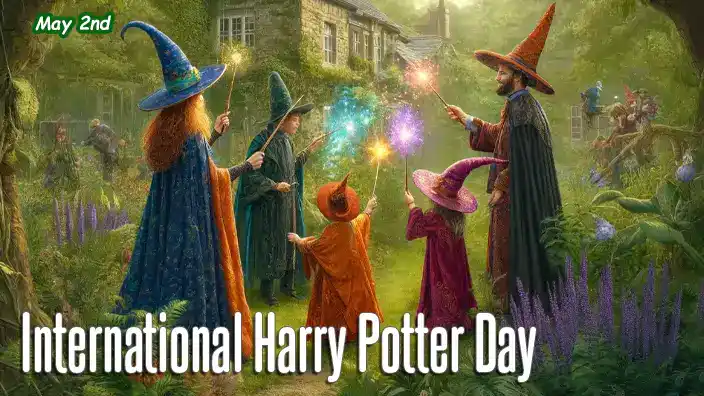
Celebrating Harry Potter is the only time it’s socially acceptable for grown adults to wave sticks around, shout Latin gibberish, and demand a letter from an owl. You start the day fully intending to keep things low-key—maybe just rewatch The Sorcerer’s Stone. But before you know it, you’re dressed in house robes, debating whether you could survive on pumpkin pasties alone, and dramatically whispering “Always” at anyone who will listen. And let’s not forget the Sorting Hat crisis—because no matter how many times you take the quiz, you still question if you’re truly a Ravenclaw or if the algorithm is just messing with you.
Celebrated: Annually, on May 2nd
A magical celebration awaits on International Harry Potter Day! Join muggles and wizards as they commemorate the Battle of Hogwarts and revel in the enduring magic of J.K. Rowling's beloved series. Grab your wands and immerse yourself in a whimsical world of Harry Potter festivities!


- Details
Every year on May the Fourth, Jedi robes come out of closets, lightsabers get dusted off, and grown adults proudly argue over the correct order to watch the movies—as if the fate of the galaxy depends on it. Star Wars Day isn’t just a celebration, it’s a full-blown galactic takeover by fans who’ll quote Yoda in business meetings, name their pets after obscure droids, and insist that yes, they do need another limited-edition Baby Yoda mug. May the Force be with their credit cards.
Celebrated: Annually, on May 4th
Discover the origins and evolution of Star Wars Day celebrated on May 4th, a global phenomenon uniting sci-fi enthusiasts in joyous festivities.


- Details
Drawing is like giving your imagination a free gym membership: it stretches your creativity, strengthens your ideas, and occasionally ends up in some pretty hilarious positions. Whether you're sketching a cat that looks more like a potato or trying to capture the "essence" of a tree and ending up with a broccoli impersonator, drawing is all about having fun. So grab a pencil, embrace the scribbles, and remember: every masterpiece starts with a doodle (and sometimes a really bad one).
Celebrated: Annually, on May 16th
Discover the importance of drawing for stress relief, creativity, and emotional expression. Join the fun on Drawing Day and celebrate artistic exploration!

- Details
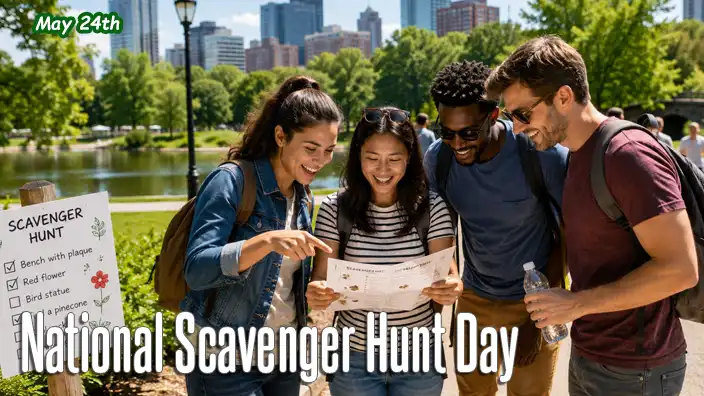
Some people are born explorers. Others can't find the television remote when it's sitting on the coffee table. National Scavenger Hunt Day celebrates both groups by turning the search itself into the fun. Whether you're tracking down hidden clues, solving clever puzzles, or arguing over whether that oddly shaped rock counts as "interesting," this is the perfect excuse to gather family and friends for an adventure where curiosity is rewarded and laughter is almost guaranteed.
Celebrated: Annually, on May 24th
Celebrate National Scavenger Hunt Day with clever clues, friendly competition, and plenty of laughs as you discover why finding hidden treasures never gets old

- Details
For museum lovers, walking into a museum is a bit like entering a treasure chest designed by historians, scientists, and people who apparently never throw anything away. One minute you’re admiring ancient kings, the next you’re staring at a 300-year-old teapot or a dinosaur skeleton the size of a bus. Museum Lover’s Day is the perfect excuse to embrace your inner explorer, soak up fascinating facts, and wander vast halls proving that humanity has been collecting cool stuff for a very, very long time.
Celebrated: Annually, on May 5th
Museum Lover’s Day is a fun celebration of history, science, art, and culture through museums that preserve humanity’s greatest stories


- Details
Ah, telecommunications — the reason we can talk to Aunt Mabel across the country, argue with strangers online, and accidentally join a Zoom meeting with the camera on and your breakfast still stuck to your face. From the days of shouting across canyons to now arguing with your phone because Siri "misunderstood again," we’ve come a long way. So today, take a moment to thank the invisible magic that connects us all — even if it occasionally drops your call right when the plot twist is revealed.
Celebrated: Annually, on May 27th
World Telecommunications Day celebrates the wizards behind the wires who keep us connected, from the telegraph to smartphones. Learn about the history and future of communication technology.


- Details
Some holidays involve fireworks, marching bands, or a cake the size of a small coffee table. World Laughter Day keeps things wonderfully simple—just laugh. That’s it. No decorations required, no fancy equipment, and absolutely no need to explain the joke afterward. Celebrated on the first Sunday in May, this cheerful day invites people everywhere to loosen up, share a chuckle, and remember that sometimes the best medicine really is a good belly laugh. After all, if the whole world paused to laugh at the same time, we might just forget our troubles long enough to enjoy the moment.
Celebrated: Annually, on the first Sunday in May
World Laughter Day celebrates the power of laughter to improve health, reduce stress, and connect people worldwide.


- Details
Blueberry cheesecake is proof that dessert can be both fancy and sneaky. It sits there looking innocent enough—smooth top, polite little swirl of berries, acting like it belongs at a classy brunch where people say things like “mmm, just the right amount of tang.” But one bite in and you’re hooked like it’s made of pure sugar sorcery, dairy wizardry, and a legally questionable amount of happiness. It’s the kind of dessert that whispers, “Just one slice,” and you believe it… because you’re a reasonable adult with self-control and a functioning moral compass. Then five minutes later you’re holding a second slice “to even it out,” a third slice “because it’s National Blueberry Day so it’s basically patriotic,” and a fourth slice because honestly the blueberries are fruit and fruit is health and you are simply making excellent nutritional choices. Before you know it, you’re alone in the kitchen with an empty pan, berry-stained teeth, and the kind of cheesecake-induced life crisis that makes you stare off into the middle distance like a war veteran. You don’t even feel guilty. You feel powerful. Like you’ve faced temptation, lost spectacularly, and somehow still won. Worth it? Always.
Celebrated: Annually, on May 26th
Celebrate National Blueberry Cheesecake Day with a slice of this creamy, tangy, and fruity dessert. Learn about the history, fun facts, and a delicious recipe for this beloved treat.


- Details
Peace Officers Memorial Day is a solemn reminder of the courage it takes to run toward danger when every instinct screams to run the other way. It’s a day to honor those who pinned on the badge not for glory or glamour, but to protect complete strangers—often without thanks and sometimes at great cost. And yet, in the midst of our grief and reverence, we find ourselves smiling through tears—because somewhere out there, a peace officer once wrestled a goose out of traffic, returned a lost teddy bear at 3 a.m., or helped an elderly woman win her lifelong battle with a jar lid. Their bravery wasn’t always headline-worthy, but it was always human. And that’s what makes them heroes.
Celebrated: Annually, on May 15th
Learn about Peace Officers Memorial Day, a solemn occasion to honor law enforcement officers who sacrificed their lives in the line of duty.


- Details
Straw hats aren't just a fashion statement; they're a survival tool for the socially awkward. Where else can you find a stylish accessory that protects you from the sun and offers a handy hiding spot from people you'd rather not talk to at summer parties? Just tilt that brim down, and voila! Instant privacy. Whether you're warding off UV rays or awkward small talk, a straw hat is your best ally—think of it as your personal shade provider and social shield rolled into one convenient package!
Celebrated: Annually, on May 15th
Discover the fascinating history and amusing quirks of National Straw Hat Day, a celebration of summer, sunshine, and laid-back living. Explore the origins and significance of the humble straw hat.


- Details
International No Diet Day is the one day a year when your salad can take a seat and your stretchy pants become formal wear. It's the culinary equivalent of hitting “snooze” on society’s obsession with abs and quinoa. On this glorious occasion, your inner food rebel gets a hall pass to high-five a donut, flirt with a double cheeseburger, and maybe even ghost that fitness tracker. Forget “cheat day”—this is treat day, and the only thing getting burned is the toast you forgot in the excitement.
Celebrated: Annually, on May 6th
Celebrate International No Diet Day with a culinary feast! Discover the history and message behind this day of food freedom and body positivity. Indulge guilt-free today!

- Details
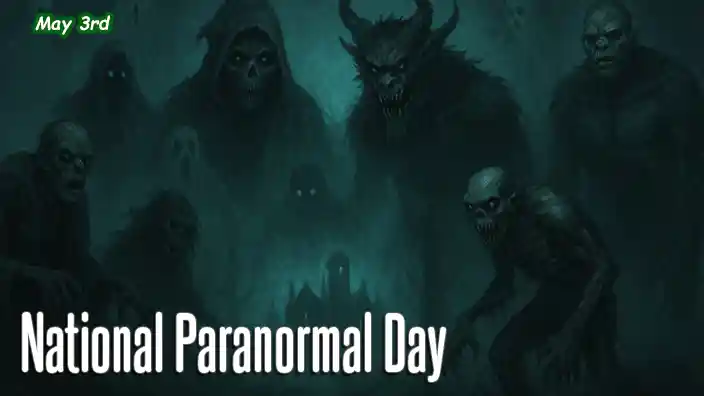
The paranormal world is like the universe’s weird uncle—mysterious, unpredictable, and probably living in a haunted RV somewhere in the desert. It’s the only field where serious investigators can say things like “the ghost seemed upset about the wallpaper” or “we confirmed the presence of a demon using a scented candle and a potato,” and still get booked for a documentary. Whether it’s ghosts with a flair for drama or aliens who can cross galaxies but still can’t figure out how to make a non-blurry entrance, the paranormal keeps us guessing—and laughing nervously in the dark.
Celebrated: Annually, on May 3rd
Look into the world of the unexplained on National Paranormal Day. Discover haunted tales, famous phenomena, and fun ways to celebrate the eerie and unexplainable.


- Details
Imagine stepping outside on May 20th and seeing a sea of red sneakers as far as the eye can see—young, old, business suits, gym shorts, even the family dog trotting along in tiny custom kicks. Boardrooms would look a lot less intimidating, weddings would get a surprising pop of color, and jogging trails would resemble a stylish stampede of good intentions. If everyone laced up in red, the world might not only be a little more aware, but a whole lot more cheerful—and frankly, who wouldn’t want to live in a world where the biggest fashion statement is kindness?
Celebrated: Annually, on May 20th
Join the global movement on International Red Sneakers Day by wearing vibrant red sneakers to raise awareness about food allergies and promote allergy safety.


- Details
Smiling is that magical facial yoga we do when we’re trying to look friendly, hide panic, or convince someone we definitely didn’t just eat the last cookie. On National Smile Day, we celebrate this universal sign of happiness, awkward customer service, and “I have no idea what you just said, but I’m nodding politely.” Whether it’s a full-blown grin or that twitchy little smirk you give when your neighbor brings up politics again, smiling is nature’s way of saying, “I’m approachable… probably.” So flash those pearly whites—or whatever teeth you’ve got left after decades of coffee—and spread a little joy that doesn't cost a thing (except maybe a wrinkle or two).
Celebrated: Annually, on May 31st
Discover the history, science, and joy of smiling on National Smile Day, celebrated on May 31st. Explore types of smiles, global variations, and fun smile trivia.

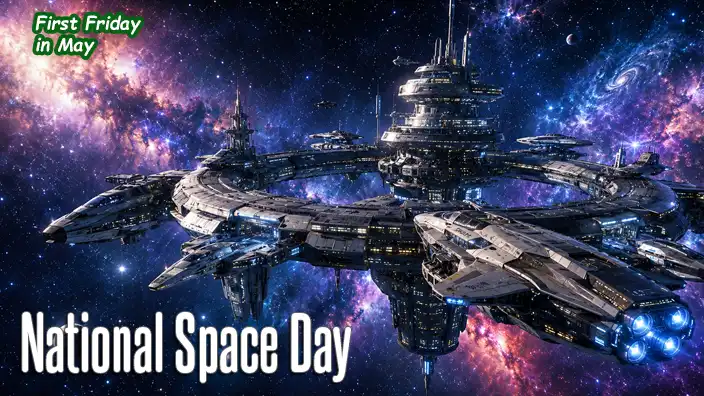
- Details
National Space Day celebrates humanity’s endless desire to explore the universe, ask impossible questions, and spend billions of dollars launching extremely brave people into the terrifying emptiness of space using what is basically controlled fire. From moon landings to Mars rovers, space exploration has shown what humans can achieve with enough intelligence, courage, and a willingness to say, “You know what? Let’s poke that mysterious glowing thing and see what happens.”
Celebrated: Annually, on the First Friday in May
Celebrate National Space Day with the history of space exploration, moon landings, astronauts, rockets, and fascinating facts about the universe

From Our Marks Catelog
-
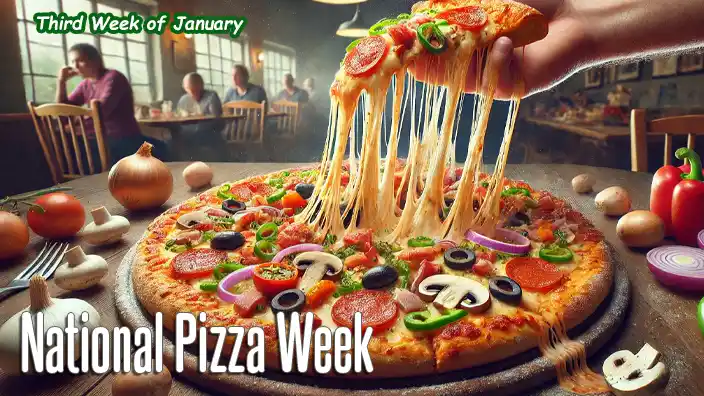
Pizza is the ultimate customizable dish. It caters to all, from the staunch meat-lover who wants...
-

Your toes don't ask for much. They spend their days squeezed into shoes, dodging coffee tables,...
-

You’re trying to relax after a long day, but your dog has decided that now is the perfect time to...
-
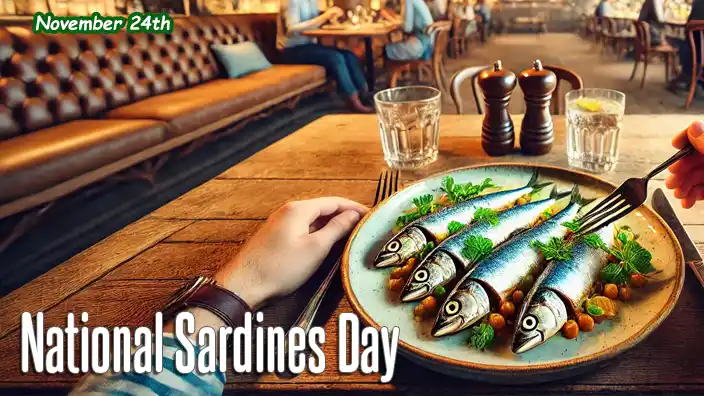
Tiny, shiny, and unapologetically bold, these little fish have a knack for stealing the show at...
-
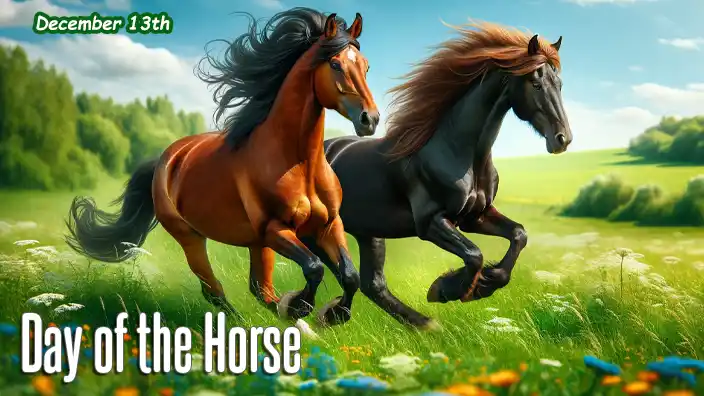
Horses are the comedians of the animal world, even if they don’t realize it. From sneaky maneuvers...
-
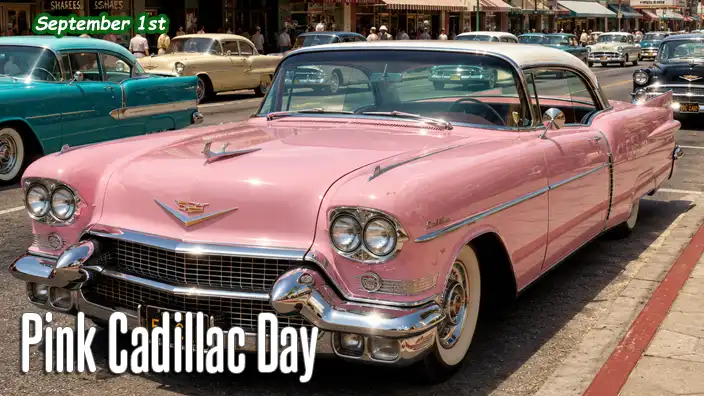
Some cars are built to get you from point A to point B. The Pink Cadillac was built to make sure...

