October 15, 1953, in Valley Stream, Long Island
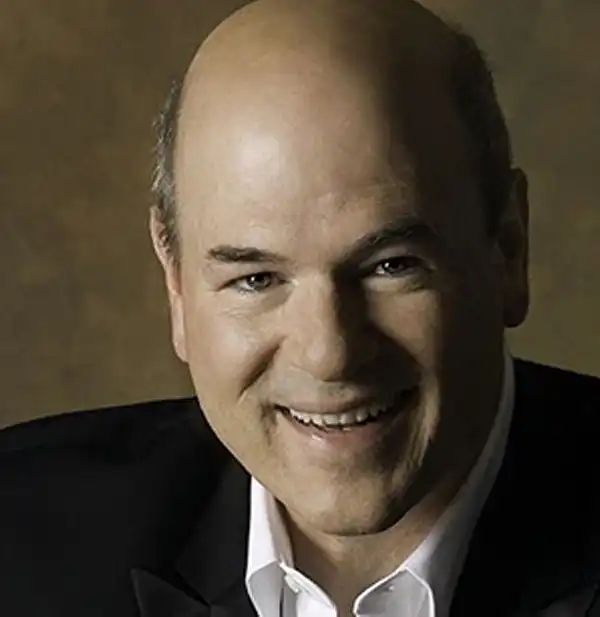
Larry Miller is an American comedian, character actor, writer, and podcaster whose distinctive delivery, sharp observational humor, and remarkable ability to portray pompous authority figures have made him a familiar face in Hollywood. Born on October 15, 1953, in Valley Stream, Long Island, New York, Miller has appeared in an impressive collection of movies and television programs, including Pretty Woman, The Nutty Professor, 10 Things I Hate About You, The Princess Diaries, and Seinfeld. Although frequently cast in supporting roles, Larry Miller possesses the unusual ability to make a relatively brief appearance feel like an essential part of the production. His characters often combine exaggerated confidence, questionable judgment, and an extraordinary talent for saying precisely the wrong thing at the most entertaining moment.
Growing up in New York, Larry Miller developed an appreciation for music, performance, and comedy that eventually shaped his professional career. He attended Amherst College in Massachusetts, where he studied music and graduated with honors. Before becoming a professional comedian, Miller worked as a musician, playing piano and drums in New York City establishments. His musical background provided valuable experience in rhythm, timing, and performance, skills that translated surprisingly well into stand-up comedy. After all, delivering a punchline and playing a drum solo have something important in common: get the timing wrong, and the audience immediately notices.
Miller eventually turned his attention toward stand-up comedy, performing in New York clubs including Catch a Rising Star and The Comic Strip. His routines demonstrated a talent for examining ordinary human behavior and finding the ridiculous assumptions lurking beneath everyday conversations. Rather than depending entirely on outrageous situations or elaborate physical comedy, Miller developed a conversational style built around observation, sarcasm, and increasingly absurd conclusions. His comedy often sounded like a perfectly reasonable man explaining something perfectly unreasonable, which made the eventual punchline particularly satisfying.
His early success in stand-up comedy included winning a televised comedy competition on Showtime's The Big Laff Off in 1978. During the following decade, Larry Miller established himself as a nationally recognized performer, appearing on television comedy programs and performing before audiences throughout the United States. His HBO appearances included One Night Stand in 1988 and the comedy special Larry Miller: Just Words in 1992. His stand-up performances helped introduce audiences to a distinctive comic personality that would later become familiar in movies and television. Miller could take an ordinary subject, examine it from several increasingly ridiculous perspectives, and leave listeners wondering how something so commonplace had become so entertaining.
One of Larry Miller's best-known stand-up routines, "The Five Levels of Drinking," became a favorite among comedy enthusiasts. The routine examines the progressively questionable decisions people make as an evening of alcohol consumption advances beyond sensible limits. Miller's escalating descriptions of confidence, impaired judgment, and social embarrassment demonstrated his ability to construct comedy through carefully organized storytelling. The routine became a recognizable example of his observational humor, proving that the journey from reasonable behavior to complete foolishness can be surprisingly entertaining when described by someone who understands the route.
Larry Miller's transition into film brought him greater recognition, particularly through his appearance in the 1990 romantic comedy Pretty Woman, starring Richard Gere and Julia Roberts. Miller portrayed Mr. Hollister, the sophisticated clothing store manager who assists Vivian Ward during her memorable shopping expedition. Although his screen time was limited, Miller made the character memorable through a combination of professional politeness, commercial enthusiasm, and perfectly measured reactions. The role demonstrated his ability to contribute to a major Hollywood production without competing unnecessarily with its leading stars. Sometimes the most effective supporting performance involves knowing exactly when to deliver a line and when to let the audience enjoy the situation.
Following Pretty Woman, Larry Miller became an increasingly familiar presence in Hollywood comedies. His film appearances included L.A. Story (1991), Necessary Roughness (1991), Suburban Commando (1991), Radioland Murders (1994), and Corrina, Corrina (1994). These productions allowed him to explore different variations of his established comedic personality, often portraying officials, professionals, and authority figures whose confidence exceeded their actual control over events. His ability to move between exaggerated comedy and more restrained supporting performances made him particularly useful to directors looking for a dependable character actor.
In 1996, Larry Miller appeared opposite Eddie Murphy in The Nutty Professor, portraying Dean Richmond, the administrator at the university where Murphy's character, Professor Sherman Klump, teaches. The film, directed by Tom Shadyac, became a major box-office success and introduced Miller to another generation of comedy fans. As Dean Richmond, Miller played an authority figure attempting to maintain institutional dignity while surrounded by increasingly outrageous scientific experiments and personal disasters. His exasperated reactions provided an effective contrast to Murphy's energetic performances, particularly when the professor's experiments created situations no respectable university administrator would ever want included in the annual report.
Miller returned as Dean Richmond in the 2000 sequel Nutty Professor II: The Klumps, again appearing alongside Eddie Murphy and the film's collection of eccentric characters. His participation in both movies reinforced his reputation as a performer who could provide comic stability within an otherwise chaotic production. While Murphy transformed himself into multiple characters through elaborate makeup and performance, Miller frequently relied on a raised eyebrow, an irritated expression, or a carefully delivered remark. It was a useful reminder that comedy does not always require elaborate costumes. Sometimes an appropriately horrified university dean is more than enough.
Another defining performance came in the 1999 romantic comedy 10 Things I Hate About You, a modern adaptation of William Shakespeare's The Taming of the Shrew. Larry Miller portrayed Walter Stratford, the overprotective father of teenage sisters Kat and Bianca, played by Julia Stiles and Larisa Oleynik. The film also featured Heath Ledger and Joseph Gordon-Levitt and became a popular example of the teenage romantic comedies of the late 1990s. Miller's character, an obstetrician with an unusually detailed understanding of the consequences of teenage romance, imposed strict dating rules upon his daughters while attempting to maintain some semblance of parental authority.
Walter Stratford became one of Larry Miller's most memorable characters because his behavior combined genuine parental concern with spectacularly exaggerated suspicion. His attempts to protect his daughters frequently involved elaborate warnings, sarcastic observations, and rules that seemed designed to eliminate the possibility of anyone enjoying adolescence. Miller delivered these scenes with complete conviction, making Walter simultaneously ridiculous and recognizable. Parents could appreciate the character's concerns, teenagers could appreciate the absurdity of his restrictions, and audiences could enjoy watching an intelligent man discover that raising daughters requires considerably more than issuing instructions.
The popularity of 10 Things I Hate About You eventually led to a television adaptation that premiered in 2009. Larry Miller returned as Walter Stratford, becoming the only actor from the original film to reprise his character as a regular cast member in the television series. The adaptation gave him additional opportunities to explore Walter's personality, particularly his struggles to understand his daughters while maintaining his strict approach to parenting. The series ran for one season, but Miller's participation provided an important connection between the film and its television successor.
Larry Miller also became associated with the improvisational comedy films of director Christopher Guest. He appeared in Waiting for Guffman (1996), Best in Show (2000), and A Mighty Wind (2003), productions celebrated for their mockumentary style, eccentric characters, and understated humor. These films depended heavily on performers who could make absurd situations appear completely natural, an approach perfectly suited to Miller's comedic abilities. His appearances demonstrated that he could contribute effectively to ensemble comedy without dominating every scene, allowing the humor to develop through character interactions and the gradual revelation of human foolishness.
In Best in Show, Miller portrayed Max Berman, one of the characters inhabiting the wonderfully peculiar world of competitive dog shows. The film's fictional documentary approach allowed its performers to explore the eccentricities of people who take their personal interests with extraordinary seriousness. Miller's ability to maintain a straight face while participating in ridiculous situations made him a natural fit for the production. His work with Christopher Guest further established his reputation among comedy enthusiasts who appreciated humor built upon recognizable personalities rather than conventional jokes.
Television provided Larry Miller with another important outlet for his talents. One of his most memorable guest appearances came in the 1995 Seinfeld episode "The Doorman," in which he portrayed a suspicious and confrontational apartment building doorman. The character becomes involved in an increasingly uncomfortable series of encounters with Jerry Seinfeld, creating the kind of escalating social misunderstanding that helped define the sitcom. Miller's performance captured the peculiar satisfaction of a man who treats a relatively ordinary job as though it carries the authority of a Supreme Court appointment. His appearance remains a recognizable example of the distinctive supporting characters that contributed to Seinfeld's popularity.
Interestingly, Larry Miller had previously been considered for the role of George Costanza, the character ultimately played by Jason Alexander. Miller was a longtime friend of Jerry Seinfeld, making his eventual appearance on the series particularly appropriate. Although he did not become a regular cast member, his guest performance demonstrated how effectively he could fit into the show's world of petty grievances, exaggerated social rules, and conversations that somehow transform minor inconveniences into major personal crises.
Miller's other television credits included Mad About You, Law & Order, Boston Legal, Curb Your Enthusiasm, and The Good Wife. On Boston Legal, he portrayed attorney Edwin Poole, a founding partner whose eccentric behavior created both professional complications and opportunities for comedy. The role allowed Miller to demonstrate a broader dramatic range while maintaining the distinctive humor that audiences associated with his performances. His work on the series reflected his ability to make unconventional characters believable even when their behavior was far removed from ordinary expectations.
Larry Miller also became familiar to younger audiences through his appearances in The Princess Diaries (2001) and The Princess Diaries 2: Royal Engagement (2004). He portrayed Paolo, the flamboyant stylist responsible for helping transform Anne Hathaway's awkward teenage character, Mia Thermopolis, into someone prepared for royal responsibilities. Miller embraced the character's theatrical personality, delivering an energetic performance filled with exaggerated confidence and comic enthusiasm. Paolo's memorable makeover scenes became an important part of the first film's appeal, adding another distinctive character to Miller's growing collection of Hollywood supporting roles.
Beyond live-action performances, Larry Miller contributed his voice to animated productions, including the television adaptation of Dilbert, in which he voiced the Pointy-Haired Boss. The character, an incompetent manager whose decisions routinely frustrate his employees, was particularly well suited to Miller's talent for portraying people with enormous confidence and limited understanding. His voice work also included appearances in Bee Movie, The Ant Bully, and The Penguins of Madagascar. Animation gave Miller another opportunity to create memorable personalities using vocal timing, inflection, and the expressive qualities of his delivery.
Larry Miller expanded his professional activities into writing and broadcasting, contributing essays and commentary while developing a podcast devoted to personal stories, humor, and observations about everyday life. Originally titled This Week with Larry Miller, the program eventually became The Larry Miller Show. Its conversational approach reflected his admiration for traditional American storytelling and performers who could entertain an audience simply by describing the people and experiences they encountered. Rather than relying on elaborate production or sensational subjects, Miller used the podcast to demonstrate that ordinary life contains more than enough material for a good story, particularly when the storyteller possesses a healthy appreciation for human absurdity.
In April 2012, Larry Miller experienced a serious medical emergency after falling and striking his head outside a recording studio. The accident resulted in a traumatic brain injury, hospitalization, and an extended period of unconsciousness. His recovery required considerable medical care and rehabilitation, temporarily interrupting his professional activities. By January 2013, however, Miller had recovered sufficiently to resume his podcast, an achievement that attracted considerable attention from colleagues and admirers. His return demonstrated remarkable resilience following an injury that had threatened both his career and his life.
Throughout his career, Larry Miller has balanced professional success with a comparatively private family life. He married television writer Eileen Conn in 1993, and the couple have two children. His long association with fellow comedians, writers, and actors reflects a career built upon professional relationships as well as individual talent. Unlike performers whose reputations depend entirely upon leading roles, Miller developed a recognizable screen identity through consistent work, versatility, and an understanding that memorable characters do not necessarily require top billing.
Larry Miller's contribution to American comedy extends beyond any single movie or television appearance. His career illustrates the importance of character actors who bring personality, credibility, and carefully judged humor to supporting roles. Whether portraying an anxious college administrator, an overprotective father, an eccentric attorney, or an impossibly self-important doorman, Miller has repeatedly demonstrated that a well-developed supporting character can become one of a production's most enjoyable features.
For audiences celebrating Larry Miller's birthday on October 15, his extensive career offers plenty of reasons to revisit a favorite comedy. From the sophisticated shopping experience in Pretty Woman to the scientific chaos of The Nutty Professor and the parental panic of 10 Things I Hate About You, his performances have contributed to decades of entertainment. Larry Miller has spent much of his professional life playing characters who believe they have everything under control, even as events prove otherwise. Fortunately for audiences, watching those characters discover their mistakes has provided some very entertaining moments in Hollywood comedy.